
Art Shields visits the mill towns of Massachusetts and their immigrant workers, uncovering the specific background to the charges against Sacco and Vanzetti; illuminating the long U.S. tradition of xenophobic red-baiting in this fine article.
‘The War on the Alien in New England’ by Art Shields from One Big Union Monthly. Vol. 3 No. 1. January, 1921.
As the murder trial of Nicola Sacco and Bartolomeo Vanzetti draws near, a brief survey of the industrial conditions of eastern Massachusetts becomes necessary in order to understand certain phases of the case. The western and middle-western worker does not generally realize that this is one of the most highly industrialized parts of the nation. It is the greatest American centre of cotton and wool cloth and produces more shoes than any other part of the world.
Massachusetts produces commodities for all the world with the aid of workers from all parts of the world, who, during normal times keep the machinery of the shoe, textile and variegated industries of the state humming for nine hours a day. But she is producing very little as this is being written, for the numerous mill towns are under the blight of the worst unemployment wave in New England history. From half to three quarters of the shoe and textile workers are on the jobless list, and many of the rest are on part time. Unrest is growing as the foreign born population finds itself as badly off as in the Europe of yesterday, from which it escaped.
Among the Shoe Workers
Nicola Sacco, one of the principals in the approaching murder trial, was engaged for several years in the men’s ‘shoe industry near Brockton, around which centre most of the men’s shoes of the country are produced. He was a highly skilled edge-trimmer in the cutting room where the first operations are performed on the leather after it comes into the factory.
Sacco learned his trade so carefully that one employer admitted that he was the fastest edge-trimmer of some three thousand who had passed through his factory doors. And if he had done no more than trim edges his employers would have been satisfied; but this young Italian-American lost no opportunity to explain to his fellow workers the advantage of being their own masters and cutting out shoes for themselves and society, instead of laboring for the wage lords who lived far away from the scene of their workers’ toil.

There were others who were carrying the same message and agitating ceaselessly against the low wages and the nine-hour day. But the workers were divided into racial groups and solidarity was difficult to obtain. And co-operating with the employers was a type of labor leader who watchfully blocked the movements for effective action.
A No-Strike Union
The Boot and Shoe Workers’ Union of the American Federation of Labor has jurisdiction over the men’s shoe makers. All the men and women in the factories near Brockton are compelled by their employers to take out cards in this organization, which has become notorious in the labor world for its no-strike contracts. Governor Allen and his Industrial Court are not needed in Brockton. Rather might he take lessons from an organization which has fined individual members for quitting their jobs on account of “stoppage” of work, in violation of union contracts.
This anti-labor combination usually held the workers in line. There had been small strikes, but nothing on a large scale till the European war forced the cost of living beyond wages and beyond endurance and it became impossible to keep a tight rein any longer. The cutters defied their officials in 1918 and went out on an “outlaw” strike for more money, and after the shoe manufacturers offered an increase the strike continued some weeks longer, with the elimination of the no-strike agreement as one of the goals of the strikers.
The strike lasted seven weeks before the cutters consented to let the factories start again on their war contracts. Sacco and other agitators became marked men with the foremen and superintendents who knew their powers of persuasion among the other workers. Sacco was forced to move from factory to factory, always able to get a job because of the skill he could demonstrate, but under constant surveillance as soon as his identity was discovered. At the time of his arrest he was employed at South Stoughton, Mass., in a small factory near the home where he lived with his wife and child.
Cordage Town
Vanzetti lived not far away in “Cordage Town”, as the city of Plymouth, where the Pilgrim Fathers landed three hundred years ago, is often called. However, the affairs of the town are no longer controlled from the old “town meeting”. Its place has been virtually taken by the office of the great Cordage Company or “Cordage Trust”, which orders the life of the community because it furnishes almost the only place of employment in the city. This powerful corporation controls most of the sisal hemp output of the Yucatan Peninsula and sends its rope and twine products all over the world. The warehouse worker in Brazil ties his coffee bags with Cordage Trust twine and the Alberta farmer binds his grain sheaves with the same material.
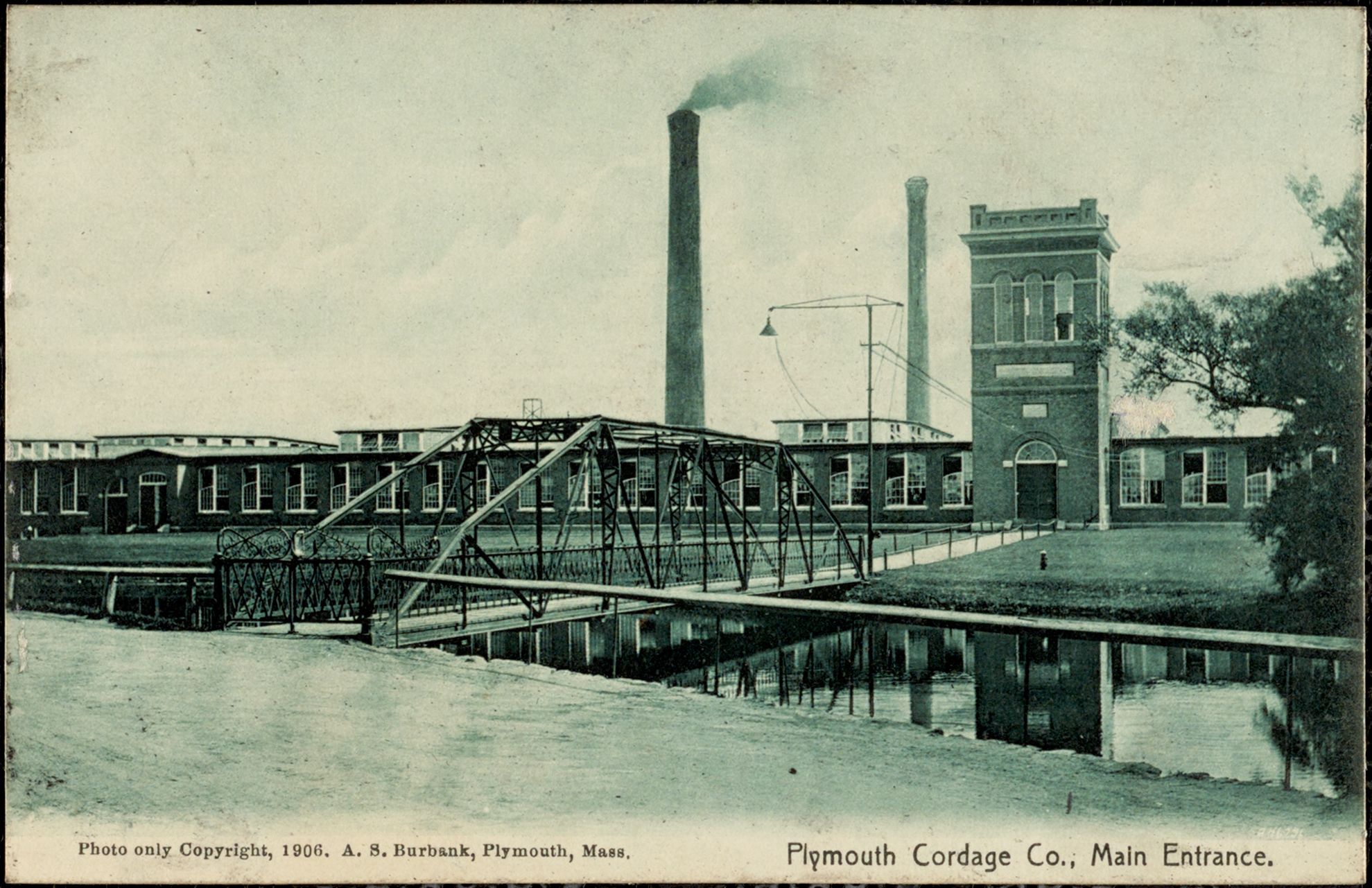
This twine and cord is made by a mingled force of Italian, Portuguese and other foreign-born workers, who now occupy this oldest city of New England, many of them living in the new company houses which have sprung up alongside the narrow, old-fashioned homes which the Puritans built. The men who carry on the agitation of the class struggle among these workers are not so well known as Gene Debs or Bob Smillie, but their work is just as difficult, as dangerous and as necessary. They are the ones who rouse their fellows to the action which brings them all nearer freedom and who often fall before the savagery of the employing class, and disappear from the scene, mourned by none but a few chosen comrades.
Vanzetti came to Plymouth not merely to pitch sacks of twine on cars in the outside gang where he worked, but to rouse his fellow workers against conditions worse even than those in the mills at Lawrence. The European war started, and the Company put on night and day shifts to fill the ever-increasing war orders. Profits piled up faster than ever, but the workers’ wages remained at nine dollars a week for the men and six and seven dollars a week for their wives, who worked by their sides at the massive spinning machines.
The Big Strike
At last came the strike, a sudden and complete walkout of four thousand workers from every department of the mill. The stream of twisted hemp ceased pouring from the mill as the workers folded their arms in the first industrial revolt that had taken place in that plant. Vanzetti worked night and day speaking, writing articles for an Italian paper and raising money for the strikers, the same as he had raised money for the Lawrence strikers four years before. The walkout started on January 17th, 1916, and continued for a month. The workers went back without the eight-hour day but with a dollar a week advance and with the feeling, gained by common action, of the power of solidarity.
Vanzetti was blacklisted and forced off all jobs controlled by the domineering Cordage Company. He became a fisherman and a fish salesman, but his class propaganda among his former fellow workers never ceased. To-day the results of the work he and others have been doing may be seen in the gradual fusing together in a common cause of the racial differences of the Italians and the Portuguese.

The native American as a rule sees little of the social .and industrial currents among the alien workers, but there are a few who follow the movements of such men as Sacco and Vanzetti most carefully. These are the managers and superintendents of the mills where the agitation that may halt their profiteering is going on. And what they and their agents cannot learn they seek to dig up through the various detective agencies that cater to our business world.
These foreign-born agitators have been relentlessly pursued by thugs, private detective agencies, the immigration authorities and the Department of Justice. Many have been deported, others have been thrown in prison, and some few have been reserved for the more deadly fate that awaits the victims of a murder frame-up.
Salsedo’s Death
The arrests of Sacco and Vanzetti followed upon the heels of a long and deadly pursuit of foreign-born radicals. They were seized just two days after their comrade and friend, Andrea Salsedo, had plunged from a fourteenth story window of the Department of Justice Building on Park Row, New York City. This young worker, it will be remembered, had been taken out of a Brooklyn printing shop on February 25th and had been held prisoner without indictment or other legal pretext for more than two months in the secret chambers of the Department, where he was subjected to all the rigors of private examination in the hope of extracting some confession that would implicate him in the 1919 bomb plots, although they are now generally believed to have been the work of agents provocateur. But news of the secret imprisonment leaked out. Vanzetti, Sacco and other Italians began an agitation for his release that was proving embarrassing to the Department. A series of meetings was planned, the first to be held in Brockton, Mass., on Sunday, May 9th. Meantime, Vanzetti was dispatched to New York with funds for an attorney to secure a writ of habeas corpus. Quick action was necessary for the other side, and two things happened close together. Salsedo perished May 3rd, and two days later, as Vanzetti and Sacco were rushing plans for the meeting, they were arrested in Brockton and taken to the town hall and police station.
The Frame-Up
Closely grilled about their labor activities, the two Italians thought they were being held as “Reds”. But no “Red” charge was entered in the police books. The conspiracy developed next day — May 6th — when Chief Stewart of Bridgewater announced with a lot of bravado that he had two desperate Italian auto bandits. Vanzetti was charged with an unsuccessful attack on a shoe company’s pay-truck in Bridgewater on December 24th, in which shots were fired but no one was injured, nor was any money taken. Then both Sacco and Vanzetti were charged with murder and robbery in connection with the seizure of an $18,000 pay-roll and the killing of two shoe company guards at South Braintree, Mass., on April 15th.
The frame-up plans were hastened. First, a police officer was brought from Medford to show that Sacco was the “Red” arrested there in the 1913 Hopedale strike for making a speech. Next, factory superintendents of the two shoe companies that had been attacked were notified to produce witnesses. The stage was set to make identification certain, just as cards are shuffled in such a manner that certain ones must be drawn. Vanzetti and Sacco, for the benefit of doubtful witnesses, were made to crouch in the position alleged to have been taken by the bandits. They were also placed in an automobile roughly similar to the one used in the hold-ups and driven over the murder route for the benefit of other witnesses who needed their recollection stimulated. In spite of all these devices, several positively stated that the wrong men had been seized. Others, yielding to the artifice, or to pressure, said that the men were, or at least resembled, the “foreigners” they had seen.
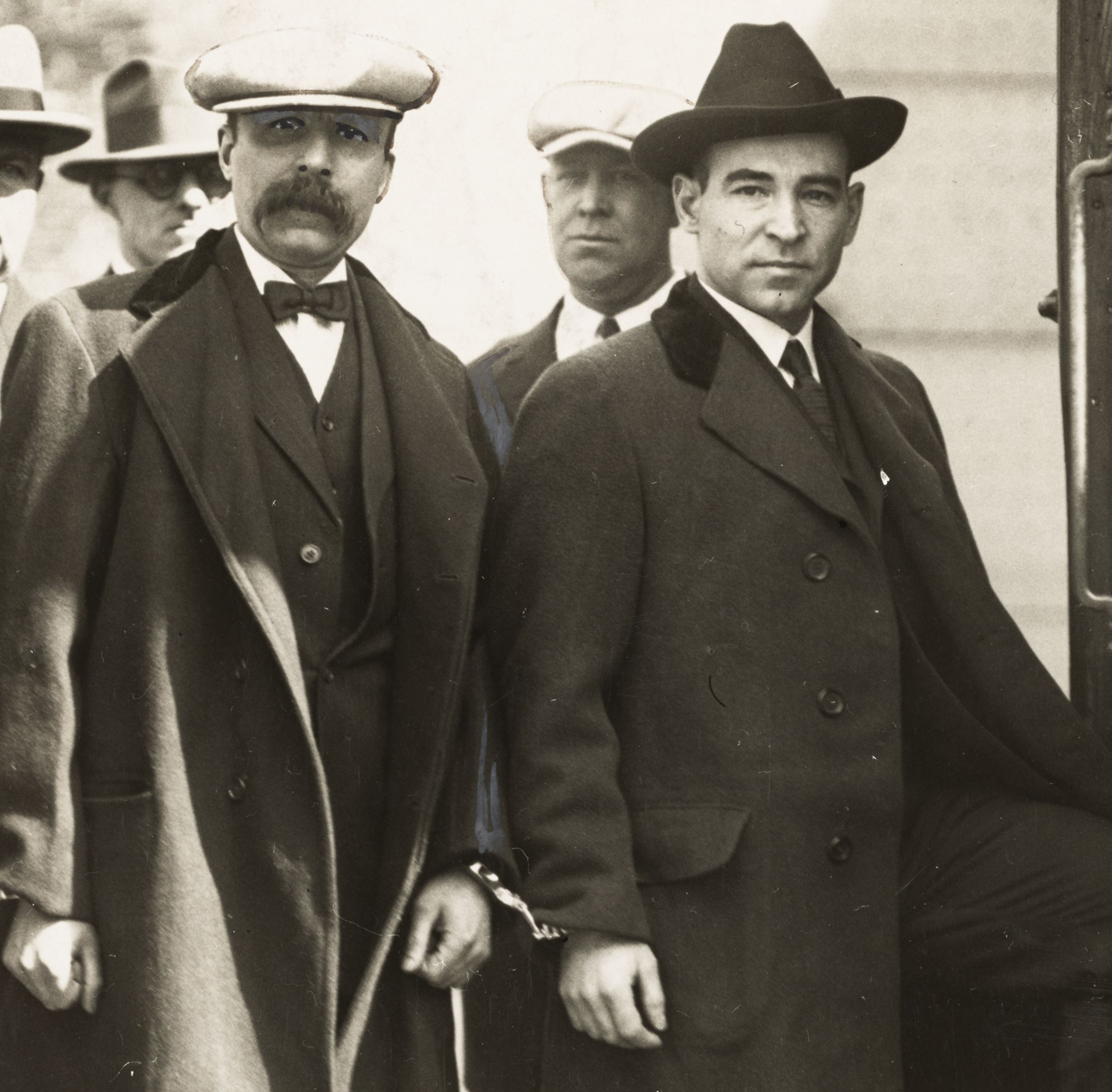
These same witnesses lost their assurance in the more matter-of-fact court room environment at the preliminary hearing for the Braintree case soon after. Not a single witness made a positive identification, but indictments for murder were brought in nevertheless. A seventy-thousand dollar reward had been offered in the meantime which police and leading witnesses’ were to share.
This happened in May. Next month Vanzetti was rushed to trial in the Plymouth Court for the Bridgewater affair. Eighteen fellow townsmen swore he had been selling fish in Plymouth, twenty-eight miles away from the scene of the hold-up, on that day. Only five Bridgewater witnesses said he was there. In the swiftness of the shooting affray, none had good opportunities to observe carefully, all were uncertain or contradictory, and three had confidential jobs with the shoe company, one as paymaster, another as guard and the third,— since the shooting — as inspector. But the eighteen alibi witnesses were ignored and the juggernaut of justice rolled over Vanzetti. “Guilty!” said the jury: “Fifteen years!” said the judge., “At last!’ said the superintendents of the Cordage Company in “Cordage Town”.
Now the murder trial is approaching and the manufacturing interests, the insurance interests, the police and the Department of Justice that got their comrade Salsedo are determined that these rank and file agitators shall go the way of Joe Hill and the Haymarket martyrs. But aid is coming from the workers in the Italian homeland and from thousands of workers in the great Massachusetts industrial section, and the frame-up will be more difficult of achievement than the authorities had expected.
Sacco and Vanzetti must be saved from this dastardly conspiracy, as Charles Krieger was saved last year and as Ettor and Giovannitti were saved from the cage in Salem eight years ago. They are needed once more in the mills and factories of New England for the inspiration of their comrades and fellow workers.
One Big Union Monthly was a magazine published in Chicago by the General Executive Board of the Industrial Workers of the World from 1919 until 1938, with a break from February, 1921 until September, 1926 when Industrial Pioneer was produced. OBU was a large format, magazine publication with heavy use of images, cartoons and photos. OBU carried news, analysis, poetry, and art as well as I.W.W. local and national reports.
PDF of full issue: https://archive.org/download/one-big-union-monthly_1921-01_3_1/one-big-union-monthly_1921-01_3_1.pdf
 Revolution's Newsstand