
This report by Varsenika Kasparova, head of the Eastern Department of International Women’s Secretariat of the Comintern, with sections on Turkey, Syria-Lebanon, ‘Persia,’ and Egypt, is goldmine of information on the women’s movement of the period. Kasparova was an ‘Old Bolshevik’ and exiled since 1904 in Switzerland with Lenin, whom she worked closely with. She returned in 1917 and became the lead Political Officer in the Red Army, working as Stalin’s personal secretary, whom Kasparova would later accuse of treachery in that period. After the Civil War she focused her work in the Comintern’s Women’s Secretariat while also becoming one of the leading women in U.S.S.R., a member of the Central Executive Committee of the Soviets. An Oppositionist early on, she would be expelled in from the Party in late 1927 and sent to internal exile. Recanting in 1935 she was released from exile, but arrested the following year. She was shot on September 11, 1941 along with many surviving figures of the Oppositions in the Medvedevsky executions. She was ‘rehabilitated’ in 1961.
‘The Women’s Movement in the Near East’ by Varsenika Kasparova from International Press Correspondence. Vol. 4 No. 24. April 10, 1924.
Turkey.
Since the world war the Women’s Movement not only exists in Turkey, but gets stronger as time goes on. It no longer consists in such timid attempts as were made in 1908 by a few Turkish women intellectuals, among others, by the famous Turkish woman writer Hialide-Khanum, for the extension of educational facilities for Turkish women and for the abolition of the custom of making women cover their faces with a veil in public.
The world war drew Turkish women into social activities and production. This applies to women of the petty-bourgeoisie and of the intellectuals who went to the front as sisters of mercy, as well as to the proletarian women of Constantinople in search of a living to be able to keep themselves and their children, and to the peasant women of Anatolia on whose shoulders rested the burden of agricultural work during the war.
During the recent war the women intellectuals of Turkey for the first time took an active part in the national movement of the country, and were encouraged in this by the young Turkish bourgeoisie. The women’s question has at present become the order of the day in Turkey. The feminist movement among Turkish women intellectuals and women of the middle class aims at women’s admission to general education, at the right of political, social and family emancipation and at electoral rights to the Medjliss (Parliament). The movement receives the support of the vanguard of the Turkish bourgeoisie and of Kemal Pasha himself. The emancipation of women (if only partial) from Moslem customs is essential for the development of modern industry in Turkey and for the transition from the despotic-feudal to the modern capitalist order. The Turkish liberal bourgeois press of Constantinople is conducting, especially since January of the current year, a campaign regarding the necessity of women’s participation in social life and for women’s political rights. The papers “Bakyt” and “Imory” make a special feature of the women’s question, and have published biographies of the heroines of the nationalist front: Aita-Efe, Khaliedo-Edib and others. The Constantinople cinemas show films from the works of the famous woman writer Khaliedo-Edib-Khanom.
The bill on compulsory marriage, introduced into the Medjliss by the Erzerum deputy Salik-Afendi, was strongly criticised in the Constantinople press.
In Angora this bill led to a hostile demonstration on the part of the Turkish women students of the teachers’ seminary. According to the Turkish press, Kemal Pasha spoke at many meetings, especially in Smyrna, attended by women on the absolute necessity of giving women political rights. He has recently introduced a bill on this subject into the Turkish national assembly.) [Since the above was written, Women’s Suffrage Law has come into operation. Ed] The feminist movement for equality of rights is stronger in Constantinople than in Anatolia, where Turkish women as yet dare not come out without a veil, as is done in Constantinople.
In connection with the demand for political rights, the Turkish women intellectuals initiated a wide educational propaganda among women. Men and women teachers’ trade unions are beginning to be organised throughout Turkey. In Smyrna, Angora, and in other towns women have been elected to the administrative bodies of the trade unions. The Anatolian papers are full of announcements of the establishment of schools for women. Public meetings and lectures for women are being organised.
According to communications which appeared during the last few months in the papers “Vakyr” and “Aktum”, a regular political women’s party has come into being in Turkey. In addition to the conquest of political rights for women, this party pursues educational and social aims. The party was formed in Anatolia from the former Women’s Section of the League of National Defence in the town of Khivas, founded by the Turkish woman Mak-bule-Khanum. The women’s political organization assumed the name of the Women’s National Party, but it has not yet received official recognition by the government.
It has over two thousand members. One of the most active members of this Party is the authoress Nezi-Khem-Mukhedin. The program of the party includes the struggle for women’s electoral rights, struggle against polygamy and prostitution and for amendment of marriage laws, as well as wide educational and charitable activities.
The Turkish bourgeoisie hopes to bring over to its side, together with the women, the Turkish peasant and working class. This is shown by the fact that, in addition to the establishment of an official people’s party, so-called economic conference was convened in Smyrna which was attended by representatives of traders, bankers, intellectuals, as well as by representatives of peasants, artisans, and of worker’s organizations. This conference was also attended by five women, one of whom was of the peasant class and four working women from Smyrna tobacco factories. It goes without saying that this conference was organised in such a way as to give preponderance to the representatives of the bourgeoisie.

Turkish women’s participation in production is growing rapidly of late, not only in agriculture but also on the industrial field. In the tobacco factories 75% of the workers are women. In Constantinople there are 3,500 women in the tobacco factories. Women are employed in textile, carpet and other factories. The conditions of Turkish working women are certainly far from satisfactory. Their earnings are from one fourth to one half of men’s earnings. In the Constantinople municipality women are working under terrible conditions. A strike broke out among them last year, but ended in failure. In a few industrial centres of Turkey, but mainly in Constantinople, Turkish women are beginning to participate in the growing workers’ class movement. In Constantinople working women are joining the tobacco workers’ trade unions. It should be stated however, that the purely working class women’s movement in Turkey is as yet weak and not independent of the bourgeois feminist movement.
On the other hand, owing to historic circumstances, the influence of the great Russian revolution, sympathy for Soviet Russia and Communist have certainly a strong hold on the feminist movement of the Turkish intellectuals. At present the first cadres of communist women workers are being formed from the rank and file of these intellectuals.
The Turkish Communist Party was established in Angora in 1920. In 1921 the Party began its work among women. The Women’s Section of the Turkish Communist Party participated in 1921 in the press organs Imen” and “Ikaz”. But work on a large scale was out of the question owing to the weakness of the Angora Communist Party. In 1921 the Party had only three women members and ten women candidates. Among women communists the majority came from the teaching profession, but there was also one peasant woman and two or three working class women in their ranks.
Even at the Congress of the Turkish Communist Party in 1922 there was a total absence of women.
In Constantinople, in the Youth League and in the circle of the marxist organ “Aidanlyk” there is a group of women communists who carry on propaganda among working women.
The campaign for Women’s Day (March 8th) was carried on in the current year for the first time in Turkey by means of a press propaganda in the organs “Aidanlyk” and “Ziya”, the latter being published in Bulgaria.
Syria.
Syria is one of the centres of Asia Minor where industrial development has reached a fairly high standard. It always had a high reputation for its silk industry, and in ancient times it was famed for a special weaving process and for silk dyeing. The silk industry provides employment for the Syrian population, including thousands of working women. In Libanon, in Beirut and Aleppo this industry has reached a high state of development.
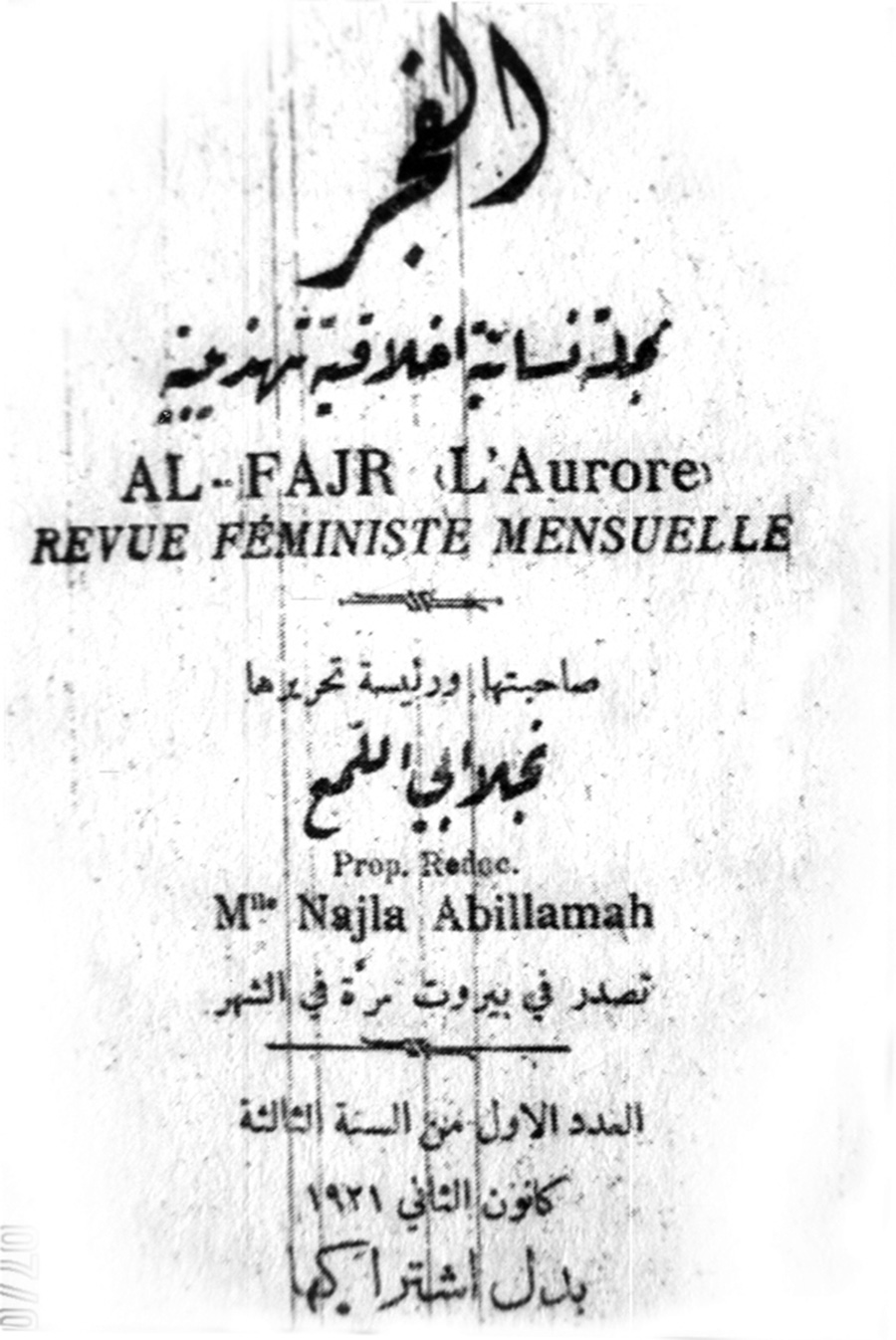
Up to the middle of the last century the Syrian silk industry was a purely handicraft industry. The first factory was established in Libanon by a French manufacturer in 1840. In Libanon there were nine spinning mills, out of which only 2 belonged to natives, and in 1912 there were already 200 factories, 3 of them being French. French capital is greatly responsible for the introduction of women’s labour in the factories of Syria. In 1914 out of 14,000 workers in the silk spinning and weaving mills of Libanon, 12,000 were women. The gradual impoverishment of the present silkworm breeders of Syria is the cause of the disintegration of handicraft industry and of the establishment of big factories. Women’s labour is greatly exploited in Syria, and the Syrian working women are working under conditions similar to those of the working women in France in the last century. Their earnings are ridiculously small, and the working day extremely long. But Syria, while being a centre of capitalist industrial development, is also the country of the most ancient trade capitalism. Women’s growing participation in production has made Syria the heart of the Arabian women’s movement. Already the 19th century saw in Syria the advent of Arabian women writers, for instance: The Arabian poetess Varda-al-Yázyjy. Since 1892 women’s journals in the Arabian language began to make their appearance “Ali-Fatat”, “Alis-Alojali”, and “Fata-Alishark” (The Eastern Girl) published by the women writers Khind-Nadhal, Alex-Avenino and others. Since 1908 a woman’s journal “Alzasna” has been published in Beirut by Zhirzh Nikyliabaz. The Women’s Movement in Syria coincides with the revival of the Arabian Nationalist movement (supported by Great Britain in opposition to the Pan-Turkoman movement) and is more in the nature of an educational movement. Cairo has been for some time the centre of this movement, and has thus a great influence on the Women’s Movement in Egypt.
The proletarian Women’s Movement in Syria has not yet taken a definite form. Recently there has been a beginning of the communist movement which is hitherto confined to the University students of Beirut.
Persia.
In spite of the recent attempts at a revolutionary movement, Persia is still more feudal than capitalist and is as dependent on Western capital as a colony. The population of Persia consists of 70% of impoverished peasants, crushed by taxes and oppressed by usurers, big landowners and government officials. Ten per cent of the population are nomadic and twenty per cent town dwellers, including artisans and people engaged in handicrafts. Owing to the feudal-patriarchal customs and the strict application of Shariat laws, the Persian women are hitherto among the most oppressed and backward sections of the female population of the East.
As in Afghanistan, the women of the nomadic tribes in Persia are the freest.
The women in the towns, the wives of artisans and traders lead a secluded life like all Moslem women and do not take part in production. The female proletariat in the towns consists almost entirely of domestic servants. Persian peasant women are afflicted with a twelve hour working day on the rice, tea and tobacco plantations, and have not the alternative of factory work, as the latter does not exist. Prostitution is flourishing in Persia especially in Teheran.
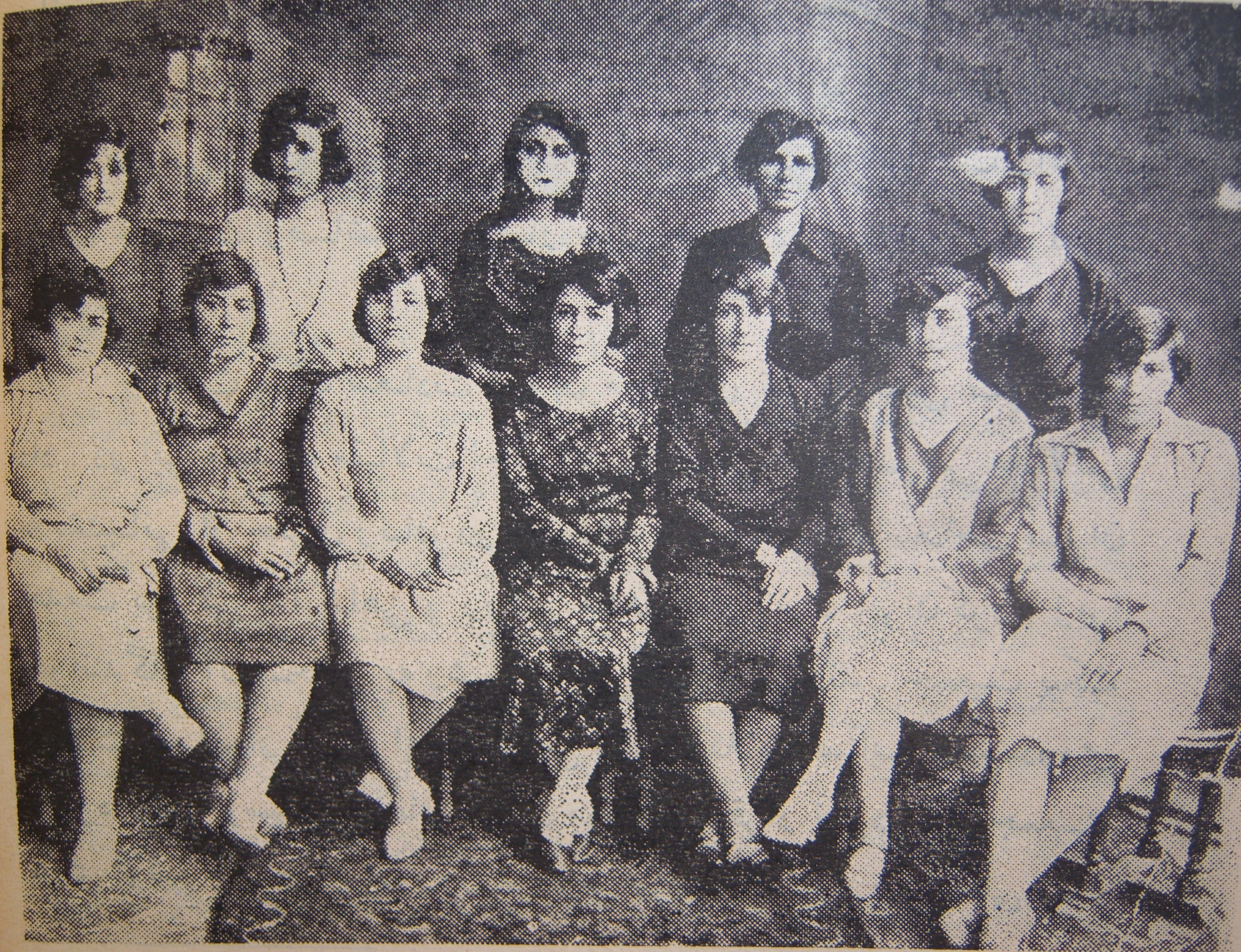
However, since the Russian revolution, an awakening has been perceptible even among the backward female population of Persia. Persia too is going through a period of economic changes, the cost of living is rising, the peasantry is becoming more and more proletarianised, while the moral and ideological influence of the neighbouring Soviet Republics is beginning to permeate the women masses of Persia. Up to the present the organised women’s movement has purely educational character and embraces only a small section of the native women intellectuals. Beginning in 1921, a women’s journal “Women’s World” was published in Teheran, but was subsequently closed down. In 1922 a new journal “Lissane Zenon” (“Woman’s Voice”) made its appearance.
The Communist movement in Iran, which two years ago resolved itself into the “Adaliat” Party, is too weak to attract large numbers of women, but nevertheless there are a few women communists in Persia.
Egypt.
Since 1919 there has been a pronounced Women’s Movement in Egypt, which took the form of active participation in the national-revolutionary struggle of the Egyptian people directed against British Imperialism.
Towards the end of the XIX and in the beginning of the XX century, much attention was paid in Arabian publications to the position of Egyptian women. The most prominent theorist of the emancipation of Egyptian women was the Arabian writer Kassim Emin. His chief works “Takjair-al-Mara” (Women’s Emancipation) and the “New Woman” had a very great influence in Egypt. It should be stated that Egyptian women take a prominent part in production. According to the census of 1897, there were 63,731 women artisans in Egypt. Nevertheless, peasant women (Fellaheens) constitute the largest section of the Egyptian female population. The Fellaheens, Egyptian peasant women on the banks of the Nile, perform the heaviest agricultural work. They are to their husbands mere labour power, to the same extent as cattle is labour power. Moreover, they bear the whole burden of exploitation by the State and by foreign capital.
During recent years a large number of women in Egypt have begun to work in the big industries, in cotton cleaning, sugar and tobacco factories. Handicraft and small industries also employ many women. It goes without saying that Egyptian working women are still more exploited than Egyptian working men. Their wages are just half of men’s wages. British capital in Egypt manages even to exploit the labour of the nomadic Bedouin women in carpet making, these carpets fetching high prices in Cairo.
Contrary to Persia and even Turkey, polygamy and harem life (attributes of the Moslem world) hardly exist in Egypt.
The Women’s Movement was initiated in Egypt in the beginning of the XX century by Syrian women writers in Cairo. Before the war it was a purely feminist movement of nationalist tendency, and embraced only the Egyptian women intellectuals. But during recent years, especially in 1919-20, the period of development of the Egyptian national-liberation movement, the Women’s Movement fused with the fatter and attracted not only women of the upper and middle classes, but also proletarian and peasant women.

In the big strikes of 1919 and 1920, in collisions between the masses and British troops, women took a very active part. They picketed at the gates of factories on strikes, helped to erect barricades in the streets and were subject to rough treatment and arrests.
Women’s demonstrations were frequently more numerous than men’s. In the villages women assisted their husbands in damaging railway lines and telegraph wires to impede the transport of troops. Women’s demonstrations took place daily in which women carrying national banners demanded Egyptian independence from British rule.
The nationalist women’s movement was under the leadership of women intellectuals.
The most prominent women intellectuals engaged in the political movement of Egypt are: Sophia Zaglul, the wife of the Egyptian nationalist Zaglul Pasha, who was arrested by the British, Hannan, the wife of another politician, and others.
Women’s influence in a nationalist movement of Egypt became more prominent in 1922. Women agitators worked in towns and villages. But Egyptian women are not only fighting for national emancipation, but also for their own enfranchisement. In Alexandria the “Committee of the Society of Egyptian Women” demands of the Committee for the elaboration of the constitution the introduction of clauses re women’s political rights.
The national-revolutionary movement of the Egyptian women masses is only a prelude to the social class movement. A Communist Party is already in existence in Egypt, and the transition of proletarian as well as other working women masses from the struggle against foreign capitalism to social struggle, is only a question of time.
International Press Correspondence, widely known as”Inprecorr” was published by the Executive Committee of the Communist International (ECCI) regularly in German and English, occasionally in many other languages, beginning in 1921 and lasting in English until 1938. Inprecorr’s role was to supply translated articles to the English-speaking press of the International from the Comintern’s different sections, as well as news and statements from the ECCI. Many ‘Daily Worker’ and ‘Communist’ articles originated in Inprecorr, and it also published articles by American comrades for use in other countries. It was published at least weekly, and often thrice weekly.
PDF of full issue: https://www.marxists.org/history/international/comintern/inprecor/1924/v04n24-apr-10-1924-inprecor.pdf
 Revolution's Newsstand