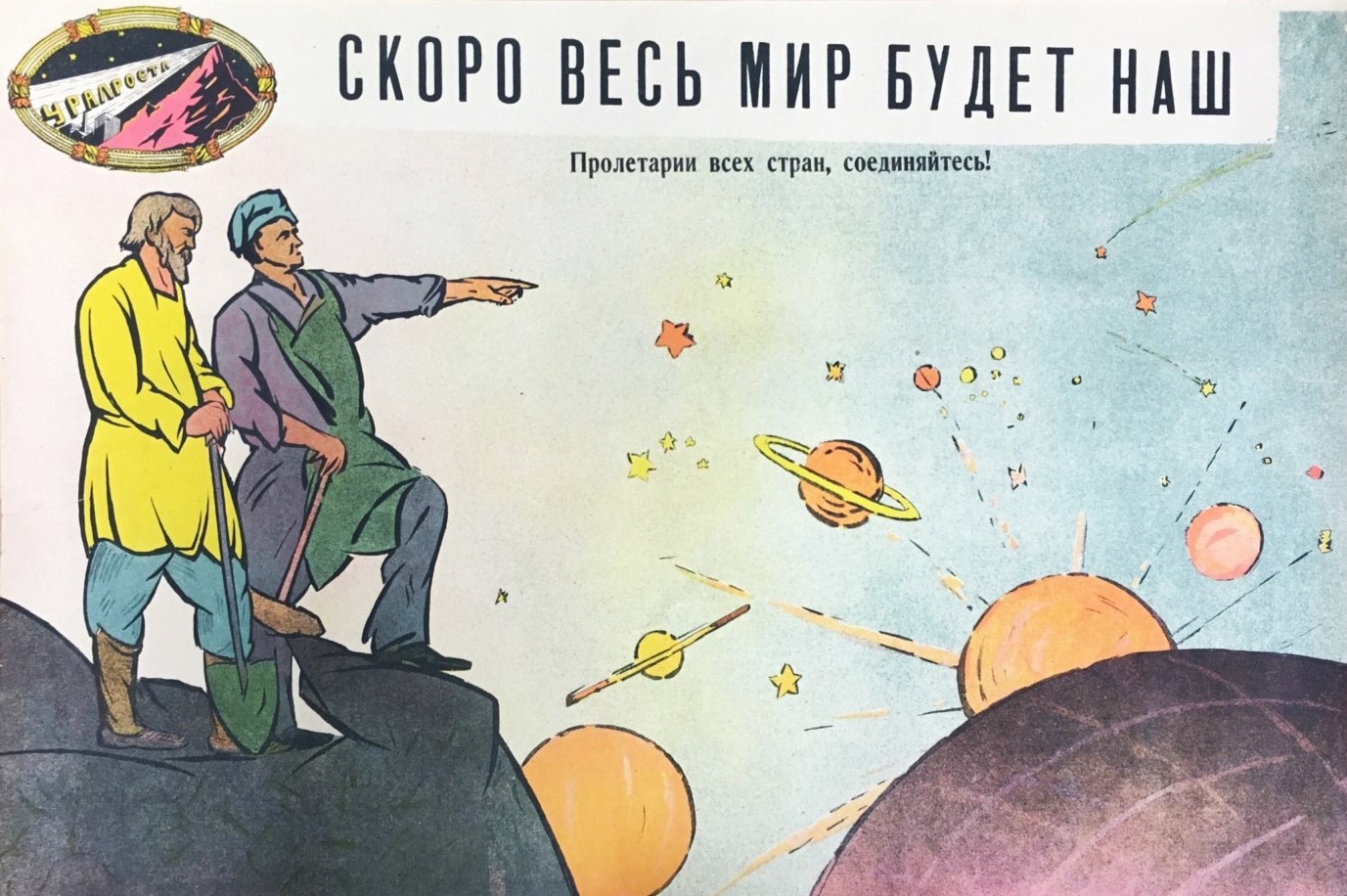
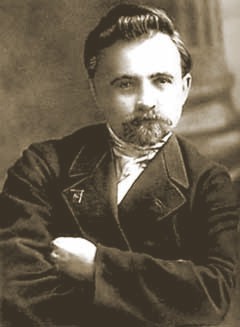
Preobrazhensky gives his thoughts on the specific combination of forces that came together in the November Revolution.
‘The Social Basis of the November Revolution’ by Yevgeni Preobrazhensky from Soviet Russia (New York). Vol. 4 No. 15. April 9, 1921.
(The author of this article is one of the theoreticians of the Russian Communist Party whose name has become well-known outside of his native country owing to the fact that, together with N. Bukharin, he is the author of the much translated “A.B.C. of Communism.”)
ONCE the November Revolution was accomplished, all the opponents of the Soviet power agreed in declaring that the Bolsheviks were only a very small minority of the population, that their success, due only to accident, would be of short duration, that moreover the new government would fall in less than fifteen days. Three years of Soviet Power have sufficiently revealed the lack of seriousness, the fundamental weakness of the sociology of the Cadets and the Mensheviks. Henceforth it will be useless to contradict the so-called “scientific analysis” of the Martovs, the Chernovs, and Kautskys, as well as the optimistic prophecies of the news-manufacturers of Paris.
They have sufficiently expiated their thoughtlessness. But for our own purposes, we should get before us a very clear idea of the social factors to which we owe the victory of the forces which occasioned the downfall of the counter-revolution. Aside from the workers, it was the soldiers who took one of the most active parts in the November Revolution. By the soldiers, we mean the peasants mobilized by Tsarism. The peasants at that time had not yet divided along class lines. The poor peasants as well as the middle and rich peasants, all participated not only in the overthrow of big land-holders in the villages, but also helped to bring about the fall of the power of the bourgeoisie of the cities. It is thus that during the first stage of the struggle—the most important—the Soviet power was based not only upon the whole proletariat, but further upon all the peasants. It is this which conferred to the movement the powerful force of a hurricane, which swept away all the organized elements of the regime of the big landholders.
This peculiarity of the Russian Revolution will not be encountered in the West. There, in the first phase of the Revolution the peasantry will participate, but in conflicting directions. On one wing it will support the proletariat which attacks the present system, and on the other, probably the larger wing, it will support the counter-revolution.
Now comes the second stage in our struggle. The class of rich peasants breaks away from the Soviet power. The grain is to be divided among the population; there is the necessity of repulsing the attacks of the Cossack generals and of the Czecho-Slovaks. The middle peasant, the largest part of the working population, had not chosen which road to follow. The summer of 1918 was the most critical period in the existence of the Soviets. The course of the Revolution depended upon the decisions which the middle peasant would make. The working class and poor peasant at one pole, the rich peasant, the officers, and the bourgeoisie supported by foreign capital at the other pole, were two forces of equal weight, or rather the second force surpassed the first. The middle peasant of the famine-stricken provinces and the peasant of Central Russia went over to the side of the Soviet Government; the middle peasant of the regions of the Volga and of Siberia followed his example, profiting by his hard experience with the Kolchak regime. This fact decided the issue of the struggle in favor of the Revolution. Consequently the downfall of Denikin is sufficient proof that the worker-peasant state, based on the union of the proletariat with eighty per cent of the peasants, can no longer have a competitor for power within the limits of Russia.
If we examine the military force of the Revolution, the Red Army, we will see that it is based on the union of the proletariat with the poor peasant and the middle peasant, a union in which the proletariat leads.
This union of the workers and the middle peasants was at the same time an economic union. Without the bread of the peasant we would never have been able to conquer our enemies, nor would we have succeeded in restoring our disorganized industries. After the rich peasants had been expropriated to a great extent, after the greater part of the poor peasants had been transformed into middle peasants at the expense of the rich peasants, the middle peasants became the basis of our supplies of provisions in wheat and other grains, the basis of mobilization for work. To preserve this union on an economic basis, is a question of prime importance for the Soviet Government.
The union of the worker and the middle peasant which assured the victory of the Soviet power in the three years of Civil War, this union will also assure the victory of the November Revolution on the economic front where great struggles are still to be expected. We realize that foreign capitalists, who finally understood why our peasants did not join Kolchak, Denikin, and Wrangel, will do their utmost to separate the peasant part of the population from the proletariat with the help of the Social Revolutionists of the Right (Savinkov and others); they will seek to organize an alliance of the peasants with European capital after the defeat of Wrangel. These efforts will not succeed; the paying off of foreign debts amounting to sixteen billions in gold, considering the disorganization of our industries, would fall on the shoulders of these same peasants. The union with the proletariat exempts the peasant from this obligation; union with the Social Revolutionists and European capital presupposes this obligation.
As long as capital will rule in the countries of Europe, as long as it will threaten to transform Russia into one of its colonies, to seize our bread and raw material, and to rob the peasant of the results of his toil, the November Revolution will have a strong foundation in the union of worker and peasant under the direction of the proletariat.
Soviet Russia began in the summer of 1919, published by the Bureau of Information of Soviet Russia and replaced The Weekly Bulletin of the Bureau of Information of Soviet Russia. In lieu of an Embassy the Russian Soviet Government Bureau was the official voice of the Soviets in the US. Soviet Russia was published as the official organ of the RSGB until February 1922 when Soviet Russia became to the official organ of The Friends of Soviet Russia, becoming Soviet Russia Pictorial in 1923. There is no better US-published source for information on the Soviet state at this time, and includes official statements, articles by prominent Bolsheviks, data on the Soviet economy, weekly reports on the wars for survival the Soviets were engaged in, as well as efforts to in the US to lift the blockade and begin trade with the emerging Soviet Union.
PDF of full issue: https://www.marxists.org/history/usa/pubs/srp/v4-5-soviet-russia%20Jan-Dec%201921.pdf
 Revolution's Newsstand