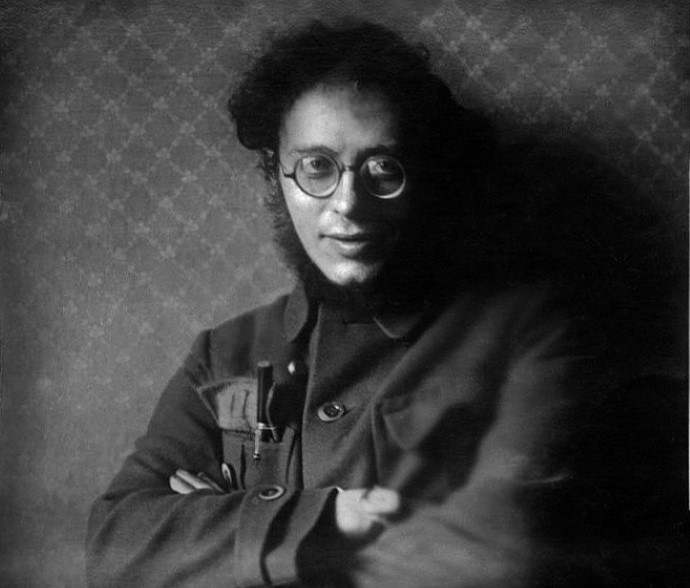
A major article from Karl Radek as he surveys international class and economic forces in the middle of the 1920s, as the German Revolution’s defeat left the Soviets isolated, European and U.S. capital largely stabilized, and the Chinese Revolution began–all in the context of the New Economic Policy within the Soviet Union.
‘World Capitalism and the Soviet Union’ by Karl Radek from International Press Correspondence. Vol. 5 Nos. 50 & 51. June 11 & 18, 1925.
I.
In the course of the last year the following two main phenomena could be observed in the economic development of the capitalist states: the first is the restoration of the system of international credit, the second is the commencement of the restoration of the shattered, or entirely collapsed, monetary system of the capitalist powers.
The Restoration of the Credit System.
In the year 1924 the United States of America exported 1,200,000,000 dollars abroad, to the Asiatic and European countries. This sum exceeds the total of all the capital exported from America during the last few years and apart from the war years constitutes a record figure as regards the export of capital from the country.
The United States of America, during the war and post- war period from 1914 to 1923 earned no less than 20 milliard dollars by exports to the belligerent country and to Central Europe. Of this sum the debts of the European powers to America alone amount, in round figures to 10 milliards.
From whence did the United States of American obtain this immense accumulation of capital which led to such an enormous export of capital? The correct answer to this question brings with it the answer to a no less essential question: whether we have to deal here with a temporary and accidental or with a permanent phenomena connected with the entire economic life of the country. To what extent has the national wealth of America increased during this period: According to the calculations of the American census, in the year 1922 the national wealth of America was 50% greater than before the war. (In this calculation allowance is made for the depreciation of the dollar consequent on the increase of prices). As result of this accumulation of capital, there followed an enormous development, of industry. The accumulation of half of the gold reserves of the entire world in the cellars of the American banks led, however, to the reduction of the rate of interest. An American bank which lends money receives 2 to 2 1/2% interest, whilst Europe (not to mention such countries as Germany, where in the past year, in the provinces, 75% was a usual rate of interest) is paying back 8% for the loans received from America. Under such conditions contradictions naturally arose between the interests of industrial capital and the interests of finance capital. Whilst finance capital was interested in forcing up the rate of interest, industrial capital was interested in obtaining credits at a low rate of interest. The policy of the United States, however, was determined by industrial capital, whose representatives comprise the leading cadres of the Republican Party.
It was only the agrarian crisis, the crisis which arose as a result of the shrinkage of the market and through other complicated causes, and which forced the masses of the farmers into movement, which led to the victory of finance capital, Finance capital opened wide prospects to the peasant masses of enriching themselves at the cost of Europe, which is compelled to build up its economy with the help of American credits and thereby to increase its purchasing power as regards the products of American agriculture. In this manner an alliance was concluded between finance capital and the masses of the farmers, which led to a change in American politics. The United States of America decided to take an active part in the restoration of capitalist Europe. This policy is expressed before all by America seizing the initiative and carrying out the Experts’ Report, and by the fact that America really conducted the London Conference in the year 1924, the aim of which was to remove the Franco-German antagonism and to pacify Europe in order that capitalism might be put into working order again.
In addition to this diplomatic act, America also participated in the financing of European commerce and industry.
The 800 million goldmarks which the Anglo-American money market lent to Germany, the 100 million dollars Morgan placed at the disposal of the French government for the support of the Franc, the various private credits Germany for example received in the past year, besides the above-mentioned 300 million gold marks, private credits to the amount of one milliard this is characteristic of the commencement of the restoration of the system of international credit. If it is asked whether this implies a fundamental organic change, one is compelled to and in those countries where the rule of capitalism already belongs to a certain extent to history we speak here of Russia. Our advantage consists in the fact that we are creating many new things and can create them with the help of electricity. The steam basis of Russian industry is not very great and its basic capital has been consumed to a very great extent. Of the capitalist countries America is the first that is capable of developing its industry in this direction.
Let us mention a characteristic trifle: Before the war it had been calculated how much money Italy would require in order to go over to electricity and to free itself from the heavy tribute which it had to yield to other countries for coal. This sum amounted to half of the annual expenditure of this country for the war. Bourgeois Italy could not bring itself to expend this money for the reorganising of industry, it could, however, venture to squander far larger sums for war purposes. As a result it is now no longer in a position to go over to electrification.
For the capitalist countries, therefore, the way to the cheapening of goods is scarcely possible, all the more so as the policy of the trusts leads to higher prices.
II.
The Question of the Russian and Chinese Markets.
The only way left to international capitalism in order to solve the question of markets, is the second way: the capturing of new markets at any price. What new markets are to be obtained? If we consider such markets as the Japanese or Indian, we perceive that they are now developing their own industries, which very jealously oppose the intrusion of foreign goods. If we consider such markets as the countries of South America, we have to realise that their powers of absorption can only develop very slowly, as these countries are relatively very thinly populated.
In order to develop these countries by means of colonisation, it would be necessary to invest enormous amounts of capital, which are likewise not available. There remains only Russia and China, which constitute a huge market for international capital, not only because our Mudjik, as well as the Chinese peasant, requires everything from the linen goods to tractors etc., but also because the peasant population in Russia and China can give an equivalent in exchange. The whole of Europe is suffering from the fact that it has to purchase agricultural products from America. But what can it pay to America in return? It has to pay with what America already possesses with industrial products. Russia, therefore, is not only important for Europe as a market, but also as a source of raw materials and corn. God does not always punish the Bolsheviki with bad harvests! Agriculture is recovering more easily than industry, as its chief forces for the time being are still Nature and human labour power. This is the explanation why, in spite of the misery and the backwardness of our peasantry, we have been able to raise our agriculture up to 80% of the pre-war standard. If there had been no bad harvests, then we should this year have attained to the pre-war level of production. The basis of the progress of our agriculture is not yet technics, but the fact that the brain of the mudjik is becoming active that the revolution and the war have caused a profound psychological change among the peasantry.
We do not always notice that in our everyday work. Every foreigner however who has seen Russia before the war and who visits it today states, that there has been created for the first time in Russia a basis for a technical advance in peasant economy, because the mudjik is beginning to think. He is no longer afraid of the tractors and other wonders from over the sea, but gladly accepts them. Russia can increase its agricultural export. It thereby offers European capital a huge and growing market.
If we now consider China, this country which, as regards its coal and iron resources, occupies the third place in the world and is thickly populated, it suffices to indicate the possibilities of development if one says that China is already today carrying on a foreign trade equal in value to three milliard gold roubles, although capital has only penetrated into the narrow coast districts.
China is looked upon even today as a medieval feudal power. This view, however, is absolutely false. Manchuria alone which during the Russo-Japanese war from the standpoint of commerce, was of no importance, is now exporting 100 million puds of various kinds of grain yearly, a fifth of the Russian pre-war export. China constitutes today a new gigantic market, which, should world capital succeed in capturing, would serve as that decisive and vast reservoir with the help of which world capital would really be able to extricate itself from the morass of the last imperialist war.
At present one might say the following: In Western Europe, world capitalism, with the help of English and American capital, is working feverishly to restore the conditions for stabilising the social relations of the pe-war period, and is undoubtedly achieving considerable results in this direction, in the first place in the sphere of the restoration of the world economic system. We know from our own experience what the stabilisation of the valuta means in this connection. The situation of the workers in Russia is at present still far from being a splendid one. The fact, however, that the country possesses a stable valuta must have a correspondingly favourable effect upon the workers’ household budget. The same applies to the State budget, and to economic life in general.
That which we are witnessing in this connection in Russia, is not absent in the capitalist countries. The stabilisation of the valuta is the most important basis for the restoration of the whole economic life.
Let us now consider the present social and economic situation. Here we must in the first place examine the prospects of the struggle of international capital for new markets.
The Question of the Imperialist United Front.
The first question is whether world capital, in this fight for the extension of the markets, has succeeded in creating a united front. This question must be answered in the negative. Capitalism has not succeeded in setting up a united front, and it will hardly succeed in doing so in the future.
Why is it so difficult for the bourgeoisie to set up this united front? For the reason that politics is a tenfold more complicated thing than it appears to be if one only considers it schematically. England is pursuing the same aims as America the extension of the market, but in the first place for itself and not for the United States. And whilst the two States act together in certain questions, as, let us say, in the German reparation question, we see in other questions, likewise relating to Germany, that Germany becomes an object of an economic struggle between both parties. When the gold mark was introduced in Germany, the purpose of which was to cover the German mark, the question immediately arose, whether this gold mark should be based upon the dollar or the pound. If the gold mark rests upon the dollar basis, then it is dependent in the first place upon America, in the other case London would become the centre for discounting German bills of exchange. There is proceeding here an uninterrupted struggle between English and American capital over the question of the domination of Germany. American capital is the stronger, but English capital is more organically bound up with Germany. As a result of “common” actions and a hard struggle, the American banks have succeeded in grabbing the fourth part of the shares of the German Bank. We therefore see in this connection, as regards the stabilising of capitalist conditions in Germany, where America and England act together, an uninterrupted struggle, which prevents common action on the part of the capitalist sharks.
In the Far East, England and America are likewise acting together and are endeavouring by this means to open the Chinese markets for foreign capital. Here, however, England relies upon diplomatic privileges which she obtained before the war. America does not possess these to the same extend as England, Soviet Russia is also intervening and demanding the abolition of all diplomatic privileges, and thereby delivers a blow to England and America. To the Americans there naturally occurs the question: why should one expose oneself to blows over that which one does not possess? As a result of the difference in the situation of England and America in the Far East, and as a result of our strong attack in the question of privileges, the American Ambassador delivered a speech in which he advocated the gradual abolition of privileges. The united front here possesses just as little stability as it does in regard to the German question.
The interests of England and America are equally divergent in regard to Russia. So far as American interests are concerned, America would not suffer if we were suddenly to disappear from the face of the earth, as one of the main questions of American economy is the question of the market for agricultural products. America does not want any agricultural competition at present. The Americans, while endeavouring to hold up the restoration of the economic power of the Soviet Republic, hope at the same time to go over mainly to cattle breeding, as then Russia would not only not be an unpleasant competitor for them, but would be required by them as being a huge market for supplying corn and grain. Professor Tuleikov was right when he pointed out the hope prevailing in American circles that in 15 years America would begin to import corn, and that Siberia would then have to feed the west coast of America. In war and in economics, more than in anything else, everything depends upon time. At present it is to the advantage of America to postpone the economic reconstruction of Russia. England, on the other hand, which at present has to purchase from America, cotton, corn and many other articles of food, and in this respect is dependent upon the United States, would be able to free itself from this dependence to the extent to which the Russian grain market developed.
These two great capitalist powers have united for the time being in order to wring concessions from the Soviet Union. If their efforts however are shattered by our resistance, then each of them will proceed separately and there will be no talk of united action.
If, however, the Soviet Union agrees to grant concessions, then the question arises: what concessions shall be made and to whom shall they be granted? For Russia it is more advantageous to grant concessions to American oil Trusts than to English oil Trusts, as America is not in close contact with the Far East, which cannot be said of England. In the Far East there meet Japan, the Soviet Union and China. If Japan abandons the idea of territorial conquests in China, then a certain unity can be established between the Soviet Union, China and Japan against England and America.
The above, even if somewhat rough sketch of the world situation shows that capitalism will hardly succeed in creating a united front.
Besides America and England, there are a whole number of capitalist countries Germany, France, Italy etc. and also many smaller capitalist countries. Should the united front be organised, and should this united front be victorious, then those countries would reap the benefit of it who command this united front. They only need the smaller countries so long as the united front is maintained. When the united front has achieved its object, then these little countries will no longer be necessary. The little countries perceive this quite clearly, and this explains their inclination to unite with us, which fact does not conduce to strengthen the bourgeois united front.
These are the general prospects. Will the creation of the united front be achieved? Even should it succeed, this front could not be regarded as a strong one; it would be incapable of solving the tasks imposed upon it.
The strengthening of capitalism is unavoidably accompanied by capitalist antagonisms. In 1924 we experienced an improvement in the relations between Germany and France. This is an objective fact, which is due to the circumstance that Germany is paying as much as it can, quite apart from any good will to pay. The paying machine is functionally mechanically. Germany is now raising the money. But will Germany be able to deliver over this money without seriously shaking its monetary system? This will only be seen in three years time, when the carrying out of the Experts’ Report passes from the phase of raising the money in Germany to the phase of paying over the same. This will be a period of fresh debates and, perhaps, of the collapse of the whole policy of the Experts’ Report.
America is endeavouring to work out on paper the peace between France and Germany, in order to be able to say to France: “My dear Sirs, nobody threatens you any longer, reduce your army and pay us back your debts”. But France is not keen on doing this.
Now we come to the Anglo-French Front. During the last few years the struggle between France and England for hegemony played a very great role, nevertheless there is to be recorded here a diminution of the antagonisms, due to the fact that France, as a result of the collapse of the franc, is no longer in a position to supply its vassals with money, and is naturally losing influence. If Poland receives 35 million dollars from America, then it follows that Poland must to this extent dance according to the tune played by Washington and New York and to the same extent must turn away from France.
The same also applies to Czecho-Slovakia.
As soon as France and England become more dependent upon America, the small European states become less dependent upon France. For this reason France does not for the moment constitute a great danger for England. England, however, wishes to consolidate this truce. But then the difficulties in the East come to the forefront, England is endeavouring, by making concessions to France, to secure its rear in its actions in the East. In this respect its calculations are very simple and extremely “innocent”. It believes that Germany, in the event of the success of the stabilisation of capitalism, would in five years constitute a strong power. Who else has such a huge chemical industry as the Germans? And even if they at present have no cannons, they will nevertheless remain a great capitalist power. And when the moment arrives, that is to say, when Germany becomes strong, so thinks England, then it will be possible to withdraw the concessions granted to France.

For the time being we see here a certain truce.
The Situation in the East.
How is it now with that stretch of front where the struggle for the market is taking place, the front of the East?
In the first place there is to be noted here a gradual but steady growth in the national revolutionary movement in all countries of the East. There exists a whole literature in England which calls attention to these facts ten times as often as we do in our literature.
The most important symptoms of the growth of the national revolutionary movement in the East consist in the following: first, in the economic growth of the Eastern bourgeoisie, which is based on the fact that during the war European capital was not capable of supplying the Oriental countries with a sufficient quantity of goods, so that they began to develop their own industries.
In the meantime there arises among this oriental bourgeoisie the natural fear of the competition of foreign capital. This not only applies to China but to all other Eastern countries, as for example Turkey, where the policy of the government consists in restricting the importation of foreign goods in order to render possible the growth of Turkish industry and Turkish commerce. The expulsion of the Greeks and Armenians has the same purpose protection of native capital from foreign competition.
The second cause of the intensification of the revolutionary crisis in the East consists in the growth of national consciousness among the native intelligentzia. In all young bourgeois countries the intelligentzia, at the commencement of the liberation movement, plays the first fiddle. This was the case with us in Russia before 1905, and is the case today in the East. Before the war the Eastern intelligentzia looked up to the European and American Democracy. The strongest of those capitalist powers which were in close contact with the East was America. And America defended the policy of the so-called “open door”, it posed as the defender of the independence of China against England, Russia and Japan. Leading American politicians took India under their protection. The emigration, workers, merchants, and in fact all oriental people living in America, were enthusiastic over American Democracy, where every foreigner settling there is granted full rights of citizenship.
But in the course of time the mass of the oriental intelligentzia perceived the true features of this Democracy, and in what consists the nature of American “self-determination of the peoples”. When, after the Versailles Peace Conference, the province of Shantung with its population of 40 millions was cut off from China and was made a “present” of to Japan, this fact served to enlighten the Eastern intelligentzia better than any propaganda as to what is the real attitude of bourgeois democracy towards the national movement. It is not surprising that we see at present in the East an ideological revulsion of the intelligentzia from Europe and America, a revulsion which at times assumes the form of reaction against European civilisation in general.
The third factor is the growth of the workers’ and peasants’ movement. The movement of the labouring masses in such countries as China and India is on the same level as was the Russian labour movement in the year 1896. It is the first mass movement of the proletariat.
Along with the mass struggles there is proceeding the creation of Communist Parties. The Russian proletariat, from the year 1896, had to carry on its fight for another ten years before it arrived at its first revolution. We hope and this hope is based upon objective facts that the East will traverse this road at a more rapid rate and with better results than the Russian revolution of 1905.
The revolutionary movement of the East is a factor the importance of which we underestimated.
When we consider the situation in Egypt, which was clearly illuminated by the bomb thrown at the English Sirdar this also can hardly be considered as a sign of the stabilisation of capitalist conditions, when we remember that the bomb was thrown by a railway worker we must again and again emphasise that the national movement in the East has not only seized the intelligentzia, but also the broad masses of the people, and that the chief task of world imperialism the extension of the markets by intensified exploitation of the colonies and suppression of the Eastern countries, will meet with other resistance than was formerly the case.
The Foreign Political Prospects of the Soviet Union.
When we speak of the prospects of the Soviet Union we must take into consideration two aspects: the relation between the proletariat and the peasantry, and the extent and the force of the pressure of the foreign capitalists upon the Soviet Union. The question is, whether we shall be able to come to an agreement with the capitalists regarding the conditions on the basis of which we shall be able to live until the next rise of the European revolution, not only as a Soviet State, but for that aim for which we were established: for the development of socialism. We are profoundly convinced that the next few years will bring with them a real agreement with world capital. This conviction is based upon the simple fact that the capitalist great powers have divergent interests regarding us. The attempt to exercise a joint and permanent pressure will end in failure.
The question now is, whether they will be able to reconcile themselves to the existence of a workers’ and peasants’ Republic. If they are not able do so, then they can do what they please. The main question is, whether they can destroy this Republic. They have already attempted it by military means but they did not succeed. They will not succeed in the next few years in mobilising the masses of the peoples in their States against us. Can they strangle us economically? Can they carry out an economic boycott against us? It is easy for America to speak of an economic boycott, as she does not need us; England can also play with this policy for a certain time, but the smaller countries such as Germany, Italy, Belgium, France etc., which have no oil and are interested in our benzine, cannot carry out a consistent boycott. They will attempt to intimidate us, but our situation is more favourable than theirs and we will find the necessary means in order to shatter their united front. The question of the Russian debts is bound up with the question of the inter-allied debts. We are interested in postponing the solution of this question. Should it prove that the allies can only extract from France 10% of its old debts, why should we be better payers of debts than France? In practical politics what will decide this question is, whether we conclude an agreement at the moment when we have a good harvest and whether the allies will recognise that we are not afraid of their pressure, or whether this agreement is concluded at time when our country is in a difficult situation.
The chief peculiarity of the policy of the Soviet Union consists in the fact that Russia, in spite of all its poverty, can, thanks to its vast extent, afford to wait its own time.
We are confronted with a period of pressure, a period which will be accompanied by a whole number of various threats, but which we shall survive, and which, in all probability, will smooth the way to agreements which will permit us not only to maintain, but also to develop our socialist State.

In regard to the Russian revolution, world capital exhibited the following phases: In the year 1919 it attempted to strangle Soviet Russia, it attempted to buy a part of the working class and to crush the steadfast revolutionary part. We had at that time, on the one hand, the intervention in Russia and the crushing of the Spartacists in Germany, and on the other hand, the promises of the socialising of industry in Germany, France and England, the extension of the suffrage to the workers etc. In spite of this world capital did not succeed in strangling us. The second phase consisted in the attempt to negotiate with us and to strangle the revolution in the East. In 1921 the imperialists negotiated with us in Genoa and shot down the Turks. They reckoned that if they succeeded in strangling our revolutionary rearguard we would have to capitulate.
The third phase began when they perceived that we were not throttled by the famine catastrophe and that the NEP did not mean a return to old capitalist politics. Then, in the year 1923, there set in the Curzon policy. It consisted in the attempt to come to an understanding with the East, with the Turks, and to exert pressure upon us. To this period belongs the Peace of Lausanne and the Ultimatum which was submitted to us. This attempt to divide the main forces of the world revolution from each other ended in defeat. To-day we are witnessing the preparation for a simultaneous attack against the East, against us, and also against the European proletariat.
This shows that the enemy is compelled to deliver blows simultaneously on all fronts. But he is over-estimating his forces and will be defeated.
International Press Correspondence, widely known as”Inprecorr” was published by the Executive Committee of the Communist International (ECCI) regularly in German and English, occasionally in many other languages, beginning in 1921 and lasting in English until 1938. Inprecorr’s role was to supply translated articles to the English-speaking press of the International from the Comintern’s different sections, as well as news and statements from the ECCI. Many ‘Daily Worker’ and ‘Communist’ articles originated in Inprecorr, and it also published articles by American comrades for use in other countries. It was published at least weekly, and often thrice weekly. Inprecorr is an invaluable English-language source on the history of the Communist International and its sections.
PDF of issue 1: https://www.marxists.org/history/international/comintern/inprecor/1925/v05n50-jun-11-1925-inprecor.pdf
PDF of issue 2: https://www.marxists.org/history/international/comintern/inprecor/1925/v05n50-jun-11-1925-inprecor.pdf
 Revolution's Newsstand