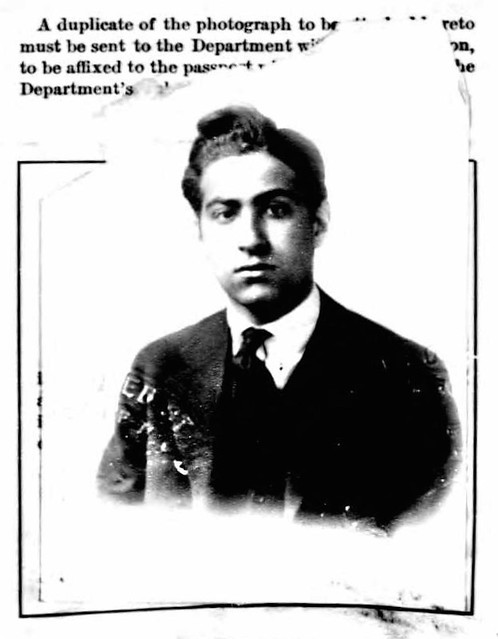
As 1923’s Farmer-Labor Party turned into a debacle and U.S. imperialism and its economy stabilized and expanded in the 1920s, a key debate of the factional struggle in the Communist Party was the impact of empire on U.S. workers and the subsequent need for moderations of Communist policy. As a leading member of the ‘Foster-Cannon’ faction Manuel Gomez (born Charles Phillips, he took the name Gomez while living in Mexico on the run from World War One draft evasion) gives the ‘left’ position against the Ruthenberg-Lovestone ‘right’ faction. In essence, the question was whether workers here would have to go through a Social Democratic stage before reaching Communist conclusions. A debate the left has had since.
‘Labor and Empire’ by Manuel Gomez (Charles Phillips) from Workers Monthly. Vol. 4 No. 9. July, 1925.
NATIONS are not great works of statuary carved out of a single rock. They are stratified into classes and groups. We must clearly distinguish the interests of the oppressed classes, of the workers, of the exploited, from the general conception of “national interests” which in reality means the interests of the ruling class.
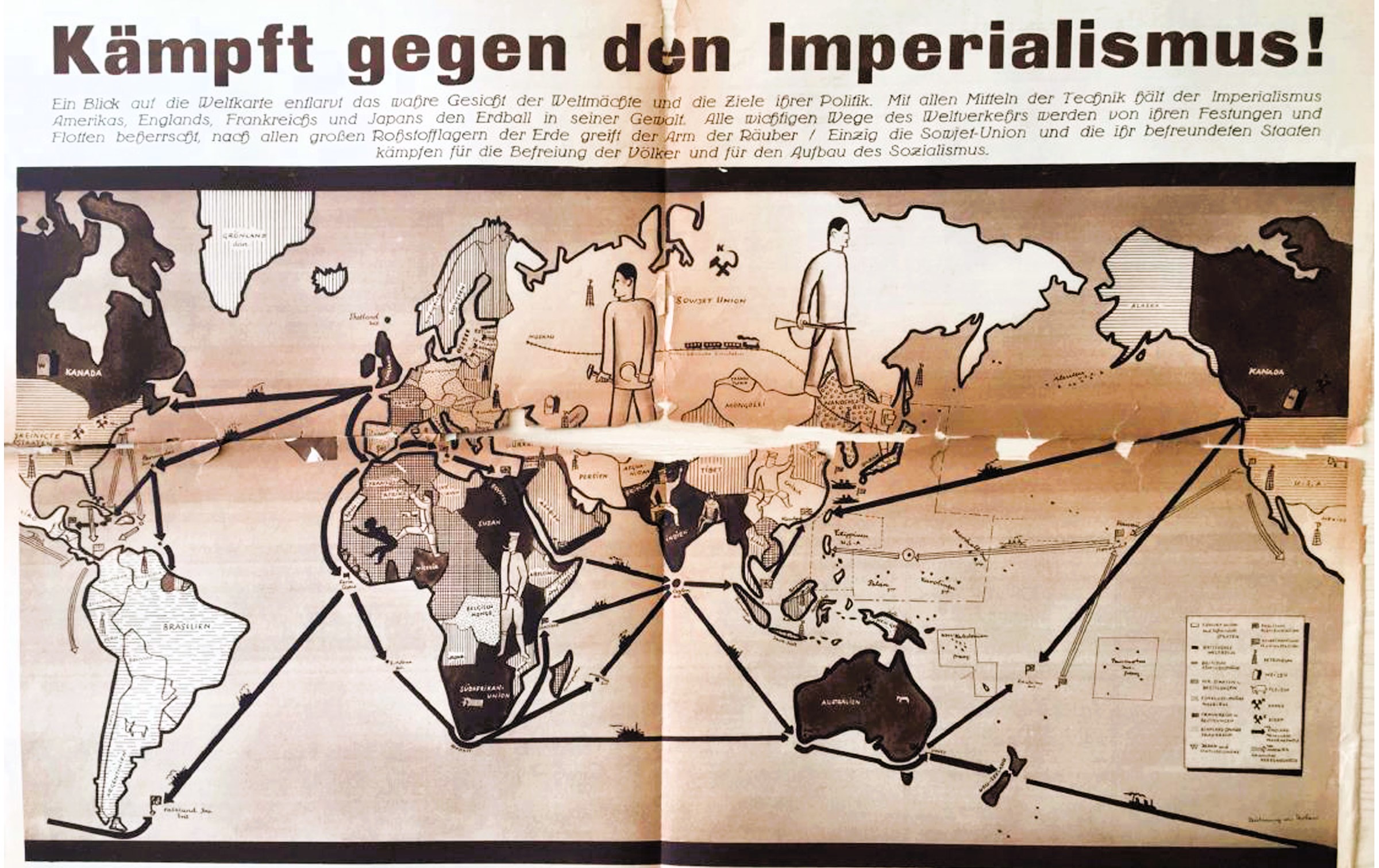
While the capitalists of this country reap royal harvests from America’s imperialistic ventures, the tolling masses enjoy no such benefits. For them, imperialism yields only greater hardships and increased suffering. Consequently it is not difficult to understand why the workers fail to enthuse with the capitalists over the new aggressions in China, the cynical blackmail plot against Mexico, the scurtling of Santo Domingo or the continued enslavement of the Filipinos. Sometimes the masses have been swept along the opposite path by false leaders but their underlying anti-imperialistic tendency has always been apparent. In general they have sympathized with every effort of the oppressed peoples to free themselves from the grip of Wall Street. In spite of the flag-waving pan-Americanism of a small section of the workers, which has recently gone over to the bosses, conditions are bringing about a natural partnership of struggle between the exploited workers of the United States and the oppressed peoples of the American Empire which must become a conscious alliance as the working class awakens more and more to its own historic interests.
Historic Background of Imperialism.
American workers might have already thrown off the whole system of wage slavery if it were not for the appearance of imperialism—as would certainly have been the case with the wage-earners of Great Britain, France and the other capitalistic countries of Europe. Everyone knows that there are fundamental contradictions in the capitalist system which made its life stormy and precarious even in comparatively early stages of its development. A long series of European working-class revolts culminated in the Paris Commune of 1871. The power of resistance of capitalism was weak, the rate of profit was falling steadily, a huge mass of surplus capital was piling up which could not be absorbed into industry. In the United States the same factors, appearing later and in necessarily modified form, were reflected in the bloody railroad strikes of 1870, the great Knights of Labor strike on the Gould lines in 1885, the fierce and all-enveloping Eight Hour Struggle of 1886, the Homestead Strike of 1892, the rail strikes of 1893 and the famous Pullman strike of 1894. Then followed a long period of the so-called peaceful development of capitalism, broken only by localized conflicts, such as the Ludlow massacre, the Lawrence and Paterson textile strikes, etc. The opportunistic Socialist Party had its origin and development during this epoch. In Europe, the Social-Democratic parties built themselves into mass organizations. The “peaceful period of capitalism” was an international phenomenon, as Lenin has shown us. It was purchased at the expense of the backward and undeveloped countries of Asia, Africa and Latin America, through the policy of imperialism.
Obliged through the pressure of internal contradictions to shift to a new basis, capitalism spread out and embraced the world, striving to fit the undeveloped areas into a special] place in an imperial system of economy founded upon conquest.
Super-Profits.
It was the development of monopoly which provided the method and created the physical possibility of exploiting these new territories. Each powerful! national group strove to monopolize for itself the vast stores of raw material, the markets and the investment fields of the backward countries, and to incorporate the1a in its own economic system. Hither to American capitalists had been satisfied to draw upon the raw materials of the undeveloped West, and they did not have sufficient capital to think of conquering new investment fields, but in 1898 they suddenly provoked an imperialist war with Spain, tearing away Cuba, Porto Rico, Guam and the Philippines. That was the beginning of the period of aggressive development of the American Empire, which has since subjected, directly and indirectly, over three-quarters of a million square miles in Latin America and the Far East, and which is now reaching out for the whole world. Working-class lives have been sacrificed in the struggle for the American Empire, and workers have dug the coal and forged the steel and built the ships that went into the winning of it, but the empire does not belong to the workers; it is the empire of Morgan and Rockefeller and the Wall Street financial oligarchy, which controls the government and uses it for its imperialist purposes.
In the colonial and semi-colonial countries raw materials are plentiful, land is cheap and labor can be had for next to nothing. American textile workers are paid little enough— when they are working, which is not very often these days— but unskilled textile workers in Central China work for from 75 cents to $1.50 a week! In the mines and oilfields of Bolivia, the workers receive less than one-tenth of the wage paid to unskilled workers in the same industries in this country. And in Haiti and Santo Domingo the natives have been made to work for practically nothing at all, by the simple process of rounding them up in chain gangs and sending them out on the roads to labor twelve hours a day under a heavy guard of United States marines. Wherever a strike situation develops American warships or troops are called into action, or—as in Chile and the banana-producing realm of the United Fruit Co. in Central America—the native government is prevailed upon to furnish the necessary troops. With all these “natural advantages,” and the added factor of monopoly control (established through the exaction of “concessions,” through special provisions of forced loans and through downright robbery), it is not to be wondered at that the profits in colonial and semi-colonial countries are enormous.
Figures printed elsewhere in this issue of the WORKERS MONTHLY give some idea of Wall Street’s return from its “colonial” investment during the past year. Profits of 1,000 per cent on the capital exported are not unheard of. It will be seen that properly safeguarded investments in undeveloped countries return far more than what is considered a handsome profit at home, far more even than monopoly profit. In fact they yield a super-profit. If the capitalists can continue to gain super-profits from their imperialist ventures abroad they may well resign themselves to more moderate profits at the seat of empire.
In the last analysis super-profit may be said to result from : (1.) the greatly increased rate of exploitation (as reflected in the composition of the capital employed, which in backward countries shows a much greater proportion of variable capital to constant); (2.) the exaggerated extension of monopoly characteristics in dependent countries; (3.) the pressure of the imperialist state in the acquisition of “concessions,” spheres of influence or colonial possession; (4.) robbery of virgin resources.
The first point is cardinal. It is a simple law of capitalism that profit is in all cases obtained from the surplus value produced by the workers, and the rate of profit increases with the increase of the variable factor in capital, that is, the amount of labor power, which produces more than its value, employed in relation to constant capital which reproduces itself in the process of production without adding to its own value—raw materials, machinery, buildings and so on. It is obvious that in a highly developed imperialist nation the industries have a higher composition of capital employed in them, and therefore a lower rate of exploitation, than the colonial or semi-colonial countries. Because of these factors, resulting in longer hours of labor, the rate of profit is naturally higher in the subject nations, and this with the items enumerated, is the explanation of the origin of super-profits.
Super-profit gained in the undeveloped countries is the mainstay of modern capitalism. Capitalism draws strength in the form of super-profits to struggle against its inherent contradictions and to continue its exploitation at home.
Imperialism and the Workers.
But the contradictions are not overcome, but magnified. Monopoly has not done away with competition, which is now the fierce and remorseless competition of huge militarized trusts competing on an international scale. A few powerful nations—of which the United States is now the most powerful—dominate all the others. They use every means to extend their monopoly control. They struggle to get hold of all important resources. Oil becomes a raw material of vital necessity and there is a mad scramble for oil lands; implacable rivalries spring up between the United States and England, rivalries which are intensified by clashes of interests at a hundred other points, and which can only be settled by the final arbiter—war! The World War and the military exploits since the war indicate how the capitalist order plunges to disaster in this, the final stage of capitalism.
The climax of the struggle to obtain super-profits is thus far different from the period of “peaceful development” which characterized its earlier stages. The world is completely partitioned, and every attempt to seize upon fresh areas for the export of capital is a challenge to some powerful overlord.
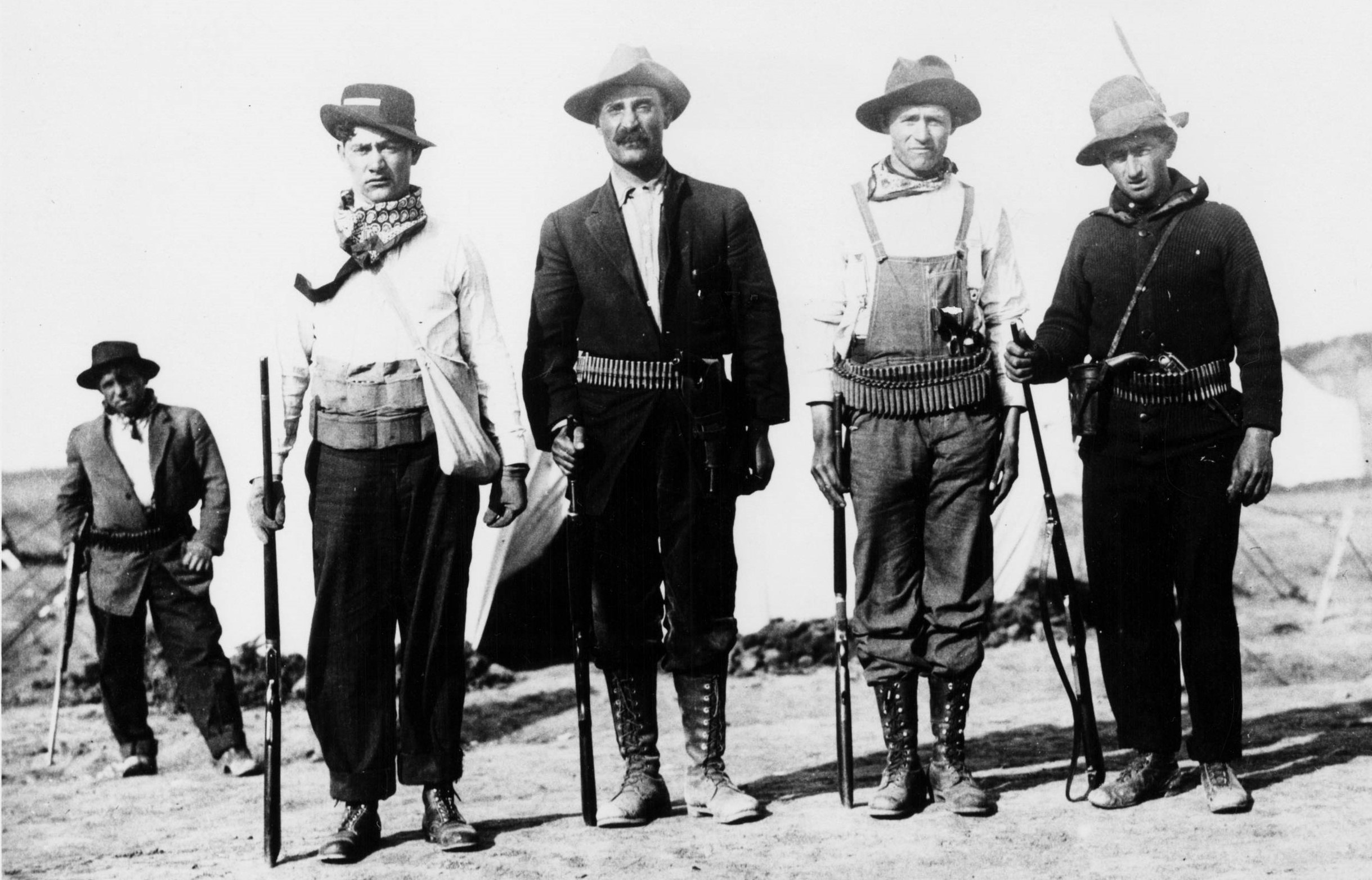
Within the imperialist nations the class antagonisms are also intensified, as a result of the deep-going imperialist crisis of capitalism brought to a head by the world war. In Germany, England, France and the other European countries this is obvious. Soviet Russia has overthrown capitalism and thereby created the first breach in the ring of imperialist states. And in the United States what has happened? We are not on the edge of proletarian revolution certainly, but who would say that we are still living in the “peaceful period” of 1894-1917? Not even in the pre-imperialist days before 1895 has there been such a series of titanic labor struggles in the United States as in the period since the war. First the great Steel Strike of 1919 led by William Z. Foster, then the first Coal Miners’ Strike, then the big “Outlaw Strike” on the railroads, then the second Miners’ Strike, the nation-wide Railway Shopmen’s Strike, the Textile Strikes of 1923-24. Palmer’s famous “Red Raids.” The assault upon the convention of the Communist Party in Berrien County, Michigan.
Pitched Battles in West Virginia and at Herrin, Illinois.
These events are all fresh in our minds. They indicate that imperialism has brought no permanent stabilization to capitalism. Imperialism, the source of the capitalists’ superprofits, weighs ever more heavily upon the workers. Just as the American coal magnates, through their monopoly control of both sections of the industry, are able to play off nonunion fields against union fields, so Wall Street plays off “cheap Mexican labor” or “cheap Chinese labor” against American labor. The average American worker may find it hard to realize that he can be at all affected by the competition of Latin Americans or Chinese or Filipinos, who are exploited under the worst conditions of imperialism and whose productivity is relatively low, but the competition is a fact. Just how much this can mean may be seen in the case of the Dundee textile workers in England, who have been so hard hit by cheap colonial competition that they recently sent special organizers to India to organize the native mill operatives—an excellent illustration of the importance of solidarity between the exploited workers in the home country of imperialism and the exploited toilers in the colonies!
The Anaconda Copper Mining Co. (controlled by the Rockefeller-Ryan interests) owns extensive properties in the United States, and it also owns the Chile Copper Co. in Chile. The Chile Copper Co. is a “low-cost producer.” It can make money even when copper is selling as low as nine cents a pound. Ananconda’s American properties find it hard to operate at a profit when copper goes much below fourteen cents a pound. When the price situation is unfavorable (or when there is a strike!) some of the American mines are shut down, while the Chilean mines are kept working.
Even where there is no conscious attempt to play off the underpaid colonial and semi-colonial toilers against Americans the effect of their competition remains, through the marketing of lower-priced goods produced by their labor. All unskilled workers feel this competition, which tends to get worse and worse with the progress of imperialism. Sections of the skilled workers feel it too, and these sections will now be greatly enlarged as a result of the Dawes Pian and other American monopolist schemes in Europe. Capitalism is every fleeing before the ghost of the Falling Rate of Profit. It yearns for the super-profits of the colonies and semi-colonies and strives to invest as much of its capital there as possible. The export of capital (as well as the war ventures and militarization which are inseparable from it) periodically stimulate certain industries at home to great activity—especially the iron and steel industry—but the other home industries lag behind. There is increasing unemployment. When, after each period of fitful activity the over-expanded steel and coal industries shut down, unemployment assumes tremendous proportions. During the present epoch of imperialism the life of the working-class family has become one of constant uncertainty and insecurity. No worker knows today if he will be working tomorrow. There are over 1,500,000 unemployed workers in England at the present time, and more than 2,000,000 in the United States.
Imperialism has made mass unemployment a permanent phenomenon. It has jeopardized and is actually forcing down the standard of living of the American workers. Moreover, it thas placed at the disposal of the capitalists a highly centralized governmental apparatus, such as never before existed in American history. Compulsory “arbitration” laws are passed, blanket injunctions are issued, the constitutionally guaranteed right of free speech is flatly denied by the Supreme Court. Militia and state police are called out in every important strike.
Only militant struggle can prevent the workers from losing all the hard-won gains of recent years.
Corruption of Labor Aristocracy.
It is to the trade unions that American workers naturally look for leadership in struggle. What do they find? A situation which tells them plainly that if they are to carry on a successful struggle against the bosses they will also have to do some struggling from the inside. The titular leaders of the unions refuse to lead. They sabotage the labor movement at every turn. Instead of attacking the bosses they concentrate their attacks on the left wing which calls for struggle. They try to defeat every attempt to strengthen the trade unions by amalgamation. Although the American working class is considerably less than 20 per cent organized, they make no sincere effort to organize the great mass of unorganized workers. A cynical bureaucracy, perpetuated through machine-made re-elections, the American labor officialdom is jealous of every progressive move that threatens its continued domination.
But this in itself is not sufficient to account for the utter sabotage of the unions by the leaders. The officials have another interest in wanting to keep the unions weak, aside from the fact that weak unions are easier to dominate. I refer to something so sinister and at the same time so essentially interlaced with all the activities of the American labor bureaucracy that it should make every worker do some serious thinking.
It is simply this: the material interests of the labor fakers are bound up with those of the bosses.
The labor fakers have one finger in the jam pot of superprofits. The returns from the exploitation of oppressed peoples abroad are so great that the capitalists can well afford to give up a small portion in order to insure smooth-running operation in the important home sector of imperialism, without which the whole imperial system would crash. It is not only labor fakers who are corrupted in this way, but the entire upper crust of the trade union movement, the so-called “labor aristocracy consisting principally of the most highly skilled workers and workers engaged in privileged trades. Such a privileged group of workers as the Brotherhood of Locomotive Engineers is not affected by the competition of colonial and semi-colonial labor in the same way as the great mass of unskilled workers are. Their wages are not lowered but increased and the increase really constitutes a share in the capitalists’ super-profits. Of course the increase is not permanent; as imperialism develops further, the privileges of even these aristocratic workers are being steadily undermined. There was a time when practically every section of the European labor movement was subsidized by a share in the super-profits from the colonies, and it was bitterly complained that the whole British working class was imperialist. The situation is far different today, with unemployment rampant and the standard of living being forced lower and lower. The honeymoon of the American labor aristocracy with the capitalist exploiters is bound to be short lived. Just at present, however, it gives the labor aristocrats partnership in the ugly business of imperialism and influences them against their own ultimate class interests.
This is the source from which has emanated a subtle poison permeating the ranks of the labor movement with a doctrine known as “class collaboration.” At a time when the bosses are carrying on a vicious series of “open shop” drives against the unions, at a time when the broad masses of workers in and out of the unions require leadership in unflinching struggle—the corrupted leaders blandly tell them that “the interests of capital and labor are identical.”
In Comrade Browder’s excellent pamphlet on “Class Struggle versus Class Collaboration,” published in the Little Red Library series, he sums up the outstanding phases of the campaign for class collaboration as follows:
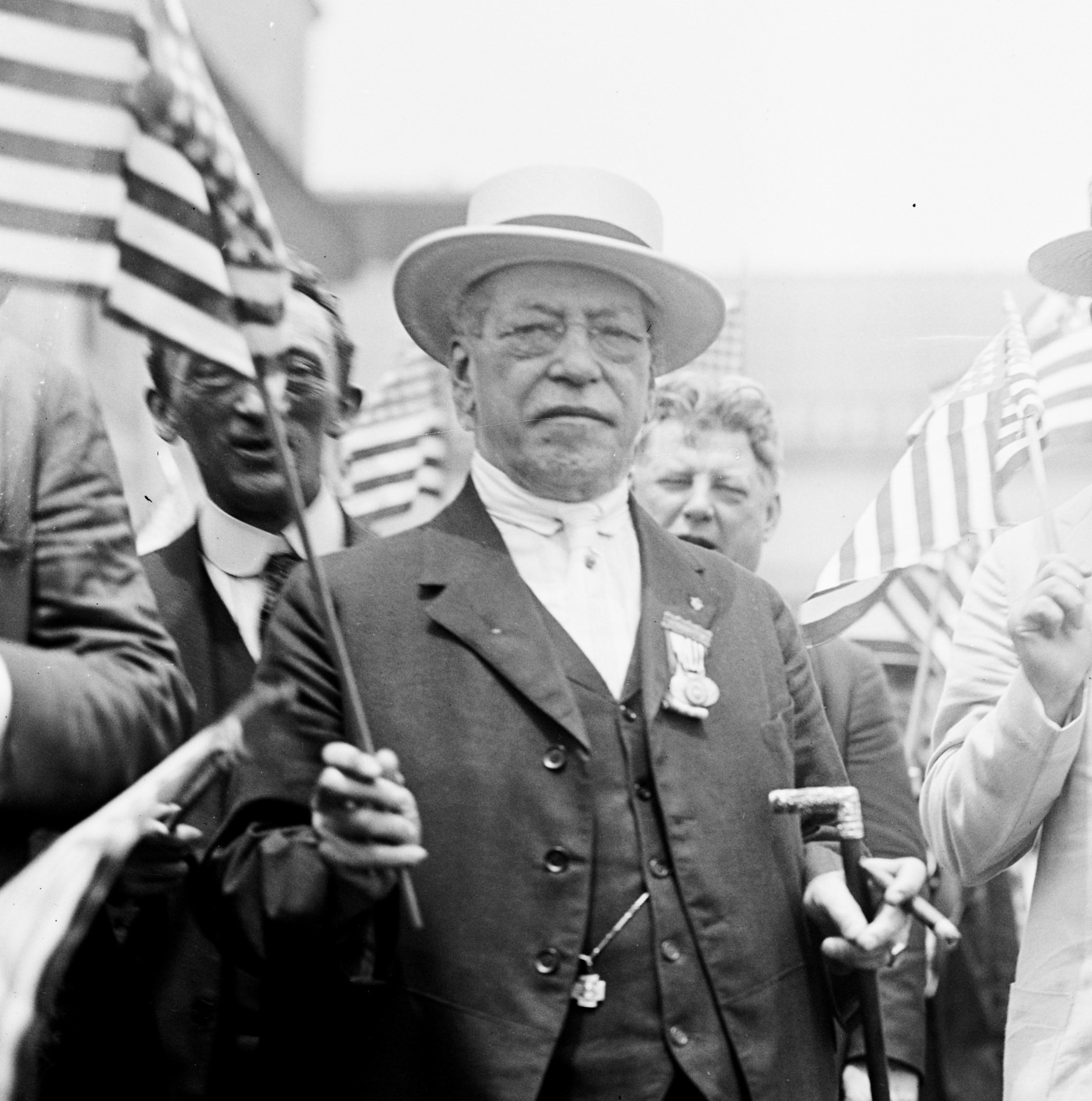
(1.) Establishment of “insurance benefits” as the dominant feature of the union’s daily activity; (2.) The epidemic of so-called labor banks; (3.) Special schemes for collaboration in the shops for reducing costs and speeding up production, such as the B. & O. plan; (4.) The systematic corruption of the minds of the more intelligent workers with a philosophy of class collaboration, through the instrumentality of so-called workers’ education, and (5.) The welding together of the entire official apparatus under the program of class collaboration, classic exposition of which was given by Samuel Gompers and Major Geo. L. Berry at the Portland Convention of the A. F. of L.
That such a program constitutes nothing less than abject slavery for the great mass of the workers is obvious to even the labor fakers. There is no real collaboration of classes under capitalism. The doctrine of “class collaboration” is an expression of the collaboration of capitalists and labor aristocracy to the detriment of the masses.
It is impossible to comprehend the real characteristics of class-collaborationism without understanding the corruption of privileged workers through a share in the superprofits. Capitalists do not share their super-profits willingly. (They do not share anything willingly!) But in rallying support for their imperialist ventures—and in the give and take of the day-to-day labor struggle—certain concessions are wrung from them on the basis of which the favored elements betray the class struggle and go over to the bourgeoisie. The process is not necessarily a conscious one on the part of either the privileged workers or the capitalists.
Nevertheless, it should be borne in mind that capitalism has learned a good deal since its early days and it does not underestimate the advantage of corrupting a whole section of the opposing class army.
The whole matter is not as simple as the payment of a bribe—although in the case of reactionary trade union officials, bribery, “rake-offs” and the awarding of all sorts of contracts are no inconsiderable item, as has been thoroughly proved in America before now. The selling out of the reactionary Officials is in this sense a special problem, which the workers will one day deal with as it deserves. As for the labor aristocracy, its share of the super-profits comes primarily in the form of increased wages—and indeed all other sources of its income really constitute an addition to wages. Some of the forms of division are significant, however.
None is more significant than that which is implied in the mechanics of “labor banking.” The rapid growth of the bank established by the Brotherhood of Locomotive Engineers gave impetus to the system, and at the last convention of the A. F. of L. it was reported that there were 30 such “labor banks” in operation with resources totaling $150,000,000, while about 60 more were in process of organization. Of all these, Browder points out in his pamphlet that the Amalgamated Trust & Savings Bank of the Amalgamated Clothing Workers is the only one that has been tinged with any real proletarian atmosphere, and for this apparent exception there is a reason which we do not have to go into here; suffice it to say that the Amalgamated officials are the only ones in the union who benefit by the bank. As a result of their banking business the Locomotive Engineers have secured an interest in the Empire Trust Co. of New York, where their officials sit side by side with Charles M. Schwab on the board of directors. Browder declares that “the bank has tied up the affairs of the Locomotive Engineers with the machinery of Wall Street so closely that it is questionable if it should still be called a labor union.” It is no more than natural that the financial ventures of the brotherhood officials should have led them finally to participate in the “open shop” drive of the bosses, such as transpired in their West Virginia mining properties where they refused to recognize the United Mine Workers of America.
It is also quite in the order of things that when the late Warren S. Stone was raised from Grand Chief Engineer to the newly created position of General President “in charge of all the various activities of the Brotherhood,” he was expected to devote most of his time to finance, insurance, etc., while the office of Grand Chief Engineer was made a secondary one, virtually subordinated to the financial department. William B. Prenter, the man who has been selected to succeed Stone as General President, has been occupied almost exclusively in the financial affairs of the organization.
The role of the banks in imperialism is well known. They are the unifying force that welds all other branches of capitalist industry together. Above all they are the principal exporters of capital. There is no mystery about the sharing of super-profits here. “Labor banking” gives those who benefit by it a direct stake in the exploitation of oppressed peoples.
One would expect to find the labor officials not only class-collaborationist but also imperialist, and that is just what we do find. They talk glibly of “our national interests,” vulgarizing the imperialist ideology of the bourgeoisie in all its phases. They are “100 per cent American,” that is jingoistic. They proved it by leading the working class like sheep to the slaughter of the imperialist World War. They have at last gone so far as to consummate an alliance between the A. F. of L. and the American Legion. Gompers appeared at a convention of the Legion for the first time in San Francisco four years ago. speaking from the same platform with Marshal Foch and General Josef Haller, notorious reactionary butcher of the Polish workers. Another guest of honor who had been invited to attend the convention but who was not able to be there was Mussolini!
The labor fakers are militant advocates of pan-Americanism. The Pan-American Federation of Labor, which was organized, financed and manipulated by Gompers, is the labor counterpart of the Pan American Union. Its political creed is the Monroe Doctrine and its purpose is to help consolidate American imperialist rule over Latin America. Its trumped-up conventions are devoted to whitewashing American imperialism, attacking the “reds” and evolving new schemes for smoothing out the road of empire among the Latin-American toilers. When a resolution of protest against American military rule in Santo Domingo and Nicaragua was introduced in the 1921 convention, at Mexico City, it was immediately choked off by the A. F. of L. bureaucrats and a substitute adopted praising the United States government for the benefits supposed to have been conferred on the occupied territories.
The A. F. of L. fakers have sought out and established connection with the ‘ worst traitors in Latin-America. Their two main supports are Luis N. Morones, known as the “Gompers of Mexico,” and Santiago Iglesias, the wily old boss of the Porto Rican labor movement. Iglesias is president of the Socialist Party of Porto Rico and A. F. of L. officials would not normally be expected to have anything to do with a socialist but there is a mitigating circumstance. The Socialist Party of Porto Rico is the chief opposition to the powerful Nationalist Party, which is backed by the majority of the Porto Rican people and which demands unconditional independence from the United States. Iglesias has come out strongly against independence. His socialism is a matter of words.
The full meaning of such doubtful Latin-American labor associations is nowhere more amply revealed than in the following paragraph, which was printed in the WORKERS MONTHLY for March, 1925, as translated from “El Machete” of Mexico City:
From the moment that the Pan-American Federation of Labor, on the motion of the Nicaraguan delegate, De la Selva, adopted a resolution approving the government of the new President of Nicaragua, we began to suspect that this president was a tool of American imperialism. But we could not expect that his servility to Wall Street and Washington would go even beyond the desire of the United States government in that respect. On January 12, the State Department at Washington acknowledged receipt of a petition from the Nicaraguan government requesting that the 100 American marines now in Nicaragua be not withdrawn. And on January 13 the State Department declared that the marines would be withdrawn in spite of the petition…
At any rate we are given an unprecedented opportunity to see what kind of Latin-American government receives the unanimous approval of the Pan-American Federation of Labor.
Thus far I have tried to show the following:
(1.) That by intense exploitation of subject peoples under the conditions of imperialism, the capitalists derive a super-profit which becomes the mainspring of imperialist relationships.
(2.) That as a result of this the capitalists are able to continue the system of wage slavery in the home countries of imperialism.
(3.) That imperialism thus becomes a burden not only upon the colonial and semi-colonial peoples, but upon the workers in the developed countries as well, whose condition moreover becomes worse and worse as the race for superprofits becomes hotter.
(4.) That the American workers are therefore obliged to struggle energetically to retain even their hard-won gains of the past.
(5.) That a section of the working class, including the trade union bureaucracy and the privileged workers, refuses to take part in the struggle and actually betrays it, having been won over to the bourgeoisie through a share in the super-profits.
(6.) That, sharing directly in the spoils of empire, these corrupted labor elements have a vested interest in imperialist expansion and become conscious or unconscious accomplices in the enslavement of subject peoples.
What I have not brought out except by inference is that the corruption of a section of the working class provides the basis for the policy of the Socialist Party policy and of social-democratic parties throughout the world. This was clearly proved by Comrade Bukharin in his answer to Boris at the fifth congress of the Communist International. Political reformism springs from the same economic soil as class collaborationism. It has the smell of super-profits upon it. That is the reason why the Second International never made any serious effort to grapple with the problem of imperialism, being content to adopt the comfortable position that the problem would solve itself with the establishment of the new social order in “the civilized countries.”
Workers, Subject Peoples, and the Revolution.
Unlike the Socialists, the Communists do not base their policies on a privileged group but on the needs of the broad masses. The lowest and most exploited strata of the working class are drawn into the struggle under their leadership. Capitalism must be overthrown! This is not the job of a group or a section, but of the entire working class.
It would be a mistake to draw too sharp a line between the labor aristocracy and the rest of the workers. The highly skilled operatives have not ceased to be wage-workers and they have not ceased to be exploited, despite their share in the super-profits. Concurrently with the tendency of the bosses to share with them there is a tendency to take away. All sorts of conflicting cross currents influence their reactions—and they will not be ultimately untrue to their historic interests as workers. While we fight to win the masses away from the leadership of these corrupted elements, we must endeavor to break the latter away from the bosses and to draw them more and more into the struggle. It is in unceasing struggle that the hope of the working class lies.
But however fine a struggle the workers put up in the developed countries it will not be easy to overthrow the capitalist order so long as the imperialists are not deprived of their source of super-profit in the subject nations. Here is where the importance of an alliance between the workers in the capitalist countries and the various oppressed peoples of imperialism comes in. Such an alliance would convert the colonies and semi-colonies from reserves of capitalism into so many strategic points for the revolution. By their export of capital, the capitalists have unwittingly helped to build up a native industry in the subject countries, with its own proletariat and bourgeoisie and its own intelligenzia whose aspirations for an independent national economy run directly counter to the interests of the imperialists. The widely noted “awakening of the east” is a result of this. Anti-imperialist movements striving toward national liberation have gained great headway in every colony and dependency of the American empire. The victory of the national liberation movements, together with the proletarian revolution in the imperialist countries will insure the overthrow of the capitalist system throughout the world.
If this common front against the common enemy is to be realized, however, the initiative must rest with the working class in the capitalist countries. Filipinos and Latin-Americans are, not unjustly, distrustful of all Americans as imperialists; the exploits of the Pan-American Federation of Labor have taught them to look with suspicion upon the friendship of even the workers. Our sincerity will be judged by deeds The key to sure policy toward the colonial and national liberation questions is in our understanding of the factor of super-profits. I shall close this article with a quotation from Comrade Bukharin which contains the kernel of the whole matter:
One of the most important differences between the Second and Third Internationals is the conception of imperialism, the conception that a few great powers exploit the colonies, receive super-profits from these colonies and by means of them corrupt some working class sections, which provide the basis for Social-Democratic policy…This conception is a strong weapon in our hands against social democracy, and against the imperialist policy of the bourgeoisie, a strong weapon which enables us to establish a connection between Western Europe and Asia, between the industrial proletariat and the backward colonial peoples. We have in this conception a connecting link between the revolution of the industrial proletariat and colonial rebellions, which in the trend of history are nothing but component parts of the world revolution.
The Workers Monthly began publishing in 1924 as a merger of the ‘Liberator’, the Trade Union Educational League magazine ‘Labor Herald’, and Friends of Soviet Russia’s monthly ‘Soviet Russia Pictorial’ as an explicitly Party publication. In 1927 Workers Monthly ceased and the Communist Party began publishing The Communist as its theoretical magazine. Editors included Earl Browder and Max Bedacht as the magazine continued the Liberator’s use of graphics and art.
PDF of full issue: https://www.marxists.org/history/usa/culture/pubs/wm/1925/v4n09-jul-1925.pdf
 Revolution's Newsstand