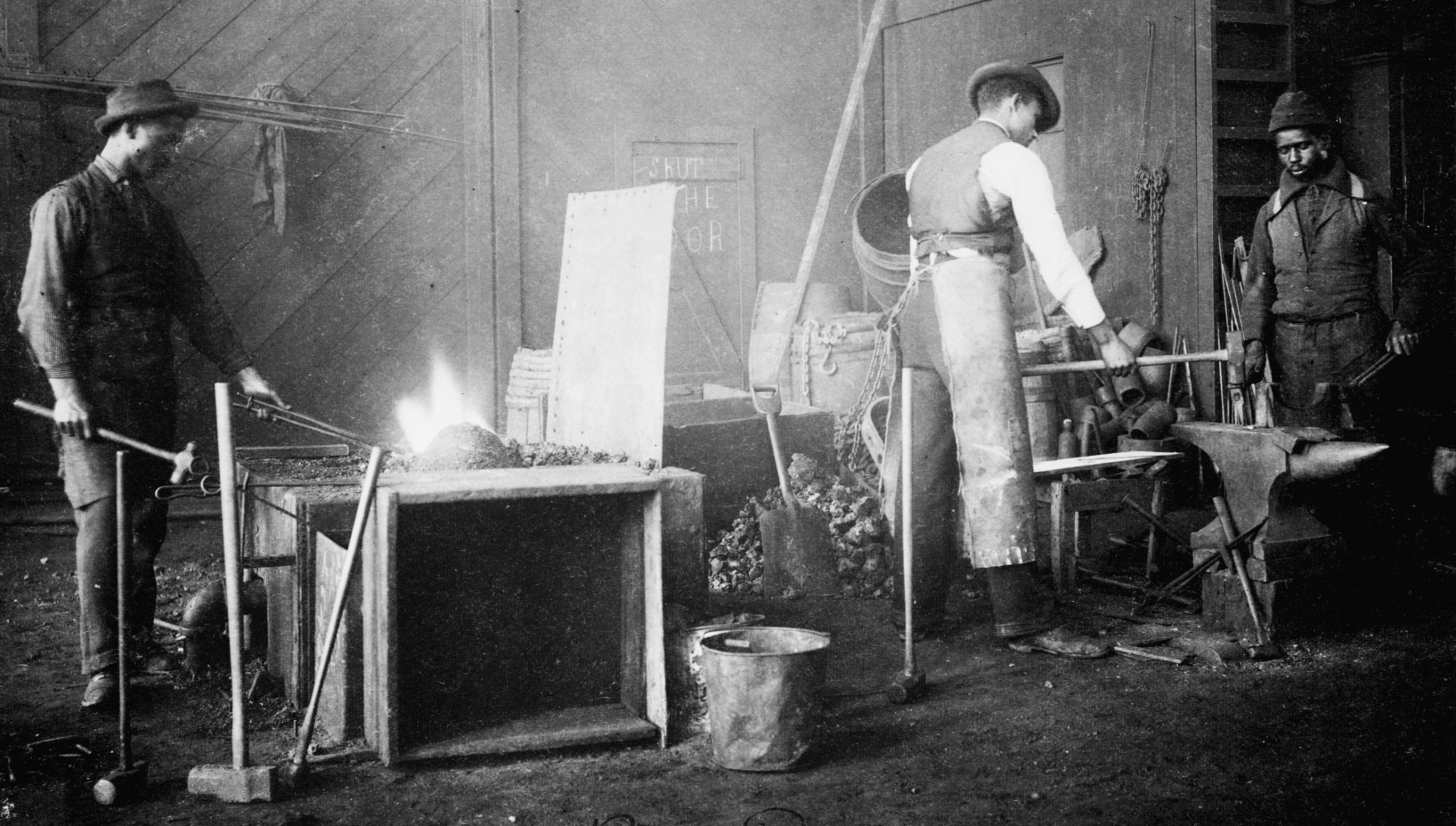
The greatest success the I.W.W. had in organizing Black workers was on the waterfronts of Mid-Atlantic ports into the Marine Transport Workers Industrial Union. Here, the appeal goes South as wobblies make their pitch in the shipyards of Norfolk, Virginia.
‘Appeal to the Colored Workers of Norfolk, Virginia’ from Solidarity. Vol. 8 No. 375. March 17, 1917.
TO COLORED FIREMEN, SAILORS, LONGSHOREMEN, COOKS, WAITERS, and All Workers Engaged in the Marine Transportation Industry in and Around Norfolk, Va.,
Wake up, colored Brother, shake your chains and be a man: don’t be a slave any longer. We, white workers in your industry, are members of a Union that has helped us a lot, and we want you in with us. You need us and we need you. So wake up, and come along with your fellow slaves, the white man, into the ranks of the Industrial Union of Marine, Transport Workers No, 100.
In Philadelphia, Boston, Providence and Baltimore the colored Marine workers are getting strong in this union. Why not all along the Atlantic Coast? Wouldn’t you like to be treated the same as a white union man? Are you unwilling to continue dragging the hated chains of the worst slavery ever known–wage slavery? Don’t you think the time has come when the tables should be turned, and instead of a difference of color keeping us from organizing together, that we should all UNITE in ONE BIG UNION in our industry so as to present a solid front to the bosses that have robbed and exploited both of us all our lives?
Yes, colored Brother, Labor is entitled to all it produces. You, like ourselves, are tired of being a slave all the time. You have in your veins red blood the same as we have, and a union of Marine workers cannot be strong until we join together in the union just as we work on the job. We are sure that you will listen to the words of your fellow-slaves, the white men. We don’t want to rule over you, or take your jobs because your color is darker than ours. This is what the parasites tell you, but it is not true. Our idea is to get all Marine Transport workers in One Big Union regardless of race or color or any other differences, in order to compel the bosses to give us a little more and, in time, all that we produce.
We recognize that you have the same rights on the job that we have; that workingmen of different races and colors are entitled to be I.W.W. men, to have equal rights in the union and to earn their living anywhere in the world.
The conditions aboard the ships and on the docks in Norfolk and further south are becoming worse every day. And it is caused by the existing division of colors and races. One man needs just as much food as another man, no matter what his color or race happens to be; and it takes as much for the comfort of one man’s family as it does another’s. It is the duty of EVERY workingman to do his share to better conditions and to demand more bread for our wives and children who are in need, not because we do not produce enough by our labor but because the bosses get all the product of our work and leave us just as little as they think we will be satisfied with.
We know that the bosses will tell you not to become Union men, because they are afraid you will then be able to force them to give you more of the good things of life that you earn every day and are entitled to. But don’t pay any attention to the words spoken by parasites who want to keep you divided to exploit you the better. Join the Union, whether they like it or not, and get in the fight for more wages, better conditions and shorter hours.
The initiation fee is $2.00 and the dues are 50 cents per month. Membership books may be obtained upon application in person to the Secretary in any port town or to delegates with credentials from the Union aboard ships. LINE UP!
JAS. PHILLIPS, J. OTERO, Organization Committee, Norfolk Branch, M.T.W., 100.
The most widely read of I.W.W. newspapers, Solidarity was published by the Industrial Workers of the World from 1909 until 1917. First produced in New Castle, Pennsylvania, and born during the McKees Rocks strike, Solidarity later moved to Cleveland, Ohio until 1917 then spent its last months in Chicago. With a circulation of around 12,000 and a readership many times that, Solidarity was instrumental in defining the Wobbly world-view at the height of their influence in the working class. It was edited over its life by A.M. Stirton, H.A. Goff, Ben H. Williams, Ralph Chaplin who also provided much of the paper’s color, and others. Like nearly all the left press it fell victim to federal repression in 1917.
PDF of full issue: https://www.marxists.org/history/usa/pubs/solidarity-iww/1917/v8-w375-mar-17-1917-solidarity.pdf
 Revolution's Newsstand