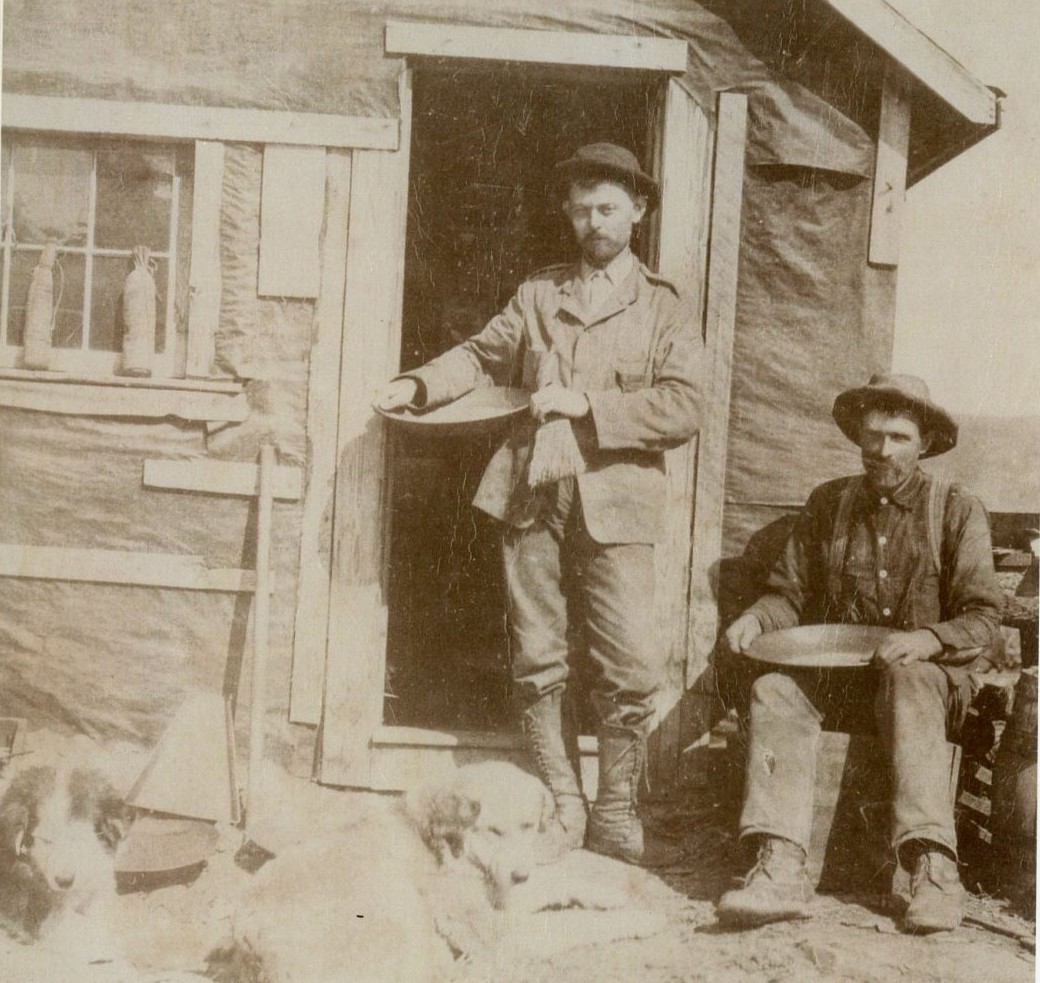
German-born Carl Wittman came to the U.S. as a boy, arriving in Alaska in 1900 where he spent ten years gold mining. Unusually, he made some money and used it to travel the world in his 20s, which made him an anti-imperialist. In 1911 while living in Hawaii he joined the Socialist Party and its Left Wing. Here, Wittman in furious form attacks Christian missionaries in the islands and the capitalist Empire they came with. In Europe between 1913-1916, Whittman would be a co-worker of Liebknecht and Otto Ruhle in the opposition to social-patriotism, reporting from Europe for the International Socialist Review. He returned to the U.S. in 1916 drifting from active politics, where he ran a small chicken farm in New Jersey and published a local paper, the Clarion, until 1950.
‘Capitalist Ethics–Destruction of People of Hawaii’ by Carl Wittman from Revolt (San Francisco). Vol. 2 No. 9. August 26, 1911.
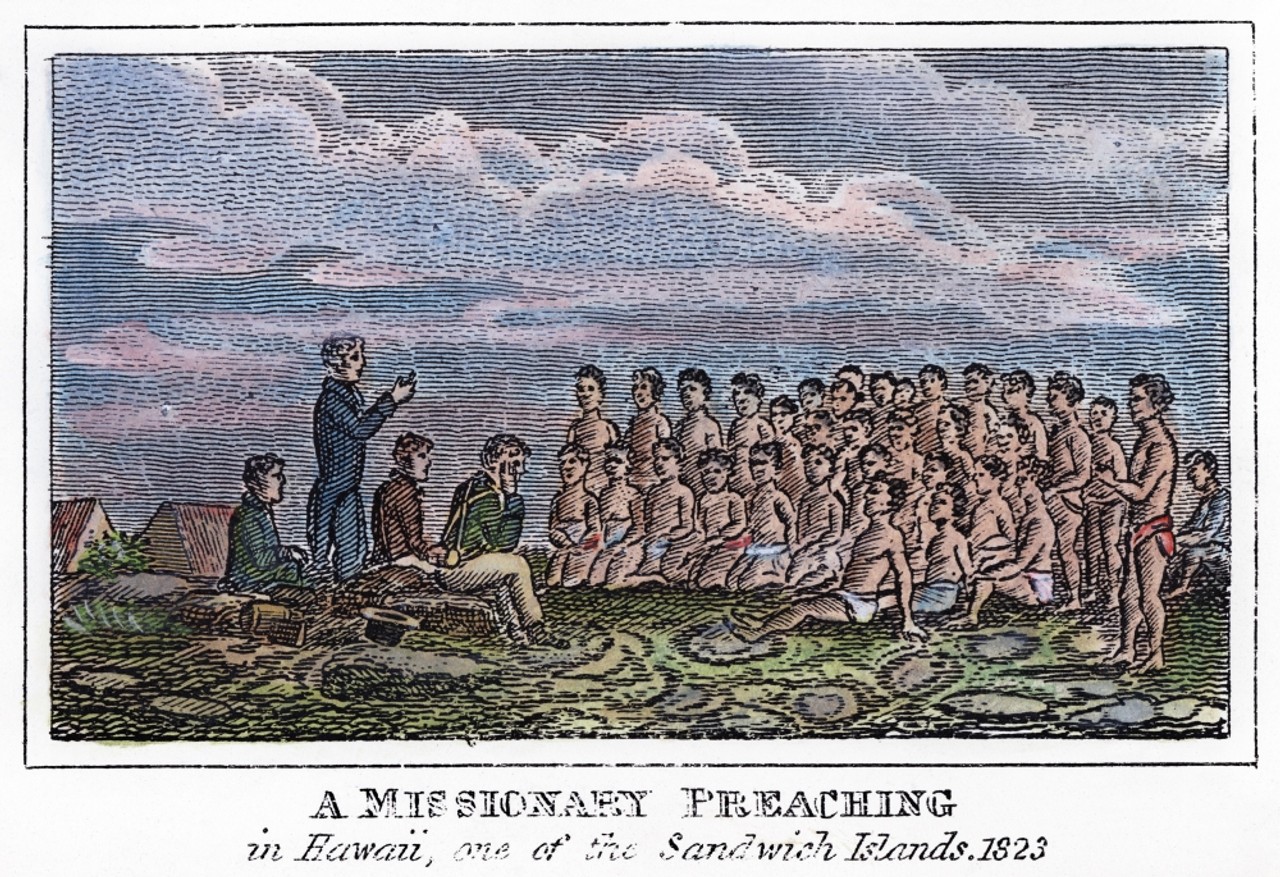
In years not long gone by, the “cream” of respectable society, some with the noble calling of open piracy sailing under the black flag, others with the divine inspiration to save souls and wearing the black cloth, came to Hawaii, the Eden of the mid-Pacific. England and New England, the home of squint-eyed Puritans, slave-traders and born flimflammers, vomited this gallant bunch of gentry and free samples of the meek profession on the Sandwich Island shores.
There is no intention to condemn or belittle all missionaries, lest we forget the sacrificing character of Father Damien or neglect to give due credit to others who do not use religion as a fig-leaf to cover their dirty deeds of piracy and murder. All missionaries are human, most of them all too human and some of them decidedly inhuman. They are part of a profession of which Jesus said, “Many are called but few are chosen.” There is honesty among thieves and yeggmen, likewise is there sincerity among missionaries. A few in spite of their calling are poor and modest men; the rest, thanks to their calling, which consists in fleecing the Christian dupe at home of his pennies and relieving in foreign lands the convert of his vulgarizing wealth, grow rich and fat like nabobs, get saucy and arrogant like wild-asses in the desert, sniffing the east wind.
Hawaii bears witness to the civilizing methods of Capitalism and the merits of Christianizing heathen races a la “come to Jesus via the sky-pilot,” who knows all about the route, while you don’t need to worry about the baggage.
The first step in the saving of a soul in the tropics or semi-tropics consists always in teaching the nature-man to cover his body with clothes. Thereby the morals of the savage are greatly improved; for Christian morals, at least in our days, depend largely upon the quantity of clothes people wear. Kind and quality depend more upon which class of Christians you belong to, the respectable exploiter and idle rich, the cream of society, the master and ruling class, or the exploiting slaves, the working class, the undesirables, the scum of society, the poor who get nothing but hell upon this earth but who shall inherit the kingdom of heaven in the sweet by and by the poor whom the rich shall have always with them to create wealth for them, so that they may prove themselves benevolent and parade their charity before God and their dupes. Next in the process of civilizing comes education. Real miracles were performed in these lines in Hawaii by the latter-day apostles. Of all bunco games bourgeois society with the Christian label works off on the unsuspecting natives, education is the nut-shell game. The hand is quicker than the eye; watch me. First the pupil is taught to write. This means he learns to make a cross on his first reader, of which also the educator holds a true copy, with the cross of the pupil opposite the signature of the teacher.
The First Reader, then, reads something like this:
“That I, the undersigned party of the first part, for and in consideration of the sum of one Mexican dollar, one brand-new prayer book with picture of the Lord feeding the multitude on six loaves of bread and one dozen fishes, one string of glass beads which shone like diamonds in the show window of Moses Hackfeld’s trading post, and six brilliant colored handkerchiefs, slightly used and otherwise as good as new (the receipt whereof is hereby acknowledged) have remised, released and quitclaimed, and do hereby remise, release and quitclaim unto my benefactor and educator, party of the second part, his heirs and assigns, forever, all the estate, right, title and interest of said party of the first part to party of the second part.
Signed:
Party of the first part,
Party of the second part, X; John Baptiste Righteous.”
Now the convert receives his certificate. By the signing of the cross his education is finished what he does not know now, he soon finds out. Too soon he finds out that the cocoanut grove that yielded such pure and sweet milk for his babies is his no more. Around the taro patch which had so abundantly supplied him with poi, his staple food, a fence is built, and at the gate is nailed a sign on which is written the inscription “Kapu,” meaning in plain English “Keep out,” or, still plainer, “No trespassing on this property.” Lo! the savage can read already, “Kapu.” Wonderful! Miraculous! How easy it is to educate when you get the right system, when you know how to apply it and have the firearms to back it up!
He has not yet been evicted from his grass hut, the family is not yet broken up, the home is still intact. The sea still gives up fish and the coral reefs shellfish whenever the tide goes out. But the mountains covered with bushes of guava are the only common property left.
By no fault of the natives the islands became pesthouses, incubators of contagious diseases brought there by pirate and missionary. For the sole interest and safety of the holy carcass of the pirate-missionary species, the grass hut of the native had to be burned down and up went the little sign “Kapu.” In Catholic countries of Europe you can hardly pass a tree along the public highways on whose trunk is not nailed a picture or crucifix of the lowly Nazarene. In Hawaii wherever you go “Kapu” stares you in the face at every turn. To mock Jesus, the Jews nailed up a sign with the inscription I.N.R.I. at the head of the cross. To the Hawaiian “Kapu” seems to have about the same meaning, and probably is there to remind them that they are also sons of God with crowns of thorns and without country. Adding insult to injury is in accord with Christian-capitalistic ethics and may be expected.

Out of 400,000 Hawaiians some hundred years ago, 35,000 are left to tell the tale. Fire water, the gracefully dodging missionary says, did all this mischief. Yes, “spirits” did it, all right, but not alcoholic spirits alone. The greedy spirit of private ownership, the greedy spirit of profits, the greedy spirit of interest. This Holy Trinity of spirits, so common among Christians, did it and not the spirit of booze. Whisky didn’t kill the Hawaiians any more than did the vinegar they passed to relieve Christ’s suffering on the cross.
“At the cross, at the cross, where they first saw the light,” by the signing of the cross to the deed, the unscrupulous Christian missionaries killed these Hawaiians. By the sign of the cross these conspiring sneakthieves cheated their unsuspecting converts out of land which no man has made, which no man has a moral right to hold for speculation and prevent his brother from using. By the sign of the cross these most holy criminals robbed babies in the cradle and children yet unborn, by monopolizing and appropriating their land. What moral right did their fathers have to sign away the land of their children, their birthright? What God or devil gave the missionary land-grabber the divine right to buy land no one had a right to sell? Does the Christian God mean the missionaries and their children should own the paradise in fee simple and all the rest of His children should be their slaves? Missionaries baptize little children so as to secure them an equal share in the heavenly paradise, with one hand, while with their other hand they rob them of their right to the earthly Eden. Is it more important to baptize children or to give them a free and equal share of land which they must have in order to live down here below?
You don’t have to be educated in Kamehameha School to know you can’t live down below on earth and board in heaven. Palama Settlement is sufficient proof for this statement. People of low caste who pay rent and interest, the exploited wage slaves who divide up with their bosses on pay day, their masters taking the lion’s share. leaving them just enough to exist on these feel the injustice; they know there is something rotten in the mid-Pacific Paradise. For one man to take away from thousands of others the land, the means of subsistence, is nothing short of high- way robbery. The educated millionaire and missionary also know it would be more respectable to hold up men on the street. But it takes courage to be a highway robber. It takes nerve to hold up men face to face. On Creation Day there was not enough courage to go around for the whole profession; some received only enough to be hypocrites enough to cheat men, rob women and steal from children. Behold your pious missionary millionaire, whole stole a paradise and murdered a race! Behold yon feudal planter, who with the aid of God and blacksnake runs the paradise for the benefit of “charity!” Behold their victims, the wreck of what has been once a proud race! Behold the few Hawaiians of today, physically unfit to compete with the hardened Oriental laborers, unable to compete with the cunning, unscrupulous white-faced scoundrels.
Tell us, do you still look to Christianity as the redeemer of mankind and bulwark for home and family? Tell us, do you still think private owner- ship and capital produce the highest type of men and lead toward a higher civilization? Are you willing to see your fellow men bleed and suffer without protest? Are you willing to see the Hawaiians die, die without a word in their behalf? Are you waiting for God or evolution to adjust everything in the sweet by and by?
No, the collection plate of a reactionary priesthood is not going to present you with the desired emancipation. You may also tip political flunkies with your vote till doomsday, they are not going to break your chains. Socialism is not by the grace of God dropping like manna from heaven. Socialism given as a present, socialism given out of charity is not worth having. You must demand it, fight for it, as for all other great economic changes which have been brought about. Five hundred thousand lives had to be sacrificed to abolish chattel slavery. Six hundred thousand wage slaves in the United States alone are maimed and sent to early graves every year. These are the sacrifices we are making for what? Why not make them in your own behalf? “Give us liberty or give us death!” was the battle-cry of the brave bourgeois one hundred and fifty years ago. A few respectables still like to call themselves “Sons of the Revolution.” “Millions of undesirables, the class-conscious proletariat, are preparing for their struggle, for freedom, for the coming revolution. What a privilege to join this world-movement! There lies your mighty opportunity-your only salvation.
Revolt ‘The Voice Of The Militant Worker’ was a short-lived revolutionary weekly newspaper published by Left Wingers in the Socialist Party in 1911 and 1912 and closely associated with Tom Mooney. The legendary activists and political prisoner Thomas J. Mooney had recently left the I.W.W. and settled in the Bay. He would join with the SP Left in the Bay Area, like Austin Lewis, William McDevitt, Nathan Greist, and Cloudseley Johns to produce The Revolt. The paper ran around 1500 copies weekly, but financial problems ended its run after one year. Mooney was also embroiled in constant legal battles for his role in the Pacific Gas and Electric Strike of the time. The paper epitomizes the revolutionary Left of the SP before World War One with its mix of Marxist orthodoxy, industrial unionism, and counter-cultural attitude. To that it adds some of the best writers in the movement; it deserved a much longer run.
PDF of full issue: https://www.marxists.org/history/usa/pubs/revolt/v2n09-aug-26-1911-Revolt.pdf
 Revolution's Newsstand