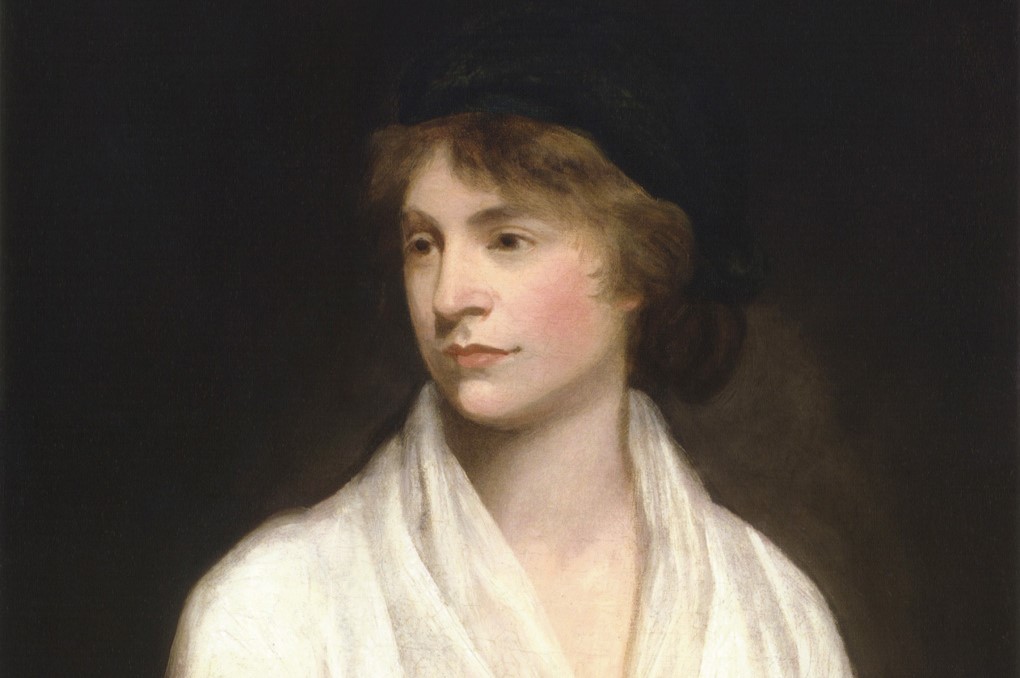
When this section of Mary Wollstonecraft’s ‘A Vindication of the Rights of Woman’ was printed in Mother Earth in 1916 it was remarked it was “written more than a hundred years ago but still of vital truth.” Now well over 200 years after the truth in this condemnation of the degrading power of property and its particular effects on women remains vital. From Chapter IX, ‘Of the Pernicious Effects Which Arise from the Unnatural Distinctions Established in Society.’
‘Women and Property’ (1792) by Mary Wollstonecraft from Mother Earth. Vol. 11 No. 6. August, 1916.
FROM the respect paid to property flow, as from a poisoned fountain, most of the evils and vices which render this world such a dreary scene to the contemplative mind. For it is in the most polished society that noisome reptiles and venomous serpents lurk under the rank herbage; and there is voluptuousness pampered by the still sultry air, which relaxes every good disposition before it ripens into virtue.
One class presses on another, for all are aiming to procure respect on account of their property; and property once gained will procure the respect due only to talents and virtue. Men neglect the duties incumbent on man, yet are treated like demi-gods. The world is almost, literally speaking, a den of sharpers or oppressors.
There is a homely proverb, which speaks a shrewd truth, that whoever the devil finds idle he will employ. And what but habitual idleness can hereditary wealth and titles produce? For man is so constituted that he can only attain a proper use of his faculties by exercising them, and will not exercise them unless necessity of some kind first set the wheels in motion, Virtue likewise can only be acquired by the discharge of relative duties; but the importance of these sacred duties will scarcely be felt by the being who is cajoled out of his humanity by the flattery of sycophants. There must be more equality established in society, or morality will never gain ground, and this virtuous equality will not rest firmly even when founded on a rock, if one-half of mankind be chained to its bottom by fate, for they will be continually undermining it through ignorance or pride.
It is vain to expect virtue from women till they are in some degree independent of men; nay, it is vain to expect that strength of natural affection which would make them good wives and mothers. Whilst they are absolutely dependent on their husbands they will be cunning, mean, and selfish; and the men who can be gratified by the fawning fondness of spaniel-like affection have not much delicacy, for love is not to be bought; in any sense of the words, its silken wings are instantly shrivelled up when anything beside a return in kind is sought. Yet whilst wealth enervates men, and women alike, as it were, by their personal charms, how can we expect them to discharge those ennobling duties which equally require exertion and self-denial? Hereditary property sophisticates the mind, and the unfortunate victims to it—if I may so express myself —swathed from their birth, seldom exert the locomotive faculty of body or mind, and thus viewing everything through one medium, and that a false one, they are unable to discern in what true merit and happiness consist.
I mean therefore to infer that the society is not properly organized which does not compel men and women to discharge their respective duties by making it the only way to acquire that countenance from their fellow-creatures which every human being wishes some way to attain. The respect consequently which is paid to wealth and mere personal charms is a true northeast blast that blights the tender blossoms of affection and comradeship.
Destructive, however, as riches and inherited honors are to the human character, women are more debased and cramped, if possible, by them than men.
The preposterous distinctions of rank which render civilization a curse, by dividing the world between voluptuous tyrants and cunning envious dependents, corrupt, almost equally, every class of people, because respectability is not attached to the discharge of the relative duties of life, but to the station. Still there are some loop-holes out of which a man may creep, and dare to think and act for himself; but for a woman it is an herculean task, because she has difficulties peculiar to her sex to overcome, which require almost superhuman powers.
Women are, in common with men, rendered weak and luxurious by the relaxing pleasures which wealth procures; but added to this they are made slaves to their persons, and must render them alluring that man may lend them his reason to guide their tottering steps aright. Or should they be ambitious, they must govern their tyrants by sinister tricks, for without rights there cannot be any incumbent duties. The laws respecting woman make an absurd unit of a man and his wife; and then, by the easy transition of only considering him as responsible, she is reduced to a mere cypher.
In the superior ranks of life, every duty is done by deputies, as if duties could ever be waived, and the vain pleasures which consequent idleness forces the rich to pursue, appear so enticing to the next rank, that the numerous scramblers for wealth sacrifice everything to tread on their heels. The most sacred trusts are then considered as sinecures, because they were procured by interest, and only sought to enable a man to keep good company. Women, in particular, all want to be ladies, Which is simply to have nothing to do, but listlessly to go they scarcely care where, for they cannot tell what.
It is a melancholy fact; yet such is the blessed effect of civilization! the most respectable women are the most oppressed; and, unless they have understandings far superior to the common run of understandings, taking in both sexes, they must, from being treated like contemptible beings, become contemptible. How many women thus waste life away the prey of discontent!
Proud of their weakness, however, they must always be protected, guarded from care, and all the rough toils that dignify the mind. If this be the fiat of fate, if they will make themselves insignificant and contemptible, sweetly to waste “life away,” let them not expect to be valued when their beauty fades, for it is the fate of the fairest flowers to be admired and pulled to pieces by the careless hand that plucked them. In how many ways do I wish, from the purest benevolence, to impress this truth on my sex; yet I fear that they will not listen to a truth that dear bought experience has brought home to many an agitated bosom, nor willingly resign the privileges of rank and sex for the privileges of humanity, to which those have no claim who do not discharge its duties.
Would men but generously snap our chains, and be content with rational fellowship instead of slavish obedience, they would find us more observant daughters, more affectionate sisters, more faithful wives, more reasonable mothers—in a word, better comrades. We should then love them with true affection, because we should learn to them with true affection, because we should learn to re-respect ourselves; and the peace of mind of a worthy man would not be interrupted by the idle vanity of his wife, nor the babes sent to nestle in a strange bosom, having never found a home in their mother’s.
Mother Earth was an anarchist magazine begin in 1906 and first edited by Emma Goldman in New York City. Alexander Berkman, became editor in 1907 after his release from prison until 1915.The journal has a history in the Free Society publication which had moved from San Francisco to New York City. Goldman was again editor in 1915 as the magazine was opposed to US entry into World War One and was closed down as a violator of the Espionage Act in 1917 with Goldman and Berkman, who had begun editing The Blast, being deported in 1919.
PDF of full issue: https://archive.org/download/mother-earth/Mother%20Earth%20v11n06%20%281916-08%29%20%28c2c%20Harvard%20DSR%29.pdf
 Revolution's Newsstand