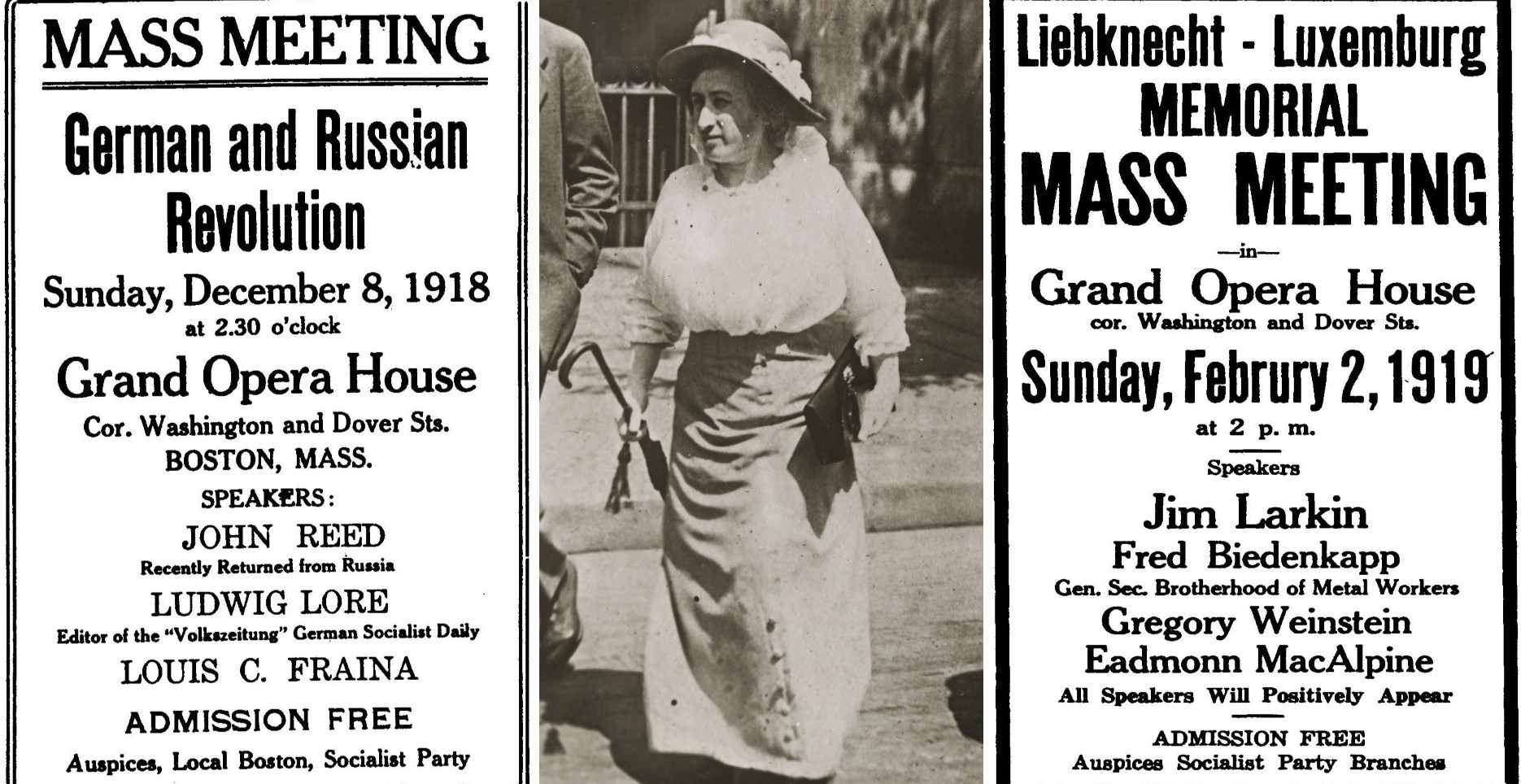
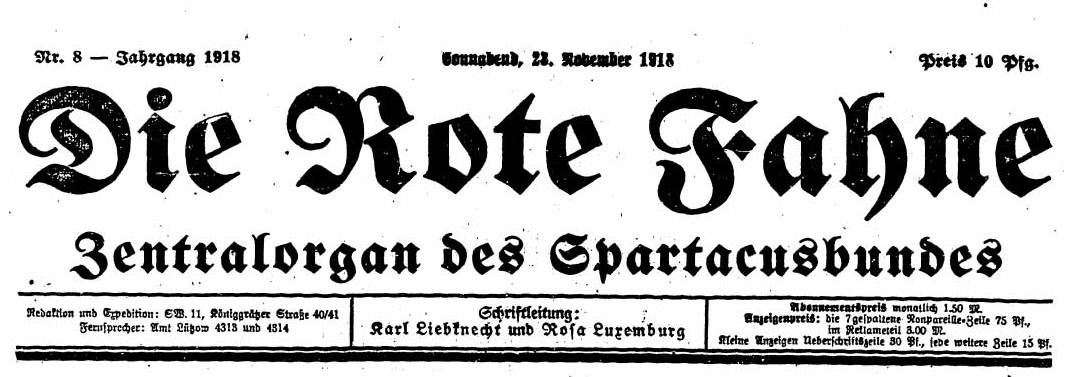
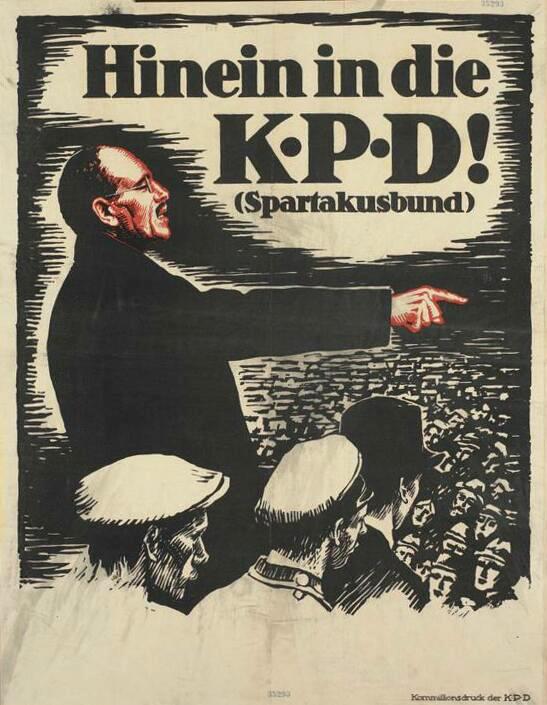
This important document in our movement’s history was written by Rosa Luxemburg in the midst of the revolution that overthrew the German Empire at the end of 1918. With its lengthy introduction it is commonly known as ‘What the Spartacist League Wants.’ Drafted in anticipation of the December 31, 1918 Spartakusbund conference in Berlin, this program passed with only minor changes and would serve as the first program of the Communist Party of Germany, as the Spartacists united with Otto Ruhle’s International Communists, renamed themselves. Within weeks the four most important leaders of the new Party were dead; Luxemburg, Karl Liebknecht, and Leo Jogiches were murdered; Franz Mehring, ill and devastated at their losses, died at 73. Printed in Louis Fraina’s ‘Revolutionary Age,’ this is quite probably its first U.S. publication.
‘Program of the Spartacans’ by Rosa Luxemburg from Revolutionary Age. Vol. 1 No. 28. April 26, 1919.
I. IMMEDIATE measures and steps to guarantee the safety of the revolution:
1. The disarming of all policemen and officers, as well as of all soldiers, who do not belong to the proletariat
2. The confiscation of all supplies of arms and munitions and all munition works by the workmen’s and soldier’s councils.
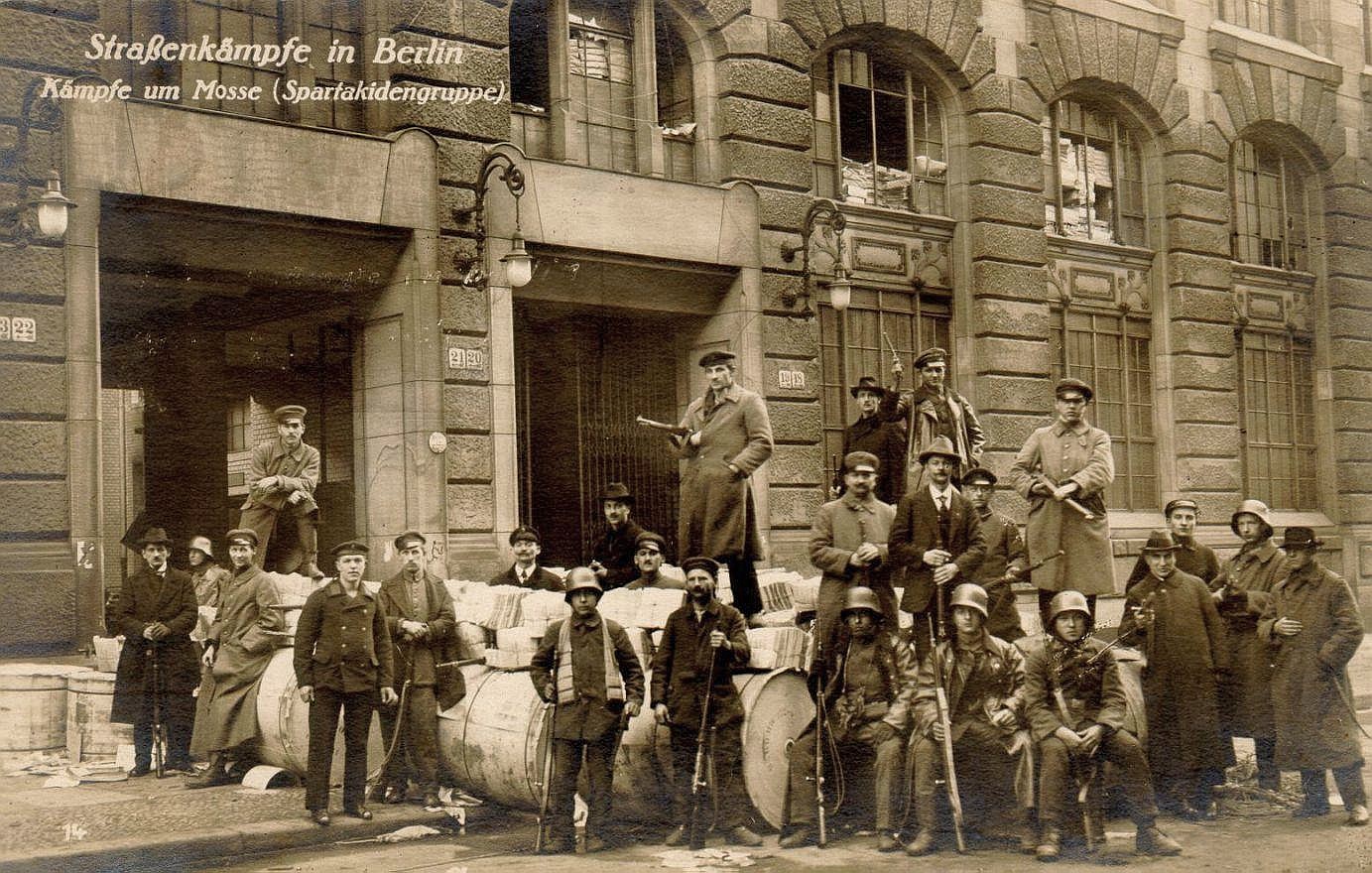
3. The arming of the whole male population of the proletariat to form a workmen’s militia. The organization of a red guard within this militia as its active body, for the protection of the revolution against all counter-revolutionary plots and conspiracies.
4. The abolition of all power of command hitherto vested in officers and non-commissioned officers, military authority to be supplanted by the voluntary discipline of the soldiers. The election of officers by the men with the right of recall. The repeal of military law.
5. The expulsion of officers and all untrustworthy persons from the soldiers’ council.
6. The replacing of all political agents and Government officials by representatives from the workmen’s and soldiers’ councils.
7. The establishment of a revolutionary tribunal before which those chiefly responsible for the war shall be tried: the Hohenzollerns, Ludendorff, Hindenburg, von Tirpitz, and their fellow-criminals, as well as all the conspirators of the counter- revolution.
8. Immediate confiscation of all food, so as to guarantee the necessities of life to the people.
II. Political and social measures:
1. The abolition of all separate states, and the formation of a single united Socialist republic.
2. The abolition of all Parliaments. and all communal bodies and the taking over of their functions by workmen’s and soldiers’ councils and by their agents and committees.
3. The election of workmen’s councils throughout Germany by all adult persons, men and women, in the laboring class of the cities and the country, within the separate trades; also the election of soldiers’ councils by the men, exclusive of officers and untrustworthy persons. The right of workmen and soldiers to recall their representatives at any time.
4. The election of delegates from the workmen’s and soldiers’ councils throughout the country to form a central council, which shall choose an executive council invested with all authority, both legislative and administrative. The central council is to meet, for the present, every three months, subject to new elections of delegates for each session. It shall exercise permanent control over the activity of the executive council and shall keep the various workmen’s and soldiers’ councils constantly in touch with their highest Government organ. The local councils shall have the right to recall their delegates to the central council at any time when they do not carry out the will of their electors, and to fill their places with others.
5. The right of appointing and deposing all Government officials to be vested in the executive council.
6. The abolition of all class distinctions, orders, and titles. 7. Far-reaching social legislation. The shortening of the working day to six hours at the most, in order to decrease unemployment, and in consideration of the physical degeneration which the laboring classes have suffered through the world war.
8. A speedy and thorough reorganization of the departments of rationing, housing sanitation, and education in the spirit of the proletarian revolution.
III. The following administrative measures:
1. The confiscation of all dynastic property and income and the handing of it over to the community.
2. The repudiation of all public debts and war loans, with the exception of subscriptions up to a certain amount, this amount to be fixed by the central council.
3. The expropriation of large and medium sized estates and the establishment of Socialist agricultural societies under a unified control for the whole country. Smaller agricultural holdings to remain in the hands of the present owners until such time as they shall voluntarily come into the Socialist community.
4. The liquidation of all banks, mines, factories, and large business concerns, by the republic.
5. The confiscation of all property beyond a certain maxi-mum, which shall be fixed by the central council.
6. The organization of councils in each industry, which shall cooperate with the workmen’s councils and manage all internal affairs of their respective trades, including labor conditions and regulation of production, and shall finally take over the practical conduct of the business.
8. The appointment of a strike committee which is to co-operate with the trade councils in guiding the strike movement throughout the country in a Socialist direction. and, through the political power of the workmen’s and soldiers’ councils, assure it of success.
IV. International tasks:
As soon as possible, connections shall be made with our brother-parties in foreign countries, so that the Socialist revolution may be put on an international basis, and through international fraternization and the uprising of the proletariat peace may be established and assured.
V. This is what the Spartacus Group wants.
And because we want it, because we are the Socialist conscience of the revolution, therefore we are hated and persecuted and maligned by all open and secret enemies of the revolution and the proletariat.
Crucify them! cry the capitalists who tremble for their money-chests.
Crucify them! cry the middle-class citizens, the officers, the anti-Semites, and the press lackeys of the bourgeois press, who tremble around the flesh-pots of the bourgeois class power.
Crucify them! cry the Scheidemanns who, like Judas Iscariot, have sold the workmen to the bourgeoisie in order to keep their political power.
Crucify them! comes the echo from those deceived and befuddled workmen who do not know that they are fighting their own flesh and blood when they rage against the Spartacus Group.
In hating and maligning the Spartacus Group they can all unite counter-revolutionists, enemies of the people, anti-Socialists, liars, and those who fear the light. But this only shows that the future belongs to those in whose breast the revolution still lives.
The Spartacus Group does not want to attain power over or through the masses of the working people. The Spartacus Group is only that part of proletariat which is conscious of its goal and attempts to wake up the broad masses to a realization of their historic task, which at every stage of the revolution represents the ultimate aim of the Socialists and the solution of national problems in the interests of the proletarian world revolution.
The Spartacus Group refuses to share power with the servants of the bourgeoisie, Ebert and Scheidemann, because it sees in such cooperation nothing but treachery to the essential principles of Socialism, strengthening of the counter- revolution, and paralyzing of the revolution.
The Spartacus Group will never take over the power of government except at the behest of the great mass of the proletariat, nor unless the masses clearly express their allegiance to its goal and methods.
The proletarian revolution can only progress step by step on its Golgotha path, and can only win full clearness and maturity through many defeats and victories.
The triumph of the Spartacus Group belongs not to the beginning, but to the end of the revolution. It is identical with the triumph of the millions of the proletarian mass.
Up, proletarians! Arise to battle! You are about to conquer a world and to fight against a world. In this last great class war for the highest goal of humanity, our motto must be thumb in eye and knee on breast!
The Revolutionary Age (not to be confused with the 1930s Lovestone group paper of the same name) was a weekly first for the Socialist Party’s Boston Local begun in November, 1918. Under the editorship of early US Communist Louis C. Fraina, and writers like Scott Nearing and John Reed, the paper became the national organ of the SP’s Left Wing Section, embracing the Bolshevik Revolution and a new International. In June 1919, the paper moved to New York City and became the most important publication of the developing communist movement. In August, 1919, it changed its name to ‘The Communist’ (one of a dozen or more so-named papers at the time) as a paper of the newly formed Communist Party of America and ran until 1921.
PDF of full issue: https://www.marxists.org/history/usa/pubs/revolutionaryage/v1n28-apr-26-1919.pdf
 Revolution's Newsstand