
The Class Struggle was a centrally important publication for the Left Wing in the United States as World War One and the Russian Revolution radicalized and split the Socialist movement. Ludwig Lore, editor of the New Yorker Volkszeitung and Class Struggle, announces the magazine’s adherence to the new Communist Labor Party after its own editorial board fractured, and promotes the positions of the C.L.P. in the questions under dispute.
‘The Communist Labor Party’ by Ludwig Lore from Class Struggle. Vol. 3 No. 4. November, 1919.
The Socialist Publication Society decided at a Special Meeting to give Over THE CLASS STRUGGLE with all the pamphlets and books published during its existence to the Communist Labor Party of the U.S. of America. The Nat. Executive Committee of the C.L.P. accepted the offer gladly and elected Ludwig Lore, Editor. Jack Carney, editor of “Truth,” Duluth, Minn.; Gregory Weinstein, N.Y., formerly the editor of “Novy Mir,” were elected his Associates. Orders, payments, etc. are to be sent until further notice to: The Socialist Publication Society, 15 Spruce St., N.Y.C.
The Communist Labor Party
With this issue the Communist Labor Party, henceforth the owner and publisher of the CLASS STRUGGLE, makes its bow to our readers and to the American working-class. It serves notice upon them and upon the ruling class that it is determined to become the Party of Revolutionary Communism in the United States, the clear expression and fearless representative of the class-conscious revolutionary American proletariat.
Its coming, no difference under what name, has been a foregone conclusion for months past. There was but one alternative. Either the Socialist Party must be forced to abdicate its advocacy of pure and simple politics; either it must resolve to become the exponent and the leader of the fighting vanguard of the American working-class upon the economic and the political field, or an organization would have to be created to take its place, more in accord with the trend of our revolutionary period than the S.P. has been. For at least three years the present writer has held the conviction that the Socialist Party, together with most of the European working-class parties, has outlived its usefulness if it persists in its adherence to the old tactics and methods in the future, and our journal, from its first to its last issue, is witness to this fact. On the question, however, as to when and under what circumstances the inevitable must happen, that is, at what time the decision must be forced–on that score and only on that score, there existed serious differences of opinion. These, recent events have set aside, but by no means have they been solved. For the question, whether this was the most favorable time for the separation of forces, is still an open one. Many sincere Communists are of the opinion that the split came too early; that the period of education and enlightenment for the membership was too short and that, therefore, good revolutionary material, that could have been converted into useful activity for a genuine revolutionary movement, will, on account of lack of understanding, continue to cast its lot with the old Party and its outworn, reactionary tactics and conservative methods.

But today the situation exists, and has to be met as it is and not as some of us would wish it to be. The C.L.P. is in the field and is here to stay. It is founded upon the principles as evolved by those revolutionary working-class parties and elements of Europe that constitute the Third International, the principles of Marx and Engels, of Lenin, Trotzky, Bucharin, Rakowski, of Liebknecht, Rosa Luxemburg, of Loriot, Serrati, McLean, Platten, etc. Its existence is a challenge to the capitalist system, toward whose destruction it will endeavor with all energy and strength of which it is capable by uniting the American workers into powerful political and industrial organizations, based upon the class struggle and the revolutionary understanding of the proletariat.
The C.L.P. recognizes that the emancipation of the working-class must be the work of the workers themselves and that no set of leaders can achieve it for them. But it also knows that revolutionary changes in society are not brought about by the masses, but by a determined and clear thinking minority, by the most advanced and trustworthy element in the proletariat. The dictatorship of the proletariat will, therefore, always be the preliminary condition for the final victory of the working-class, because it will permit the advanced working-class elements to socialize the important and fundamental industries without interference from the capitalist classes on one hand, and from that unwielding, unthinking mass of the workers, whose mental make-up is still being contaminated from the poisoned wells of the bourgeois press. Whether this transitory stage in the transformation of capitalist society into socialist society will be of short or long duration, will, of course, be determined by the degree of understanding which the workers of a given country possess. We do not doubt that some of the S.P. leaders and a good many of its membership also believe in the dictatorship of the proletariat. But they dare not confess it for fear of frightening away the middle-class voter to whom they are catering, of losing their respectability in the eyes of the “general public.” Since bitter experience in the German and Austrian Revolutions has taught us the necessity of educating the workers to the right kind of revolutionary methods, unless this is done the American worker will be just as unready and unable to take care of its interests as were the workers of those countries. This lack of understanding or shall we call it cowardice-on the side of the Socialist Party is of utmost importance. working-class movement whose slogan is not: all power to the workers and to the workers’ government, can never be anything else but pseudo-proletarian and distinctly anti-working-class.
The question of affiliation with the Second or Third International is therefore of the greatest importance. Parties which do not stand squarely upon the dictatorship of the proletariat, cannot and, of course, will not be admitted to the International formed at Moscow. The S.P. of the U.S. says that it, cannot remain in the Second International and will not join the Third. It claims that a new alignment of socialist elements must take place to unite “all forces of revolutionary Socialism” and invites these forces to form a Fourth International. But so long as the leaders of the S.P. count among the Revolutionists of their new order Socialists of such decidedly moderate, yes anti-revolutionary conceptions as Karl Kautsky, who has just published a book attacking the “unsocialistic theory of the dictatorship of the proletariat,” the courageous but purely pacifist MacDonald, who is still an opponent of the philosophy of the class-struggle, the Social-Patriot Henderson, and many more of that type, their wish for a “unification of all the forces of revolutionary Socialism must remain a dream, and not a beautiful one. It is true, the Independent Social-Democrat Party of Germany hailed the American idea with great joy; but since this party is also hopelessly divided on this issue, its support is rather of doubtful value.
We have already touched upon another vital difference between the S.P. and the C.L.P.; the different attitude toward political action. The political action of the S.P. is pure and simple parliamentarism, identical in character with that of the capitalist parties. Both use the machinery of the bourgeois state for the achievement of their political end. The C.L.P. has no such illusions. It knows that the ballot will never open the door to Socialism and that the petty reforms which may be attained by many long and weary struggles and compromises with corrupt politicians of the old parties can be of no considerable benefit to the workers. We, therefore, will use the parliamentary platform for propaganda purposes only. The representatives elected upon the C.L.P. ticket will go to the legislative halls not to “legislate,” not as “statesman,” to fritter away their time with dickering and bargaining. They will be charged with the important task of showing up the forces of law and order, the society of godliness and morality, in all their ugly nakedness and hypocrisy. They go there as educators of the masses, as teachers of the working-class, and for no other purpose.
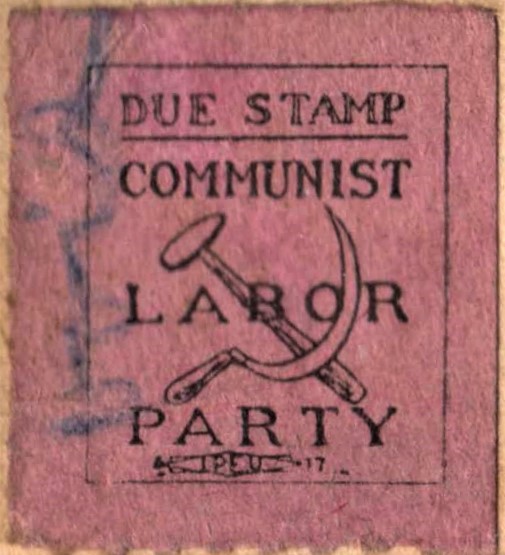
In place of the all important parliamentary-political action, as understood by the old-line Socialists, will come political mass action. Strikes, general strikes, heretofore used in this country exclusively as working-class weapons on the industrial field, will be just as effectively employed on the political field for the enforcement of political demands, such as the liberation of class- war prisoners (Mooney, Debs, etc.), against the abrogation of working-class rights (abolition of the right to strike and boycott, freedom of press, assemblage and free speech). For while we all recognize that the ruling classes cannot be forced into granting working-class demands as long as the workers are only insufficiently organized, we also appreciate the possibility of frightening the powers that be into submission by the show of great numerical strength. Here again the Socialist Party politician tells us, that he also is in favor of mass-action as soon as the masses are ready for it. But he ridicules the idea of propagating mass-action “without the masses.” It never enters his mind that mass-action like all other weapons of the working-class necessitates education and training on the part of the proletariat and that unless this preparatory work is done the “time” and especially the working-class will never be “ready” for it. The last Convention that the Social-Democratic Party of Germany held before the outbreak of the war, resolved unanimously in favor of political mass-action as one of the weapons to be employed by the German workers. It was the glorious end of a fight carried on for almost a decade by Rosa Luxemburg, Karl Liebknecht and others. But the victory of the revolutionary Socialists in the German Party came too late. The masses of the German proletariat stood behind the Party, the organizations were there to organize and lead such a fight. But the time was too short for the training and education of the masses to prepare them for their new role in the class struggle before the world-war started, and the Socialists of Germany submitted without even showing fight. What might have happened had the Jena resolution been adopted ten years earlier, is, of course, open to conjecture. But this much seems certain, the more determined part of the organized workers of Germany at least would have begun open warfare upon the imperialistic-militarist clique a few years earlier than actually was the case.
To prepare and arrange for such political mass action a close unity of industrial and political bodies as well as a thorough and militant organization of the workers is necessary. This is one of the reasons why the C.L.P. not only declares for revolutionary industrial unionism, but also makes it the duty of all its members to join the forces of industrial unionism already in existence in this country and to work actively in their ranks. Here, once more, the S.P. may claim a close similarity of views, inasmuch as the Chicago Convention of the old Party likewise went on record in favor of industrial, unionism, as opposed to craft unionism. But on this question, too, the S.P. is like the platonic lover who entertains friendly relations with several ladies at the same time. Great care was taken not to offend the sensibilities of the American Federation of Labor. And this is only natural. A Party whose main object in life is the gathering in of votes must be careful not to estrange the sympathies of so large a body of voters as the A.F. of L. actually includes. If we recognize the absolute necessity of the industrial form of labor organization for the effective enforcement of the workers’ demands, we cannot be content to advise our class concerning the proper method and form, but must assist and co-operate with it in the actual work. But the “actual work” means not only the upbuilding of the union movement on industrial lines but also the destruction of craft unionism. You, comrades of the Socialist Party, cannot, therefore favor industrial unionism and the A.F. of L. at the same time. You must know that the A.F. of L., as fundamentally constituted today, is a hot-bed of reaction and a bulwark of capitalism, and you must say so. In its double-faced treatment of the question of unionism the Socialist Party reflects the attitude taken by important groups among its supporters, the United Hebrew Trades of New York for instance, and similar bodies. The question of industrial unionism has become too big an issue to allow it to be the plaything of clever politicians.
The communist movement in the United States has at present two branches–the Communist Labor Party and the Communist Party. This chapter of disunion of the revolutionary political forces in America is the saddest of all, and shall not be extensively treated at this time. But this must be said, that the formation of two parties became a necessity after it was evident that the Communist Convention would not admit those of Left Wing delegates who had no credentials for the Convention called for September 1st. The consequence of a submission to the demands of the Communist Party Convention would have been to estrange a goodly number of earnest and sincere revolutionary Socialists from the Communist movement, Socialists who at this time when the American born workers are still conservative, are doubly valuable on account of their American nativity.
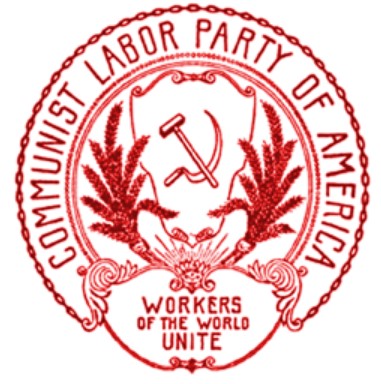
The C.L.P. is convinced that eventually there must and will be only one communist political organization in this country and it did everything in its power during and after the Chicago Conventions to bring about the needed unity of forces. But without avail the latest attempt of the C.L.P., a plea for an informal meeting of the two National Executive Committees for the discussion of a basis for unity, has also been refused by the N.E.C. (the Central Committee) of the Communist Party. The C.P. demands unconditional surrender and surrender is impossible. Thus in spite of unity of purpose and principles, the struggle for supremacy between the communist organizations must continue until the membership forces the end of this suicidal warfare.
The C.L.P. feels sure of its ground and is determined to live up to its revolutionary principles. It is certain to survive, for its spirit is that of the undefeated, unconquered, class conscious revolutionary working-class.
The Class Struggle is considered among the first pro-Bolshevik journals in the United States and began in the aftermath of Russia’s February Revolution. A bi-monthly published between May 1917 and November 1919 in New York City by the Socialist Publication Society, its original editors were Ludwig Lore, Louis B. Boudin, and Louis C. Fraina. The Class Struggle became the primary English-language theoretical periodical of the Socialist Party’s left wing and emerging Communist movement. Its last issue was published by the Communist Labor Party of America.
PDF of full issue: https://www.marxists.org/history/usa/pubs/class-struggle/v3n4nov1919.pdf
 Revolution's Newsstand