
The extraordinary life and work of the Peruvian Marxist and scholar José Carlos Mariátegui.
‘José Carlos Mariátegui‘ by George Paz from The Daily Worker. Vol. 6 No. 369. May 13, 1930.
JOSE CARLOS MARIATEGUI, organizer of of the Communist Party of Peru, and founder of the General Confederation of Labor, after a long illness that had mutilated both legs and prostrated him, has died, his death constituting a real loss to the revolutionary movement of Latin-America and the world.
If, by a criterion enough provincial, we analyze the surrounding conditions in which the ideological capacitation of the native masses of Peru has developed, we can affirm that this capacitation loses its strictly Leninist content and likewise its class character given to all the revolutionary activities developed in the country by our fallen comrade.
Lima, capital of Peru, represented in the Spanish colonies, the city typically feudal of the South American region. Capital of the Viceroy, the richest the Spaniards had in Latin America, Lima was the seat of the Spanish feudal nobility, of the conquerors, as previously Cuzco had been of the native nobility.
Lima, which lies on the slopes of the mountains very near the coast, had a backward influence on the country. English imperialism, which conquered the country economically after “independence” was won from Spain, had little other relation with it than carrying away in ships the gold and silver of its fabulous mines.
It appears, that the industrialization, slightly developed though it may be, nor the import of Yankee capital which usually bears with it some small measure of capitalist culture even though it develop only the extractive industries in fields and mines, has failed to make much impression on the spirit of the middle ages, and the capital of Peru with its 250,000 inhabitants lives in a veritable feudal atmosphere In part this is due to the influence of the Catholic church. The slow awakening of the toiling masses, recently brought into the Latin- American revolutionary movement as a consequence of the period of proletarian revolutions, was more than difficult, a gigantic task of the formation of a revolutionary ideology.
In rational philosophy, the spiritual modalities of a people have been classified by Marx and Engels as thoughts of men determined by their manner of living. And through a feudal economy, through a semi-feudal life, a feudal mentality had to follow.
The task of Comrade Mariategui in this sense was titanic, equivalent to the task of the Communist Party of the United States in the South in establishing the absolute equality of the Negro with the white–to establish in Peru the absolute equality of the semi-slave Indians with the whites and the half-bred “meztizo.”
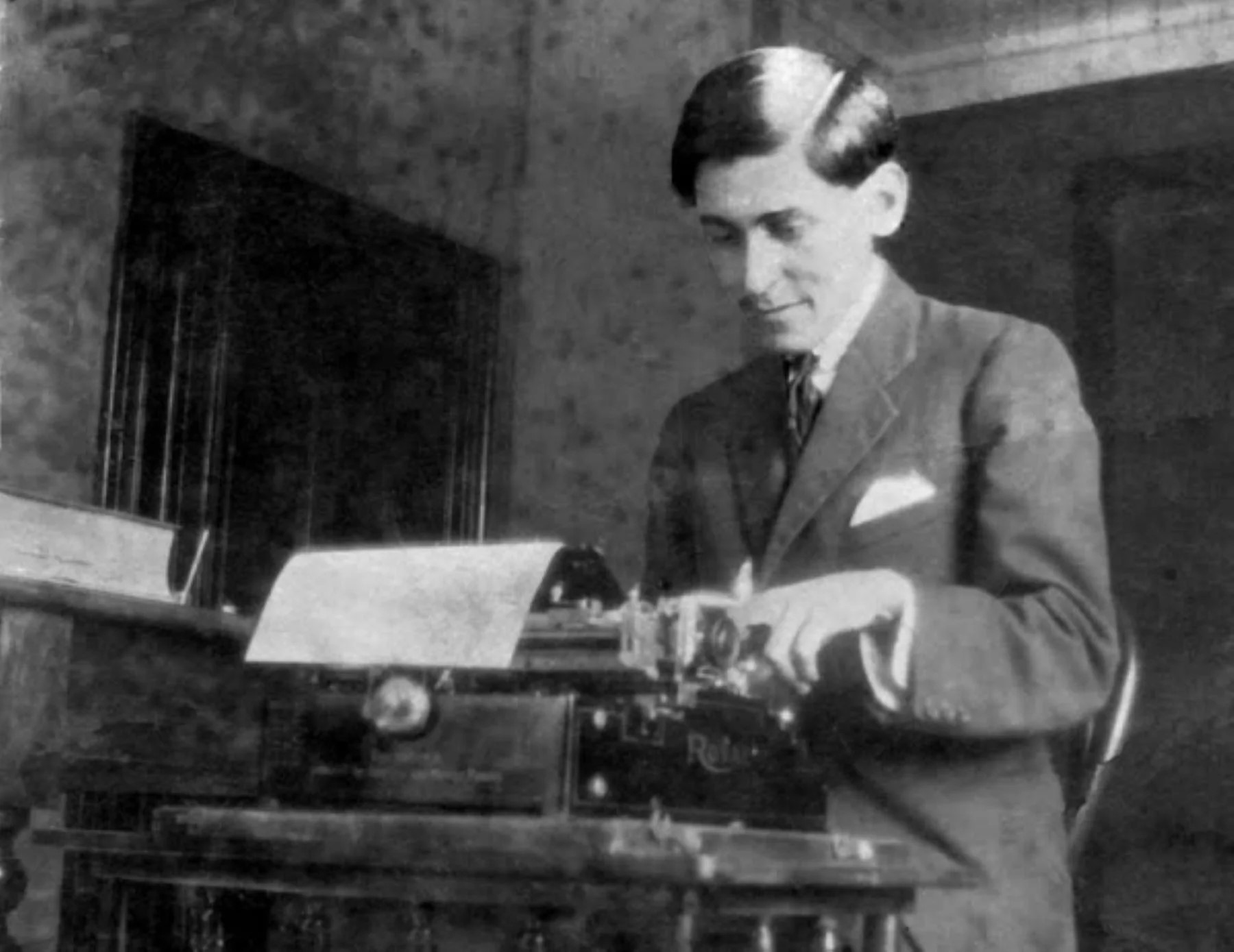
Mariategui went to Europe in 1921. At the time he was one of the outstanding literary critics of that part of America. And this talent was sacrificed from then on to a more noble and virile cause to which he dedicated all his activities thereafter. In Germany, Mariategui entered into the revolutionary struggles, became a part of them as very few intellectuals have done. He yielded his whole life to the revolutionary movement of the proletariat, and especially to the native Indian.
Peru’s “Whalens” Horrified.
From this, when the Communist International dealt first with Peru, the responsibility of organization fell upon Comrade Mariategui. And the attacks began: “The Communists want to socialize women and pervert the youth, and this Moscow novelty has entered Peru thanks to the beclouded brain of Jose Carlos Mariategui!” This thunderclap struck the Peruvian workers between the eyes. They were not easily convinced to burn that which they had previously adored. But this condemnation was in harmony with the semi-feudal situation of Peru and its clerical influence.
But to the continuous spontaneous strikes were added studies and criticisms in accord with international revolutionary ideology. This closely followed the road which, objectively, Peruvian economy, more and more bound up with Yankee imperialism, was taking.
In these conditions, Peru, like the rest of Latin-America, and especially those countries having least relations with Europe, was a fertile field for anarchism, for revolutionary syndicalism, hence it follows that the struggles of the proletariat were thus isolated. Peru was, for the international toilers, as distant from the proletarian political development of Europe, from the world struggles of the proletariat, as are the indigenous Indian peoples of the mountains from the life of the Peruvian capital.
Mariategui began his work. In his book, “La Escena Contemporanea” (The Contemporaneous Scene), were gathered a series of articles published in the workers’ press of Peru, and these constituted the first serious studies of the fundamental problems which the Latin-American workers had to face. Few Communist leaders of Latin-America had the comprehension, the intuition and the Leninist solution. And Mariategui was one of the few intellectual Communist leaders that knew well the problems of the Latin-American proletariat. From these abilities he was able to be a leader and applier of Leninism in Peru.
His Tremendous Tasks.
He gave special attention to the trade union movement. This movement was not centralized in Peru, and in a few months, with the aid of the Latin-American Trade Union Confederation, he succeeded in forming the General Confederation of Labor of Peru.
Through the columns of the review “Amauta” and of the trade union journal, “Labor,” he was creating, in spite of all the difficulties of the environment, in a country for 14 years under a tyrannous dictator, a class consciousness, a revolutionary ideology without which it is not possible to speak of proletarian revolution. His deep understanding of this postulate of Lenin made him bend every effort to maintain these periodicals at whatever cost, and to keep them within the political line of the Communist International and the Red International of Labor Unions.
These two papers, one trade unionist and one political, had their individuality as such, but both were Communist papers for the workers of city and country, for the native Indian of Peru. Hence these two papers were widely distributed not only in Peru but in all Latin-America.
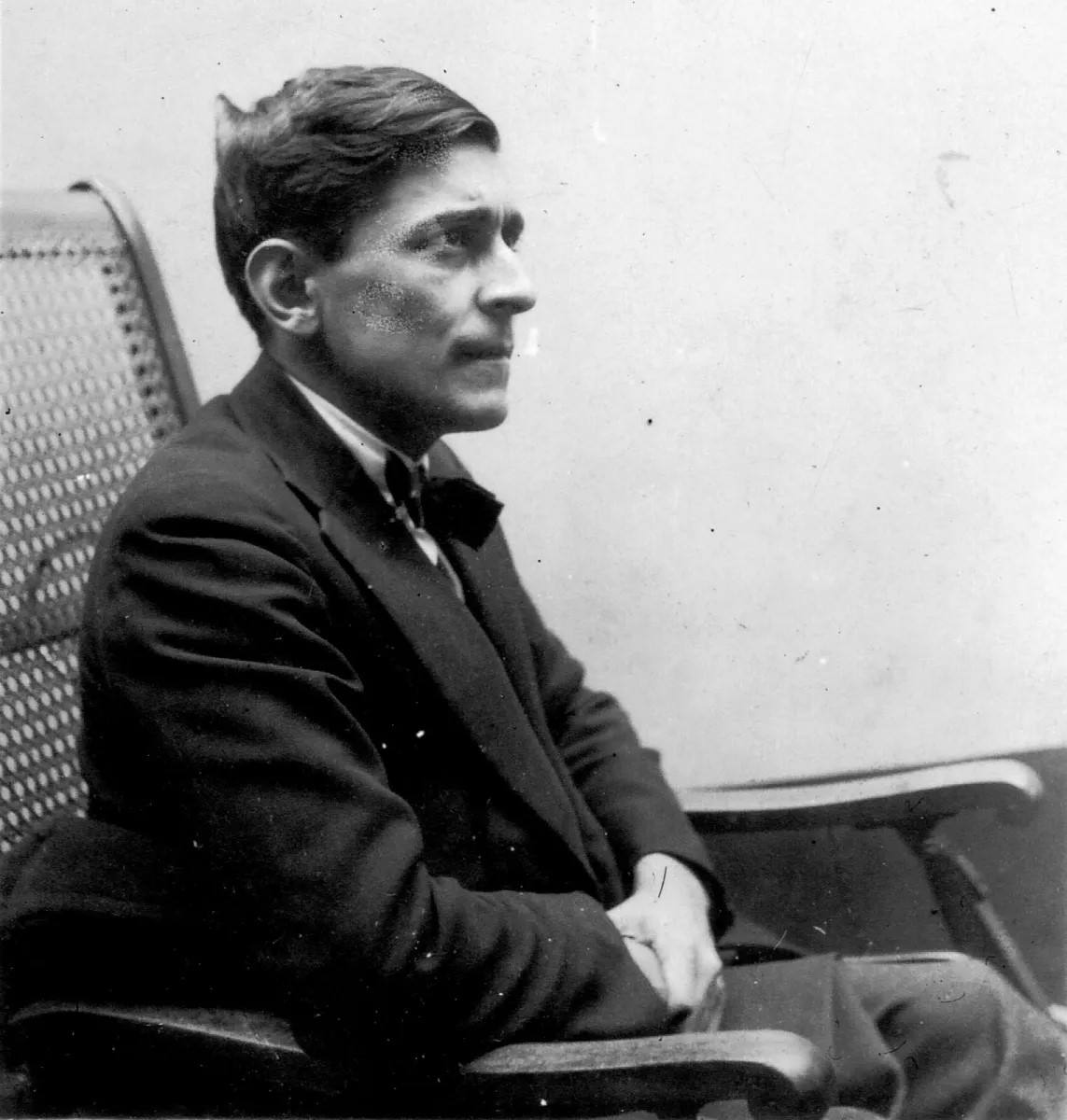
To the trade union congress of Montevideo, which formed the Latin-American Trade Union Confederation, he sent his thesis upon the problem of the native Indian. The congress made his thesis its own, accepting the general lines he established on this very important problem.
Gave His Utmost to Gastonia.
By that time Mariategui had carried out an intense campaign in Peru for the Gastonia prisoners, this agitation in behalf of his class comrades of imperialist U.S.A. (to whom, let us express our doubts, this work of Mariategui in far away Peru is even yet unknown!), succeeding in mobilizing in the general campaign led by the Sub-committee for the Caribees of the Latin-American Trade Union Confederation, 10,000 workers in demonstration in the Peruvian town of Cajamarca! Mariategui, forced to travel carried in a chair over vast mountains, and jailed for his work in Cajamarca, drained his remaining force thus-for the prisoners of Gastonia. I could write extensively upon the life and work of this fallen comrade and friend. but not in these columns, dedicated to the daily struggle of the workers. Yet, a little more.
There can scarcely exist racial groups more sensitive than the Indians of Latin-America. Upon the treatment and personal affection given them depends in great measure the success of the work to be done. People who take the Party as a commercial enterprise whose merchandise is weighed and measured according to cost could not have accomplished the delicate but tremendous work that Mariategui did. And because he was imbued with a great humanity, his home was a sanctuary, visited continually by delegations of workers and Indians. These native Indians, for understand- able reasons distrustful of the whites, hating the whites; these restless Indians made this paralytic one of their best revolutionary chiefs.
Among the misery, the semi-misery of the Peruvian Indian, Mariategui lived their pain, not theoretically but humanly, without being a sentimentalist oozing tainted philanthropism. It is not always easy to find united in the militant Communist a correct political line, a clear vision of problems, and that quality of feeling himself without distasteful exhibition–a real brother of another who is exploited and is in the proletarian ranks. Mariategui united these qualities. Hence, when he was buried, workers in great numbers filed by his coffin under banners of the Communist Party, not perfectly understanding the Party but rather their leader who had died. In two years a Party ideology cannot be fully developed.
His value as a Marxist-Leninist theoretician is unquestioned. His last book, “7 Ensayos de la Realidad Peruana” (Seven Essays of Peruvian Reality) reveals him as one of the first to apply the scientific theory of historical materialism in Latin America.
Articular tuberculosis, aggravated by the persecutions and constant imprisonments by the fascist tyrant Leguia, carried off this great comrade at 34 years of age on April 27, 1930. The revolutionary movement of Latin America loses one of its greatest figures, a pioneer of the proletarian revolution.
His exquisite sensibility, his profound human sympathy and his life of sacrifice to the cause of a better world, inspires the Communists of Latin America, colony of this Yankee imperialism; and among the deportations, imprisonments, persecutions and pain through which we Latin Americans in the United States pass, his example urges us to devote all our energy to the Communist Party of the United States–the best way of aiding in the overthrow of the fascist tyrants ruling in our native lands.
The Daily Worker began in 1924 and was published in New York City by the Communist Party US and its predecessor organizations. Among the most long-lasting and important left publications in US history, it had a circulation of 35,000 at its peak. The Daily Worker came from The Ohio Socialist, published by the Left Wing-dominated Socialist Party of Ohio in Cleveland from 1917 to November 1919, when it became became The Toiler, paper of the Communist Labor Party. In December 1921 the above-ground Workers Party of America merged the Toiler with the paper Workers Council to found The Worker, which became The Daily Worker beginning January 13, 1924.
PDF of full issue: https://www.marxists.org/history/usa/pubs/dailyworker/1930/v06-n369-NY-may-13-1930-DW-LOC.pdf
 Revolution's Newsstand