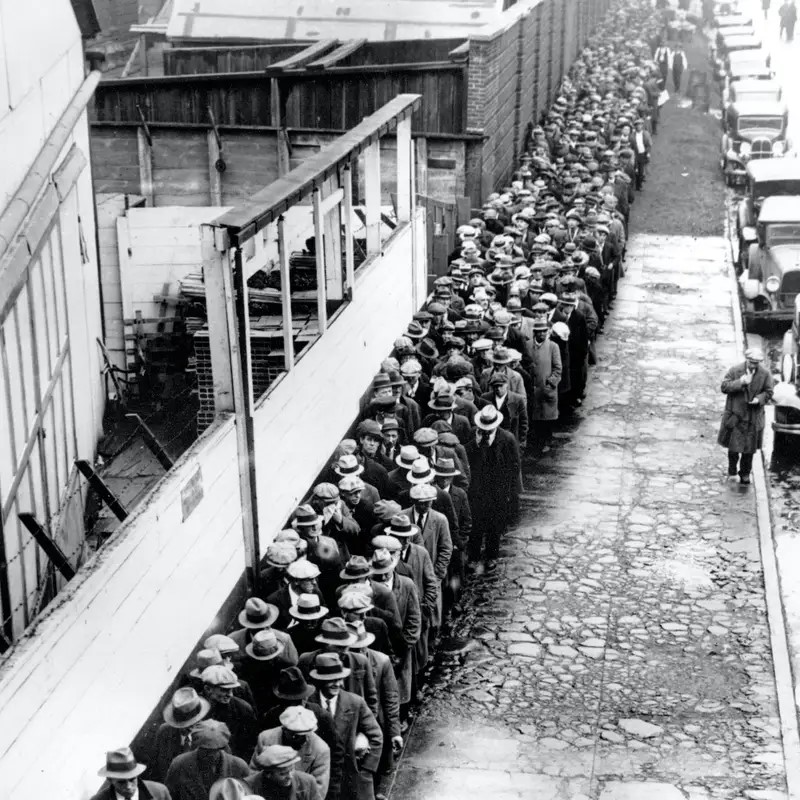
Still in his teens, Louis C. Fraina contrasts the degradation of bourgeois, Christian charity with proletarian justice.
‘Charity’ by Louis C. Fraina from The Weekly People. Vol. 19 No. 23. September 4, 1909.
The futility and bankruptcy of Charity is to-day a demonstrated fact. One is appalled at the poverty and misery rampant in society; and Charity stands impotent and aghast before it. To seek to alleviate the horrors of poverty with the puerile methods of Charity is comparable to the efforts of the fool who would empty the mighty ocean with a tin cup. For nineteen hundred years “Christian” Charity has sought to stem the tide of misery and poverty, ministering to the poor and the needy. the weak and the unfortunate; yet misery has risen higher and higher. its wail more bitter and heart-rending. All its efforts have been but a delusion and a snare, a delusion and a snare in that Charity sought to abolish a state of misery inevitable so long as exploitation and injustice were co-existent in society.
Historic is the fact of the clergy pluming themselves on their Charity. Rather should they bow their heads in shame, for their role has been a hypo critical and futile one. Did the toilers, goaded to desperation by exploitation and misery, cry aloud for justice?–the clergy have replied with the smug assurance of a reward beyond the skies, seeking to have the exploited bear their lot in patience. Have the exploited sought some relief from their misery?–the followers of the lowly Nazarene have ostentatiously dropped them a few crumbs in Charity. But never have they sought to destroy the causes of poverty and misery; for the clergy have profited and waxed fat on the exploitation of the toilers. Heaven in the future, Charity for the present: thus have they ever answered the wail of the disinherited.
In order that their own nest should be feathered the clergy have ever allied themselves with the dominant class in society, defending and extolling their every act of merciless exploitation. No victory of war has been so brutal. no tyrant’s deed so shameful, no act of exploitation so hideous, but that religious prelates have invoked God’s blessing upon it.
True Charity has been, relatively speaking, lacking among the clergy: it has been for them an ostentatious but hollow mockery, a means of currying favor with the masses. It has been a mockery, a stench in the nostrils of honest men and women,
The Charity that springs direct from the human heart is a beautiful thing, however ineffective it may be in destroying misery. It is a tribute to the innate kindness of humanity. Such Charity consists, not in ostentatious display, in the giving to the poor of what one does not need with the object of attracting attention, but of personal service to those in need. It was of this sort of Charity that Victor Hugo wrote:
“How fair her glorious features shine,
Wherein the hand of God hath set
An angel’s attributes divine,
With all a woman’s sweetness met.
“Above the old man’s couch of woe
She bows her forehead, pure and even,
There’s nothing fairer here below,
There’s nothing grander up in heaven,
“Than when caressingly she stands
(The cold hearts wakening ‘gain their beat).
And holds within her holy hands
The little children’s naked feet.
Then over all the earth she runs,
And seeks in the cold mists of life.
The poor forsaken little ones
Who droop and weary in the strife.”
How rare is this sort of Charity! How few are the instances to be recorded of Charity seeking “in the cold mists of life” the “poor forsaken little ones,” ministering to their needs, easing their burdened young lives, bringing back the bloom of childhood to faded, withered cheeks. “Suffer little children to come unto us, for from such do we reap Huge Profits,” cry the Masters of Life. And the children go unto them. In mill and mine and factory do we see them toiling from morn till night, four million strong. with wan, emaciated cheeks, listless eyes, stooping shoulders, and starved, stunted bodies. Where is the happy, careless laugh of childhood, the inalienable gift of Nature to all children? Why are they not at school sowing their young minds with the seeds of learning and knowledge? Why are they not romping amid the beauties of Nature’s playground, building up normal, healthy bodies? And still that cry goes up: “Suffer little children to come unto us, for from such do we reap Huge Profits.” And none seek these children and ease their burden of sorrow.
Assuredly are we lacking in that Charity which goes seeking “in the cold mists of life” the “poor forsaken little ones who droop and weary in the strife.” Charity is ostentatious, brazen, loud, its only function seeming to be the advertising of certain “charitably disposed” men and women–also to I gloss over the crimes of our industrial magnates and throw dust in the eyes of the people. Witness the Charity of a Carnegie, whose workmen are mercilessly exploited in his Steel Mills: the recent “barefoot dances” of Lady Constance Richardson, presumably for Charity, but really to gain notoriety for her; the fashionable “teas” given for charity; and a host of other instances too numerous to mention.
And as for organized Charity, cold, calculating, selfish, doing more for the officers and “spongers” than for the destitute, what does it accomplish? A little here, a little there: mere drops in the huge ocean of universal suffering. True, we have hospitals for the sick and the dying; and morgues for the dead. True, the Charity Organization Society last year rendered a little aid to ten thousand families in need of help. destitute, as the report says, “through no fault of their own.” Miserably inadequate, in view of the thousands of families who are destitute and in need of help. And the picture is even more gloomy than this.
What of the workingmen for whom industrial toil has all the ghastly strain of war, hundreds of thousands of whom are killed and injured in our industries every year? What of the poor women toiling in mills and sweat-shops, with the germs of tuberculosis eating their lives away?
What of the four million unemployed men, their families and themselves suffering from a lack of the necessaries of life?
What of the thousands of once-honest workingmen who have become tramps and thieves because society denies them the right to earn an honest living?
What of the awful host of 600,000 prostitutes, the wives and daughters of workingmen, selling their bodies for a morsel of bread, forced to prostitute themselves because of poverty? What of the four million children between the ages of five and sixteen years toiling in mill and mine and fac- tory, denied the right of education and play, their young lives sacrificed for the profit of a parasitic horde of capitalists?
To solve this problem of human suffering and destitution Charity is impotent, a hideous mockery, and must make way for Justice. To those who are exploited, and as a result are suffering in poverty and misery, it is an insult to offer the crumbs of Charity. They scorn its paltry aid and loud and clear rises their demand for Justice. Too long have the Masters of Life exploited the toilers. Exploitation must cease. The private ownership of the means of production carries with it the power of exploitation, hence they must be made the collective possession of those who toil. The Glutton Class that feed and fatten on the misery of the workers must be destroyed, and the Socialist Republic established, wherein economic plenty being assured to all, Want and Charity will become the phantoms of a hideous past.
New York Labor News Company was the publishing house of the Socialist Labor Party and their paper The People. The People was the official paper of the Socialist Labor Party of America (SLP), established in New York City in 1891 as a weekly. The New York SLP, and The People, were dominated Daniel De Leon and his supporters, the dominant ideological leader of the SLP from the 1890s until the time of his death. The People became a daily in 1900. It’s first editor was the French socialist Lucien Sanial who was quickly replaced by De Leon who held the position until his death in 1914. Morris Hillquit and Henry Slobodin, future leaders of the Socialist Party of America were writers before their split from the SLP in 1899. For a while there were two SLPs and two Peoples, requiring a legal case to determine ownership. Eventual the anti-De Leonist produced what would become the New York Call and became the Social Democratic, later Socialist, Party. The De Leonist The People continued publishing until 2008.
PDF of full issue: https://www.marxists.org/history/usa/pubs/the-people-slp/090904-weeklypeople-v19n23.pdf
 Revolution's Newsstand