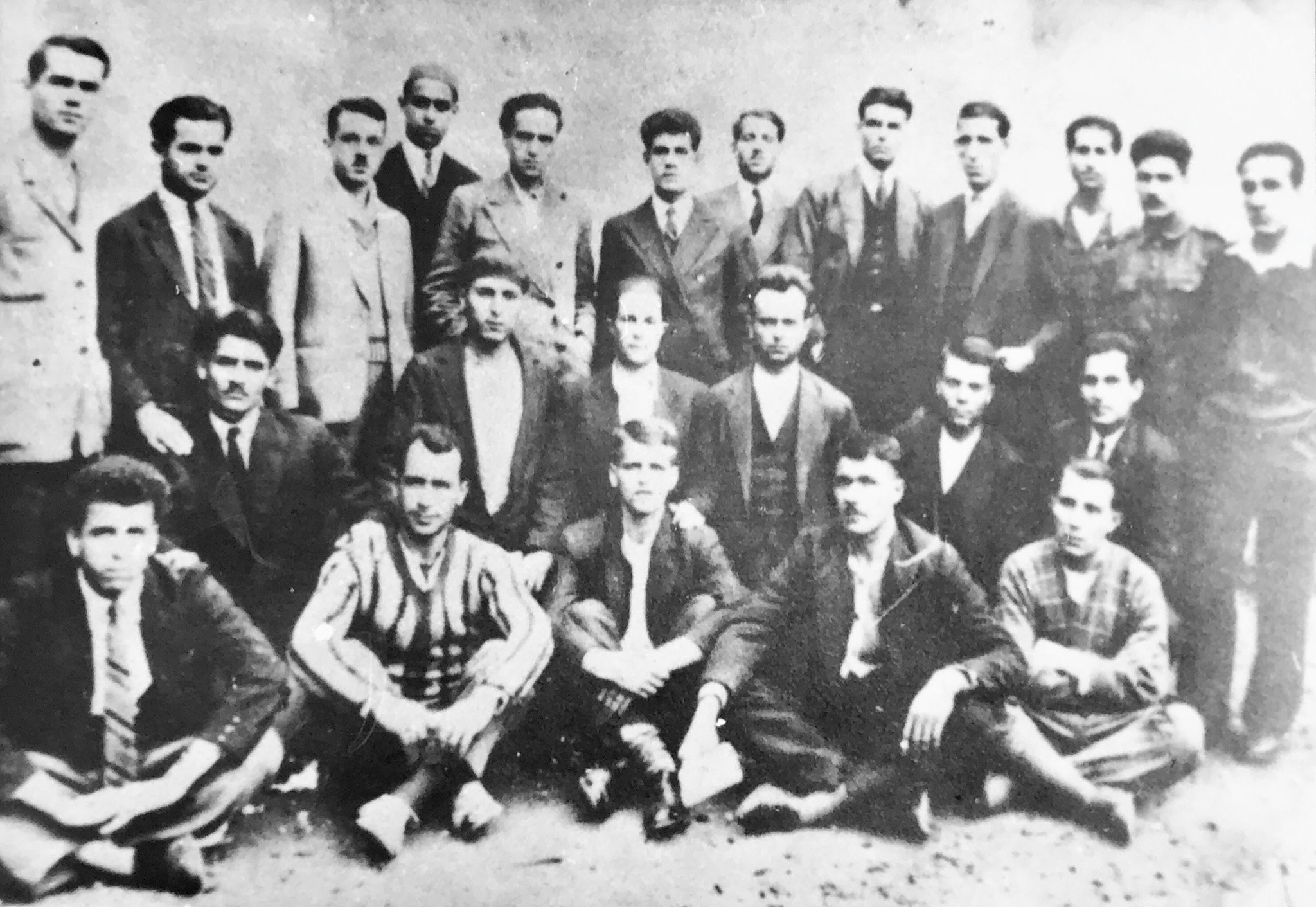
A report on the background to the Communist movement in Greece, the fascinating and unique history of the Archives of Marxism group, its relations with the official C.P. and the ‘Spartakos’ opposition, left publications, and the difficulties of work under illegality in this historic look at the origins of Greek Trotskyism.
‘The Left Opposition in Greece’ from The International Bulletin of Communist Left Opposition. Vol. 1 No. 2. March, 1931.
The development of the Communist movement and of the Left Opposition of Greece has taken an extraordinary course. The Greece working-class never had any social-democratic traditions before the war. It could be said that up to 1917 the laboring masses of Greece had passed through no socialist school of revolutionary sentiment. Only after the October revolution did the soil become favorable for class propaganda among the workers and poor peasants. A socialist Labor Party was formed, which set itself at the head of the masses and animated by the great inspiration of the Russian Opposition sought an issue out of the ruins and the misery in mass actions.
But the socialist Labor Party could not reflect exactly the aspirations of the working class. It did not possess the ideological arm indispensable for that—Marxism–nor the necessary cadres. The revolutionary upsurge of the masses makes this young party pass through a rapid evolution toward communism and join, under the influence of a little nucleus, “Kommunismos”, the Communist International.
The change of name and the formal adherence to the C.I. do not, however, in the least change the confusing character of the Labor Party. The absence of Marxist traditions and of advanced cadres allows politicians of every shade to use the new Communist Party for their own interests and to cause the party to go through the most opportunistic experiences, very often to the direct advantage of different bourgeois cliques.
This party, without any solid working class base, followed blindly the Stalinist faction in the C.I. and transferred its slogans faithfully on Greek soil. In 1927 an opposition begins to appear against the C.P. leadership. Little by little, this opposition approaches in its criticism that of the Left Opposition in other countries. It gathers around the review ‘SPARTAKOS’ and attempts to influence the leadership and save the debris of the party. Expelled by the ever more corrupted apparatus, the SPARTAKOS group lives in the meantime only on the more or less correct interpretations of the ideas of the Russian and the International Left Opposition. It does not succeed in organizing a solid nucleus in the party, capable of drawing the class organizations after it.
But aside from the reactionary leaders, the open agents of the bourgeoisie, no organization of a reformist or socialist character succeeded in lining up behind it the Greek working class, which has in the meantime become much more numerous and much more militant. The official C.P. has fallen completely into discredit due to the only too well-known absurdities of the “third period”, and has reduced its forces to a few hundred, of which a great number are functionaries of the Stalinist apparatus.
Who, then, is to undertake the heavy task of organizing the Greek proletariat which in several years has grown from 80,000 to 300,000 workers? Under the given conditions, it can be only the party, which in the light of Marxist-Leninist theory and practice will succeed in forming cadres of clear-sighted and conscious workers. It is the organization of the “Archives of Marxism” that these tasks are charged upon.
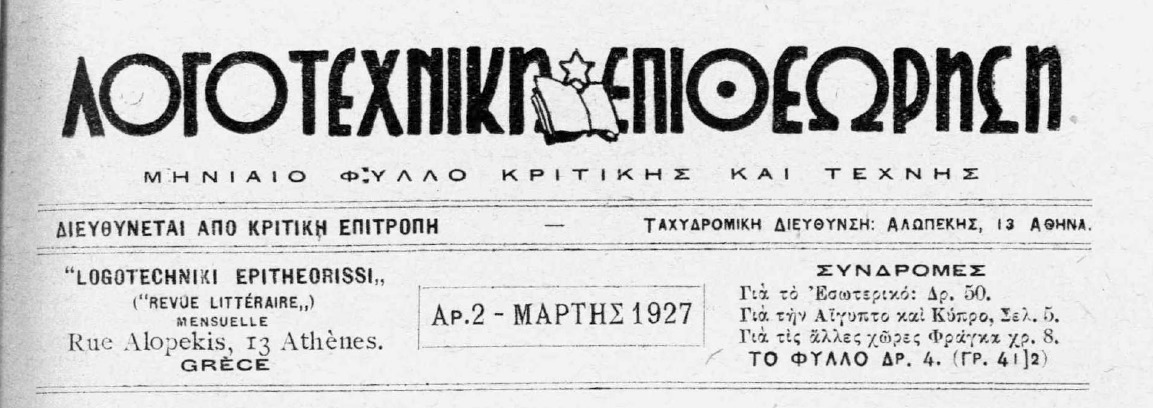
A communist tendency running parallel to the official Communist Party has been created in Greece and has set itself the task of supplementing and correcting the shortcomings and mistakes of the official party. Already in 1921 the comrades who had come to the party from the KOMMUNISMOS group struggled heatedly for a Marxist upbringing of their cadres. Fought by the leadership, these comrades created the ARCHIVES OF MARXISM, in which they published for the first time in Greece the chief works of Marx, Lenin and Trotsky, and the classics of socialism in general. The politicians of the Greek C.P. a half social-democratic, half anarchistic party decided to expel the comrades who found the ARCHIVES OF MARXISM and since then a struggle has been waged between the small nucleus of revolutionary Marxists and the official party.
The ARCHIVES OF MARXISM set itself as its primordial task the propagation of the ideas of Marx and the Russian revolutionists. They considered the question of education as the preliminary condition for revolutionary action. This position academically exaggerated forced them to withdraw to narrow circles for the study of Marxism and to abandon for a certain time the labor movement to the politicians of the official party.
Up to 1925, the ARCHIVES OF MARXISM could group about itself advanced workers from the industrial centers. From 1925 to 1927 its underground activity was seriously damaged by the Pangales dictatorship. But the revolutionary education of the preceding years had not been in vain. Taking advantage of the few liberties granted by the new regime, the circles of the ARCHIVES OF MARXISM reconstituted themselves anew. They began to publish their review again and decided to undertake a long labor of penetration into the working class. After two years of intense activity, they gained a considerable influence in the trade unions, among the unemployed, the poor students, the refugees, etc….Their own organization grew in proportion to their influence, despite the rigid forms and the severe internal discipline imposed by the conditions of illegality.
What has been the political evolution of the ARCHIVES? Deprived of all international connections, this young and unexperienced movement, under conditions favorable for the development of reformism and the different forms of trade unionism, could easily fall into confusion with one of these tendencies. But neither the history of the labor movement of Greece, nor the objective conditions created by rapacious capitalism, Greek and foreign, have left any forms of intermediary labor struggles between communism and the open treason of the reactionary leaders. The ARCHIVES OF MARXISM, while remaining outside the ranks of the C.I. were inspired in all their actions by the ideas of the Russian revolution. The fact that they maintained their independence after 1922-1923 has even been favorable to the ideological development of the ARCHIVES OF MARXISM in the sense that they were made immune to the intoxications of the falsifiers of Leninism in the Stalin faction. After 1923 the ARCHIVES OF MARXISM began to take an interest in the struggle of the Left Opposition of the U.S.S.R. They studied in their circles the criticism of the Russian Opposition toward the German revolution of 1923, toward the defeat of the Chinese revolution, toward the Anglo-Russian committee and all the questions concerning Soviet Russia, approving of it unreservedly. They translated into Greek the works of Comrade Trotsky and distributed them among wide circles of revolutionary workers. The assimilation of these ideas of the International Left Opposition went hand in hand with the penetration into the trade unions and economic struggles of the working class.
After they had reached an important stage of development in the country, the ARCHIVES OF MARXISM understood the danger of their national isolation and in June, 1930, they sent their application to the International Bureau of the Left Opposition.
This unique development of an isolated opposition current which has thrown itself into the general flow of the International Left Opposition aroused the interest of the International Bureau and lately two of its representatives went to Greece to make a detailed inquiry into the situation and the perspectives of the Greek Left Opposition. The results of the inquiry testify to the fact that we encounter in Greece an altogether new phenomenon in the Opposition movement. Beside the official party, which has left only a few feeble traces of its existence on the political life of the Greek proletariat, there is growing a Communist opposition movement, organized in every industrial city in the country and in the countryside, having a considerable influence in the trade union movement.
The organizations of the ARCHIVES OF MARXISM have been built up in the manner of the old Russian socialist parties who had to work illegally. In broad study circles of elementary Marxism, a selection is made at the end of several months of experience from among the most devoted comrades. They pass over into more intimate circles and to the study of more serious problems of Marxism and are charged with responsible work. After this stage, which consists of about 18 months, they are admitted into the units which constitute the base of the organization. For conspirative reasons, we cannot give all the details of their organization, but suffice it to say, in order to get an idea of their strength, that after so careful a selection the membership of the ARCHIVES OF MARXISM organizations numbers more than 1,500 comrades. Their trade union influence embraces more than 20,000 members. The trade union councils of the Concrete Workers, the Shoe, the Tobacco Workers, the Carpenters, the Bakers, and other branches of industry, as well as of the Public Utilities, are controlled by the comrades of the ARCHIVES OF MARXISM. The trade union papers, published by our comrades, are read by more than 7,000 workers. The leadership of the organization of the war veterans is under the influence of our comrades. Here also our comrades publish a widely read paper.
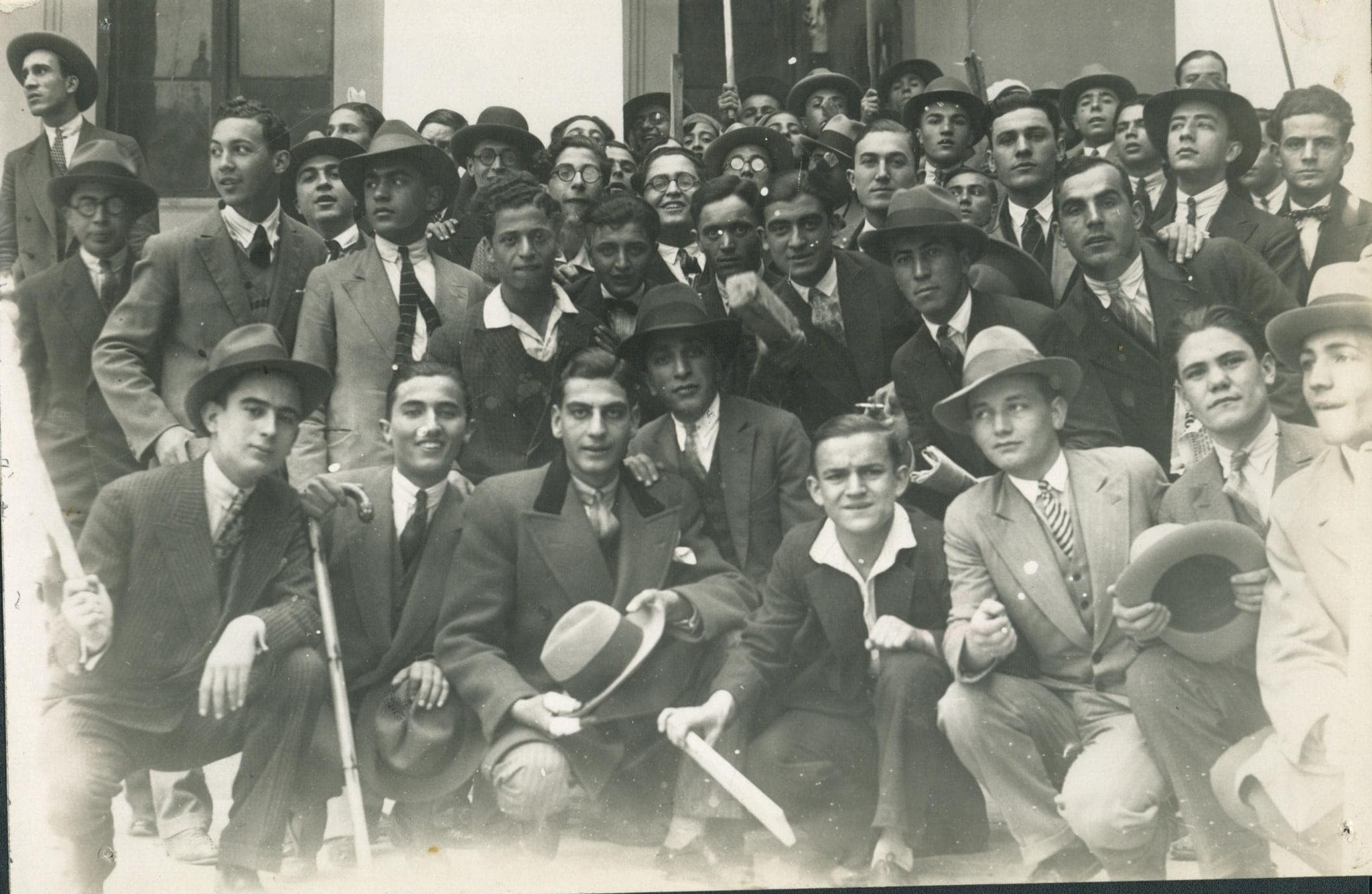
The activities of the ARCHIVES OF MARXISM among the unemployed have lately aroused the ire of the entire bourgeois press and the savage reprisals of the police. The demonstration of the unemployed and their petition to Athens were directed by the ARCHIVES OF MARXISM. The bourgeoisie, in its press, well takes note of the danger which this organization represents against it. The student demonstrations in 1929, which were accompanied by bloody battles with the police and which were directed not only against the University authorities but also against the bourgeois state (they were the talk of the entire Communist press of the West in their time), were led by the student fraction of the ARCHIVES OF MARXISM with the direct collaboration of the workers of that organization. Among the poor refugees, also, our comrades display an intense activity.
In all these spheres the influence of the official party is negligible, if not inexistent. To demonstrate their zeal to the bureaucrats of Moscow, those of Athens have tried to create a Trade Union Center, but the skeleton-like character of the unions which they have grouped into this Center have made of it a fictive organization which exists only on paper.
As in all other countries, but with even greater venom, because it is more impotent, the C.P. of Greece has employed against the Opposition the Stalinist methods of “ideological” struggle, violence. In a leaflet issued by the official party organization of Cavalla (Greek Macedonia) it literally says, “Comrades, the Archio-Marxists are police agents of the worst sort. Show no moderation towards them. Chase them out of the factories. Smash them wherever you find them. Beat them up before the tobacco depots, etc…This furious appeal to violence wa9s naturally followed up by actions. Two of our comrades were killed by the organized bands of the party.
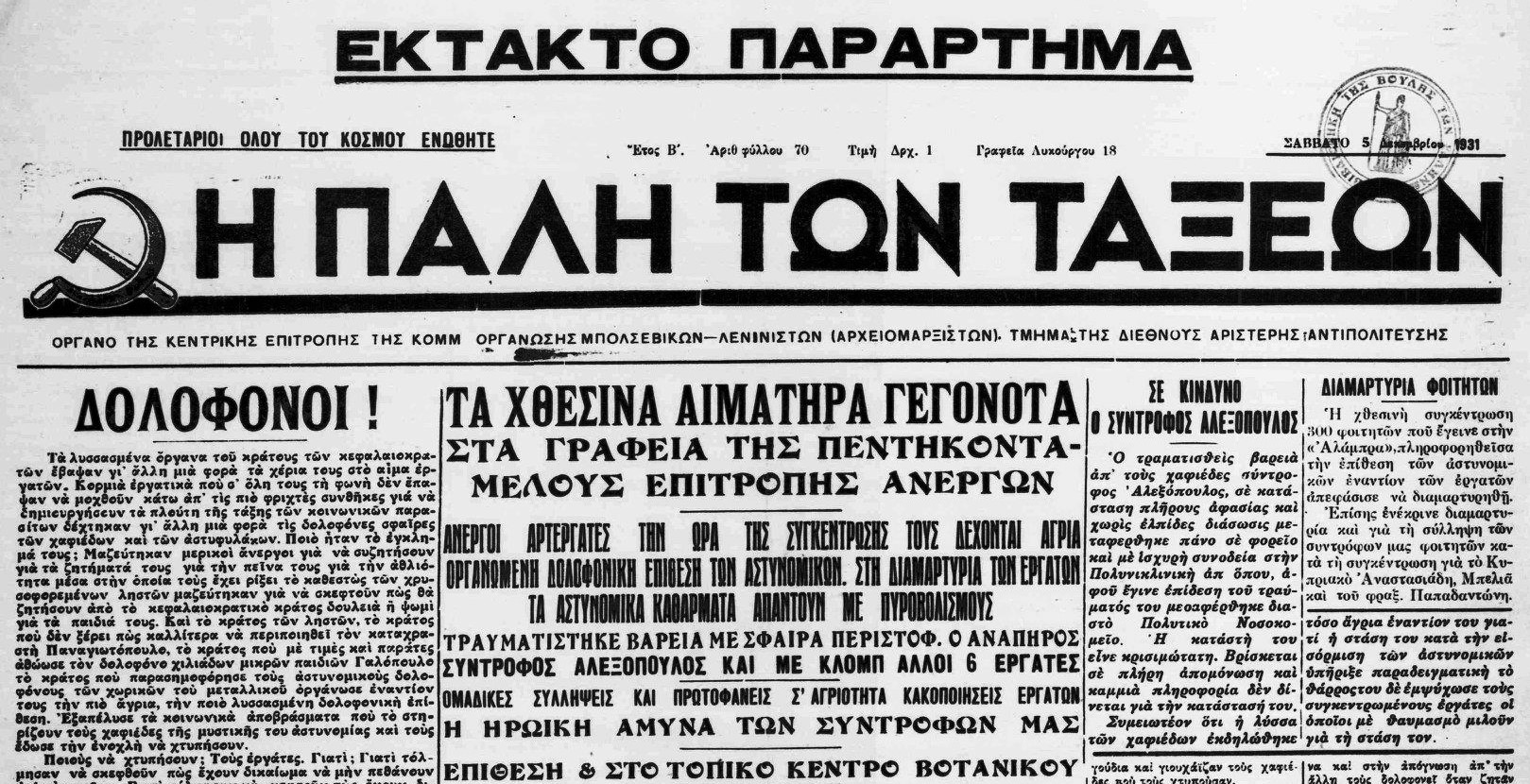
The Archives organization did not delay with its reply. The Opposition workers would not tolerate the Stalinist terror, which held free sway under the approving eye of the police. They have organized their self-defense corps in the entire country, and after some serious struggles they have been able to impose silence on the small Stalinist sect. The struggle of the Archives against the official party and their calumniators was made especially difficult by the fact that they did not possess a political paper of their own, in which to defend their political point of view in public and to refute the calumnies of their opponents. (The papers of which we have spoken above bear a strictly trade union character.) We must note that our comrades of the Archives for a long time considered external political work, with a paper and all the forms of struggle of a political party as premature. (In our opinion this was wrong.). Only after they had attained real influence in the country and among the working class did they decide to publish a weekly, FALI TO TAKEDON, and a monthly theoretical journal, DAVLOS.
This decision has led them to pose another question, which in Greece more than in any other country is posed in all its amplitude: should they work as a faction of the official party or must they seek the road to a new party?
The national conference of the ARCHIVES OF MARXISM which was held in Athens in October in the presence of two representatives of the International Bureau discussed these questions widely. The conference marks a decisive step in the development of the “Archio-Marxist” movement, which according to the decision of the conference will henceforth bear the name: Bolshevik-Leninist Organization of Greece (Opposition).
The most important decisions of this conference are expressed in the principle resolution unanimously adopted (and reprinted elsewhere in this issue of the Bulletin).
As we have said above, the conference in its resolution marks an important step in the evolution of the ARCHIVES OF MARXISM. The period of theoretical preparation and the consolidation of the cadres is finished. A period of broad political work is beginning. At the same time, a wide current of Organizations of Bolshevik-Leninists (Opposition) is replacing the Archio-Marxists in Greece.
Are they going to take on the character of a new Communist Party, which will supplant the discredited Greek C.P,? The membership of these organizations will in the course of the next few months decide. At any rate, the Greek Opposition will, as the resolution says, “follow attentively the development of the Greek party and will support it in all actions capable of involving the laboring masses in a revolutionary movement”.
The experiences of the last few years in the struggles of Greek Left Opposition and the important successes obtained show that it has taken the correct read. A clear and precise political line will, with the aid of the International Opposition, help it create a healthy Communist current which will attract the best elements from the party and the new opposition which has come out from it (the SPARTAKOS group). As long as a fusion of this opposition organization with the Archives does not take place, a serious and loyal discussion must mark the relations between the Archives and Spartakos.
Before all of the Left Oppositionists of Greece a task of great importance is posed: the creation of a genuine Communist Party, worthy of the teachings of Marx and of Lenin.
This party will be independent of the Stalinist apparatus and of the bureaucrats of the official Greek C.P. This will not, however, prevent it from considering itself as a section of the III International and from working hard to rebuild it. The example of the ARCHIVES OF MARXISM shows that the less dependent a revolutionary organization is on the Stalinist apparatus, the more militant and the more devoted is it to the cause of the International of Lenin and of Trotsky.
The U.S. Trotskyist movement began official, semi-regular internal bulletins to host political debate and discussion as the Communist League of America in 1930. In 1931, an International Bulletin was also produced running through 1934 to separate out the international debates. After the formation of Workers Party of the United States bulletins continued. With the entry of the Workers Party into the Socialist Party in the ‘French Turn’ internal bulletins were discontinued. In a reflection of the different size and resources of the CP, the CLA-WP-SWP bulletins were largely mimeographed rather than printed. A new set of Bulletins for internal discussion of the newly formed SWP in January of 1938 were produced, as well as another International Bulletin for discussion of the founding of the Fourth International. As a whole, these bulletins, unlike the internal bulletin of the CP, focus on long-form debate and internal discussion of Party resolutions and policy with the movement’s top leaders and thinkers contributing. Often, before congresses or plenums, special bulletins would be printed to host the relevant debate. The International Bulletins contain many of Trotsky’s and other international voices’ first English-language translations. Often those voice used pseudonyms, Crux is Trotsky. An invaluable resource for students of US Communism, Trotskyism, and the larger US workers’ movement.
PDF of original bulletin: https://www.marxists.org/history/etol/document/swp-us/idb/cla-iib/02-1931-mar-international.pdf
 Revolution's Newsstand