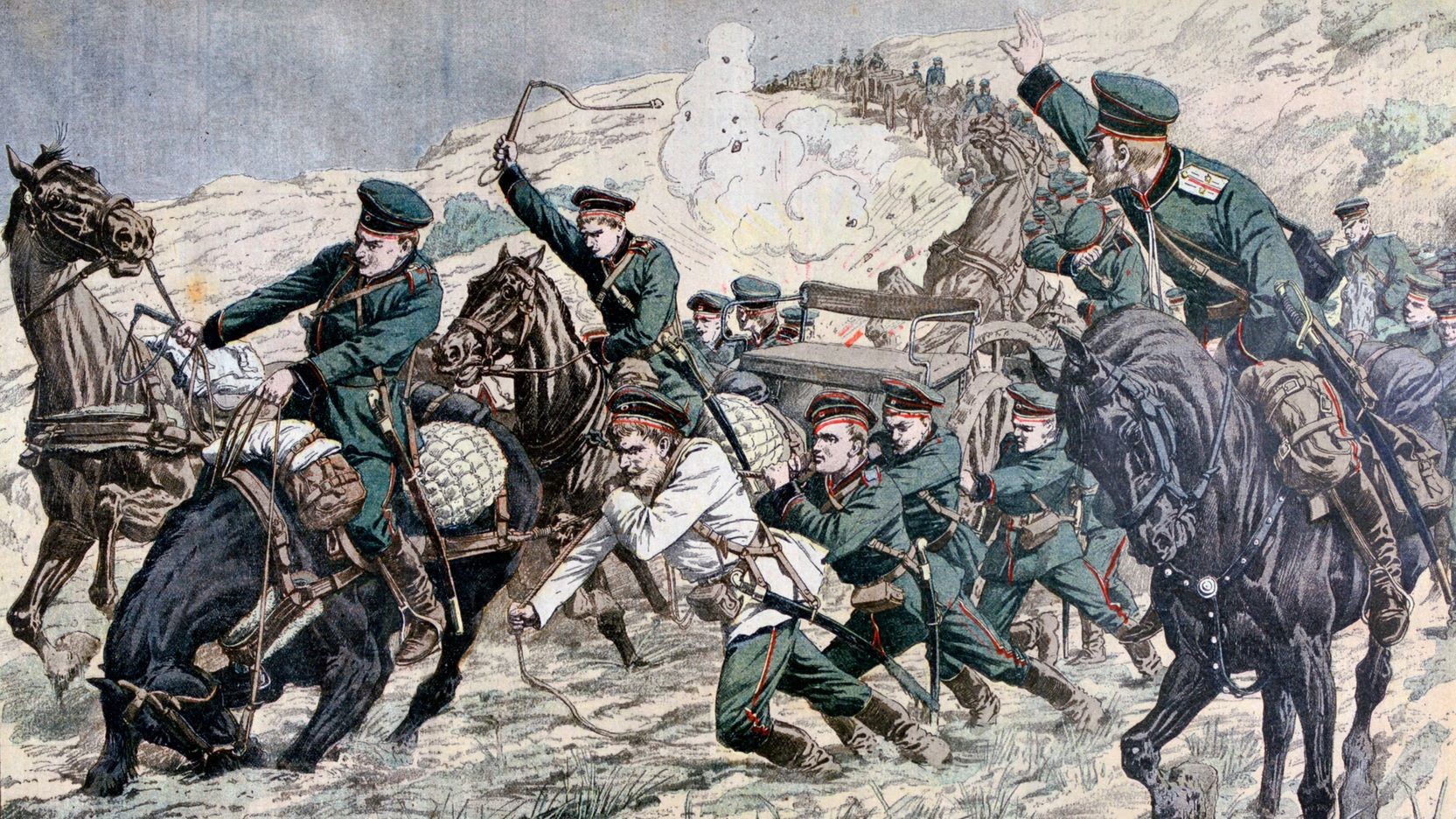
Written for the twentieth anniversary of the 1905 Revolution.
‘The Russian Revolution of 1905 and Japan’ by Sen Katayama from International Press Correspondence. Vol. 5 No. 76. October 26, 1925.
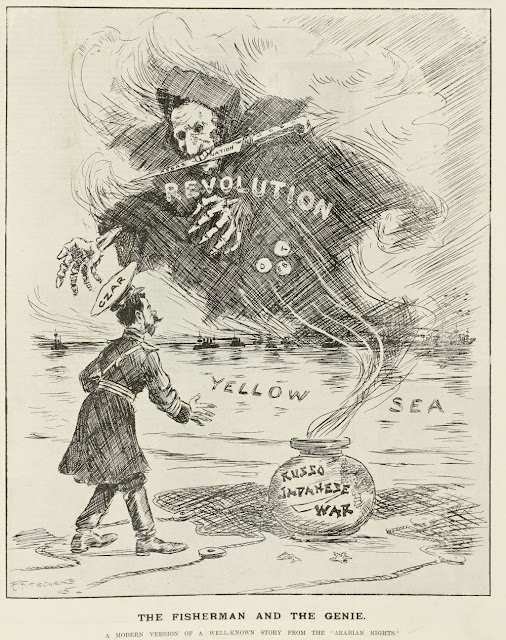
The Russian Revolution of 1905 took place in the midst of the Russo-Japanese War. The moral connection between the Japanese Socialist Association and the Russian Socialist Labour Party was established by two resolutions passed and sent by the Japanese Socialist Association during the first year of the Russo-Japanese War. The first resolution, the greetings of the Japanese Socialists to the Russian comrades, was printed in the “Iskra” and replied to in the same paper. The resolution sent from the Japanese comrades was based on pacifist principles, but expressed the Marxian standpoint and emphasised that Russian workers have no quarrel with the Japanese workers, but on the contrary, they are all fellow workers, that there is no reason or cause for their fighting and killing each other, and that therefore the Japanese proletariat sent hearty greetings to the Russian proletariat. The resolution also pointed out that the war between two countries was an imperialist war. The “Iskra” in its reply, commented upon and admired the spirit of international solidarity of the Japanese Socialists and compared the act of theirs with the anti-annexation attitude assumed by Liebknecht and Bebel with regard to Alsace-Lorraine.
During the war, the Japanese Socialists made the most determined propaganda against war. The first anti-war demonstration was held in November 1904, at the Y.M.C.A., Hall Kanda, Tokyo. There was stiff opposition got up by the war party to break up the meeting. Speaker after speaker was silenced by the opposition, but we were able to hold out and finally silenced the opposition completely, and the demonstration was great success. With this beginning, the Socialist Association earnestly led the anti-war propaganda and fought for the speedy conclusion of the bloody war.
Thus moral relations between the proletariat of two countries were established as soon as the actual war began, and this tie was strengthened at the International Socialist Congress in August 1904 at Amsterdam, by the appearance of representatives of the two belligerent countries on the same platform, on the opening of the Congress, and declaring jointly the solidarity of the workers of both countries. There is no doubt that the dramatic scene which took place on the platform made a lasting and profound impression upon the international aspect of the Congress. These events, of course, helped the Japanese Socialists in their anti-war and peace propaganda.
In the Russo-Japanese War, the Japanese militarists were able by various propaganda methods to get the people in such a firm national united front against the enemy, that for a while the authorities could disregard the Socialist propaganda in Japan; and the international greetings extended to the Russian comrades did not result in any persecution. It was in such an atmosphere that the news of the revolution of 1905 reached Japan. “Bloody Sunday” caused strong indignation against tsarism among the Socialists and Revolutionary workers throughout the world.
We had at that time a socialist weekly, called “Chokugen”. which gave full views of the Russian Revolution and published editorials on it. The Japanese workers were profoundly interested in the development of the Russian Revolution, and the heroic fight and sacrifices of the Russian workers for the cause of revolution called forth the highest praise and admiration of the Japanese comrades.
The Chokugen in its editorial of February 19, 1905 under the title of “Lessons of the Russian Revolution”, which gave a brief history of the revolutionary movement of the Russian Socialists and others, concluded with the following words:
“Revolution never comes in a day, and never succeeds in a day. It takes long years, and many sacrifices are made for it. Because of this, once the revolution starts the revolutionary thought will never be quenched, but must lead sooner or later to great conflict and great destruction.
“See how greatly the progress and spread of revolutionary education and knowledge have influenced the Russians! Look at what influence women’s education has had on the revolutionary movement: There is a belief that it is possible to suppress the revolutionary movement, by suppressing the freedom of speech and press; but in Russia, there is no freedom for speech and press! This shows that in Russia the suppression of speech and press was without effect.”
On the 19th March, Chokugen addressed an open letter to the Russian prisoners in Japan: there were over 700,000. During the war, a great deal of propaganda literature was sent from Europe and America, and Japanese comrades distributed this among the prisoners. The “Chokugen”, after expressing its sympathy towards the Russian prisoners:
“You must realise yourselves that you have in the future a great duty towards your own country. Especially towards your comrades in arms who died in vain in the battle, you must, moreover, realise that you have a now and great responsibility. That is a problem what to do with Russia. When you were fighting the bloody battle in Manchuria with the Japanese army, you must have heard that in Petrograd, Moscow and other places, there were ta- king place great disturbances, which are still continuing to this day. We deeply sympathise with the revolutionary party and the workers in your country…We urge and advise you to grasp the ideal of human life, without hesitation; build it up in your country. Exalt social-democracy. Put socialism into practice! Don’t take up arms and don’t fight against your brothers! Do not allow yourselves again to become the shameful tools of autocratic governments.
“Remember comrades! Russia at the beginning of the 20th Century is just as was France at the beginning of the 19th century. As the Western European revolution always waited for the signal from France, so now the ruined countries of the East are waiting the signal of the Russian Revolution!”
Here the writer of the “Chokugen” expressed a true note of prophesy that has been fulfilled in the November revolution of 1917. One thing is certain: the writer understood the true meaning of the revolution of 1905.
The influence of the revolution of 1905 has been growing in the minds and thoughts of the workers of Japan and, strengthened by the November revolution, will bear fruit. The Russian Revolution of 1905, caused the first step in the development of the revolutionary movement in Japan, and which found expression in the great uprisings of 1918. The Japanese proletariat and poor peasantry are working for the November Revolution!
Long live the Revolutions of 1905 and 1918! Long live the Comintern!
International Press Correspondence, widely known as”Inprecorr” was published by the Executive Committee of the Communist International (ECCI) regularly in German and English, occasionally in many other languages, beginning in 1921 and lasting in English until 1938. Inprecorr’s role was to supply translated articles to the English-speaking press of the International from the Comintern’s different sections, as well as news and statements from the ECCI. Many ‘Daily Worker’ and ‘Communist’ articles originated in Inprecorr, and it also published articles by American comrades for use in other countries. It was published at least weekly, and often thrice weekly. Inprecorr is an invaluable English-language source on the history of the Communist International and its sections.
PDF of full issue: https://www.marxists.org/history/international/comintern/inprecor/1925/v05n76-oct-26-1925-inprecor.pdf
 Revolution's Newsstand