
A fascinating look at the ‘social forces’ at work during the Civil War and intervention in Ukraine of late 1919, with many implications for helping to understand the background to today’s war.
‘Social Forces in Ukraine’ from Soviet Russia (New York). Vol. 2 No. 7. February 14, 1920.
Events are moving rapidly in Ukraine, and the Soviet Government will soon have entirely recovered this portion of Russia from the counter-revolutionary forces. The following interesting article from a Polish periodical, published in Vienna, makes a very good analysis of the various forces opposing each other in Ukraine during the past few months as well as at this moment.
I.
Owing to the events which are taking place in Ukraine, the question of that country has come to occupy the chief place in the international situation—it has become its central point—at the present moment.
Out of its five principal military fronts, Soviet Russia is victorious on three. On the Archangel-Murman front the English and the Chaikovsky Government have long been beaten. In Siberia, the Red armies are constantly pursuing Kolchak in an easterly direction, after having already occupied all of western Siberia, and after having made deep inroads into Middle Asia. On the Baltic front, the Western Russian government no longer exists, and the Yudenich bands are completely wiped off the scene of battle. There remain Poland with Pilsudski, and Ukraine with Denikin.
The victories of Soviet Russia have dispelled all the expectations and hopes of the imperialistic capital and compelled the counter-revolutionary governments of the Entente to revise their program with regard to proletarian Russia. We have given proofs in our former articles that since the time that public debates were started within the Entente as to a change of tactics toward Soviet Russia, this fact, combined with the final breaking up of the Entente itself, constitutes a new stage in the development of the international situation. The negotiations which were started at Copenhagen, and which are to be continued in the future, are a reflex of the situation that had been created as a result of the halting, by the Soviet, of the two years’ offensive of Capital; though by themselves, of course, they do not guarantee a durable peace, still, they constitute a turning point of a military calm, of a consummation by the masses of the situation, of looking for new avenues for the next day.

No doubt, neither in England, nor in France, nor elsewhere, is the bourgeoisie glad to talk of these negotiations, the opposing parties being immensely strong; but no less strong is the average opinion which, on drawing conclusions from the two years’ experience, believes that the peace conditions, in view of the ever increasing power of Soviet Russia, are getting worse almost daily.
The governments of the Entente are vacillating and are afraid of these negotiations. The advocates of intervention are planning new expeditions and are still clinging to the black bands of Denikin and to the reaction that has its nest in Ukraine. The professional diplomats and the generals by trade have no faith in Denikin, but the governments of the Entente, owing to the fact of the continued existence of his army so far, are staving off the pressure of the oppositionist masses demanding peace ever more stubbornly. The fortunes of the still existing Denikin army are influencing the policy of the diplomats of reaction, which is making its first unwilling and uncertain steps toward negotiations. But the situation of Denikin is bad, as is admitted by the papers of every camp, and the destruction of his army of bandits would mean not only the repelling of also this, thus far last, offensive of Capital, but as well an unprecedented territorial and economic expansion of Soviet Russia, her gaining a foothold on the Black Sea.
A Soviet Russia which includes western Siberia, which is negotiating with the Baltic states, and which is established on the waters of the Black Sea, will be more powerful than ever; it will be unconquerable.
In the measure as the Soviet armies are advancing southward, the desire of the Entente for negotiations will grow, and for that reason the question of Ukraine is at present the central point of the international situation. In Ukraine is hidden the whip which will force imperialism to treat with the revolution.
II.
This is not the place for a delineation of the front of Denikin and the further perspectives of the struggle. We record, on the basis of the news offered by the bourgeois press, that the White bands are retreating on all battlefields, that their front is broken through, that they are reported every day as losing their large cities. Their field of activity is becoming narrower, while it is enclosed ever more tightly by a widely open pincers, whose one arm is around Tsaritsin, while the other, toward the west, is around Zhitomir. The preponderance of the Bolsheviks lies also in the fact that the Soviet army is driven forward by an ever more profound consciousness of their great historical role—this army is only now, after two years of communistic training, growing into a real power— and by the enthusiasm resulting from the victories over Yudenich and Kolchak. The army of Denikin, welded together with the aid of gold and watered with cheap liquor, held in one mass by the use of lashes, beaten, surrounded by the flames of peasant uprisings, must become demoralized and fall apart.
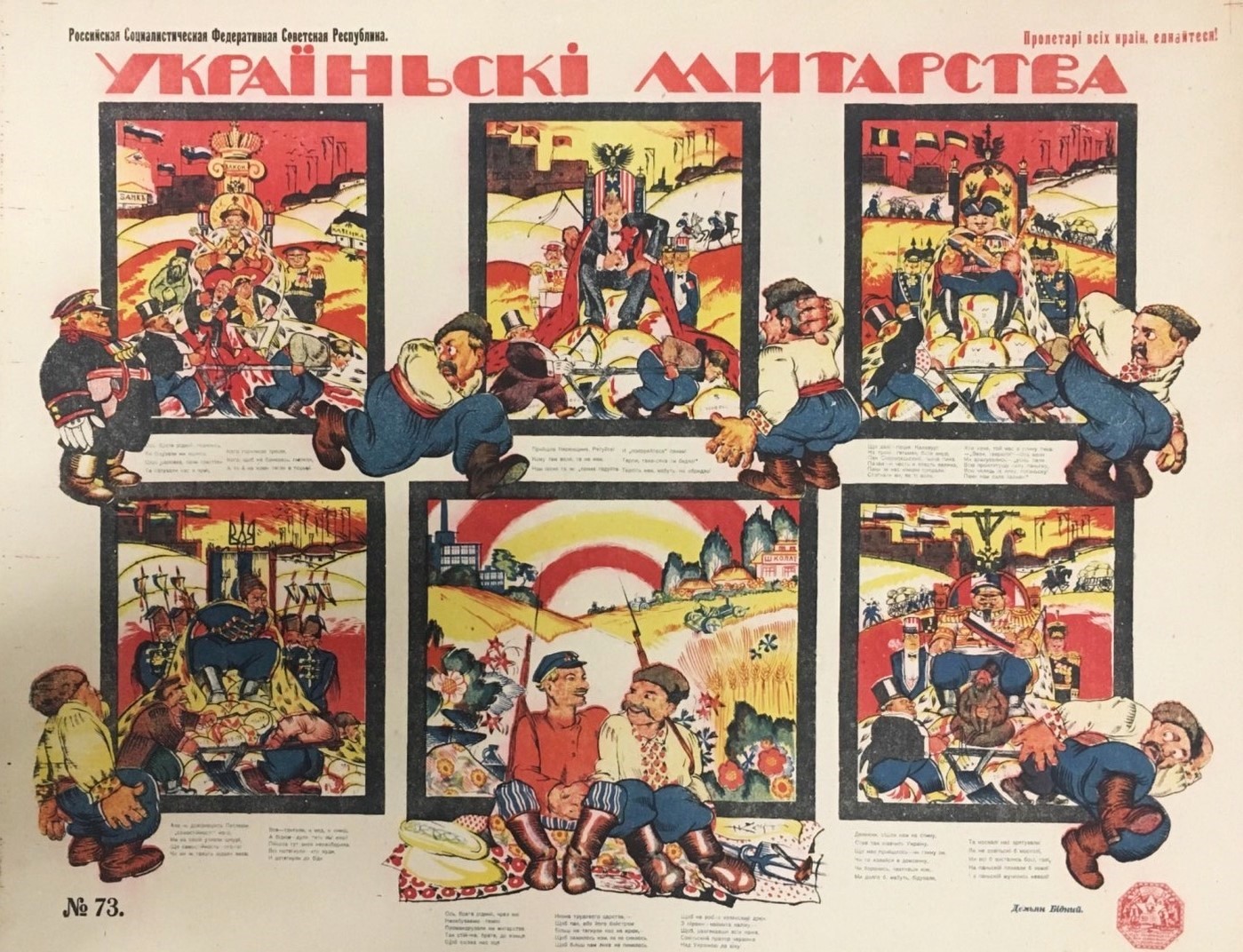
Denikin may, yes, he may, gain one or another victory; he may be able to stave off, on a limited territory, the onslaught of the revolutionary army for a short while; but fundamentally, his doom has been already sealed by history. Its materialization is merely a matter of time. All the news indicates that Denikin’s army will be torn by the Communist armies into separate pieces and that each will be dealt with and destroyed singly. Inasmuch as in the Don region peasant uprisings are incessantly taking place and the Kuban republic is in a state of war with Denikin, his armies will have to retreat toward the Black Sea. The situation will be one resembling that of Yudenich at the Finnish Gulf, with the difference that on the Black Sea there is no Esthonia to receive the broken armies, The armies of Denikin, or their remnants, will have to surrender. Then, Denikin and his government, like Yudenich and his government, will go to Paris, their moral supporter, for their unearned bonus and the favors of a continued protection.
III.
However, even though the very probable chances of a complete smashing of Denikin are raising the international prestige of Soviet Russia and will compel the governments of the coalition to begin negotiations earlier, still they do not decide as yet the form which the situation in Ukraine will take. The situation there does not depend solely on the course of the military events, but, also, and mainly, on the state of the revolution in Ukraine, i.e., on the results of the class struggle in Ukrainian society. For, as long as the revolution has not triumphed completely in Ukraine, as long as the rule of the toiling masses has not been firmly established, for just so long will Ukraine be an opportune place for counter-revolutionary efforts.
Not until Soviet Russia will have a free and sure access to the Ukrainian grain, the Donetz coal, and the states of Caucasia (naptha and cotton), will she be assured of her predominance in Eastern Europe.
Furthermore, the firm placing of the victorious red banners on the Black Sea and at the gates of Caucasia is a death blow to the imperialism of England, at present the main adversary of Soviet Russia.
What, then, is the situation of the Ukrainian revolution? Everything indicates that it is good.
Let us turn our attention somewhat to the past. At the beginning of the Russian revolution, when the appetites of the Ukrainian nationalist parties showed themselves in all their splendor, they wanted to build up an independent (“samostijna”) Ukraine from the ridge of the Carpathians up to the Volga and the Caspian Sea to the North and West, making large inroads into the Great Russian, White Russian, and Polish territories. Today, all these plans are dormant, completely smashed. In the East, independent republics have been formed in the Terek and the Kuban. On the Don, in the regions of Elisavetgrad, Poltava, Chernigov, Kiev—in the whole of Ukraine to boot—there are uprisings, triumphant uprisings, of Bolshevik peasants or such as are in sympathy with them, who are animated by the slogan of possessing themselves of the land of the nobles and establishing the rule of Labor in opposition to the Ukrainian state. Taught by the lessons of all the governments: Skoropadski’s and Denikin’s, Vinnichenko’s and Petrushevich’s, the peasant population of Ukraine understands that neither a reactionary, nor a liberal, a democratic, or a social-patriotic power will return to them the land and secure its possession. The land, alike with freedom, must be obtained through one’s own efforts and only by one’s own power can it be retained. A poor Ukrainian peasant or worker probably does not know how to judge the intricacies of the Soviet constitution, but he understands and feels its sense. Soviet Russia is too great a lesson and example for him.
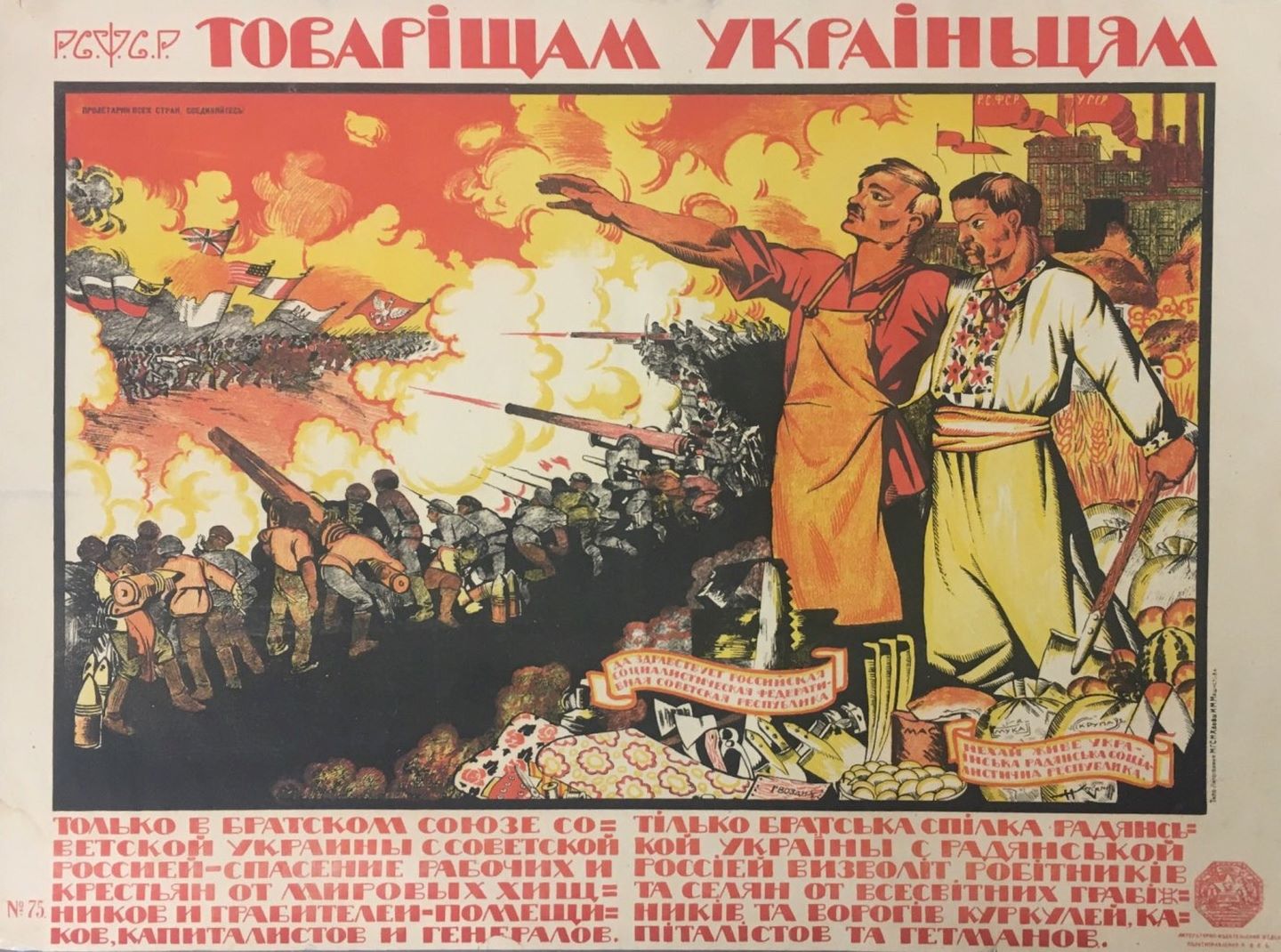
In the West of Ukraine, the Petlura “state” has been broken up. Not only by the fact that, owing to the treason by Tarnowski, his armies were diminished and the strategical situation changed, but also because the Ukrainian social-democratic party, whence he originates, and which was his support, is broken to pieces. It is but a few weeks since, at a conference of the party, held in Vienna, a stand was taken by the majority, to cooperate with Soviet Russia. The resolutions of the conference were directed against Petlura, and though his Lemberg organ Wpered (Forward) was not writing truth about these matters, there is no doubt but that this conference brought a split—a dissolution.
As an unmistakable expression of this state of affairs, the fact may serve, that the president of the Petlura ministry, Mazepa,1 went over to the side of the Bolsheviks; Wityk2 and Bezpalka3 did the same, taking with them 2,000 out of the total 5,000 of Petlura’s troops. Thus the forces of Petlura are very small and it is unknown whether the morrow will grant him enough land on which to muster his troops.
Eastern Galicia, headed by its dictator, Petrushevich, has long since, after its conquest by the Polish armies, become merely a card in the diplomatic game. Though Petrushevich was a rival of Petlura, nevertheless the hopes of the eastern Ruthenian nationalists found their support in the army and the “state” of Petlura. However, the rivalry was not merely of a personal nature; it was rooted in a difference of political orientation. Namely, Petlura, who was directly threatened by the imperialism of Denikin, was simulating sympathy for Poland, and was looking to Poland for support, in treaties that were favorable to Pilsudski as well in facilitating the latter’s policy in Podolia. On the other hand, Petrushevich, whose followers, the population of eastern Galicia, have been directly experiencing the blessings of the gentle protection they received at the hands of the Polish reaction, was holding out his hand to Denikin in order to defend himself against the Polish designs. Today, when Denikin has less time for flirting with Galicia, and Petlura is crushed, Messrs. Petrushevich and Co. will seek for contact with the rulers in Warsaw, will remind them of their services in preventing the Galician peasants from plundering the land of the Polish nobles; the bargain will be surely contracted at the expense of the peasant’s hide. If the party of Petrushevich and Co. will submit to the Polish rulers it will receive positions, offices, and a kind of autonomic rights; but the Polish nobility will obtain at a cheap price hired lackeys to keep the Ruthenian peasants within bounds.
When we analyze the class conditions and party relations prevailing in Ukraine, we fail to find sufficiently strong counter-revolutionary forces which could oppose the union of the toiling masses of Ukraine with Soviet Russia. Soviet Ukraine has been broken by the Entente and Denikin, with the aid of Petlura and some reactionary groups. Today, when these groups are in a state of dissolution, when Denikin is beaten, and is retreating towards the sea, we have ground enough to maintain that Soviet Ukraine, built up for the second time, will be already firm. The more so, as the Caucasian states have convinced themselves during the last year what the rule of Denikin and the Entente means for them: a death sentence to their existence.
The Ukrainian nationalists, for whose policy the development of Ukrainian culture is a determining factor, after two years of experience, can convince themselves that only the rule of the toiling masses can give Ukraine a guarantee for the development of her culture. The cultural work of Soviet Russia, which in regard to its content, form and force has surpassed everything that had been done anywhere up to now, ought to convince even the most stubborn as to whither the road leads, if the Ukrainian peasant is to have a secure existence—land and culture, schools and organizations for spiritual development. And, at any rate, he will not find these treasures through the reaction in Berlin, nor through the Supreme Council of the Entente, which carries on its conversation with the representatives of Petlura and Petrushevich in the antichambre.
IV.
The victory of Soviet Russia, and thus the existence of Soviet Ukraine, will be always threatened from the side of the Polish front. But the strength of the Polish front will not suffice for long. First, because events are developing in Poland at a quick tempo for an overturn, and one of its main slogans will be precisely the stopping of the war. Secondly, because the Polish armies have been having increasing difficulties in opposing the Bolsheviks, the proof of which is seen in the battles on the Berezyna, where the Bolsheviks have crossed the river. Furthermore, the offensive against the Bolsheviks is difficult beyond description, if only for economic reasons, and would therefore accelerate the internal crisis. But the most important point is that the conduct of war by the Polish government against Soviet Russia depends upon the tactics of the Entente with regard to the government of the People’s Commissars at Moscow. If the Entente should be compelled to carry on negotiations, then all intervention will stop, and the stopping of intervention by Poland will then be only a matter of time. For if public opinion and the voice of the workers will achieve their aim, that is, negotiations and a stopping of the armed counterrevolution, then its pressure will also reach Poland and Warsaw.
V.
We began our article with the statement that the case of Ukraine has now become the central point of the international situation, and we have proved that the triumph of the revolution in Ukraine, which is undoubtedly coming, and the re-establishment of the proletarian government there will put Soviet Russia on such a powerful basis—military, economic and spiritual—that the designs against Russia on the part of the international reaction will be dealt a mortal, a final blow.

Of course, it is possible to make assumptions of a union between France and England with reactionary Germany, but the strength of Russia is developing faster than the hatred of the western imperialists for the German capital is disappearing; besides, this would probably prove to be an adventure against which not only the workmen in Germany, but also the popular opinion in the West, would come out in full force. An intervention of the West based on such premises—on the support of the reactionary Germany, but yesterday an outcast,—would be all the more obnoxious to the proletariat of the Entente countries.
—Swit, Vienna, Dec. 6, 1919.
NOTES.
1.Mazepa, a member of the Central Committee of the Ukrainian Social-Democratic Party, is well known in Russia as a cultural and zemstvo worker.
2. Wityk, who served twice as a member of the Vienna Parliament, was a member of the Petlura government and a sworn enemy of the latter whom he branded as a man with demoralizing influence. (The news of Wityk’s going over to the Bolsheviks was denied since.—Ed.)
3. Bezpalka, a Social-democrat from Bukovina, editor of the paper Borotba, was minister of labor in the government of Petlura.
Soviet Russia began in the summer of 1919, published by the Bureau of Information of Soviet Russia and replaced The Weekly Bulletin of the Bureau of Information of Soviet Russia. In lieu of an Embassy the Russian Soviet Government Bureau was the official voice of the Soviets in the US. Soviet Russia was published as the official organ of the RSGB until February 1922 when Soviet Russia became to the official organ of The Friends of Soviet Russia, becoming Soviet Russia Pictorial in 1923. There is no better US-published source for information on the Soviet state at this time, and includes official statements, articles by prominent Bolsheviks, data on the Soviet economy, weekly reports on the wars for survival the Soviets were engaged in, as well as efforts to in the US to lift the blockade and begin trade with the emerging Soviet Union.
PDF of original issue: https://www.marxists.org/history/usa/pubs/srp/v1v2-soviet-russia-Jan-June-1920.pdf
 Revolution's Newsstand