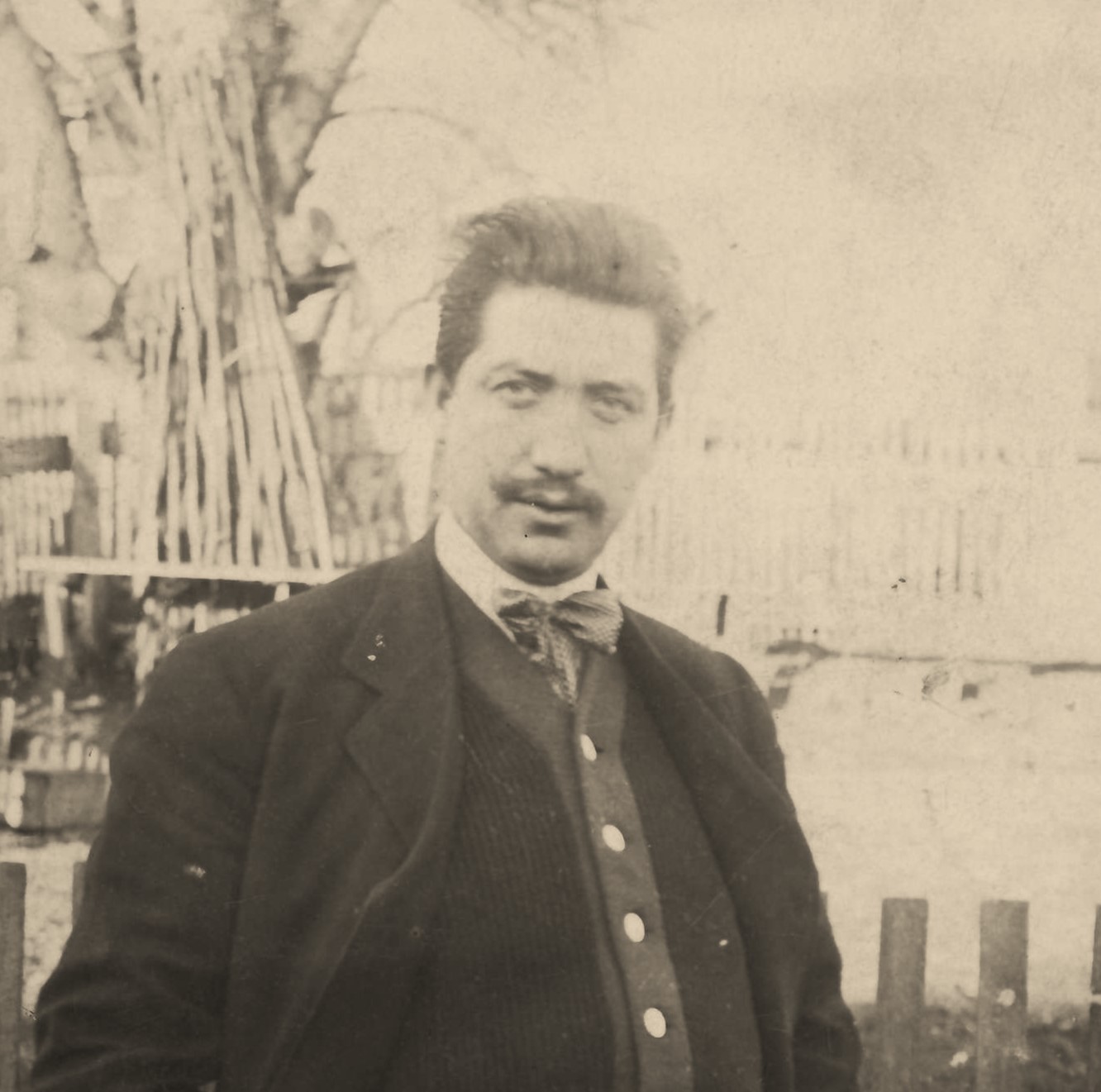
An important essay from Carlo Tresca on the crisis of the Italian workers movement caused by the war, which saw Mussolini and de Ambris emerge from the Socialist movement to become leaders of nascent fascism.
‘The Italian Workers and the War’ by Carlo Tresca from The Liberator. Vol. 1 No. 10. December, 1918.
EUROPE is swept today from one end to the other by an irresistible and purifying revolutionary spirit, which will triumph over hate and greed and create social justice. The proletariat of Italy is aroused, alert and vigilant. When the “social democracies” of the old world were furling the red flag of the class struggle to raise the yellow flag of class harmony towards the sun, the proletariat of Italy remained steadfast at post, almost alone, but faithful to the principle of “no compromise.” The bourgeoisie there- upon seduced the leaders. The Socialists’ faith reposed in Benito Mussolini, the editor of L’Avanti, the brilliant daily organ of the Official Socialist party (Partito Socialista Ufficiale), and the syndicalists had centered around Alceste De Ambris, the demogogue of pungent and facile phrases, who is now reported to be in America on a governmental mission.
Mussolini had assumed the Jacobin pose, popular with the masses; time after time in the columns of L’Avanti or on the platform his voice thundered like that of Blanqui. Ambris had successfully revivified the ranks of the organized workers, attacking conservative unionism and leading the young, daring, fighting syndicalist organization.
Mussolini and De Ambris resolutely opposed war–but when it was the Italo-Turkish War. At the very beginning of the European conflict De Ambris became a turncoat. On the occasion of Italy’s entrance into the war he donned a military uniform, and, although he never went to the front, he “fought heroically” to carry with him the “Italian Syndicalist Union” (Unione Syndicaliste Italiana), but they abandoned him to his destiny. Mussolini, however, remained at his post for a short period and contributed considerably to maintaining Italy’s one year of neutrality. But he, too, soon joined the war party, resigned from L’Avanti, and within twenty-four hours founded a new daily paper, Il Popolo. He admitted that 500,000 francs were donated to him for this purpose by the Italian bourgeoisie. The Socialist party membership was shocked. The change was too abrupt. But the party remained unreconciled to the war and the government.
To appreciate the attitude of the Italian Socialist party, the Syndicalist Union and also the general Confederation of Labor, representing as they do the class conscious workers of Italy, it is necessary to bear in mind the treachery of these two men. The Stokeses, Wallings and Spargos of America are doctrinaires without followers; they were never identified with the masses, who ignore their existence. But De Ambris and Mussolini were thoroughly identified with the working class. They fought in the greatest labor struggles, they served faithfully and sincerely for many years, and the workers had loved and appreciated them. But when the moment of a supreme test came and the two leaders turned their backs upon their organizations, the workers of Italy compelled them to surrender to the bourgeoisie as two generals stripped of their armies.
It is a mistake to speak of a “coalition government” in Italy, even with Bissolati, Bonomi, Canépa and others in power. These men are considered Socialists by many in America, although they left the party long before the war.
But, in order to justify their participation in the government as representatives of the people, their followers organized the “Unione Socialiste Italiana,” which was poorly represented at the Inter-Allied Socialist Conference of London, and was there denied the right to vote. This so-called Socialist organization is comparable with the “American Alliance for Labor and Democracy.”
In spite of this, the Official Socialist party continues to represent the mass of the Italian workers, both numerically and in spirit. It shares the leadership with the Syndicalist Union, whose most active organizers are either in prison or interned like Armando Borghi. But the organization’s work continues silently and successfully. During the war the Syndicalists have doubled their membership, reaching the 200,000 mark at present. Their attitude towards the war remains unchanged and they are devoted to the rebuilding of the international.1
When the Italian government was preparing the country for war every student of world politics asked, “Will there be a revolution in Italy?” The workers were actually ready. One year before the proclamation of the war against Austria the workers had declared a general strike against the Italo-Tripolitan War. For over a week Italy was swept by the flames of revolt and the Republic was proclaimed in many cities. If in 1915, as in the year prior, the same cohesion of radical groups had existed and a leader like Malatesta had appeared, another story might have been written. The desertions of Mussolini from the Socialists, De Ambris and Masotta from the syndicalists, Tancredi and Rigier from the anarchists, created enough temporary confusion, discouragement and indecision among the masses to give the government the advantage at the psychological moment. But revolution was greatly feared a year later, just prior to the military disaster of Caporetto. In America this disaster was discussed widely, and the capitalist press unanimously fixed the responsibility upon “Socialist defeatists.” In Italy it is generally accepted, however, that the causes were principally of a military nature. In December, 1915, a large number of soldiers were allowed home on leave. But it is admitted by the Italian government that a large number refused to return, and in consequence and to avoid a repetition, further leave of absence was denied, forcing the soldiers to remain at the battle front for two years without relief. The soldiers naturally became tired, and the military command attempted to revive their exhausted spirits with rapid and repeated attacks of a political rather than military significance. In the secret discussions of the Chamber of Deputies it was proven that officers had encouraged. the combatants by promising peace after the attack. Another psychological factor must also be considered in a thorough understanding of Caporetto. Italy as a nation felt herself neglected by her allies at that time. The newspapers had openly expressed this feeling and editorially had made covert threats of separate peace with Austria. Undoubtedly the Socialist opposition contributed in part. But it may be possible (though here we cannot, of course, express ourselves freely) that a reason for Caporetto could be found in the fact that an impending revolution was thereby checked.
We are not discussing revolution here in an academic sense. Minister Nitti, speaking in the Chamber of Deputies before Caporetto pleaded on behalf of the government with the Socialists to abandon the idea of a revolution in Italy at this time.
With the enemy on Italian soil, the government, urged on by the reactionary bourgeoisie, the military party and the “Socialist nationalists,” attempted coercive methods against the radicals. Constantine Lazzari, an old communist and now secretary of the Socialist party, was tried and convicted of treason and sentenced to two years. Menotti Serrati, present editor of L’Avanti, was tried as accessory before the fact” in connection with the revolt in Turino, where workers fought on barricades for a week, and regiments of Alpini and Bersaglieri, sent to quell the disturbance, joined the revolt. In these trials the strength of the Italian workers was again revealed. Serrati, who faced the military court with the utmost courage, was sentenced to only three years in prison, and continues from his cell, “No. 48” (which is also his pen name), to edit L’Avanti.2 The government obviously feared to go too far with him because the Official Socialist party Congress of Bologna reaffirmed their confidence in him and applauded his extremist attitude.
The depressed spirits of the bourgeoisie were relieved slightly after Caporetto when Filippo Turati, the leader of the Socialist Parliamentary group of forty-two deputies, made a flowery speech in which he weepingly declared he would sacrifice his Socialist principles for the safety of the country! His fellow Socialist deputies applauded him, but L’Avanti and the party protested vehemently. Dissension grew, and the government hoped to see its strongest opposition divided. The question of a Governmental Committee on Reconstruction aggravated this dissension. This committee was organized on a large scale, and men of every party were invited to join, including De Ambris, Mussolini, etc. The Parliamentary Socialist group and the leaders of the Confederation of Labor accepted the invitation promptly. But L’Avanti as promptly objected from the viewpoint of an uncompromising working class party. It contended that to participate in such a committee would not only violate party tactics and lend a friendly hand to the government responsible for the war, but it would be a virtual “whitewashing” of Mussolini, De Ambris and company.
Turati took exception to the rigidity of the party’s discipline. The capitalist press applauded him warmly and the government attempted to assist him by forbidding the Congress of the party called to discuss the matter. After a vigorous protest by the party, the government acceded, and the Congress met in Bologna in September, 1918. The extremists” triumphed, with 14,015 votes in favor of a motion by Salvadori, criticizing the Socialist Parliamentary groups for their weak and vacillating attitude after Caporetto. The motion by Tiratoschi for the “moderates” received only 2,507 votes. (The Socialist party is much stronger, however, than these figures indicate, since it carries with it nearly 500,000 votes.) As a consequence of L’Avanti’s agitation and this motion, the Socialist deputies, with the exception of Turati, resigned from Minister Orlando’s “Committee on Reconstruction.”
The same question was discussed within the range of the Confederation of Labor with similar results. Their leaders also resigned.
Thus the latest attempt in Italy to produce compromise between the classes was foiled by the ever vigilant vanguard of labor.
In connection with the problem of reconstruction, L’Avanti said: “We have our programme of reconstruction and it is advisable to insist upon its application.” This programme was formulated in the Convention of Milano in 1917 and included numerous social reforms similar to those promulgated in London at the Inter-Allied Labor Conferences. But there had unobtrusively been inserted into this reconstruction programme a paragraph in which the necessity for a republic in Italy as a basis of all reform was affirmed.
Turati, who wrote the original resolution of the Milan Convention, now claims that the word Republic was added by someone else. But the magic word Republic has now been discussed with increasing animation for many days. The word Republic symbolizes a state of mind throughout Italy. The workers, who have postponed the revolution, first because of the desertion of some leaders, and second because of the invasion of the country, do not want further postponement of the dream of Mazzini and Garabaldi—a united Republic of Italy!
NOTES.
1. One of the reasons given by the official Socialist Party for declining to participate in the last Interallied Labor Conference, was because it was called at the request of Samuel Gompers, whom they consider opposed to the principles, tactics and ideals of International Socialism.
2. When Congressman La Guardia debated with Scott Nearing he asserted that L’Avanti “had been proven guilty of accepting German gold.” As a matter of fact, L’Avanti insisted upon a public accounting compelled by law, from every newspaper. The proposition was strongly opposed by all the capitalist papers, so that L’Avanti remains the only paper in Italy actually willing to have a thorough investigation of its finances.
The Liberator was published monthly from 1918, first established by Max Eastman and his sister Crystal Eastman continuing The Masses, was shut down by the US Government during World War One. Like The Masses, The Liberator contained some of the best radical journalism of its, or any, day. It combined political coverage with the arts, culture, and a commitment to revolutionary politics. Increasingly, The Liberator oriented to the Communist movement and by late 1922 was a de facto publication of the Party. In 1924, The Liberator merged with Labor Herald and Soviet Russia Pictorial into Workers Monthly. An essential magazine of the US left.
PDF of full issue: https://www.marxists.org/history/usa/culture/pubs/liberator/1918/10/v1n10-dec-1918-liberator-hr.pdf
 Revolution's Newsstand