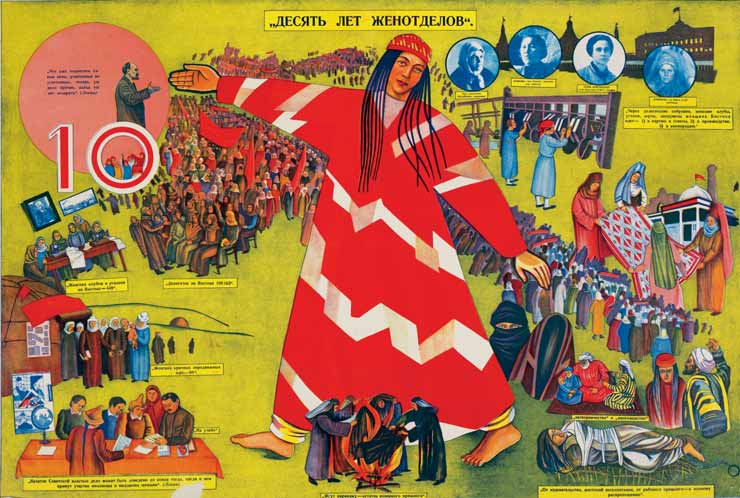
A valuable, expansive document on work among women in the largely colonial and semi-colonial ‘East’ from the Comintern’s Fourth International Conference of Work Among Women held in Moscow during May and June, 1926
‘Thesis on Work among Working Women of the East’ from International Press Correspondence. Vol. 6 No. 69. October 26, 1926.
The revolutionary masses of the East in their struggle for political and economic emancipation from international imperialism and for liberation from feudal-servitude relations which are still prevalent in most Eastern countries, have now a loyal ally–women.
By drawing the women of the East into the struggle against imperialism, an impetus will be given to the national-liberation movement and its success will be ensured. Women’s participation will also imbue world revolution with new energy, the energy of millions of people who for centuries were fettered by social conditions, traditions, customs and prejudices. Therefore, the V. Congress of the Comintern insisted on the fact that “Communist work among women is by no means a side-issue for Communist Parties, that it constitutes an important and even determining part of the fundamental task of organisation and realisation of the struggles of the revolutionary proletariat”.
In their work among the women of the East, Communist Parties take as their point of issue the general tasks of the national-liberation movement of the proletarian masses and of the proletarian class struggle. In respect to Japan, which is a developed capitalist and imperialist country having a great deal in common with the Western European countries, the Communist Party should base its activities in the field of working amongst women on the general tasks of the working class in its struggle against the rule of capitalism and imperialism tor the triumph of the proletarian dictatorship.
With these fundamental tasks in mind, they must in their activity extend and consolidate the united anti-imperialist front, drawing into it large numbers of working women, making use for this purpose of the mass workers and peasant organisations and also of the petty bourgeois national-revolutionary and women’s organisations, which are rallying ground also for revolutionary elements. Communist influence over these organisations must be exercised by means of introducing women Communists into them as active workers, and by joint actions in connection with definite concrete slogans.
But at the same time, Communist Parties must display maximum caution and flexibility in their support of local national-liberation, feminist and other petty-bourgeois movements. They must draw a line between the Communist women’s movement and bourgeois feminism and must also adapt the immediate demands, and the forms of work to local conditions, in complete agreement with the programme and tactics of the Communist Party of every separate country.
Efforts should be made by means of systematic work to eliminate in the ranks of working and peasant women, of working class intellectuals and other petty bourgeois elements the last vestige of the illusion that it is possible for them, within the framework of bourgeois society, to find a way out of their miserable and absolutely dependent position, and at the same time to make them realise that their participation in the economic and political struggle of the proletariat and of the vanguard of the peasantry is essential for the final emancipation of women from the relics of the old religious and social habits and traditions and from exploitation by capitalist society.
I. ORGANISATION.
Organisational forms which activity, among the women of the East should assume fundamentally were already laid down by the V. World Congress of the Communist International. In its resolution “On the activity of the Communist Party among working women”, the V. Congress “Insists on the fact that activity among working women is the task of the Party as a whole. It must more than ever become part of the general Party work. In the entire activity of the Party, in all its actions and campaigns, special measures for the mobilisation of working women should always be considered.
In Communist Parties and mass workers’ organisations and also in national-revolutionary parties and mass peasant organisations, in workers-peasant parties, trade unions and co-operatives, women’s departments or women’s commissions should be established in the form of auxiliary organs whose task it shall be to help to organise women and to draw them into the mass workers’, peasant and national-revolutionary organisations.
Women’s Departments, women’s commissions and the institute of women organisers in their capacity of auxiliary Party organs represent organisational forms which ensure uniform leadership of the proletarian and national-liberation movement, and which prevent the consolidation and extension of bourgeois- feminist influence.
A member of the C.C. is to be made responsible for work among women. It is essential that the C.C. appoint one comrade of the Communist Party, preferably a woman, and if possible a member of the C.C., who shall be responsible for the management and conduct of activity among women.
Every local committee must appoint one comrade, preferably a woman, for work among women and for regular control over the activity of women’s organisers. Women’s organisers have to account for their work to the Party Committees and the lower Party nuclei. They are the representatives of the Party as a whole and not only of women Communists, but are responsible for their work to the Party as a whole. At the sessions of Congresses and C.C. plenums, local committees, nuclei and Communist fractions, questions concerning work among women should be placed on the agenda and discussed. All questions of principle and the organisational forms and methods of work among women must be decided by the competent leading Party organ in full agreement with the decisions of the Comintern.
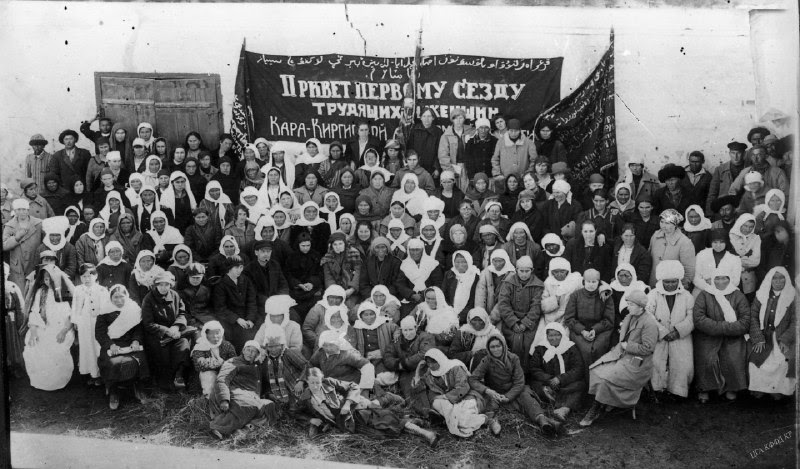
Local women’s departments must see to it that in every factory and big enterprise where women are employed, there should be regular agitation and propaganda among women with respect to all labour and everyday questions of special interest to women at the particular moment. Should there be a Communist nucleus of at least 3 Communist men or women in the enterprise, one of them entrusted with work among women, should be directly connected with the local women’s department or women’s organiser and should report on his or her work to them. If no Communist nucleus exists in the factory or enterprise the local women’s department must appoint a woman organiser for personal contact with the women’s department from the ranks of manual or office women workers in this enterprise. It is desirable to select women organisers from the ranks of working women. By means of selection circles, groups of the most active non-Party, active working women are formed around the women organiser, the woman representative of the Communist nucleus. These circles deal with general and special questions of special interest to working women, such as: sanitation, hygiene, protection of motherhood, childhood and labour, reorganisation of social and domestic life, struggle against war, convocation of the national assembly, etc.
In order to achieve maximum successes with respect to the organisation and attraction of women to mass political (proletarian, national revolutionary and peasant), trade union, co- operative and other parallel non-Party organisations (International Workers’ Relief, I.R.A., Society of Friends of the US.S.R., etc.) the Communist Parties of all countries should adopt two programmes of action in all fundamental branches of work among women: A broader and a narrower (immediate) programme, bringing forward the most important transitional demands which should be linked up with the general programme of action. The broad programme should comprise general principles, tactics and organisational forms of work among women laid down by special decisions of the Communist International and the I.W.S. and at congresses and conferences. For the realisation of this maximum programme, it is essential in the activity among working and peasant women, active women intellectuals and women of petty bourgeois circles to take immediately in hand the realisation of the most pressing demands. Special branches of work closely connected with the interests of various sections of women and also general questions of the national-liberation and class struggle of interest to all sections of working women should receive special attention.
The fundamental aim pursued in connection with this is to bring forward a group of questions of immediate and pressing interest to various social sections of women and to make them of equal interest and equally actual for women as a whole, as it is they who will have to fight for them.
Work among women embraces generally speaking several fundamental spheres: the juridical and domestic sphere and the economic and cultural-educational spheres.
II. SPHERES OF WORK.
A. The Economic Sphere.
The development of capitalism in the East and the disintegration of the feudal-patriarchal forms of economy and of social and domestic conditions caused thereby, compel women to come gradually out of their former state of slavery and dependence and to endeavour to earn their living, which in its turn brings a gradual change into their economic position. The first great change in this respect is the mass participation of women in industrial production (Japan, India, China), and in agriculture.
The task of the Party and the trade unions, consist, on the one hand in the struggle against all obstacles in the way of women’s participation in production (this takes place in the Moslem East with its backward forms of national economy) and in free professions, and on the other hand in helping women to become skilled workers, in protecting their labour and demanding equal pay for equal work regardless of sex, etc.
The Communist Party, the women’s departments and women’s sections in the trade unions must carry on a systematic agitation in favour of the admission of women to technical education and apprenticeship in factories and workshops in those Eastern countries which have such institutions.
With respect to the protection of interests of peasant women, the Communist Party must take an active part in the solution of questions connected with agriculture, as for instance. the land question, the land development policy, the usufruct of land, the land legislation of the country. With regard to the general relations concerning the land question, the Party must be guided by the following considerations: to give women an opportunity to earn their living, to make them economically independent, namely, the Party must issue the slogan of right to landownership and right to inheritance for all women.
B. The Juridical and Domestic Sphere.
It is essential to study very thoroughly the fundamental laws concerning women’s rights in every individual country, and even in every separate region.
Having made themselves acquainted with the fundamental laws on women’s rights, workers among women must ensure, that those of them which even to a small extent protect the interests of workers and particularly those of women be put into practice, and must point out all their negative sides and their inadequacy.
In this sphere the task of the Party consists in singling. out questions which make women economically dependent, deprive them of political rights and condemn them to domestic slavery. The Parties should bring forward demands concerning the removal of the sex disability by law. The fundamental questions of equal rights are as follows: the right to participate in all branches of labour, the right to education, protection of women’s and child labour, protection of motherhood, the right to participate in social-political life of the country, equality with regard to the inheritance law, the right to transactions concerning property, the right to divorce and property rights in connection therewith, the father to provide for the child in the event of divorce, the right to the usufruct of land, participation in land development policy, abolition of polygamy as an institution of slavery in the East, of child marriages, a struggle against customs which hinder the normal development of the masses, and particularly the women and children.
Taking these fundamental regulations as their point of issue, the Parties must take advantage of any opportunity in connection with the legislation of the country to bring forward in their agitation suitable demands for the extension of women’s rights, endeavouring to have them included in the general legislation. In connection with this it is essential to organise an agitational campaign on a large scale, to explain the Party proposals and their meaning for working women, and at the same time to make use of every campaign of this kind to draw women into social life.
In the East parliament (National Assembly in China, Constituent Assembly and also local autonomous administration), are still in a number of colonial and semi-colonial countries progressive political factors, not only in the struggle against the relics of feudal-patriarchal economic and social institutions, but even become in the process of the struggle the centre of that struggle against the foreign yoke for the independence of the country and the unification of the nation.
By bringing forward suitable demands in the National Assemblies in connection with the protection and the equality of rights of women before the law, the Communist Party and the Y.C.L. enlist the sympathy and support, not only of revolutionary organisations in sympathy with us, but also the support of purely progressive elements and groups through the press. oral propaganda, campaigns and demonstrations. They should organise special campaigns in connection with legislation affecting the interests of working women. In short, they must place themselves at the head of any movement directed towards the improvement of social conditions.
It behooves Communist Parties to make use of all legal possibilities in leading government organisations and institutions (parliament, legislative organs, local autonomous administrations, municipalities), in the various political and social associations, (educational establishments, managements of various societies. craft and guild organisations, among those forms of religious societies, which unite toiling women, in general cultural and social organisations), laying stress on the protection of women’s and children’s interests and labour. In this respect special attention should be paid to local autonomous administrations, where particularly there is a chance to work successfully for the improvement of the conditions of life of the working class. utilising this work for spreading our influence amongst the broad masses of the people.
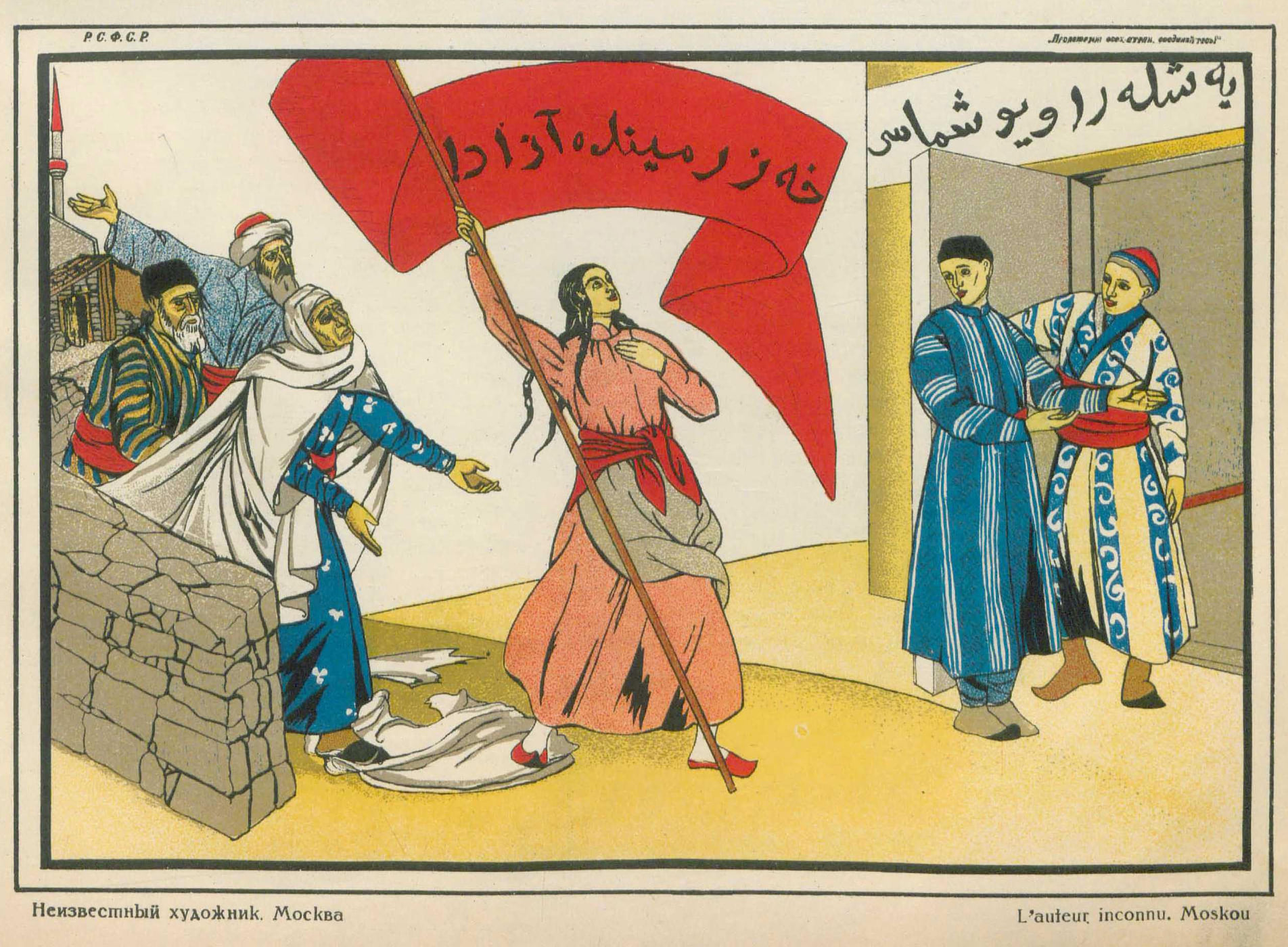
The main task in this sphere is struggle against religious and social prejudices, which are a great impediment to successful Communist activity among the working women of the East.
C. The Cultural-Educational Sphere.
Under conditions prevailing in the backward East, one of the fundamental tasks is cultural-educational work among large sections of working women.
In this respect the task of the Party consists on the one hand in continually bringing pressure to bear on the government of the country, concerning the introduction of a number of measures of a cultural-educational character for the benefit of large sections of women, and on the other hand in the work which the Party itself must carry on in order to achieve this aim.
With respect to public instruction and the liquidation of wholesale illiteracy among the female population in the East (the only exception is Japan where only 10% of the total number of women are illiterate), first place must be given to the question of women’s education. With this object in view, the question of drawing girls into the schools, organising co-education for them as well as special girls’ schools, drawing older girls into secondary educational institutions, into pedagogical polit-technical schools, technical schools, courses, etc. must be brought to the notice of society as a whole.
A campaign must be carried on against prejudices concerning the application of female labour in cultural-educational institutions in the capacity of teachers, midwives, doctors, etc.
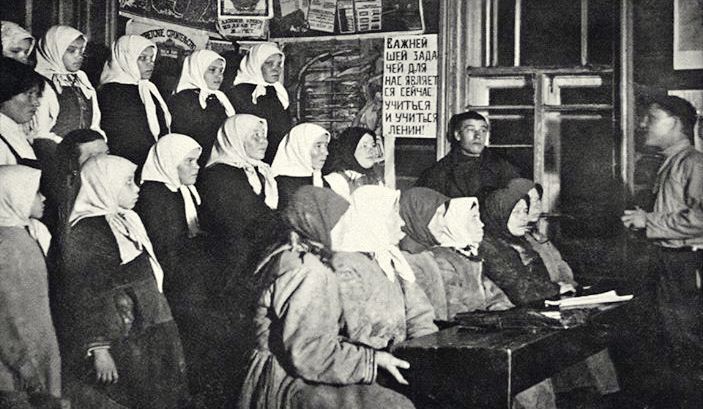
In view of the necessity of drawing special attention to raising the cultural and educational level of the female masses, the Communist Party must endeavour to draw them into its general educational activity, into circles, schools and club work, into the theatres, excursions and into participation in the general and women’s department wall-newspaper, in the press, etc. Wherever joint work is impossible, because of the customs of the country, the Party must carry on through its women’s organisers separate cultural-educational work among women, forming women’s circles, schools, corners in the clubs or women’s clubs, etc. Special women’s dramatic performances and excursions must be organised and women’s newspapers, periodicals, etc., must be published.
Apart from all this the Communist Party carries on work in the existing cultural-educational associations and endeavours to gain influence over them, (China, etc.).
III. DRAWING WOMEN INTO SOCIAL LIFE.
Party.
The ultimate aim of work among women must be to draw them out of their domestic hearth, to widen their limited horizon and to compel them to take an interest in the lives of thousands and millions of their sisters and brothers, in the work for their emancipation and also in questions of an economic, political, and social character. Women must not only be made to take an interest in all these questions, they must be induced to take an active part in the social and political life of the country, in the struggle for the interests of the entire working class and of the advanced peasantry, in the national-liberation movement of the oppressed peoples against imperialism.
The Party can do justice to this task by systematically explaining and emphasising the importance of the aims pursued by the Party, the trade unions, the co-operatives, and youth and pioneer organisations, and also by drawing working women into these organisations. In view of the fact that the extremely inadequate influx of Eastern working women into the Party is not only due to objective conditions, but also to lack of attention to this question on the part of the Party, it is essential to concentrate on the work connected with the attraction into the ranks of the Party of the best section of the working women, who have gone through the school of social work.
It is also essential to continue to carry on work among the women who have already entered the Party. They must be drawn into the circles organised by the Party, trade unions, co-operatives, etc. and must be given definite work to do in order to create around them an atmosphere of confidence and comradeship. There must also be systematic control over these women and efforts must be made to eliminate among them and first of all amongst Communists, all the relics of past traditions and of the conservative, medieval views concerning women which still prevail among men.
The Trade Union Movement.
In view of the small percentage of women in trade unions and of the enormous importance of women’s labour in a number of Eastern countries (Japan. India, China), the Party must pay special attention to the work connected with bringing large sections of women into the trade union movement.
In order to achieve this, the best forces of Communist women workers must be employed in agitation and propaganda among labour, for instance the textile industry. The tactics of the trade union united front must be applied, taking into consideration the present position and the demands of working Women. Efforts must be made to draw working women into the trade union struggle, into all strikes, manifestations, demonstrations and mass actions, in order to cultivate in them class and political consciousness and a feeling of working class solidarity. The organisation of separate women’s trade unions should not be allowed, but wherever they exist, the Party should take an active part in them, endeavouring to merge them into the general trade unions.
To ensure successful agitational-propagandist and educational work, it is essential to organise women’s commissions or to appoint women’s organisers in the trade unions under the control and guidance of the trade union Communist fraction.
During campaigns which have for their purpose to draw working women into the trade union movement, it is essential to bring forward a number of demands which should form the centre of the entire agitation. Wherever there is a strike in an enterprise in which women participate and whenever it is expedient, demands should be made for the protection of labour and the cultural and social development of working women.
Co-operation.
Co-operation in the East can play an important role in women’s emancipation. It can be a useful weapon in the struggle for the right to work, for raising the qualification of women’s work, for improving their position as home industries workers and also for carrying on cultural-educational work in the spirit of the proletarian class struggle. Among the women of the East the centre of gravity of this activity should be transferred to the producers, agricultural and consumers co-operative movement.
Women should be drawn into organised production (artels, workshops, etc.); purely women’s artels should be formed as a means to promote the material independence of large sections of working women.
Efforts should be made to organise through the co-operative movement the normal distribution of the products of the home industries which have special export value (China, Japan, India, Persia, Turkey, etc.), in order to rescue from exploitation the working women in the West who have to work for contractors or middlemen.
Efforts should be made to establish trade relations with the co-operative organisations of the Soviet countries in order to facilitate an exchange of technical and political experiences for women employed in home industries. Wherever it is possible exhibitions of the produce of the Eastern women of the U.S.S.R. should be organised, and the exhibits should be accompanied by as many women as possible from the various Eastern countries where the exhibited goods were produced.
In the East the co-operative movement should be one of the means of bringing women into contact with the Party, by grouping them around the Communist women-initiators of this activity as a base for regular cultural-educational and poli- tical work, by regular cultural-educational lectures, or rather informal talks and women producers conferences organised by Communists. After a certain amount of preparation and purely political discourses the method of delegate meetings adapted to the conditions of local work should be introduced among the women employed in the home industries.
Relations with women employed in the home industries should be established by means of correspondence, by publishing a periodical for them which should very gradually assume a political, technical and cultural-educational character in order that its women readers should become interested in the political life of the workers.
IV. WORK AMONG PEASANT WOMEN.
Peasant women in Eastern countries beyond our borders play a very important role in agriculture. But at the same time there is no proportion whatever between their actual participation in the economic life and their civil and political rights. The peasant population and especially the women live and work under very hard conditions of the still existing feudal-patriarchal social order. They are exploited, not only by the imperialists, but also by their own States. At the same time peasant women are overburdened with domestic work, family duties and are kept in a state of ignorance, oppression and complete dependence.
These conditions of labour and the disproportion between women’s actual position in agriculture and their exclusion from all social and domestic rights and privileges create a fruitful ground for the propagation in their midst of ideas of liberation and emancipation. The national-liberation movement in the East is beginning to take hold also of the peasant women. In a umber of countries China (Kwantung), India, Turkey – peasant women participated in the movement against the imperialists. In Japan peasant women are being drawn into organisations and are fighting side by side with men against the exploitation of the landowners (Tenants Federation”).
In its work among the peasantry, the Party must not neglect activity among peasant women. In its efforts to permeate the rural districts, the Communist Party must in addition to its general work take special measures in order to get into closer contact with large numbers of peasant women. It must endeavour to create a strong body of non-Party peasant women around the Party, drawing them into the national-revolutionary parties, into workers-peasants and advanced peasant organisations, and the most class-conscious among them into the Communist Party.
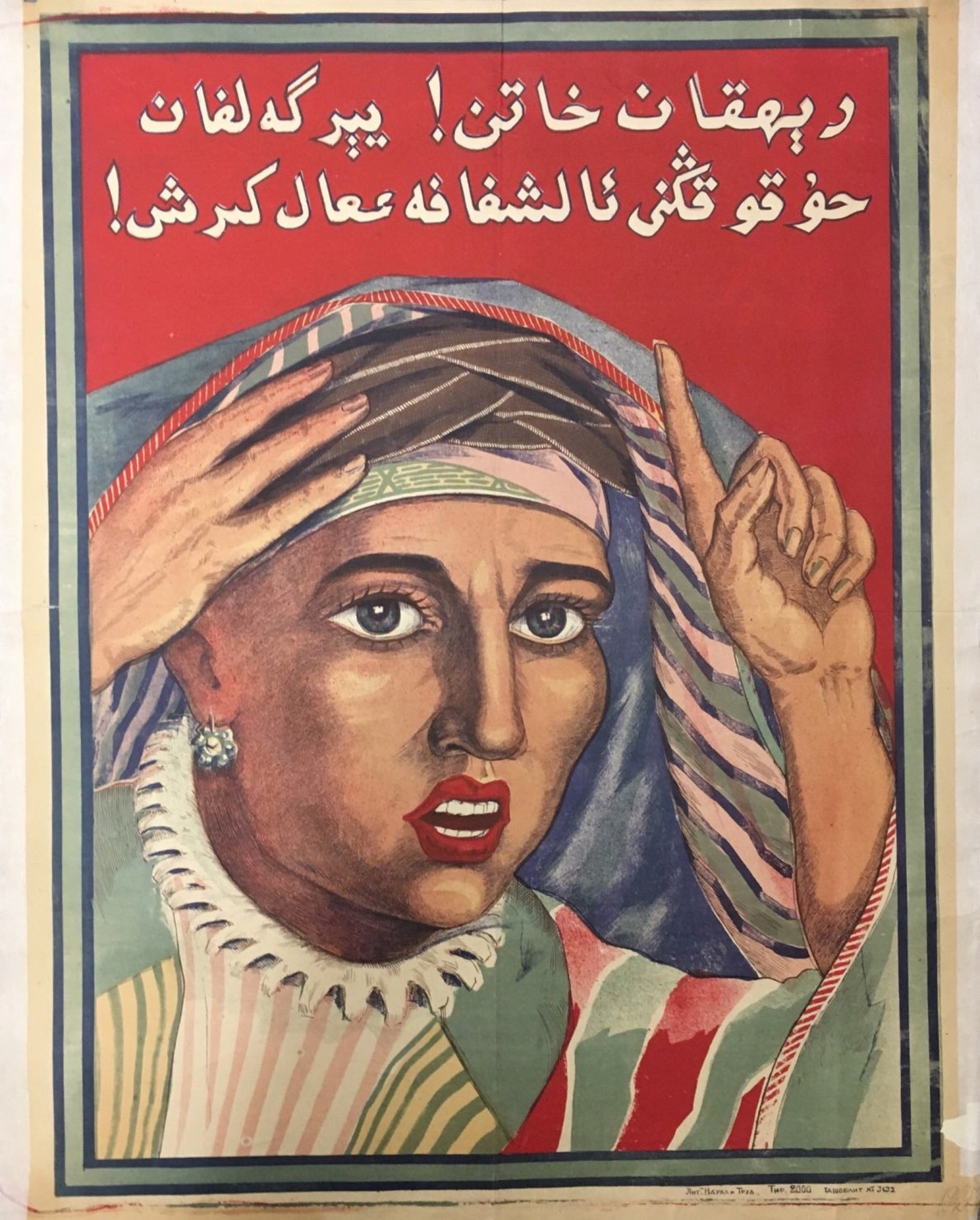
To give an impetus to the work among peasant women, the Party should establish women’s departments in the general peasant organisations with which we are in contact, as is already the case in Canton (China), in Mongolia and Japan. Sub-departments of commissions for work among peasant women should be formed in the women’s departments (in national-revolutionary parties, workers-peasant and Communist Parties) in the centre as well as in the provinces.
In connection with work among peasant women the various social strata in the villages should not be overlooked and suitable methods for approaching these strata must be adopted. Peasant women-leaseholders as well as women belonging to the poor or middle peasantry endeavour to ensure the well-being of their homesteads, our agitation and propaganda finds favour among them inasfar as their well-being is impaired by their general unsatisfactory economic and political position and sex disability. Women agricultural labourers, as hired workers, have every incentive to work against the exploitation of their labour and for the improvement of their conditions of labour.
Because of these fundamental differences in the interests of the peasant masses, the forms and methods of our work among them must also be different. The fundamental activity among peasant women is that connected with questions of women’s equality of rights on the economic, juridical and political field, especially inasfar as they are connected with the peculiarities of women’s position in the national economy and in the family, with questions-connected with raising the agricultural, cultural and political level of peasant women, their emancipation from landowners’ exploitation and from the imperialist yoke. Our main activity among women agricultural labourers and peasant women is their organisation on an economic basis for the protection of their interests against the exploitation of the ruling classes in the villages, also the protection of their political and civil rights, and the demand for perfect equality regardless of sex.
When we speak of the organisation of women agricultural labourers on an economic basis we do not mean the formation of independent women’s agricultural labourers’ unions, we mean that these women are to be drawn into the general agricultural labourers’ unions. Women’s departments should be organised in these unions whose business it shall be to work among the women agricultural masses.
The methods and forms of work among urban female masses -women’s circles, women’s non-Party conferences, women’s non-Party congresses, general and women’s campaigns and of possible women’s corners in the general clubs, can be successfully applied among peasant women, with the only difference that the questions to be brought forward in the process of the work must be in keeping with the demands and needs of peasant women at the given moment, and must be connected with the general political tasks of the Party with respect to the peasant population as a whole.
The Youth Movement.
In connection with the general desire for education and the growing interest in the social life of young girls, Young Communist organisations are confronted with the question of systematic work in drawing girls into their ranks.
In the Young Communist Leagues systematic propaganda should be carried on to promulgate a Communist interpretation of the question of drawing girls into the cultural, economic and political life of the country.
Side by side with this propaganda an energetic struggle must be carried on against backward views concerning working women which still prevail among rank and file Y.C Leaguers in the East, especially in Moslem countries. In connection with the activity among girls in the East one should pay special attention to the peculiarities of the cultural, economic, social and family life in each one of these countries. There are in the East countries with considerable industrial development where women participate on a large scale in the industries and free professions (Japan, India, China) where women have more or less free intercourse with men. But there are also countries such as Turkey, Persia, and others with a Moslem population where women are isolated from the social life, are so to speak kept prisoners, have to cover their faces and are forbidden all intercourse with men.
Different conditions require different methods and forms of activity among girls.
Wherever social and family conditions permit it is of the utmost importance to draw girl Y.C. Leaguers, not only into the League, but also into the League’s general work.
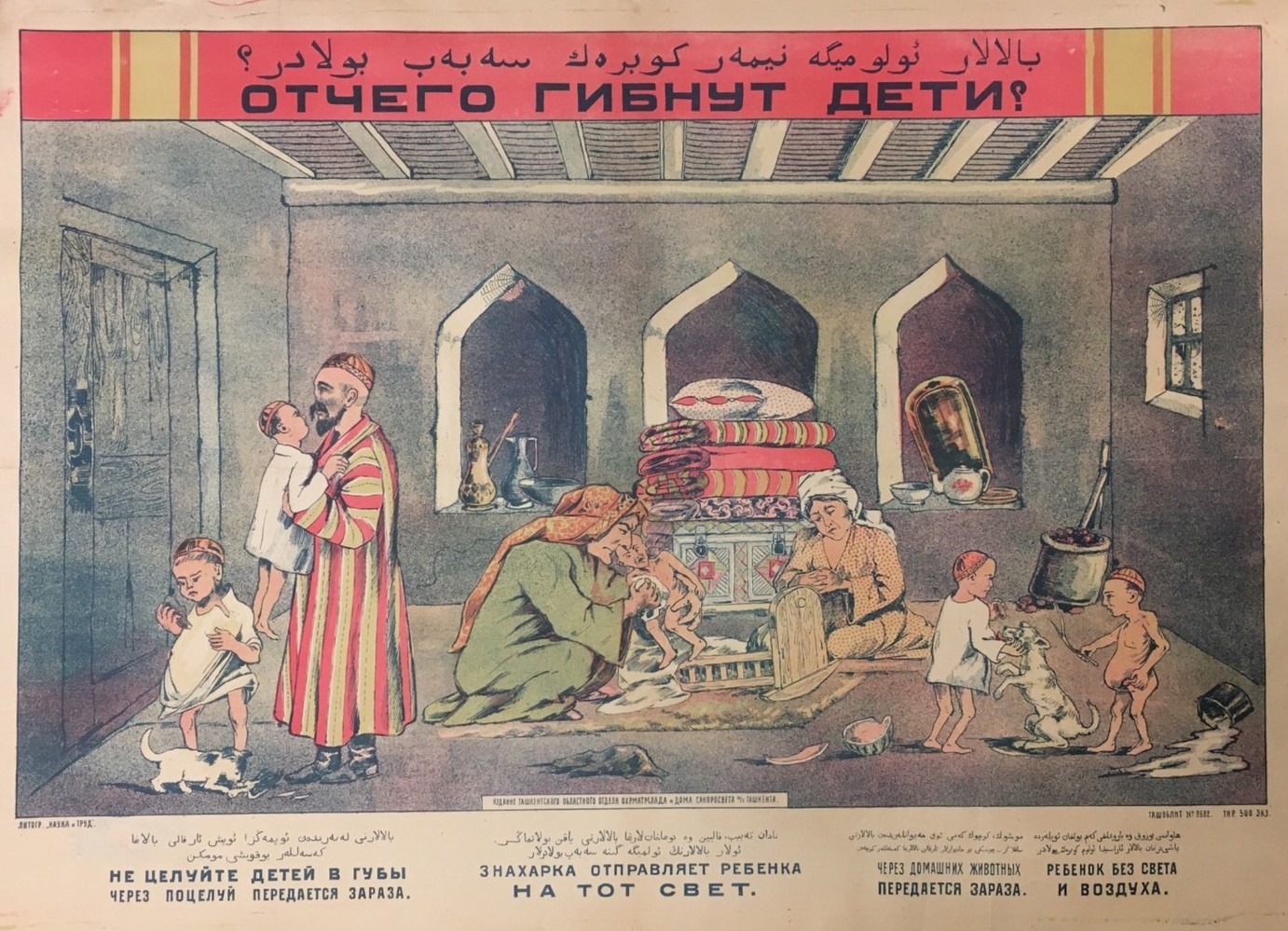
When drawing girls into the Y.C.L. in backward Eastern countries (especially in Moslem countries), it is permissible as an exceptional and temporary measure to form special Y.C.L girl nuclei, but efforts should be made to amalgamate these nuclei gradually with the general Y.C.L. nuclei.
Girl Y.C.L. nuclei should only be formed in localities where common Party and Y.C.L. leadership can be guaranteed. The work of girl Y.C.L. nuclei should be generally of a cultural- educational character. It must aim at drawing girls gradually, into social-political work which is not beyond their level of development.
It is essential to plan out this work among girls and to make it systematic, connecting it with the general tasks of the League. The entire activity among girls must be carried on in contact with the women’s departments, the organisational connection resting on mutual representation.
In order to intensify and develop mass activity among girls, the Y.C.L. must show in its activity a great deal of tact, in respect to the masses that have to be won over (the family, the environment in which the young women are brought up, live. and work) it must be able to understand and take into account all the peculiarities of social conditions, national culture, customs, habits, and prejudices.
Because of the prevalence of early marriages in the East, special attention should be paid to attracting young girls to the Pioneer Corps, permitting the existence of special girls corps also for older girls. These special girl Pioneers Corps must be very cautiously and gradually transformed into mixed corps.
The Y.C.L. and the women’s department must harmoniously collaborate in connection with activity among young and little girls. They must unite forces and funds.
V. ATTITUDE TO THE WOMEN’S NATIONAL REVOLUTIONARY MOVEMENT AND TO THE PURELY FEMINIST (WOMEN’S NON-PARTY) ORGANISATIONS.
In the countries of the East where the national-revolutionary. movement is causing a great awakening among all the sections of the population arousing their centuries old indignation against every kind of enslavement and exploitation, the women’s movement is rapidly developing, and is assuming the character. of a struggle against the economic, political, social and domestic enslavement of women against feudal-patriarchal relics, and for women’s equality of rights. But at the same time this nascent women’s movement keeps pace in the majority of countries with the general, national liberation movement and endeavours to draw the backward women into the social life, thereby tearing asunder the age-long ties of submission and dependence.
As the national-revolutionary movement extends and becomes more intensive (China, Turkey, India) and in connection with women’s extensive participation in industrial and other public activity, the women’s movement develops and forms part of the general liberation struggle of the various peoples. Side by side with this, women’s mass organisations are springing up, unions, leagues, etc. In the national-revolutionary parties women participate actively in the liberation struggle against the imperialism of foreign States, and for the independence of the country. They have an enormous influence among the petty- bourgeoisie and partly also among the working class. Such is the women’s movement organised by the Kuomintang Party of China, and of the national-revolutionary Party of Mongolia.
Apart from the women’s movement connected with the national-revolutionary parties there are feminist organisations which can be divided into two groups:
1. Feminist Organisations which have set themselves the task of wining within the framework of capitalist society full economic, political and social rights lor women. They embrace mainly bourgeois and petty bourgeois elements, intellectuals, and have no elements from the ranks of working women.
Such organisations are mainly to be found in Japan, some of them being organised under the protection of the government and the Court. Such organisations organised by liberal English. women also exist in India.
The bourgeois feminist movement in India is not anti-imperialist.
2 Feminist organisations, which identify themselves with the general national-liberation movement, and in their demands touch upon questions of a general political character directed against foreign imperialism. They embrace the revolutionary section of the women intellectuals, petty-bourgeois elements and even working women (China, Egypt, India, Turkey).
The experience of the last few years has shown that there is a strong tendency to organise among the women of the East. But on the other hand, the general backwardness, the social and family conditions, the inequality of rights, create condition for the development of the feminist and petty bourgeois women’s movement, which is directed against the age-long slavery and oppression of women and for the establishment by means of legislation of women’s economic, juridical, social and family, equality of rights for women’s recognition as human beings.
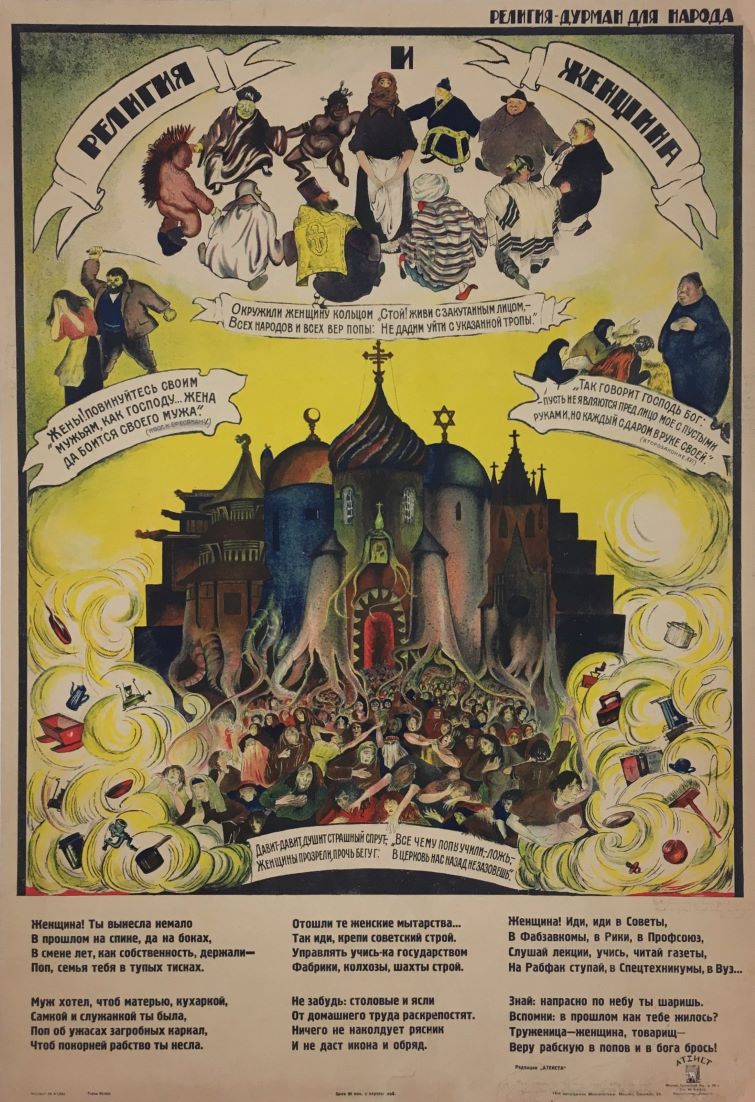
The Communist Party should determine its attitude and tactics to these various groups of women’s organisations in accordance with their attitude to the national-revolutionary movement, and to the proletarian struggle, and also according to the extent of their influence over large sections of working women, taking into account their social composition.
Feminist organisations which have no working women in their ranks, but represent women’s organisations of a West European type (as for instance in Japan and India) the Communist Party treats as organisations alien to it and carries on a struggle against them exposing to the workers their narrow- mindedness and their bourgeois class character.
With respect to feminist and petty bourgeois organisations, which are animated by a revolutionary spirit and are connected with the rank and file intellectuals, peasant women and even working women the task of the Party consists in extending, at the expense of these organisations, the national-liberation movement, drawing them into the united anti-imperialist front, but only in so far as they have within them truly revolutionary elements. At the same time the Communist Party should show great cautiousness and flexibility in its support of these organisations. It should endeavour to separate the Communist women’s movement gradually from bourgeois feminism and from the petty bourgeois women’s movement.
In order to make use of the women’s revolutionary national organisations and also of the progressive feminist organisations in the direction of strengthening the united. anti-imperialist front according to the general decisions of the Comintern. Communists must join these organisations and by systematic work bring them gradually to the side of the liberation movement, and the most revolutionary from among them onto the path of the class struggle. Women Communists must endeavour to change gradually and to supplement the programme and statutes of these organisations in the direction of making them weapons for the protection of the interests of the proletariat and for the class struggle.
Communist fractions in national-liberation parties and organisations must encourage the women’s departments or women’s sections to work among women. As auxiliary organs these women’s departments and sections represent organisational forms which guarantee unity in the leadership of the proletarian and national liberation movement, as they prevent the women’s movement from becoming isolated, and at the same time prevent the consolidation and extension of bourgeois feminist influence which finds a fruitful field in the East.
The fundamental tasks of women Communists in the women’s national-revolutionary movement and in non-Party women’s organisations are as follows:
1. Political education of the members in the spirit of class struggle, pointing out the limited nature of the tasks which progressive feminist organisations and the national-revolutionary women’s movement set themselves.
2. Raising the self-consciousness and activity of working women.
3. Arousing the interest of members in all actual tasks and in the struggle of the working class and the advanced section of the peasantry.
4. Propaganda in favour of the members of these movements. joining general mass, workers’ and peasants’ organisations, especially trade unions, co-operatives, the I.R.A., I.W.R., etc., drawing children and young people into the Y.C.L. and the Communist Children’s Groups.
VI. FORMS AND METHODS OF MASS WORK.
The economic and juridical enslavement of the women of the East, their cultural-political backwardness and their almost wholesale illiteracy demands special forms and methods of work, different considerably from these which are practised in highly developed capitalist countries. Therefore, in order to prepare women’s participation in the trade union and political movement, it is essential in the East more than anywhere else to carry on preparatory work on a very large scale with the object of raising the cultural level of women generally, abolishing mediaeval forms of social life, religious fanaticism, savage superstitions and ignorance. But our main effort must be directed towards the emancipation of women from their secluded life which prevents them coming out into the arena of social activity and which prevents their entry into the general mass organisations.
The best methods lor carrying on mass work among the women of the East are women’s campaigns, women’s schools, dubs, and corners, non-Party women’s conferences, women’s meetings, circles, delegate meetings and a women’s press. All this must be organised and controlled by our Parties, or by organisations in sympathy with us (national-revolutionary, trade union organisations, etc.), through the medium of women’s departments, sections, commissions in the C.C. as well as in local committees and in the enterprises.
Women’s clubs are the best means for the organisation of the most backward and economically and socially most down- trodden female masses. These clubs work under the control of the Party and in their entire activity they are organically connected with Party, trade union and co-operative organisations. They adapt themselves to the peculiarities of the social, economic and cultural development of every country.
Women’s clubs at times fulfil the functions of all political- education organs as well as the functions of juridical general educational organs and organs for the protection of health. Their task consists in familiarising women with definite forms of labour, generally practised, and which could be applied in every locality.
The fundamental tasks of women’s clubs is women’s political education, by means of connecting the entire club work with the tasks confronting the Party at the given moment and also in the future.
The various institutions for the development of women are: schools for the liquidation of illiteracy, circles for political education, trade union and co-operative circles, literature, art, dramatic and workers’ correspondents’ circles, excursions, wall newspapers and periodicals.
In view of the cultural, economic and social backwardness of the women of the East, especially of the Moslem East, it is admissible to establish in the corners and clubs special purely Women’s Communist nuclei, which, however, should aim at fusion with the general nuclei.
Special youth sections are formed in the clubs for the benefit of young girls. Work in the youth sections is similar to the work carried on in children’s and youth organisations and is based on the Party’s decision with respect to this subject.
Through their sections women’s clubs do their share in the organisation of Y.C.L nuclei Youth Sections, Pioneer Corps, various circles among girls and boys and wall news. papers under the control of the Y.C.L.
Young Pioneers’ circles are gradually linked up with the Y.C.L. Membership in the Youth Sections is open to girls- children of workers, club members and also non-members of the club. From their ranks Pioneer corps and Y.C.L. members are recruited.
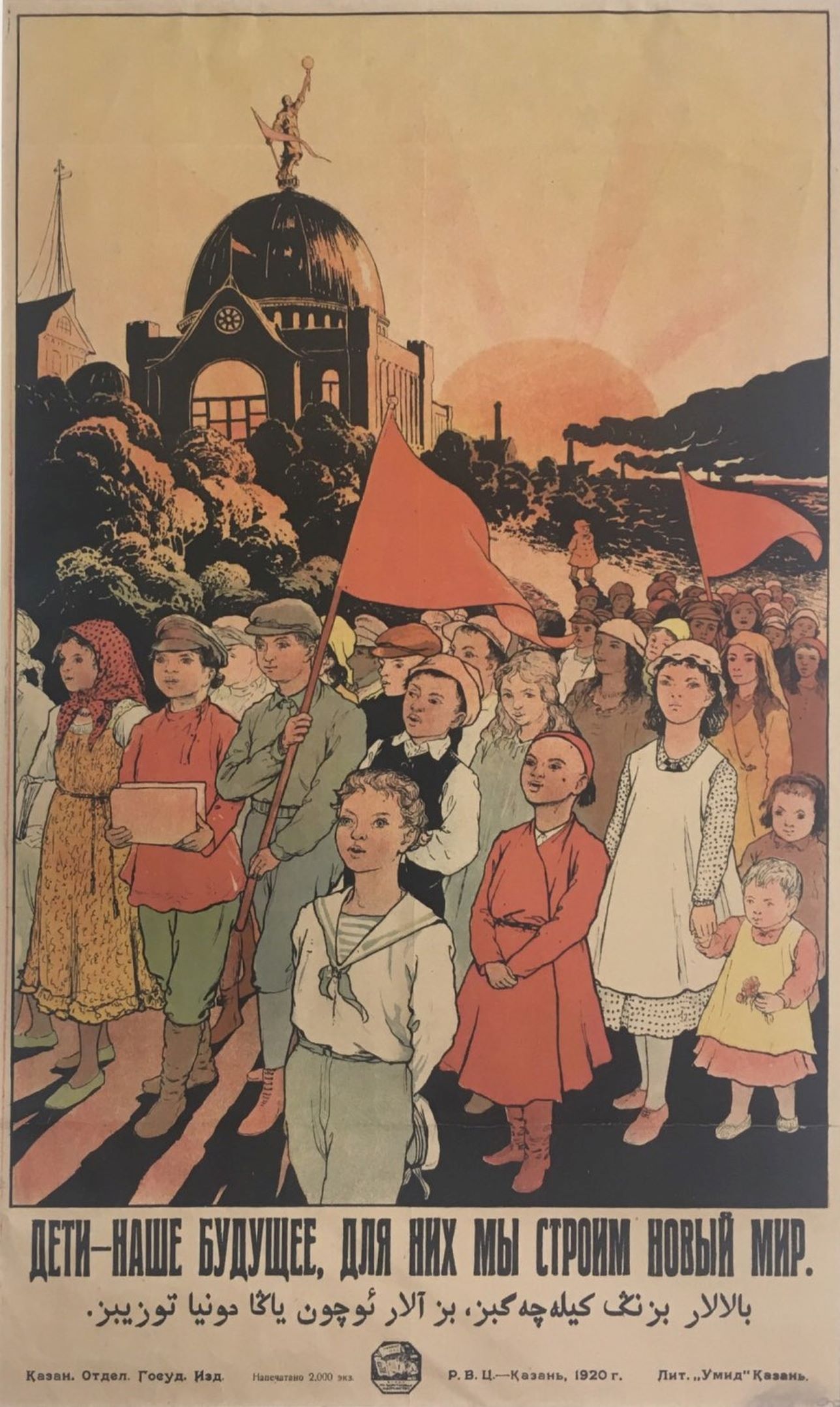
One of the fundamental tasks of the clubs with respect to work among the youth is the physical training of the young girls. This is of particular importance in the East where early and unequal marriages, the downtrodden position of women in the family and in society, lack of culture and complete ignorance with respect to sanitation, hygiene, were bound to have a detrimental influence on women’s organism and therefore on the general health of the nation and the vitality of the young generation.
In connection with the activity among young girls, the women’s clubs should carry on work among mothers with respect to questions connected with youth and children’s movements. They also do their share in social education and enlightenment concerning sanitation. This work must culminate in the establishment of kindergartens in the clubs, in propaganda and agitation among mothers in favour of a rational up-bringing of the children, in the organisation of lectures and informal talks on questions of health protection and the protection of motherhood and childhood.
At the same time a number of model institutions connected with club work and intended to promote women’s emancipation are to be formed; dispensaries, consultation rooms, creches etc. The entire cultural-educational and political-educational work of the women’s clubs is carried on mainly by means of meetings, general meetings of all club members, conferences and also by means of participation of the club members in revolutionary festivities and the organisation of various forms of entertainments; theatricals, concerts, cinema performances, living newspapers, etc.
Every club should organise gradually dramatic, choral, musical and ballet circles which certainly contribute to the artistic development of the club members.
The organisation of the club must be such as to facilitate on the one hand the attraction of large members of working women and to guarantee on the other hand Party control over them.
Therefore, admission to club membership is open to all working women, be they manual or brain workers, or peasant women. All club members take an active part in club work and have a decisive vote at all meetings. They elect from their midst the management and the auditing commission.
The leading organ of club life is the club management, the members of which are elected at the general club members’ meeting and which also includes a representative of the local working women’s section, Y.C.L. and Pioneer organisations. The management has to be confirmed by the local women’s department which also appoints the manageress of the club.
The funds of the club are raised by means of membership dues, revenue from theatrical performances, occasional donations, etc.
Women’s clubs in the East are a temporary institution. As women become more and more emancipated from feudal-patriarchal traditions, as men’s conservatism with respect to sex disability will be overcome, women’s clubs will, of course, be gradually liquidated.
Wherever women’s clubs organised by other parties, or organisations exist it is essential to join them and to organise within them a Communist nucleus in order to gain influence over the rank and file women members.
Wherever conditions prevent the organisation of women’s clubs, cultural-educational work should be carried on in the usual way. Its main object should be the liquidation of illiteracy among club and trade union members, the organisation of schools, for political education in the general women’s and girl’s clubs.
A method of our work for extending our influence over the broad masses of toiling women is the women’s delegate meeting, which serves as a transmission belt from the Party to these masses. Questions of structure, organisation, programme and plan of work are drawn up by the respective conferences and should serve as the basis for the organisation and carrying out of women’s delegate meetings in full accord with the peculiar conditions in the East.
(See: III. International Women’s Conference and International Conference for work amongst women on the question of women’s delegate meetings).
In most countries women’s circles can serve as a basis for the organisation of delegate meetings, for the purpose of drawing women into the women’s clubs and Party schools, and women’s Party schools again can play a very important role in connection with the training of active workers among women. If the influence of the Party is to be extended to large sections of working women, energetic work must be carried on in order to draw women into all the mass campaigns of the Party. But at the same time, and in the nature of preliminary work, it is essential to carry on special women’s campaigns on questions of direct interest to women as workers, mothers, or wives.
Non-Party congresses and conferences, which play a very important role in the Soviet East as a method of propaganda among the rural female population and also in all campaigns, demonstrations, and slogans concerning not only women’s interests, but also the interests of the national-liberation struggle of the working class, can be organised, certainly on a smaller scale also in other Eastern countries. They provide an opportunity for women of various localities to meet, they make women delegates familiar with the life and work of others, they enable the Party to form an opinion on the moods and frame of mind of the female masses, to get into touch with them, they widen the political and general outlook of women.
Training of Workers.
Lack of trained workers is one of the sore points in the work of the women’s departments in the East. Therefore it is essential to draw the attention of the Party to the training of workers among women, from workers in the lower organisations up to workers in the C.C. and the Communist Party.
Special circles should be organised in women’s clubs and nuclei for the training of workers among women. In the I.W.S. as well as in the central and local women’s departments, an institute of probationers should be established. Wherever any general preparatory courses or Party schools for Party workers are organised, a certain percentage of women should be included. The syllabus in the general Party schools should in- dude questions concerning the theory and practice of the women’s movement.
All the delegations which are sent to the U.S.S.R. should include women, preferably women who carry on propaganda among women, in order to familiarise them with the work in the U.S.S.R. First and foremost the Party must make sure that a definite quota of women be sent to the Eastern Universities in Moscow (the “Stalin” Communist University of the workers of the East and the “Sun-Yat-Sen” University). The same must be done with regard to the Comintern courses. A definite number of Party, workers who have gone through the various courses, should be utilised for work amongst women.
The Press.
All questions of interest to large sections of working women as well as all questions of principle and those connected with the organisational work of the Communist Party amongst women must be fully dealt with in the general Party press. For agitation among politically backward sections of women, women’s pages must form part of all the periodical publications of the Party and trade union press. In the East where women are backward and to a great extent illiterate, it is essential to establish a special women’s press, for only such a press could adapt itself technically and also with respect to contents to the level and peculiarity of the conditions in which Eastern women live. Cadres of women workers and peasant correspondents should be trained and formed.
It would be advisable to establish first of all a periodical women’s press in Japan where women’s interest in literature is considerable and where feminist publications have a very big circulation (women’s periodicals have a circulation of 500,000), and also in China where the movement is developing and gaining in strength, where there is an absolute need of a special organ which would be of great use in giving a definite form to the women’s working class movement and where there is already a definite demand for the establishment of a women’s periodical.
In character and form the special women’s press must be first of all adapted to the organisation of these sections of women who are already under our influence, or are at least organised in trade unions and other organisations sympathetic to us. This press must be able to give the lead to workers among women. It must bring forward and elaborate all problems of a political, economic, Party and organisational character, and it must at the same time reflect the entice activity in the centre and in the provinces.
For agitation among large sections of women, it is essential to have periodical publications in the form of supplements to other periodicals, or as independent. publications, such as pamphlets, leaflets, posters, etc. This literature must be written in a popular style and must confirm itself with topical questions which at the given moment are of paramount interest to the women generally. The publication of periodical literature may be expedient and at the same time extremely valuable if it coincides with the local or general struggle of working women, with general women’s campaigns during which women’s attention is drawn to a definite question.
International Press Correspondence, widely known as”Inprecorr” was published by the Executive Committee of the Communist International (ECCI) regularly in German and English, occasionally in many other languages, beginning in 1921 and lasting in English until 1938. Inprecorr’s role was to supply translated articles to the English-speaking press of the International from the Comintern’s different sections, as well as news and statements from the ECCI. Many ‘Daily Worker’ and ‘Communist’ articles originated in Inprecorr, and it also published articles by American comrades for use in other countries. It was published at least weekly, and often thrice weekly. The ECCI also published the magazine ‘Communist International’ edited by Zinoviev and Karl Radek from 1919 until 1926 monthly in German, French, Russian, and English. Unlike, Inprecorr, CI contained long-form articles by the leading figures of the International as well as proceedings, statements, and notices of the Comintern. No complete run of Communist International is available in English. Both were largely published outside of Soviet territory, with Communist International printed in London, to facilitate distribution and both were major contributors to the Communist press in the U.S. Communist International and Inprecorr are an invaluable English-language source on the history of the Communist International and its sections.
PDF of full issue: https://www.marxists.org/history/international/comintern/inprecor/1926/v06n69-oct-26-1926-inprecor.pdf
 Revolution's Newsstand