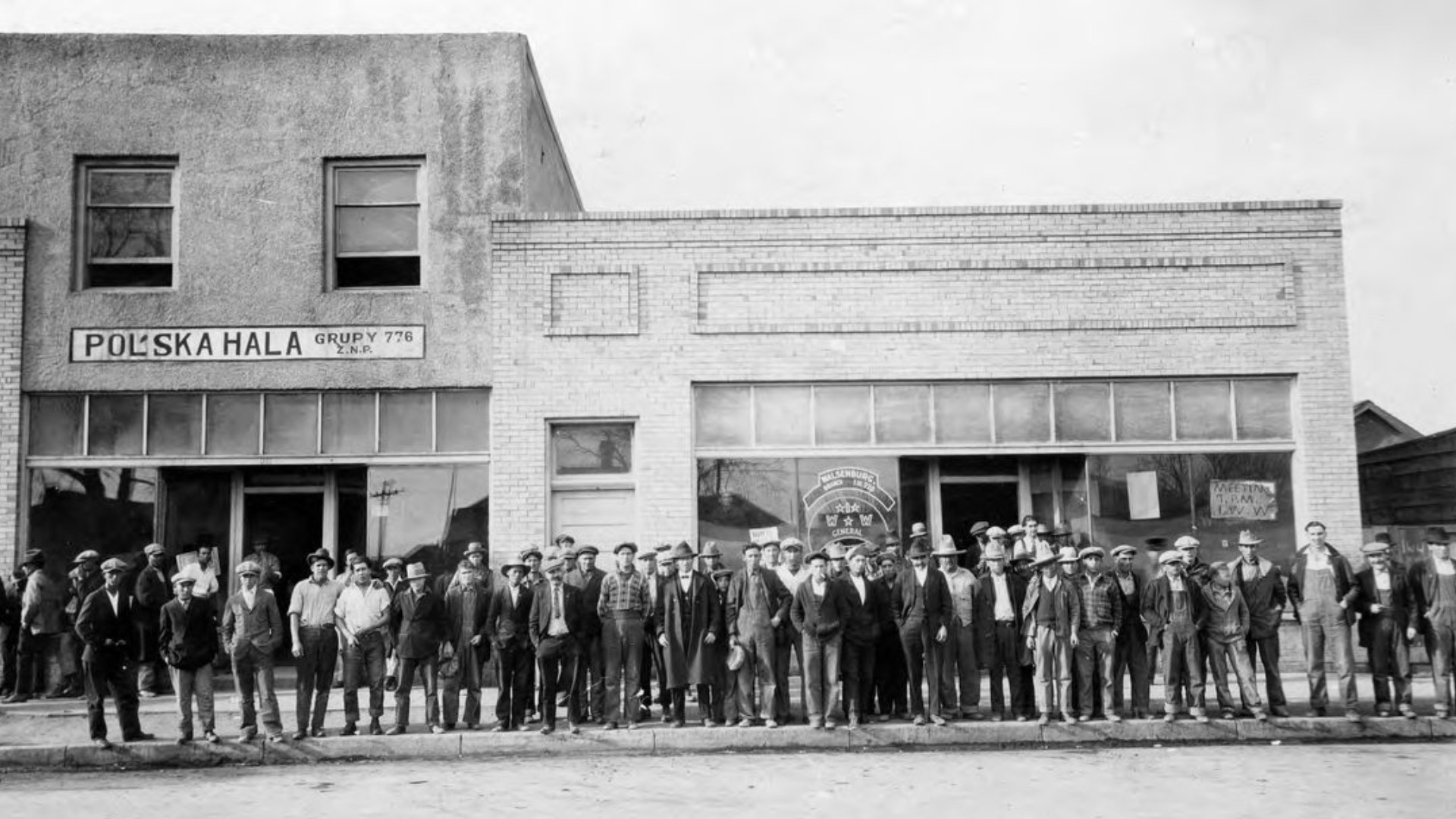
A wonderful look inside the busy, and besieged, strike headquarters in Walsenburg, Colorado during the last of the mine wars in the state. Coal miners organized by the I.W.W. struck over 100 mines, eventually winning the struggle in which whole communities mobilized. Just weeks after this letter was written, on January 12, 1928, the Walsenburg offices described were attacked by police killing 15-year-old Salastino Martinez and 40 year old wobbly Klementz Chavez.
‘Colorado Still Going Strong’ by J. McVarish from New Masses. 3 No. 9. January, 1928.
DEAR NEW MASSES:
The strike, in spite of organized murders, military terrorism and thuggery, has entered upon its seventh week. The strike is fully ninety per cent efficient. Our ability to hold out rests entirely upon the generosity of those outside. Given even average *financial support, we shall win. We are handicapped by lack of able human material-the “polizei” seeing to that. All of us exist in an unreal and uncertain atmosphere, not knowing when we leave the office at night whether we will be on hand in the morning. The police are making arrests daily, on the mildest of pretexts–or none at all. But we shall continue to carry on.
Yours for industrial freedom, J. McVarish.
Walsenburg, Colorado.
HEADQUARTERS building is easily distinguished by the crowds of persons–men, women and children–gathered about the front entrance, reading bulletins, passing in and out. All is verve and movement-activity.
On the ground floor is the “hall”, where meetings packed to overflowing, are held twice daily, at 2 p.m. and 7 p.m. The meetings are particularly interesting. Immediate questions of the day and of the strike are threshed out ably and forcefully. A fiery speech from a Spaniard brings forth an ardent response not only from the Latin element, but from the Slav and the Nordic as well. The enthusiastic “sings” make the meetings lively affairs and Solidarity is their favorite song!
On the ground floor also are the kitchen and mess-hall, presided over by the cook and many willing assistants. Here meals are served to the unmarried strikers twice daily. In the morning the fare consists of such staples as porridge, fried bacon, boiled potatoes, bread and coffee, and is served from 8 to 10. For the second meal, served from 4 to 7 p.m., there are boiled beef and spuds, or cabbage and ham, or pork and beans, bread and coffee.
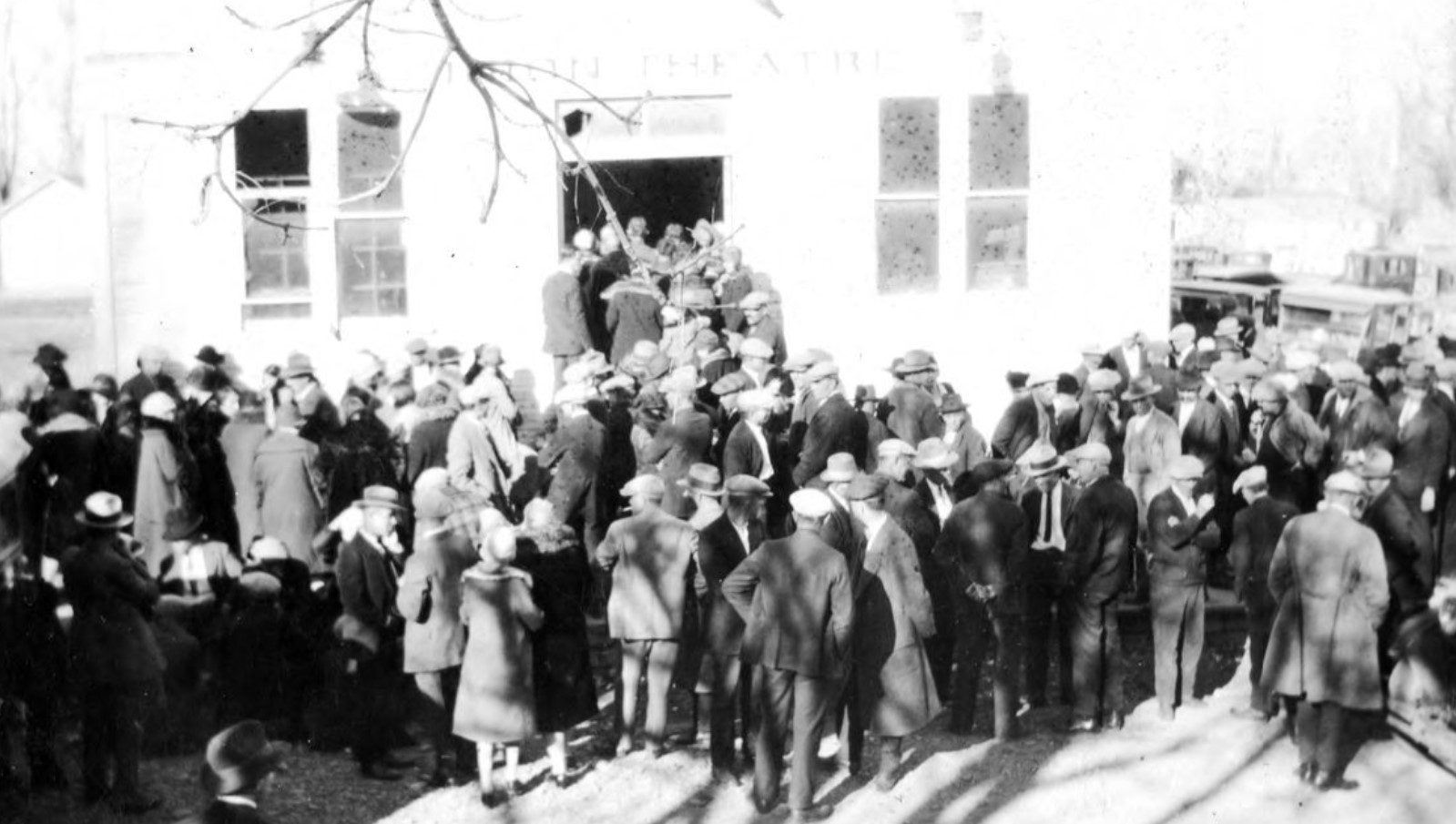
A system of feeding has been worked out that safeguards against company spies. The actual workers on strike have no difficulty of course, in establishing their identity. A numbered card is issued to each. This he presents at the door of the dining-room, to the striker in charge of the messing. He is checked when he enters and when he leaves.
The stranger who presents himself for a “feed”, must get from the Relief Committee the necessary credentials. A card is not granted to the stranger for the asking. If he is a new arrival in the camp, his presence there in the first place must be inquired into. Finks and stool-pigeons have been known to apply for relief, in order to find out the quantity and quality of the food supplied. The morale of strikers may be appreciably lowered if the food is of poor quality or badly prepared. And from information thus gained, employers may conjecture the extent of the existing morale and the possibility of a long drawn struggle. The inquisition of the Relief Committee however, usually succeeds in sifting the fink to his true level, whereupon he is cast into the outer darkness, unfed.
It is in other portions of the headquarters building however, where one finds the most intense activity. One room is allotted to the Strike Committee; another to the Relief Committee; one to the Publicity Bureau; and yet another for the routine work of the Branch Secretary and his assistants.

Typewriters click far into the night: reports are being made, bulletins issued, vouchers filed, all the hundred and one loose ends attendant upon the strike, gathered in and organized.
Work is constantly being interrupted by fellow-workers. A striker or a striker’s wife comes in to submit a query or a plea. This one is threatened with eviction; that one needs shoes for the kids; one woman’s husband has not been seen for forty-eight hours–she is sure he has been arrested. Not infrequently she is right. Her husband may be a Martinez, a Smith, or a Pulaski, and due inquiry elicits the information that he is held by the sheriff’s office no charges preferred–he is just held! (In the Colorado strike zone, the jails have been filled to overflowing with those who are just “held”).
There are other difficulties. By the third week of the strike, most of the “leaders” had been imprisoned. It was hoped by the authorities that these arrests would seriously cripple the functioning of the strike. They reckoned, however, without the elasticity of a revolutionary organization. It was only a matter of hours until another directing force had been quietly assembled and was edging its way into the affected zone. These individuals, properly credentialed, arrived on the scene unheralded. Highways were being patrolled; on passenger trains travelers were carefully scrutinized; and freight trains were assiduously overhauled. Nevertheless these men came through. Their duties are exacting and trying. Eighteen hours of work is not at all unusual–is all in the day’s routine, in fact. They live like the strikers themselves, eating at the relief kitchen, quartered at night with a striker’s family. Necessarily they keep in the background, directing and supervising the various activities.
Amusing sidelights of the struggle are furnished in the grotesque activities of the military and the slum-gendarmerie. Their chief concern is to provide reason for their existence. The appearance, all dressed up, of these cavaliers, is an occasion for mirth-ten-gallon hats, twelve-hour boots, open-work breeches, low-slung “gats”–all in the approved mode of Hollywood. They constitute the funny supplement of the situation.
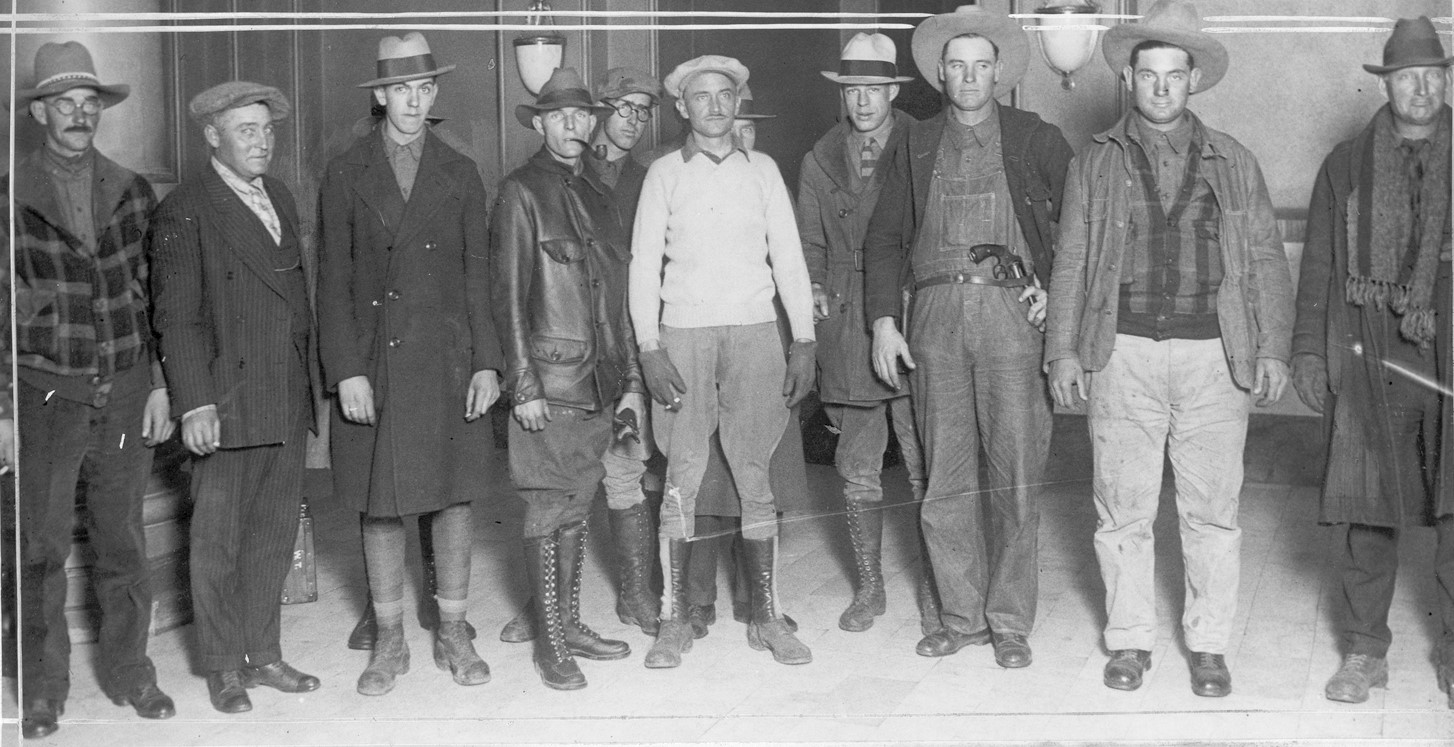
With the development of new tactics in the conduct of a strike, the need for these mental eunuchs has disappeared. As offal from the camp of the enemy, as fertilizer to engender strife and dissension they have been highly unsuccessful in this campaign. Their incapacity to break our ranks has been their demonstrated, impotence against our solidarity established. Even their own obscure consciousness has enfolded this fact.
The spirit and morale of the strikers is magnificent, in spite of hardships and annoyances. For we have our sorrows. And as November draws to a close, and we see the cold, gaunt shadow of December just beyond the threshold, we know that these hardships will not diminish. But we face the outlook unflinchingly, even cheerfully and with confidence. We know that we shall win. Rockefeller and all his gentlemen stockholders shall not triumph in 1927, nor even in 1928.
The New Masses was the continuation of Workers Monthly which began publishing in 1924 as a merger of the ‘Liberator’, the Trade Union Educational League magazine ‘Labor Herald’, and Friends of Soviet Russia’s monthly ‘Soviet Russia Pictorial’ as an explicitly Communist Party publication, but drawing in a wide range of contributors and sympathizers. In 1927 Workers Monthly ceased and The New Masses began. A major left cultural magazine of the late 1920s and early 1940s, the early editors of The New Masses included Hugo Gellert, John F. Sloan, Max Eastman, Mike Gold, and Joseph Freeman. Writers included William Carlos Williams, Theodore Dreiser, John Dos Passos, Upton Sinclair, Richard Wright, Ralph Ellison, Dorothy Parker, Dorothy Day, John Breecher, Langston Hughes, Eugene O’Neill, Rex Stout and Ernest Hemingway. Artists included Hugo Gellert, Stuart Davis, Boardman Robinson, Wanda Gag, William Gropper and Otto Soglow. Over time, the New Masses became narrower politically and the articles more commentary than comment. However, particularly in it first years, New Masses was the epitome of the era’s finest revolutionary cultural and artistic traditions.
PDF of full issue: https://www.marxists.org/history/usa/pubs/new-masses/1928/v03-09-jan-1928-New-Masses.pdf
 Revolution's Newsstand