Kentucky and Indiana are not normally places one associates with Socialism. That was also true in 1904. However, then, like today, more were active than perceived. S.L.P. National Organizer Frank Bohn visits Debs’ home state, Indiana, as well as Kentucky shortly after the 1904 election and the rivalry between the S.P. and S.L.P. is a central theme here. Looking in on S.L.P. locals in Logansport, Marion, Muncie, Evansville, and Indianapolis, Indiana along with Kentucky stops at Louisville, Covington/Newport, and Paducah he also visits workplaces and addresses strikers.
‘Touring Kentucky and Indiana’ by Frank Bohn from the Weekly People. Vol. 14 Nos. 37 & 38. December 10 & 17, 1904.
BOHN IN KENTUCKY–FINDS SOCIALIST LABOR PARTY IN A GRATIFYING CONDITION THERE.
Its Unity and Class-Consciousness Affords Striking Contrast To S.P. Dissensions and Conflict of Tactics–Trades-Unionism, the Race Question, and the Recent Political Upheaval.
Marion, Ind. Dec. 3. Gratifying indeed, is the condition of our party in Kentucky. A State so largely agricultural can hardly be expected to ring with the blows of the class struggle. It contains only three industrial cities of any considerable size. These are Louisville, (200,000); the urban group of Newport, Covington, etc., (80,000) and Paducah (23,000).
In Louisville, although the Socialist Labor Party polled a few less votes than the Debs’ Party this year, our organization is much the stronger of the two. In striking contrast to the fine spirit of unity which marks the activities of our Section, the “Socialist” party local is sundered into two factions, which, despite the repeated attempts of the “Socialist” State Committee, cannot be brought together. A third group organized an independent “Propaganda Club” during the heat of the campaign. But this is said to have broken up. Elements which could not agree while the enthusiasm of the campaign acted as a partial bond of union, will hardly be found in each other’s embrace during those fretful days of stomach troubles and divorce which are already upon the Debs’ family.
The heart of the hair-plucking contest among the “Socialists” at Louisville is the Trades Union Question. A recalcitrant member refused to knuckle under the fakirs. “Throw him out of the party”, shouted a few who never worried because Kelly voted for a franchise steal at Marion, Ind., and then got one himself; but who trembled in their boots lest trades unionists cut the ticket. And then there were others who saw the matter in a different light, even claiming that a man might continuously oppose capitalist “labor unions” and still be a Socialist. Of course each faction claims to be the Local and ignores the others. Result one of their best members comes to the Socialist Labor Party and after declaring his intention to join, hastens back to his late comrades with a bundle of The Difference” for each faction. Others are on the point of following. Now, ye Socialist Labor Party veterans everywhere, from New York City to the loneliest gulch of Colorado, what difference does it make to you and me that. Debs received more votes in Louisville then Corregan! If you have had a sinking feeling in the stomach, feel ashamed of it all by yourself and get out and hustle. Verily, verily, to “Gain the whole world and lose your own soul” in’t in it with the new version–what profiteth it a movement to gain a half million votes and quail before the outposts of the enemy by compromising truth and making friends among them?
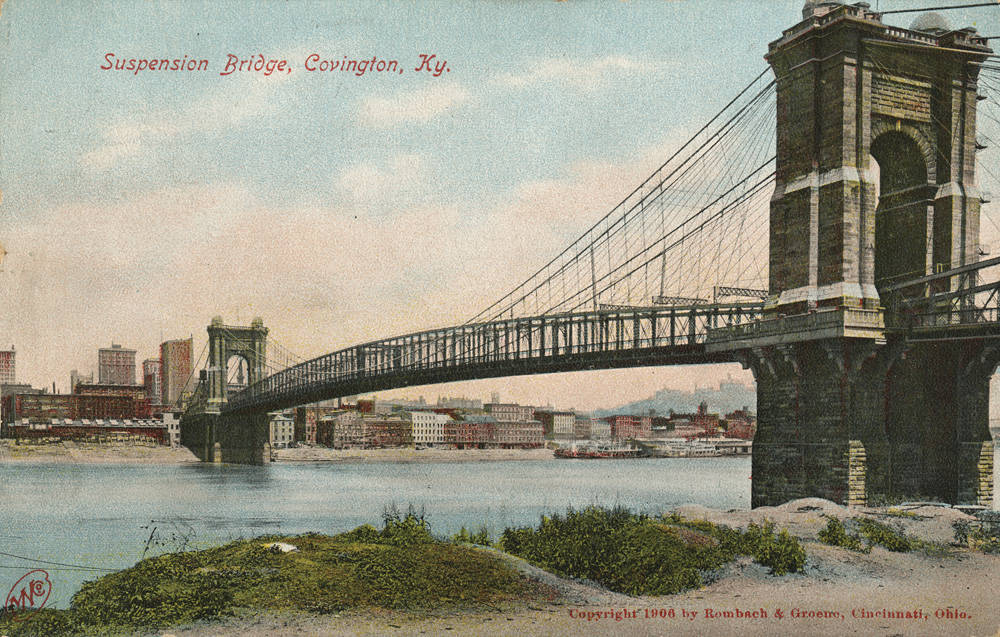
In Newport and Covington, where Section Cincinnati did yeoman service during the recent campaign, our vote was increased, if my memory serves me rightly, from about 50 to over 270. And this in the face of the fact that the two towns are the “Socialist” party stronghold in Kentucky, and the seat of their State Committee. The outlook for a strong Section there is promising and the eyes of the party will be fastened upon Section Cincinnati, which must do the work.
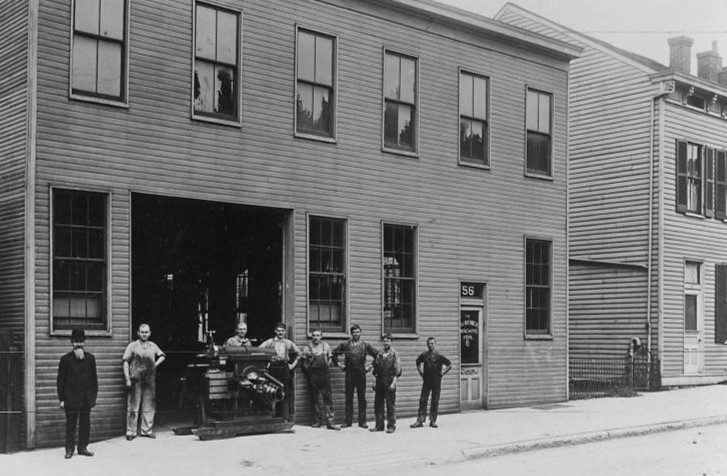
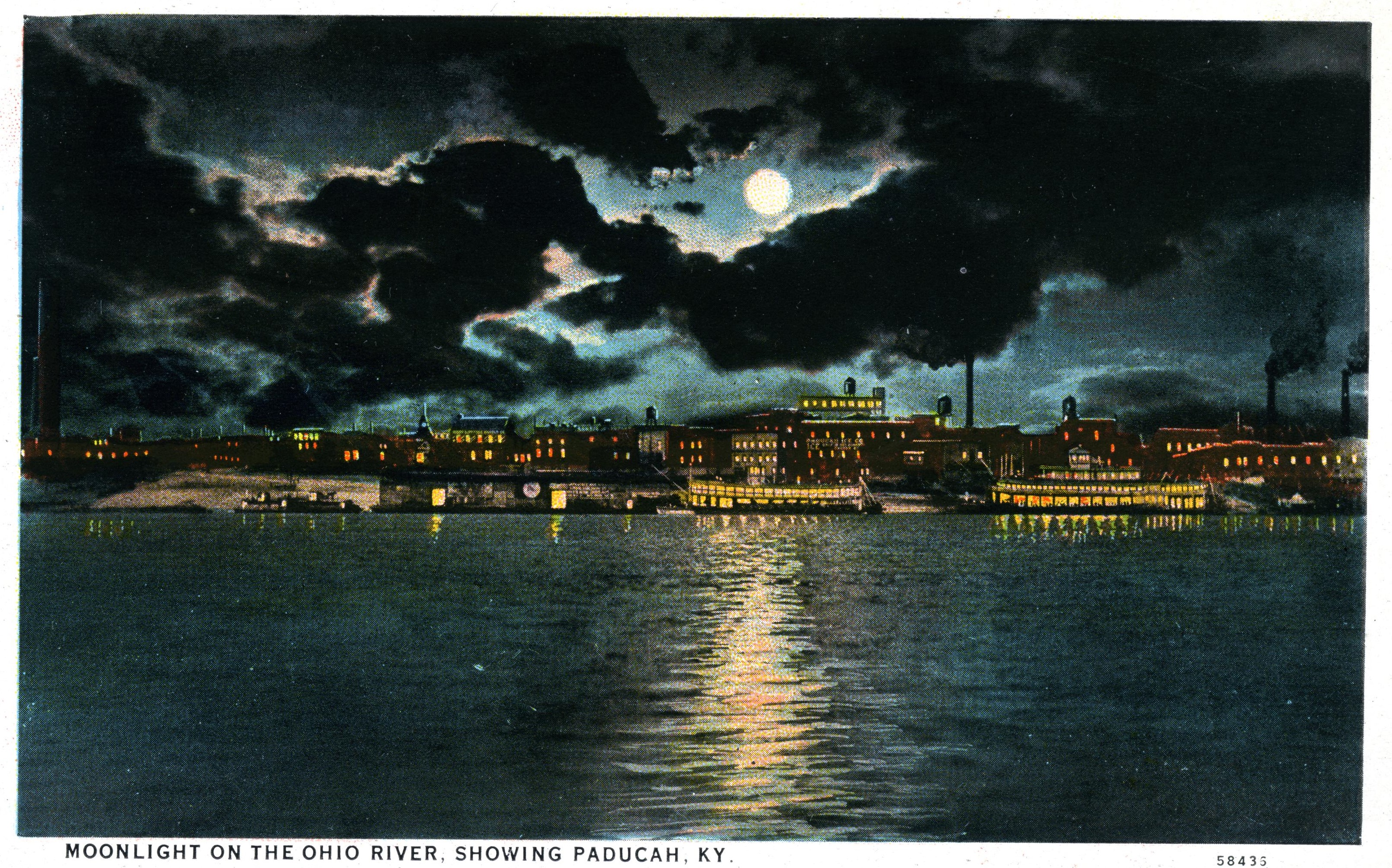
But of all points this side of Peabody’s Caliphate, Paducah incited most Interest. Situated in the extreme western portion of the State, this city is entirely American and largely “Southern” in character. I remembered this district situated in the angle of the great rivers, as hot-bed of secession during the Civil War. Paducah has just given a fine vote for Corregan. I believe that the figure is 65 to 34 for Debs. “How about the race issue among our Southern comrades!” thought I, as the train bed along the south side of the beautiful Ohio. The next day at noon, I visited one of the Paducah shops, where comrades have been doing effective work. As I looked into the eager, intelligent faces of those young men, the question as to whether the old American population of the South would be there with the goods” in the great days coming was answered. Capitalism is transforming that belated section so rapidly that one must think, fast to keep up.
The first comrade I met was tall and spare, while his bearing and conversation suggested at once “He is of the old regime.” Later I learned that he had served just three years and four months in the Confederate Army. In young manhood he was a fighter for chattel slavery and states’ autonomy, and in old age. the onrushing times have made him a staunch member of the Socialist Labor Party. No other period of the world’s history in any country can furnish a parallel to this. A single generation witnesses four distinct systems of society.
No one ever doubted that, both physically and mentally, the Southerner is a fine fighter. Make him a wage-slave and he is as ready for Socialist doctrines as any man in the world. And the bugbear of the “race issue”, that problem which our editors and other professional saviors of society have so often said is to be predominated during the coming generation! It does not seem to interfere in the least with the agitation conducted by our Southern comrades.
No one can deny, of course, that as the political fight along class lines becomes more general, the fact of the deep rift, physical and psychical, in Southern society, will seriously hamper our work. But with the supreme fact of the Socialist movement the hack-writers on the much worn “race question” have not reckoned. Socialism comes into the life of our class everywhere and raises them out of the narrow grooves of social thought and action cut for them by the peculiar interests and prejudices of the class in power. The ex-Confederate soldier, on becoming a class conscious Socialist, makes a world idea the guiding principle of his life. He is exalted to world citizenship. Organized by the Socialist Labor Party, the white workers of the South will scorn the masters’ claim that both robber and robbed belong to the “dominant race”. The cat-calls of the “race conflict” will soon be drowned by the thunders of the Social Revolution.
At Paducah the “Socialist” party has no organization and conducts no agitation. The few “Appeal To Reason” “Socialists” appear to be just as kindly disposed toward the Socialist Labor Party as toward the “Socialist” party. Judging from the work done by Section Paducah and the fine results obtained the Debs party will never get a foothold there. In Comrade Scopes the party has a speaker of the first order, and vigorous out-door agitation has brought large numbers of the working class in touch with the Socialist Labor Party,
From conversations with Democrats in Kentucky it is evident to me that the time is at hand in that State for something extremely radical. The following statement made to me by an old-fashioned inn-keeper in a small country town is typical of the thinking being done by “dyed in the wool” Democrats of the ante-deluvian period:
“I don’t just know what the Democrats will do. I stuck to them this Fall, but it was might hard to do it. I believe a new party will be organized. We need one.”
“What kind of a party would you favor?”
“I don’t exactly know, but not one run by the rich.”
On another occasion, while I was eating my proletarian lunch in a Paducah restaurant, a countryman came in, got down beside me and started the conversation with “What is your business?” “I am devoting my time,” I observed, “to speaking the doctrine of revolutionary Socialism.”
A photograph of the man at this moment should accompany this narrative, but I was not armed with a camera. He looked me over in a confused way, and I, meanwhile, hastened to tell him just what I meant.
“There are lots of people out our way who are thinking that way,” he answered. “Can’t you come out and speak to us? We will furnish you a hall free and good crowd.” But to give him a little of our literature was the best I could do.
Radical, indeed, must be that great tidal wave of “reform” to catch the vote even of rural America. But the Watson-Bryan-Hearst-Johnson-Lawson Co. may be depended upon to furnish variety in form and color sufficient unto their purposes in 1908. The South and West, evidently, will require a platform about as radical as Victor Berger’s marvelous production in Wisconsin. And then we shall know, at last, who are Socialists and who were “voting for Debs”. Frank Bohn. Marion, Ind. Dec. 3.
BOHN IN INDIANA–ADDRESSES THE MARION FLINT GLASS STRIKERS ON THE SITUATION CONFRONTING THEM.
The “Aristocrats of Labor and the Union Versus the Machine and the Trust–Evansville’s Success in Agitation–An Industrial Hornet’s Nest At Indianapolis–How The “Open Shop” Works In Muncie.
Logansport, Ind., Dec. 11. “Just a little band of men is this Socialist Labor Party; always far to the front against the enemy; always fighting; cut deep but never failing to recover and fight on.”
Some such statement as this I read in the editorial columns of The People a year or so ago. Last week I ran upon a band of fighters whom this description fits perfectly. I wish to share the glory of their deeds with the party membership and other readers of The People.
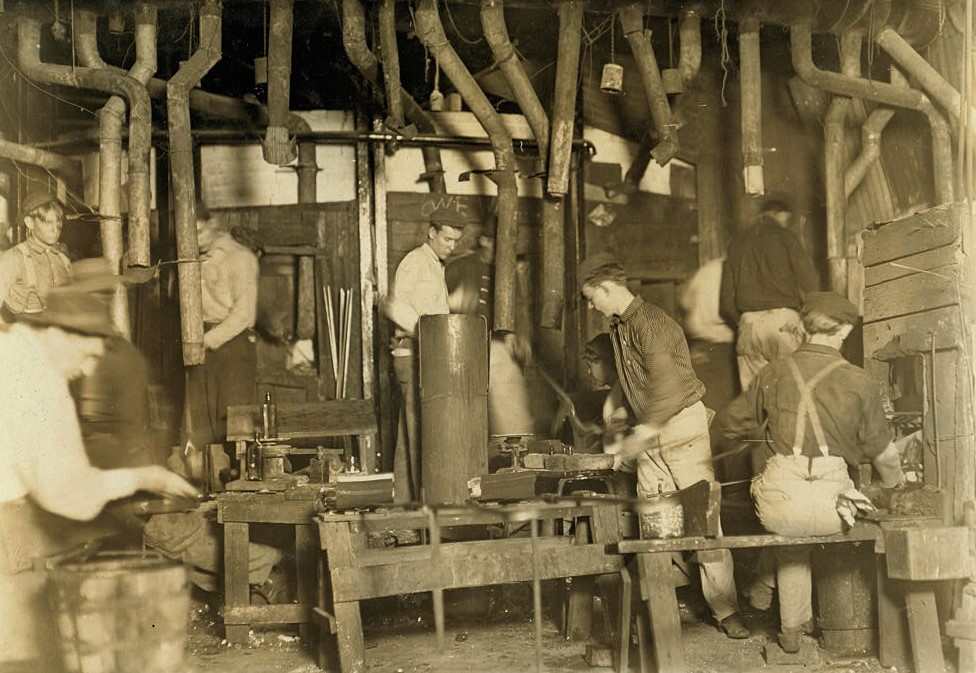
The general history of the strike of the flint glass workers is already well known. These “aristocrats of labor” until last spring had been able to earn as high as seven dollars per day. They dictated the rules of the trade. When they desired to refresh themselves en masse by a month’s vacation, who dared prevent them from taking it? Other men might grow weary and sick at heart but to them hard labor brought at least the chance to “eat, drink, and be merry.” A huge strike fund foretold, in their opinion, destruction to any capitalist who might take it into his head to reduce their wages or increase hours of labor. Knowing little of the history of industrial society, their peace of mind. was undisturbed by worry for the future. Ignorance, for the time being, was bliss. And then there came a change. First a trust was organized to replace individual employers in the lamp chimney industry. But this appeared to be balanced by their labor trust and they continued to enjoy seven dollars worth of food and clothing and shelter each day. But of a sudden, one fine morning they awoke to find themselves facing that veritable hobgoblin, a machine which could do their work.
It is a fact pretty well understood by historians that the great Napoleon owed his defeat in the twenty years’ struggle with England, to machines. He might announce his imperious decrees against commerce with England as often as he captured a foreign capital; but his own veterans often went to battle clad in English made garments. Frenchmen and Englishmen were at war. While French women wept, their English sisters ran spinning machines. In fighting England, the great conqueror of Continental Europe was thrusting his arms into a buzzing drive-wheel. Well, the glass blowers did the same, and if they are not in Saint Helena it is because the Macbeth-Evans trust doesn’t fear them enough to pay steerage rates. For some time the trust compromised with them on the quantity of the output. The slack times last summer gave an opportunity to the employers to have their way or “quash the union.” The union voted to strike, and be quashed.
At Marion there were 500 workers included in the strike order. This number included a dozen or so of as staunch S.L.P. fighters as ever wore the arm and hammer. They asked not whether votes would be gained or lost by their action. It never occurred to this brand of Socialists to inquire whether or not their fellow workers were “really for the truth”. The process of doling out Socialism in small bits they had not learned. From the first hour of that strike until now, when it has been hopelessly lost, they told “the truth, the whole truth and nothing but the truth” about machines and trusts and the working class and government and politics and wage slavery and their only hope–Socialism. Most of their misled fellow workers hated and ostracized them. When they arose to speak their mind in the union meeting they were often quieted by physical force. To their face they were accused of receiving $100 per week apiece from the trust to break the strike. Yet they stood firm and on election day voted as they had talked for three months past. On December 3, the strikers still remaining in Marion, invited by unanimous vote the undersigned S.L.P. organizer to address them on the then hackneyed subject of machines and trusts and strikes and government and politics and wage slavery and the hope which science holds out to the workers–the Socialist Republic. They were ready to be “bored from within” by Socialists who had not lost their self respect to get the chance to bore. To the meeting which I addressed came a striker in tattered coat and shoes asking for funds to carry him South, where he “could be in a hay-pile till summer”. “If you can’t help me”, he said, “take my card back, it’s no good to me.” Will he vote for wage slavery again?
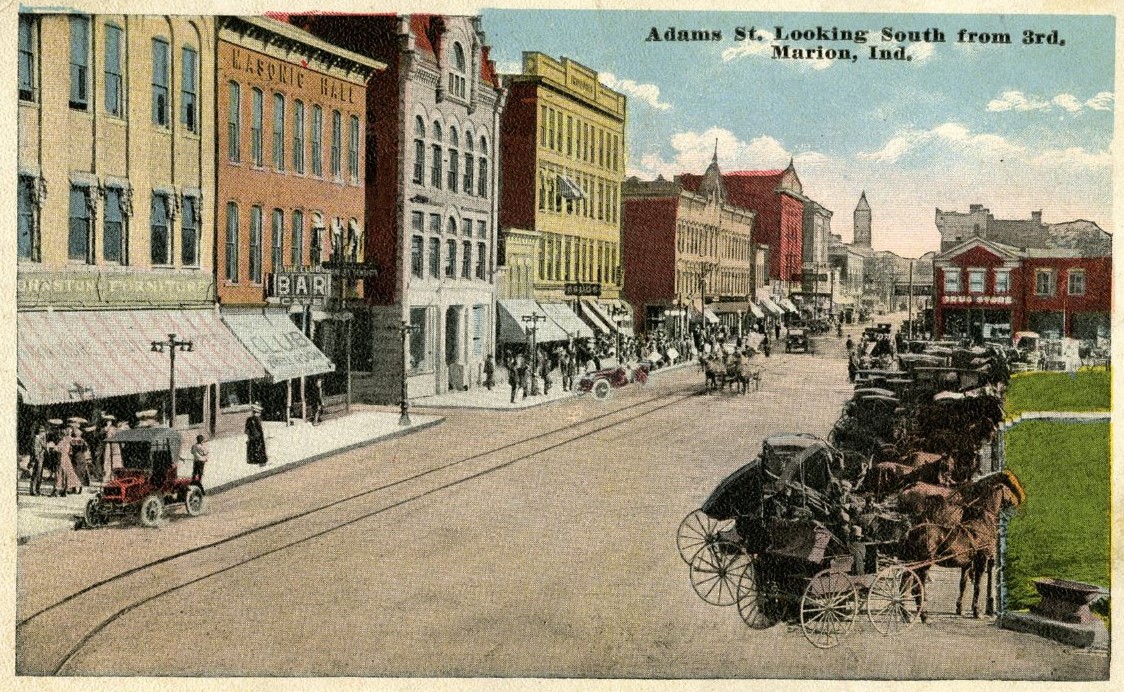
We lost votes in Marion. We lost many subscribers to the Weekly People. But did we lose otherwise? Can we lose with such men and principles as fought that fight? The thought makes the blood hot. It is the same old story. A few determined men against a world made brutally ignorant by class rule. A host hang about in the rear and say in whispers that they agree but that they will take an easier road to victory. And the few grit their teeth, take hold of one another’s hands and press on.
It was a real pleasure to meet in Marion a Comrade who has been in the fight ever since Socialism has been known in this county. It was about the year 1880, that Comrade Kohlenberg told the glass workers of Philadelphia that their weak-kneed pure and simpledom must give way to a class conscious movement. And true blue he has been ever since. Always ready to aid the full extent of his ability, always urging his principles upon everyone he meets, he is one of that all too small number of Germans who really understand the needs of the situation here in America.
Auf wiedersehen, Marion!
Evansville and Indianapolis were covered last week and should have been mentioned in the last report. Evansville is composed almost entirely of Germans and needs to have their sturdy. strength enlivened by an influx of young men. Against great olds they have maintained successful agitation. The vote of Evansville was encouraging and the future will bring, undoubtedly, competer rewards for past efforts,
When I saw Section Indianapolis the mystery of “Parryism” was solved. With a hornet’s nest under the eaves of his own home, he may be excused for running about the country urging “fire.”
In Muncie we organized the Section anew. Now that the right men have been located and have given faithful promise to the representative of the N.E.C. to do their utmost for the movement in Muncie, I have no fears for the organization there. And the real thing, Heaven knows, is needed there. The organizer of the S.P. local, having been a “Socialist” since hearing Debs, said last September that “all spiritualists should be Socialists”, and is now writing a book on his new found theme. It is entitled, he tells me “The Curse of Greed for Gold,” or “The Sorrows of the Afflicted”. The S.P. local, with such a burden to carry, has disbanded, of course. Several of their working class members are on the point of becoming members of our new Section.
The open shop system is beginning to prevail in Muncie. I visited a “works” where a sign as large as a Casearetts advertisement warned all “labor agitators” to be gone. Going in unnoticed I talked with groups of men here and there. Good molders in that shop can make $1.60 to $1.70 per day, if they hustle and put in eleven hours work. As a result the men talk of dynamite bombs as a remedy. And then we Socialists are said to create class hatred! Hands directed by untrained minds will throw bombs. Give Socialism a chance and the silent army, millions strong, will march to victory in peace. What an opportunity these embittered lives furnish for our propaganda! But I must needs, on Friday, hurry away to Logansport, leaving all this to Section Muncie.
At Logansport we took the first step toward an organization. The members at-large and sympathizers met and elected a Secretary and a literary agent. Here also in an industrial town of 20,000 the S.L.P. has a clear field in which to work unhampered. A thriving Section should be a natural growth not later than next summer.
New York Labor News Company was the publishing house of the Socialist Labor Party and their paper The People. The People was the official paper of the Socialist Labor Party of America (SLP), established in New York City in 1891 as a weekly. The New York SLP, and The People, were dominated Daniel De Leon and his supporters, the dominant ideological leader of the SLP from the 1890s until the time of his death. The People became a daily in 1900. It’s first editor was the French socialist Lucien Sanial who was quickly replaced by De Leon who held the position until his death in 1914. Morris Hillquit and Henry Slobodin, future leaders of the Socialist Party of America were writers before their split from the SLP in 1899. For a while there were two SLPs and two Peoples, requiring a legal case to determine ownership. Eventual the anti-De Leonist produced what would become the New York Call and became the Social Democratic, later Socialist, Party. The De Leonist The People continued publishing until 2008.
PDF of issue 1: https://www.marxists.org/history/usa/pubs/the-people-slp/041210-weeklypeople-v14n37.pdf
PDF of issue 2: https://www.marxists.org/history/usa/pubs/the-people-slp/041217-weeklypeople-v14n38.pdf
 Revolution's Newsstand