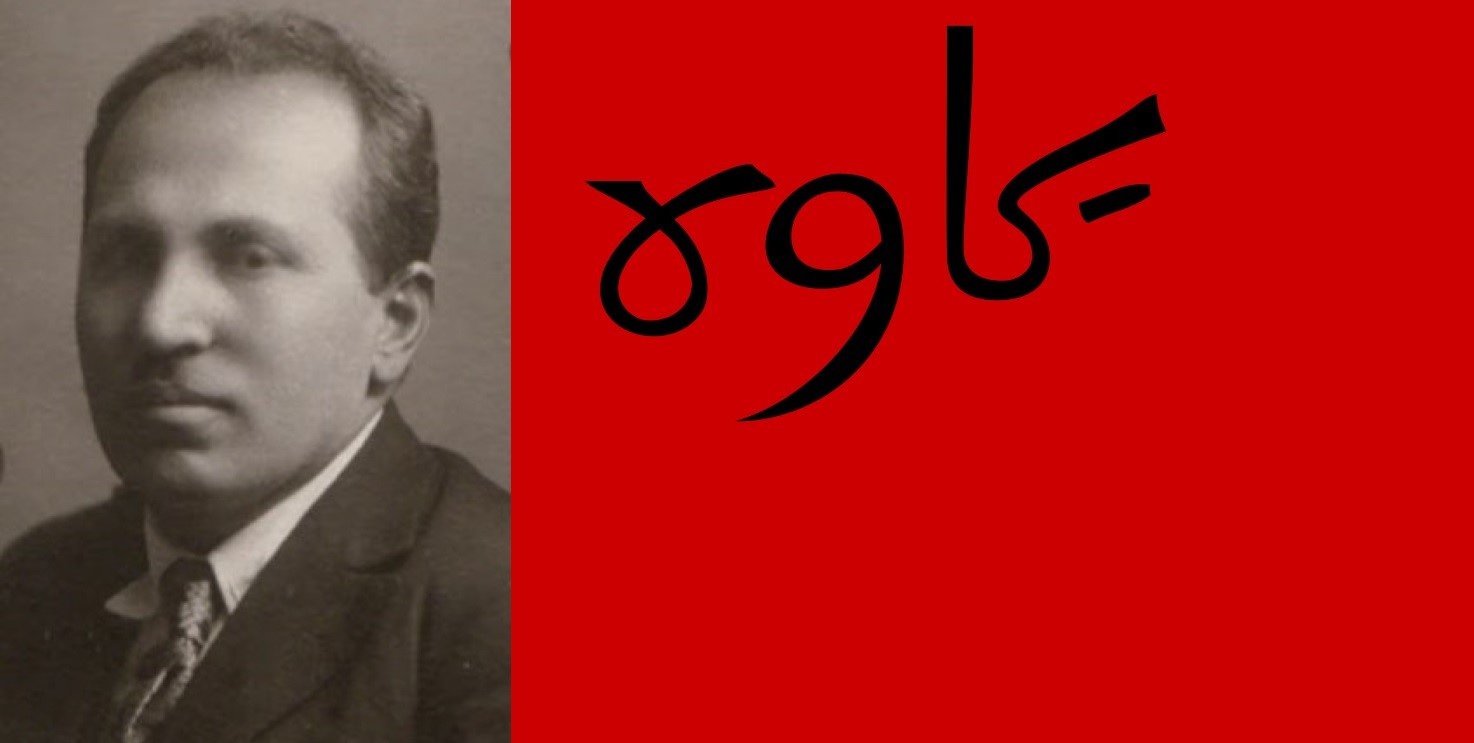
Left Communist Avetis Sultan-Zade was founder of the Communist Party of Persia and on the Executive of the Comintern. Side-lined through much of the mid-20s for favoring land collectivization and hostility to the Comintern’s orientation to progressive nationalists, he returned to leadership as the Comintern moved to the ‘Third Period.’ This major essay should be read with that background in mind. He was expelled from the Party in 1932 and later a victim of the purges, executed on June 18, 1938.
‘The Lines of Development of Modern Persia’ by Avetis Sultan-Zade from Communist International. Vol. 5 No. 1. January, 1928.
IN its development present day capitalism is increasingly taking on a monopolistic character, concentration of capital in the leading capitalist countries has taken on such gigantic dimensions that often whole spheres of industry are monopolised in the hands of one or several industrial groups.
Parallel with the centralisation and concentration of capital within separate capitalist countries colossal international concerns, cartels and syndicates are being created before our eyes. These industrial giants, having assured their position in their own country, endeavour to avoid costly competition outside it also. The partitioning of the world markets among the largest concerns of this or that sphere of industry has now become a common phenomenon.
But a peaceable, amicable division of the world markets is not a method which can for long eliminate the competitive struggle between capitalist producers.
The limitations of the markets of distribution and the inadequacy of sources of raw materials lead more and more frequently to a forcible division and partitioning of the existing colonial countries. This circumstance is intensified still further by the fact that owing to the inequality of capitalism’s development, the industry and economic powers of individual countries, overtaking others and advancing to the leading positions of modern capitalism, find themselves deprived both of markets for distribution and of sources for raw materials. Consequently the temporary lull in the competitive struggle of capitalist giants is swiftly replaced by open hostility, followed by war with the aim of making a new divisional partitioning of the world. In order to gain their ends, at the necessary moment the kings of industry and the banks put into motion all the colossal machine of bourgeois society: the police, the army, the press, bribery, prisons, exile, shootings and all that may assist in the pillage of their own and foreign countries and peoples. All the State power is adapted to the defence of the interest of these uncrowned masters of capitalist society.
Effect of Russian Revolution on Persia
Owing to all this, the independent existence of those backward countries which have not yet found themselves in the tenacious arms of the one or the other capitalist libertine is becoming increasingly difficult. Persia is one such country. Its formal independence was formerly guaranteed by the struggle between the imperialist libertines, Britain and Tsarist Russia. The October revolution put an end to this suspicious game. The U.S.S.R. renounced all its pretensions to enslave and humiliate Persia. But at the same time the pressure from imperialist Britain was greatly intensified.
The tragedy of the Persian people consists also in the fact that their country lies on the road to the greatest of Britain’s colonies: India. For more than a century Britain has vigilantly defended all the India is approaches to this jewel of the British crown.
The most vulnerable from the direction of Persia, consequently the exploitation and pillaging of this land of 300 millions will not continue for long if it is not fortified from the direction of Persia. But the whole tenor of the British Empire consists not in the possibility of anyone’s carrying out an attack on India, but in the fact that she cannot be confident in the war she is preparing on all hands against U.S.S.R. so long as India is not entirely out of danger. But it can be placed beyond danger if Persia becomes a continuation of India, i.e., a British colony. And this is all the more necessary because Persia is also a rich source of oil, a fuel greatly exploited by British capital.

After the fall of the Russian autocracy, Britain occupied the whole of Persia in the hope of further finally consolidating the country for herself. The Anglo-Persian Treaty of 1919 was to have formally assured to Britain the actual annexation of Persia. But the growth and consolidation of the Soviet Union and the strong development of the national revolutionary movement in Persia forced Britain temporarily to renounce its intentions of immediately annexing Persia and compelled her to seek fresh roads for the achievement of the same end. But a swift annexation was impossible also for reasons of a pure economic nature, for Persia was economically too closely bound to Russia for this association to be broken so quickly. This link with Russia had over a number of years, beginning with the eighties of last century, gradually drawn Persia into the orbit of world economy. The extension of railways from the Russian side to the Persian frontier still more intensified this process, and naturally created advantageous conditions for the export from Persia of industrial raw materials and agricultural produce to Russia’s enormous markets. The trade turnover grew with colossal speed, and with it grew the number and influence of the Persian compradore bourgeoisie.
Until the October revolution the compradore bourgeoisie of northern and central Persia and owners of the large land estates orientated towards Tsarist Russia, and in reality were agents of Russian capital. But the liquidation of Russian capitalism, the monopoly of U.S.S.R.’s external trade and the impossibility of restoring the former links with Russia were inevitably bound to lead to a change in the political orientation of these classes.
Anglo-Persian Relations
The Anglo-Persian Treaty of 1919 represented an attempt on the part of the ruling classes in Persia to transfer to the embraces of British imperialism. And if they temporarily and formally rejected this treaty it was because they were afraid of being carried away by a revolutionary wave and of being deprived of their influence in the direction of the ship of State. This was continued until 1921.
Britain, becoming convinced of the impossibility of conquering Persia by brute force, decided after the pattern of Mesopotamia and Egypt, to put forward its own candidates for the government of the country, and through them slowly but firmly to consolidate its hegemonist position. The revolution of Said-Zia-Ellin (25-11-21) was to have done British imperialism this service. But Said-Zia was quickly compromised as an open Anglophile and was unable to carry out the task laid on him, so Britain decided to replace him by his rival Riza Khan, a person almost unknown to anyone at that time.
On Riza Khan was laid the tasks of breaking up the growing revolutionary movement in the country and of gradually strengthening Britain’s economic and political influence, i.e., of putting into operation the treaty of 1919. But Riza Khan could achieve this end by two methods; on the one hand by creating a national army, and on the other by a continual expression of a feeling of friendship for the U.S.S.R., for which purpose he long made himself out to be a republican. But his talk of friendship and of republicanism were merely empty chatter, and actually British influence was strengthened. This clever double-dealing continued till the end of 1925, when Riza Khan, having with Britain’s support broken up all the revolutionary centres, threw away his mask of republicanism and ascended the throne of the Shah of Shahs.
Britain and the Landowners
Britain’s economic interests insistently demanded the pacification of the country. Under the pressure of the masses Britain withdrew her army of occupation from Persia, for the role of pacifier was to be. played by Riza Khan’s national army. In order to ensure a successful realisation of this task and a swift liquidation of the revolutionary risings in various sections of the country, and to bridle the refractory feudalists, who refused to recognise Riza Khan’s government, almost everywhere the civil governors were replaced by military governors and a centralised police State was created. Riza Khan’s dynasty could not have existed for one day without this centralised police machinery.

Only thanks to the specific conditions and the backwardness of our country’s national economy could the British imperialists, together with Riza Khan, achieve such “brilliant” results. Our country is one of large landed aristocrats. In many provinces, as in Shiraz, Ispahan, Gilan and others, from forty to seventy per cent. of the land under cultivation is in the hands of a few dozen persons. Altogether three-fifths of the serviceable land is in the hands of about 3,000 landowners. Any revolution or disturbance in the country would inevitably be turned against these parasites first of all, because they are more interested than anyone else in a strong government, which can protect and defend them from the peasants and from revolution. This task can be best fulfilled by a monarchy as being the form of government native to them. For this purpose the Kodzhar dynasty was very weak and decrepit, and so they decided together with Britain to support Riza Khan against the Kodzhar dynasty.
Thus the class structure of modern Persia is favourable in the highest degree to the designs of the British-Riza Khan reaction. The basic ruling class, the large landowners, are the real masters of the country. Riza Khan himself in a short period was transformed into a large landowner and thus became the chief prop of the new dynasty. The role of the industrial bourgeoisie is insignificant, and the compradore bourgeoisie which has all its roots firmly founded in foreign capitalism, always was and remains, like the clerical element, an instrument in the hands of foreign imperialist reaction. All this rabble with Riza Khan at their head, prepared to betray the interests of the country for any price, are the internal force on which British capital bases itself, while the “national” Medjliss by means of packed elections is the personification of the concentrated will of this rabble.
Riza Khan and Britain
From the very beginning of his career Riza Khan orientated towards Britain and endeavoured in all ways to oblige his masters. But his complaisance was never manifested so plainly as in the matter of railway construction. The trans-Persian railway, the plan of which was confirmed by the Medjliss on February 24th, 1927, is to connect the Persian Gulf at Muhamrah with the Caspian Sea. This law reads:
(1) The national Medjliss gives the government permission to construct a railway between the port of Muhamrah and the port of Bender-Gaz through Hamadan-Teheran.
(2) The government is granted permission to put the construction of the railway into the hands of a foreign or national construction company, with the observation of the principle of economy for the State. The government is granted permission to obtain the necessary construction material from abroad, whenever it cannot be supplied within the State.
(3) The building of the said railway is to be realised according to the plan of a railway specialist, taken into service by the Medjliss.
(4) From the sugar monopoly fund is assigned 41 million tumans for the construction of an iron foundry, during the first four years up to one million tumans is assigned per annum for the foundry, while in the fifth year 500 thousand tumans is assigned.
(5) The carrying out of this law is entrusted to the Ministry of Social Works and the Ministry of Finance.
The construction of the iron foundry is to be financed by the British Bank of Persia, for which in the form of a guarantee it will receive the receipts from the sugar monopoly. It must be mentioned here that Britain has continually striven to obtain the control of the sugar monopoly in Persia and to increase the excise on sugar, as it is the one kind of goods which Britain does not import into Persia. The British have obtained the doubling of the excise on sugar and thus have made it possible for the British bank to finance this enterprise. Thus the sugar monopoly passes into the hands of Britain, who will collect these receipts with the aid of the British bank; the money will for the time being lie in the bank, for which the latter will pay two to three per cent. while it itself receives 12 to 16 per cent. interest on loans.
Oil and Railways
There is nothing in the bill as to where the 150 million pounds for the construction of the railway is to be obtained, when the total budget of the country amounts to 4 to 5 million pounds. To any literate man, however, the business is clear. The construction of the railway is linked with the giving of new concessions. The Persian Government has already signed an agreement with the Anglo-Persian Company for the transfer to the latter of the south-west oil regions, which later will be united with the Mesopotamia group. A second concession is the northern oil region, and in this case also the matter is almost predetermined. The only question is whether to give the concession to the Anglo-Persian Company, or to Standard Oil. Seemingly it will be given to Standard Oil, who will share with the Anglo-Persian Co. In other words the financing of the railway is exclusively connected with the granting of new concessions to the British imperialists in Persia, and the building of railways has mainly a strategic significance, for according to the plan these railways. are to be immediately united with the Irak railway system, and later will be linked up with the Indian system. This is Britain’s old secret desire. In his time Curzon dreamed of this plan. What economic advantages will Persia actually obtain if her railways are linked up with India in the first place? From our point of view, almost none. Together with a strongly developing industry India has enormous reserves of raw materials and foodstuffs (rice) and there is not the least doubt that the projected southern lines of railways will confer no advantage on Persia beyond an increased import of goods from India. Persia cannot seriously count on the export of rice, dried fruits, cotton, wool, Morocco leather and raw hides from the north to the south by way of the Persian gulf on to the world market or through Duzdab to the Indian market.
If these railways actually did not possess a purely strategic significance, if in the given moment the masters of Persia, thanks to Riza Khan, were not the British, then it is quite clear that the question would be settled somewhat differently; for from the point of view of the direct development of Persia’s productive forces, of a rise in her agriculture, the strengthening of economy in the north-western, the north and the north-eastern, and also of the central regions, lines connecting Teheran with Meshad and line from Teheran to Astara would have enormous significance.
From the comparative study of the customs goods traffic in regard to imported and exported goods it appears that the northern, northwestern and northeastern roads are roads of Persian export (with the exception of opium going to Bushire); the southern, southeastern and, southwestern roads are roads mainly of Persian import.
If the position is indisputable that outside the development of agriculture, outside the growth in cotton and rice plantations, outside the development of silk production and the carpet industry, outside the safeguarding of a market for disposal of the production of industrialised orchards and cattle rearing, the national economy cannot be soundly built up, if it is also indisputable that with an ordered economy imports can only be built up in dependence on export, then there can be no doubt that the railways first to be constructed should connect the producing regions with the markets for disposal of their goods. But if today Persia, despite its vital interests, decides to unite the Persian gulf with the Caspian Sea by means of a railway line, it is quite clear that this plan has been prompted by the British, who have long been dreaming of linking Egypt, Palestine and Mesopotamia with India. Consequently in order to achieve this very end, the Persian Government under Riza Khan’s guidance is, in addition to the trans-Persian railway, planning jointly with the British the construction of a series of other tracks, to wit: (1) Khanikin-Hamadan-Teheran; (2) Duzdab- Meshad-Sheikrul (the Indo-Persian track); (3) Teheran-Sheikrul; (4) Duzdab-Kerman-Shiraz-Behbehan-Hindian-Muhamrah; (5) Tabriz-Teheran. Thus, besides their political and economic importance these railways would also have an enormous strategic influence, as the British would obtain the following possibilities: (1) a railway to India (Haifa-Bagdad); (2) a successful deploying of forces at great distances from the Indian frontiers; (3) a favourable position for the development of operations against the Caucasian and Turkestan frontiers of the U.S.S.R.; (4) the transformation of the territory of Irak and Iran into a single military encampment (the front line of the Indian theatre of operations.
If to all this be added also the fact that the railway from the Persian Gulf to the Caspian Sea is absolutely indispensable to the concession seekers of the northern oil area, where unquestionably Britain will have the lion’s share, and that without this railway the working of the oil lands of the north raises colossal difficulties for foreign concessionaires, the desire of Riza Khan’s government to oblige its master Britain becomes quite understandable.
New Roads for a Mechanised Army
That is not all. The British are working also along another line. They are planning the construction of a series of paved highroads. Eight groups of these roads have already been sanctioned by the government. They are intended on the one hand to unite the Mesopotamia roads through Teheran with Tabriz, and on the other a series of roads are intended to link up with the Indian system.
The significance of this network of roads is enormous. (1) It will greatly lighten the projected railway construction (especially in the laying down of the Trans-Persian track-Muhamrah-Teheran-Bender-Gaz and the Bagdad branch Khanikin-Hamadan. (2) It creates a network of approach roads and intersecting roads, foreshadowing an extensive development of motor transport. (3) It creates internal markets by linking together provinces distant from one another. (4) It partially solves the problem of transit through the U.S.S.R. for North Persia, affording the possibility of directing the production of the north to the internal. markets and the ports of the Mediterranean. (5) It establishes the conditions of a further successful expansion of British imperialism. (6) These roads, being a continuation of the Indian and Irak railways in the direction of the Trans-Caucasian and Turkestan frontiers of the U.S.S.R. will have the importance of strategic roads.

Thus conditions are established whereby at any moment thousands of armed men can be transported by motors from India and Mesopotamia to aid the government to put down the “Bolshevik attacks” in Tabriz, Khorosan and other places.
Finally, Britain is establishing benzine storages in Kasvin and other regions, so as to have an aviation base ready at any future moment of need. And all these measures receive the entire support of Riza Khan’s government.
On all hands it is evident that Britain is making ready for something or other in Persia.
Plans for War
Parallel with this the specialists of the British press have recently been occupied with the consideration of questions “of the danger” of the Indian frontiers. This question was first broached in the pages of the Conservative press during the height of the anti-Soviet campaign which accompanied Chamberlain’s “warning note” of Spring, 1927. The commander of the British troops in India himself then made his famous pronouncement on the dangers seemingly threatening India from “neighbours.” It was absolutely clear that the British. military command were preparing the ground for transferring large military forces from the metropolis to India. To-day an organ connected with the British Foreign Office, the “Daily Telegraph,” states that between the London Cabinet and the Government of India an animated exchange of opinions is taking place in regard to the question of the mechanisation of the frontier army and the increase of the contingent of British armed forces in the north of India. The ends being pursued by the Conservative Cabinet are simple enough: the British imperialists intend to take the armed forces of India into their own hands and to use them for the realisation of their anti-Soviet plans.
Thus with the aid of Riza Khan Britain is working for the gradual preparation of Persia for the future war against the U.S.S.R.
But the political and strategic plans of the British hard-faces cannot ameliorate the serious economic position of the country.
As is well known the agricultural character of Persia has transformed her into a supplier of raw materials for European industrial centres. The more Persia was drawn into the orbit of world economy, the more swiftly she adapted herself to the demands of the world market, so much the more did she feel her dependence on foreign capitalists. The growth of connections. with world economy had the effect of greatly increasing the value of land in Persia and led in many places to a decline of the large feudal States, which gradually came into the hands of trade-financial capital. The financier, who in the dawn of capitalism in Europe
played a certain progressive role and was destined to break up the old feudal system, in Asiatic conditions, as Karl Marx rightly pointed out, on the contrary, rather tended to consolidate the feudal system.
Consequently, to talk of the progressive role of merchant landownership in a most typical eastern country, such as is Persia, as certain “authorities” on the East do, is incorrect, to say the very least. methods of action of financial capital in Persia are almost the same as those which existed in the ancient world, in Rome and Greece, where the transfer of landownership into the hands of the financiers was regarded as a common phenomenon.
But what is the cause of the transference of trading financial capital to agriculture? To this question Marx gives the following, in our view, exhaustive answer: “In general it has to be acknowledged that with a less highly developed, pre-capitalist method of production, agriculture is more productive than industry, because here nature participates in the work as a machine and organism, while in industry the forces of nature must be almost entirely replaced by human. forces.”
Thanks to the incomparably cheap peasant labour and the possibility of its unlimited exploitation, the financier finds it more advantageous to place his resources in agriculture than in industry. But when it went into agriculture trade, financial capital resorted to all the methods of feudal exploitation of peasant labour, partially reviving and strengthening the conditions of serfdom in the village.
Ruin of Peasants and Artisans
The management of the agents of foreign capitalism in Persia is reflected with particular severity in the peasant industries and artisanic labour. The import of cheap goods from abroad is ruining them more and more and compels them to drag out a miserable semi-starvation existence. The elementary state of national industry deprives them of the possibility of applying their forces inside the country and compels them to seek their bread beyond the frontiers of their native land. The development of the capitalistic elements and the transformation of Persia into a colonial appendage of one or the other capitalist power must greatly worsen the already serious position of the working artisans and handicraftsmen.
The existing economic system in Persia and the domination of the Sheik and landowner government is the greatest of brakes to the development of the productive forces of the country. The basic producing class in Persia still remains the peasantry and in part the artisans and handicraft workers, on whose labour the parasites live: the Sheik and his court, the landowners of all kinds, the traders and middlemen, the clericals of all ranks and so on. But the class which has to feed this innumerable host of parasites lives in indigence and under conditions of unheard-of oppression. Persia’s entry into the world market, the development of external trade traffic, and the introduction of currency and goods relationships has in the highest degree intensified the exploitation of the peasant masses. the one hand the large and small landowners have begun to expropriate the peasant and communal land by all means possible, on the other the growing need of money resources has driven the landowners–the mulkedars–to establish more and more taxes and imposts on the peasant economies. The agents of the Shah’s government have in this matter as in all else supported the land barons and their demands. Part of the peasants, wishing to safeguard their existence, have been compelled to make a present of their land allotment to mosques, in order to save themselves from the encroachments of the landowner or arbab and from the payment of excessive and insufferable taxes. This circumstance has especially encouraged the extension of mosque properties, the dimensions of which are continually growing. The absence of a national market and of large consuming industrial centres places agriculture in strong dependence on the landowners, the financiers and the compradore bourgeoisie, who like leeches suck out the last drop of blood from the already ruined peasantry.
The Road to Socialism
Consequently, despite Riza Khan’s ferocious regime and despite the generous assistance of his British allies in putting down the revolutionary movement, revolts of the working masses against the bloody regime of the new dynasty are continually breaking out in one place or another. The continual outbreaks of revolt in Azerbaidjan, Gilan, Khorosan, prove over and over again that the revolutionary mood has reached to the very heart of the working masses of the town and village, and that the peasantry, which until recently stood on one side, is beginning to take a more active part in the struggle against the existing system and against the Anglo-Riza Khan reaction. But that reaction, having obtained a firm hand in putting down the national disturbances, knows no mercy. All revolts are sup- pressed with unheard-of ruthlessness, and participants and leaders caught alive have been subjected to public torture and execution. (Gilan.) Where Riza Khan’s forces were incapable of liquidating the revolt, the British technique came to their aid, with lorries, aeroplanes, etc. (Khorosan.) But economic problems are not to be solved with aeroplanes and shootings. The peasants are demanding the land; the country is in need of development of its productive forces. A national market needs to be created and a national industry. The country cannot feed its own population, even within the limits of those miserable rations on which the working masses of Persia live. Consequently, thousands of people abandon their permanent homes and seek work in Mesopotamia, Constantinople, Baku, Turkestan, etc. Industry is not to be created and the economic position of the peasantry is not to be improved by way of punitive expeditions and ruthless chastisement.
But industry can be created in two ways in Persia; either by developing the private capitalist economies or by a planned organisation of the whole economic life of the country. The first road is pregnant with more than usually serious consequences for Persia, since in the absence of accumulated capitals inside the country it cannot create a normal industry with its own resources. Persia has not yet passed through the period of elemental accumulation. Moreover, the absence of the general conditions for development of capitalism leads to the position that for the present the capital accumulated in the hands of the trading and financing bourgeoisie goes not into workshops, but, as we have seen, tends towards agriculture, where, resorting to the most antediluvian methods of exploitation, it is transformed into a new parasite on the body of the peasantry. Truly, elemental accumulation can be replaced by the import of foreign capital, but for Persia this signifies the sale of the country to foreign capitalists, and to the British. in the first place. Britain cannot allow the growth of economic interests without a struggle, especially in the sphere of the influx of another Power’s capital; for Persia is too important a point in the world system of British colonies for Britain to agree to yield her hegemony so easily. Consequently, the development of capitalism in Persia under the existing system can only take the lines of Persia’s transformation into a colonial appendage in the system of the British Empire. All Riza Khan’s colonial enterprises (the construction of railways and roads, the granting of concessions, etc.) are carried on entirely and wholly in the interests of British capital. The appearance of small workshops and factories in one or other of the districts of the country cannot alter this basic process. If to this be added the fact that already the main strategic points of Persian economy, as the banks, the telegraphs, oil, etc., are in the hands of Britain, the direction which Riza Khan is giving to the country is quite obvious.
Workers’ Revolt
But there is also another road which Persia can take; i.e., it can and should avoid the long and extraordinarily painful capitalist road of development. To this end the setting up of industrial co-operative societies among the artisans and handicraft workers in the towns, and agricultural societies in the villages, should be one of the basic slogans of the I.C.P. Parallel with this the Party should in all ways assist the organisation and development of cooperation, in order to facilitate the union between the Socialist industry of the country of the victorious proletariat and the working consumers of Persia, as far as possible endeavouring to avoid superfluous middlemen.
Only with the support of the victorious proletariat of the leading industrial countries will Persia be able to pass steadfastly to the road of Socialist development.
PDF of full issue: https://www.marxists.org/history/international/comintern/ci/vol-5/v05-n01-jan-01-1928-CI-grn-riaz.pdf
 Revolution's Newsstand