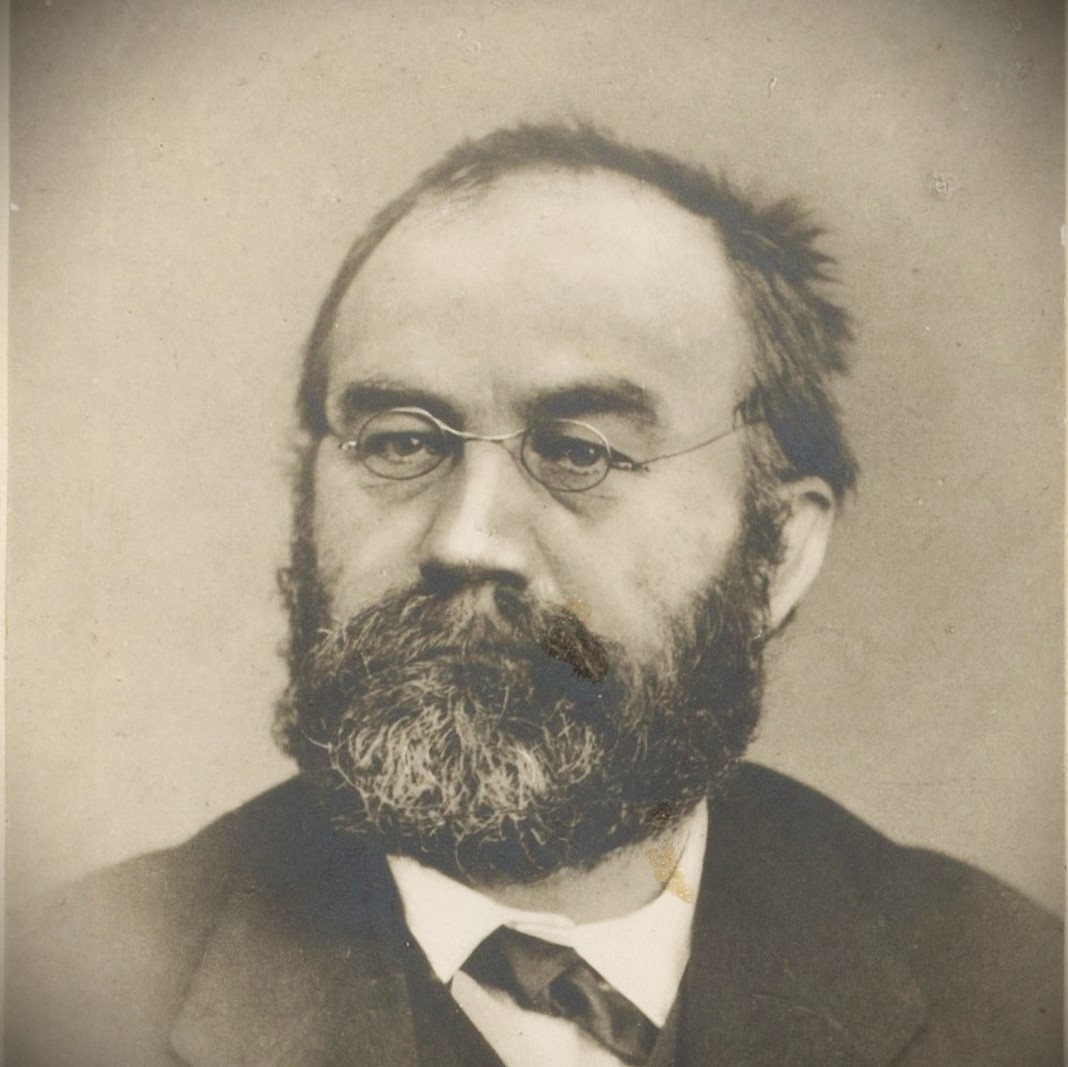
Presided over by Friedrich Adolph Sorge, the International in the United States holds a meeting at New York’s Cooper Union to protest the Franco-Prussian War after the French surrender at Metz. Three months later and the Commune would be proclaimed. The Workmen’s Advocate, voice the National Labor Union, would print the International’s statements on the war written by Marx as they were published.
‘Mass Anti-War Meeting of the International’ from Workmen’s Advocate (Chicago). Vol. 7 No. 15. December 3, 1870.
Held at Cooper Institute, New York. November, 19, 1870.
The mass meeting held at the Cooper Institute, New York, on the evening of November 19, 1870, for the purpose of protesting against the war, was, so far as the accomplishment of its several objects was concerned, a perfect success. The several objects were, first, a desire of many humane societies, including the three New York sections of the International Association of Workingmen, to express their deep regret and abhorrence of the brutal and reckless career of a few potentates and their devotees, in almost indiscriminately murdering the majorities subjugated to their rule. Secondly, a wish to bring the fact of these societies’ existence into public view, and thirdly, to test the sympathy of the American press toward the industrial movement generally.
The Mass Meeting was held under the auspices of nearly all the largest societies in New York sympathizing with labor, excepting those of trades unions and co operation.
The societies were the French, German and Tchechian or Bohemian sections of the International, the Freidenker Bund, the Social Democratic Society and the New Democracy.
The evening was clear and very propitious, and at 8 o’clock, the large hall of the Cooper Union was alive with an intelligent audience of about 2,500 persons of many nationalities. At this time the meeting was opened by a true veteran in the Labor cause, whose face has been familiar in the American Metropolis a score of years, Mr. Jno. B. Davis, who introduced the Committee’s President, Mr. F. A. Sorge, as the presiding officer of the evening. As soon as the applause had subsided, Mr. Sorge addressed the meeting briefly in English, of which he gave an epitome in German and French. His address was much applauded, especially when he declared: “There is something higher than patriotism, it is humanity.” He closed by introducing to the audience Mr. J. W. Greggory, of the Society of the New Democracy, who read Resolutions and several letters addressed to the Committee, among others one from the Hon. Charles Sumner, who gave in his opinion that the abolition of the “tax of blood” must prove a new era to the cause of progress of the human race.
Mr. Drury, the first speaker, followed with an address which was one of the charming features of the evening. He presented a full and astonishing catalogue of statistics on the costs of armed peace in Europe, and proved that nineteen-twentieths of the entire revenue of Europe was absorbed by the foolish antipathizing systems of National development on the war basis, and deduced the necessity and practicability through the International of a perfectly feasible system of government on an anti-war basis.
Mrs. Blake made a stirring speech on behalf of her sex, proving that the real, though unexpressed, suffering of the gentler sex, in view of the exciting scenes that absorb the soldiers’ woes compared to the distress of lonely watchers at home, often starving, and in view of the fact that death from anxiety and neglect is more terrible than violence, was actually greater sometimes than that of the harder sex. The meeting was then addressed in German by Mr. Carl and Dr. Douai. who gave a faithful synopsis of the present war in Europe from a working- man’s point of view in which the condition of actual affairs in France was made to appear as it really is, and the tricks of royal bidders for power were lucidly exposed and unstintingly denounced.
Mr. Feider addressed them in French for the French (society) section, and to add to the variety, a speech was made in the Czechian tongue, making in all one of the most cosmopolitan, it not the most interesting, demonstrations ever enjoyed in this city. An enthusiastic demonstration of applause was given for JACOBY, the great German leader of the political socialists movement in Germany, and his associates, and the meeting was brought to a happy termination by Mr. Greggory, who stated that a certain object of the meeting was to enlist sympathy and action on a great forthcoming movement, in which he invited the cordial concurrence of all workingmen’s society. The President, in adjourning the meeting, also made allusion to the fore- going hints, stating that it was the committee’s object on behalf of the International, to make this the inauguration of a series of general propagandism on industrial questions. By order,
C. OSBORNE WARD, F. BATTE, H. HARNIRE, G. SCHRIETEN. Secretaries.
The Chicago Workingman’s Advocate in 1864 by the Chicago Typographical Union during a strike against the Chicago Times. An essential publication in the history of the U.S. workers’ movement, the Advocate though editor Andrew Cameron became the voice National Labor Union after the Civil War. It’s pages were often the first place the work of Marx, Engels, and the International were printed in English in the U.S. It lasted through 1874 with the demise of the N.L.U.
Access to PDF of issue: https://chroniclingamerica.loc.gov/lccn/sn89077510/1870-12-03/ed-1/seq-1/
 Revolution's Newsstand