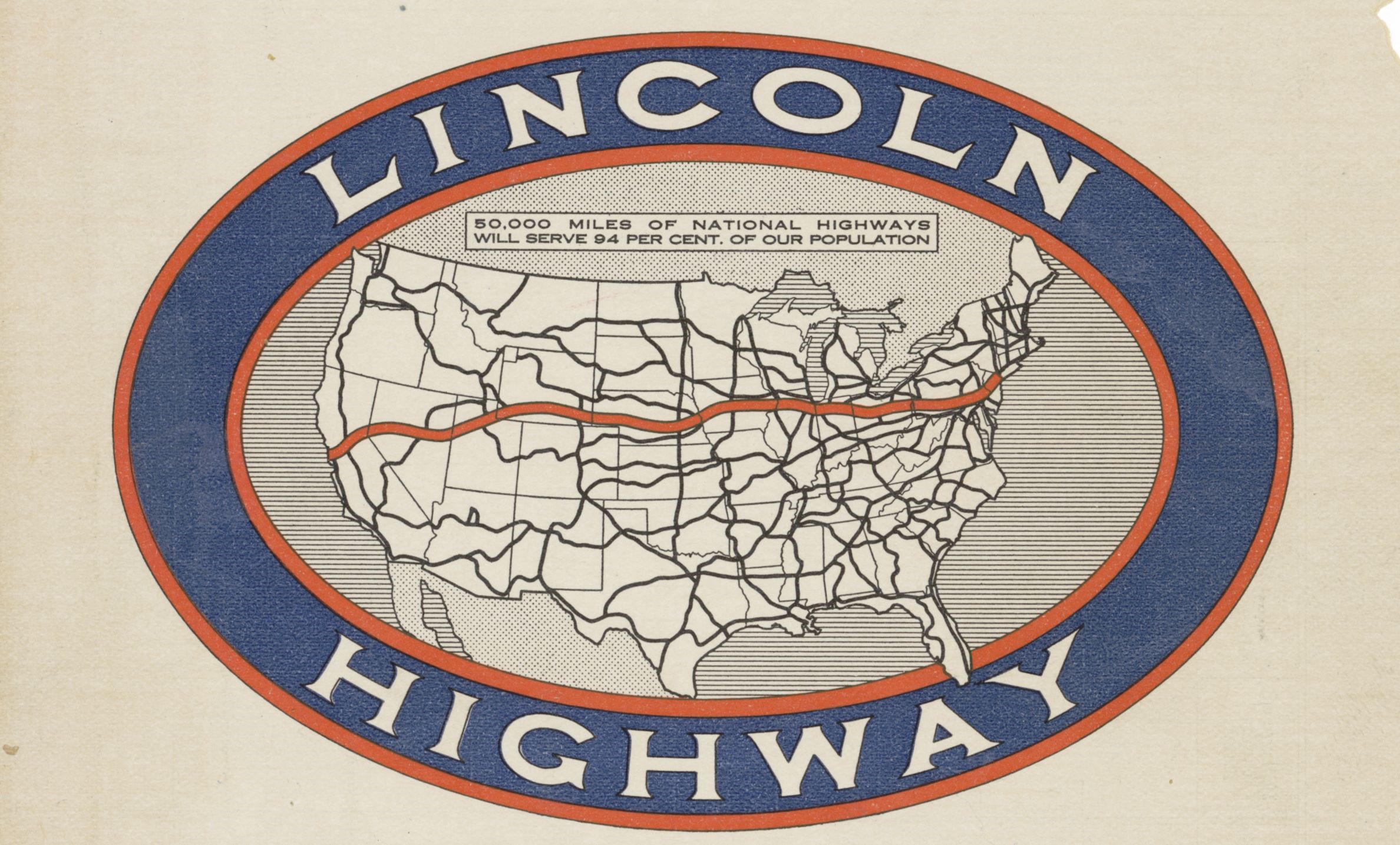
The building of the first coast-to-coast highway involved significantly less romance than the driving of it.
‘The Ocean to Ocean Highway’ by Alfred R. Tucker from Voice of the People. Vol. 2 No. 37. October 1, 1914.
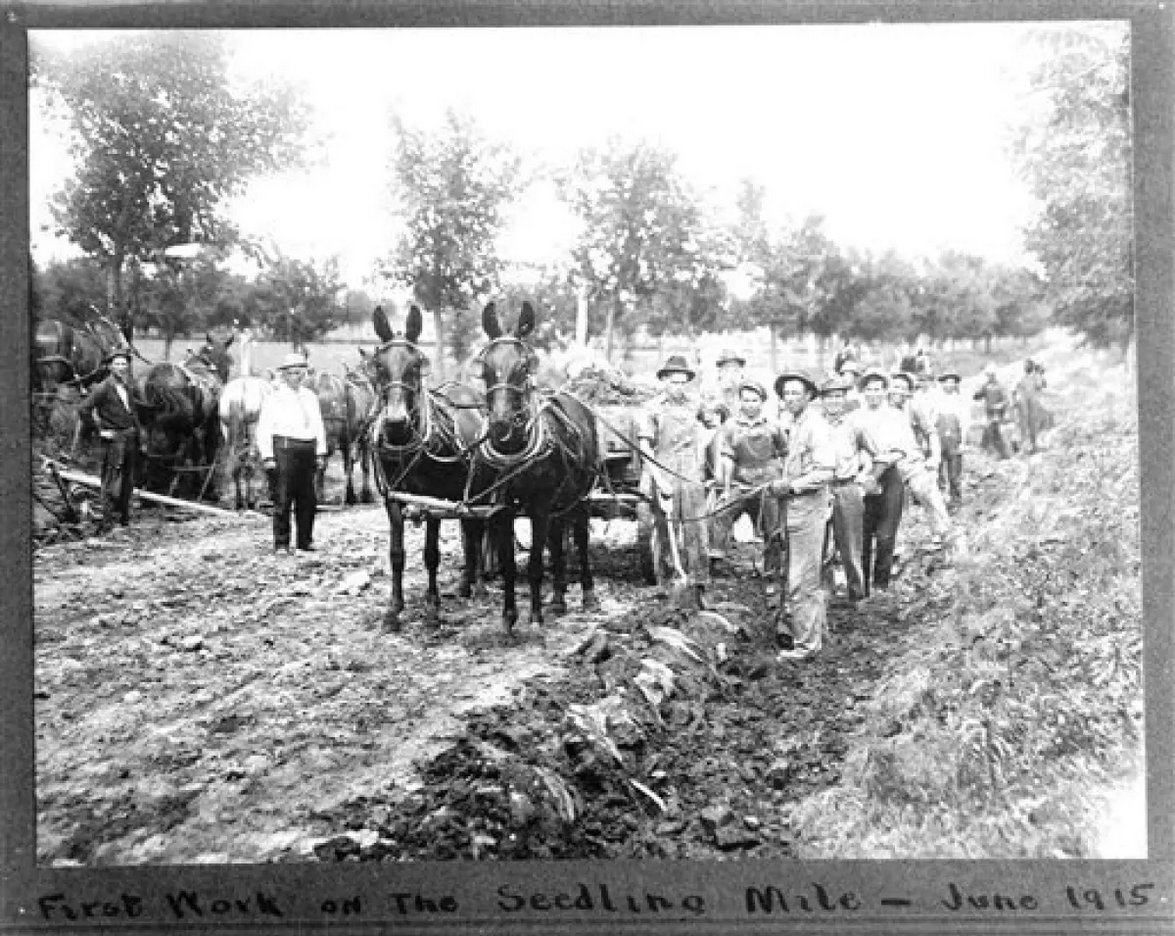
In spite of the fact that automobile clubs and associations are holding mass meetings and collecting large sums of money for the purpose of building the great Ocean to Ocean Highway, or Lincoln Highway, as it has been named, very little of the money ever gets to the roads, but is all squandered by the officials in big champagne and oyster suppers. After each blow-out the press and pulpit laud them to the skies for the great work they are doing. In reality here is what they are doing; at least this is the way the California end of the road is being built. The first link of the road from the cost through Los Angeles to San Bernardino, something like 75 miles, run. over roads already improved, so the real road building commences at San Bernardino and runs 250 miles, or more, through a mountain and desert country to Needles on the boundary line of Arizona and California. It follows the Santa Fe Railroad the whole distance; so that the unemployed, working men traveling through this district are the victims who are building this road. Any working man in this district who is caught out of work is grabbed either by R.R. bulls or deputy constables, and is kangarooed for 30, 60 or 90 days’ work on the Lincoln Highway. They are treated just the same as state convicts. Rotten grub and the bare ground for sleeping quarters; and for the least violation of rules they are whipped the same as the black slaves were in the South before the Civil War. On top of this this sentence is extended. If a man works hard, and is able to live through his entire sentence, he will be paid the magnificent salary of 35 cents per day. This is seldom necessary, for just before a man’s time is up, if they see he is about broke down and no longer able to do a day’s work, they will give him a chance to run away. I saw a few men who managed to get their 35 cents per day for 30 days paid to them in the form of a check, but they were unable to cash the checks and were forced to walk 30 or 40 miles to a town where they could get them cashed. In the mean time they must go hungry or beg. If they are caught begging they will be grabbed and given another 60 to 90 days on the great Lincoln Highway. You can see they have many ways of keeping the slaves on the job and keeping them from getting any money out of it. Now you may think they could not get enough men in this way to do the work but there are so many unemployed that they can afford to select the best. When the bulls grab a bunch of jobless slaves, 50 at a time, they line them up, examine them carefully and select the strongest looking men for the kangaroo court. As for the rest they are unfit to survive and are given a few swift kicks and told to beat it and be quick about it.
Jobless, homeless and propertyless slaves are building this great highway and all they get out of it is kicks, jails and rotten grub. I doubt very much if they will be allowed to walk over it after they have finished it.
The working class as a whole are facing this kind of a career with nothing but death at the end. How can we reach the working class with our plan to improve conditions. So far we have reached one in a thousand. The great mass know nothing of any plan to better their condition and have no hope in life. Can anyone devise ways and means, first to put the whole plan of the I.W.W. in as small and concise a pamphlet as possible, and then get it before every working man, women and child at once. If we can I am sure that out of the whole mass we could get a working majority, with a militant minority to put life into it and steer the movement clear of the rocks.
We have no right to say the working class has rejected the I.W.W. until we have put the whole thing squarely before all of them. Let’s get busy before the masters puts us under military rule when there will be less chance than there is now. Hoping that this article may be the means of bringing the question of reaching the working class before the entire membership, I remain yours for the Social and Industrial Revolution.
ALFRED R. TUCKER, Box 163, Victorville.
The Voice of the People continued The Lumberjack. The Lumberjack began in January 1913 as the weekly voice of the Brotherhood of Timber Workers strike in Merryville, Louisiana. Published by the Southern District of the National Industrial Union of Forest and Lumber Workers, affiliated with the Industrial Workers of the World, the weekly paper was edited by Covington Hall of the Socialist Party in New Orleans. In July, 1913 the name was changed to Voice of the People and the printing home briefly moved to Portland, Oregon. It ran until late 1914.
PDF of full issue: https://www.marxists.org/history/usa/pubs/lumberjack/141001-voiceofthepeople-v3n37w089.pdf
 Revolution's Newsstand