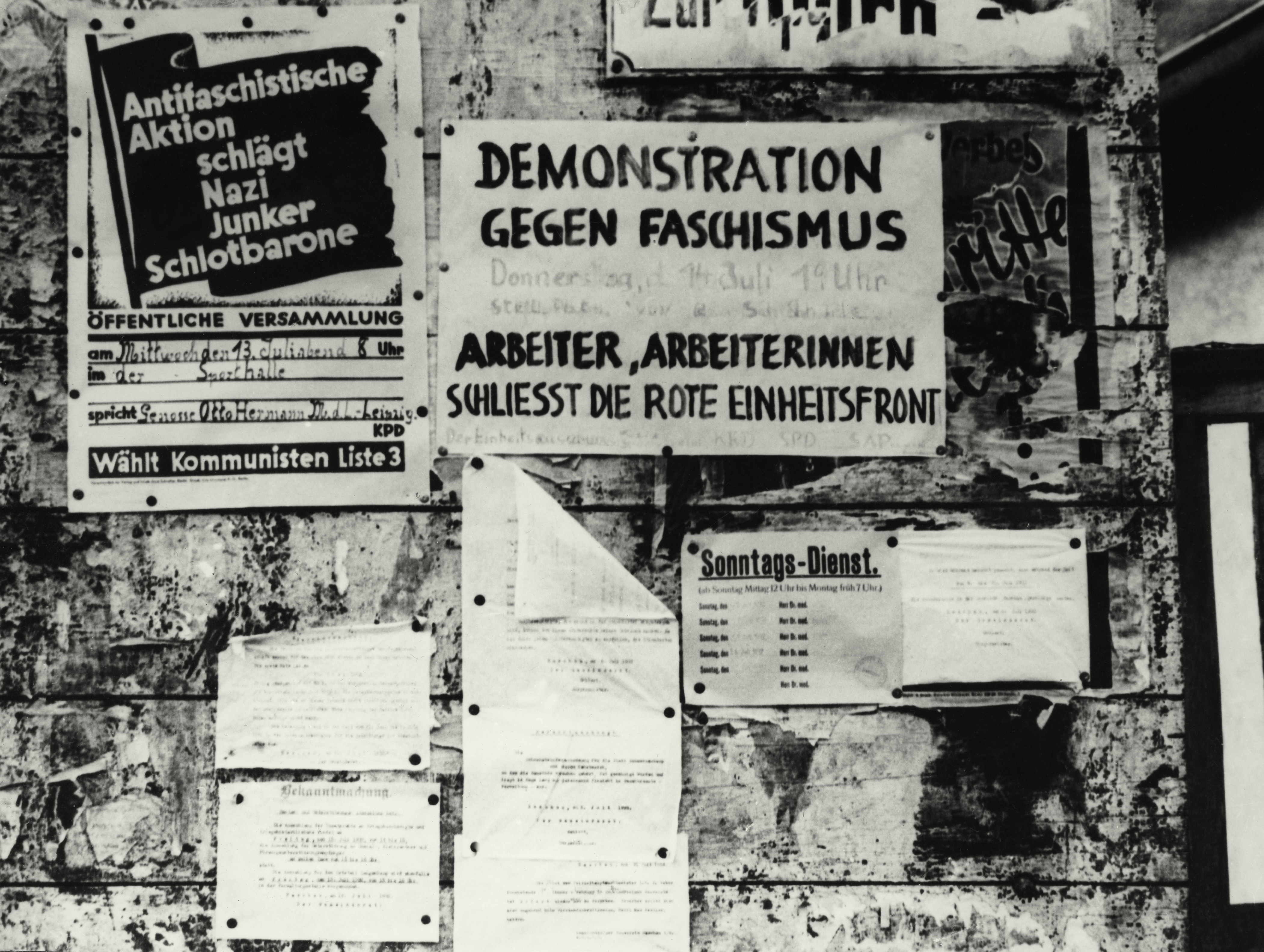
Submitted and introduced by Clara Zetkin, the Report on Fascism, a formidable speech sounding the bell of warning was given to the Third Plenum of the Executive Committee of the Communist International in June, 1923. The E.C.C.I. was the highest Comintern body between International Congresses, usually meeting once a year, and the organ of many consequential debates and decisions for the International. After the discussion on Zetkin’s report, reproduced below, the ‘Resolution on Fascism’ was adopted unanimously on June 20, 1923. Along with Zetkin’s summary speech, interventions include Krajevski (Poland), Böttcher (Germany), Serra (Italy), Smeral (Czecho-Slovakia), Gyptner (Germany), Karl Radek, and Zetkin’s closing speech. It was the Comintern’s first substantial statement on fascism.
The Commission on “The Fight against Fascism” included Zetkin as Chair and 21 members: Zinoviev, Trotzky, Bucharin, Piatakov, (Russia); Levy, Souvarine (France); Botcher, Hörnle (Germany); Neurath and Smeral (Czechoslovakia); Kolarov, Vladetic (the Balkans); Tranmael, Höglund, Scheflo (Scandinavia); Matsievki (Poland); Aoki (Japan); Pollit (England); Gennari Saitta (Italy); Laukki (Finland); Schatzkin (Y.C.L.).
‘Discussion on Fascism’ by the Executive Committee of the Communist International from International Press Correspondence. Vol. 3 No. 40. July 12, 1923.
Ninth Day of Session Discussion on Report of Clara Zetkin on Fascism. June 21, 1923. The Session was opened shortly after midday by Comrade Amter. The first speaker in the discussion on Fascism was:
Krajevski (Poland): Externally Polish Fascism does not appear as aggressive as Italian fascism. The Polish bourgeoisie considers it advisable to set the numerous Fascist organisations into motion only from time to time. A strictly centralised Fascist movement on the Italian example at present does not exist. As a result of the financial disorganisation, the frightful increase in the cost of living and the desperation of the landless peasants, a change of outlook has taken place amongst wide masses of the petty bourgeoisie and the peasantry. They are turning away from Pilsudski. The bourgeoisie and the present government occasionally provoke the masses to anti-Semitic excesses and demonstrations against Soviet Russia. But at the same time they fear the elementary mass character of the Fascist movement that unites these masses. The slogans of Polish Fascism are externally less anti-worker than national-chauvinistic. Its advocate is the present Glombinski-Vitosk Government, which prefers to adopt a policy of cunning towards the working class, with the exception of the communists, but naturally only as long as it sits firmly in the saddle. As in all other countries Fascism is preaching the fundamental reform of parliament, advocating that all enemies of the Polish fatherland and all members of foreign nations should be deprived of electoral rights. The notorious bomb outrage in Cracow showed that Fascism, in spite of its externally not very aggressive manner, does not refuse to resort to terrorist methods from time to time. The small and large Fascist organisations in Poland are as follows: The Anti-Bolshevik League of Warsaw; the League for Social Defence–a strike-breaking organisation; the “Development” League; the military leagues of Domber and Haller; the Peasants’ Educational League, etc. The full brunt of Polish Fascism is born exclusively by the Communist Party. The Polish Socialist Party, which only recently took up the fight against fascism verbally, is still as formerly in its policy the fore-runner of Fascism. Cur proposals for the formation of the united front in town and country between the social-democratic organisations, as the Polish Socialist Party and the Bund, and the revolutionary organisations of the Communist Party and the labor unions, were rejected by the former.
Böttcher (Germany): No peril requires such quick international actions by the international working class, as the Fascist peril. We are now discussing Comrade. Zetkin’s political analysis of Fascism.
In Germany, the Fascist organisations have developed into strong national leagues: The German People’s Freedom Party and the National-Socialist Workers’ Party. There are various tendencies within German Fascism itself. The struggle of these various tendencies is very acute. From a central viewpoint, the Fascist movement in Germany is now a people’s movement. This people’s movement has two prominent features, 1. anti-semitism and 2. a pronounced anti-capitalist-demagogic tone. In connection with internal policy, this people’s movement concerns itself with propaganda on the so-called debt question. The struggle against the Versailles Treaty is one of the main features of the Fascist movement. Hitler’s slogan: Down with the November criminals! is the internal policy of the Fascists in a nut shell. This means of course-fighting the labor movement. In Bavaria, the Fascists apply this slogan even to the social-democrats. Thus, the social-democrats, who helped to bring Fascism into being, are being beaten with their own stick. The German Communist Party issued the watchword: Workers’ rule against Fascist rule, proletarian hundreds against fascist hundreds! But the Party soon realised that the Fascist movement was not only a narrow movement of illegal, military fighting leagues, but that it is beginning to get hold of wide masses. As soon as the Party realised this, it took up the struggle against Fascism also on the political-ideological field. The latest phase of Fascism is the struggle for the factories. In the face of this strategy, the Party is now propagating the idea of the establishment of joint factory hundreds, which are the organ of the united front in the struggle against Fascism in the factories, and which must take up the struggle against Fascism on the ideological field. The Communists showed the way out of all this chaos and misery. In this struggle they rally the masses around them. It is only if we succeed in thus establishing the united front on a broad basis, that it will be possible to disintegrate Fascism politically, and to overcome it militarily.
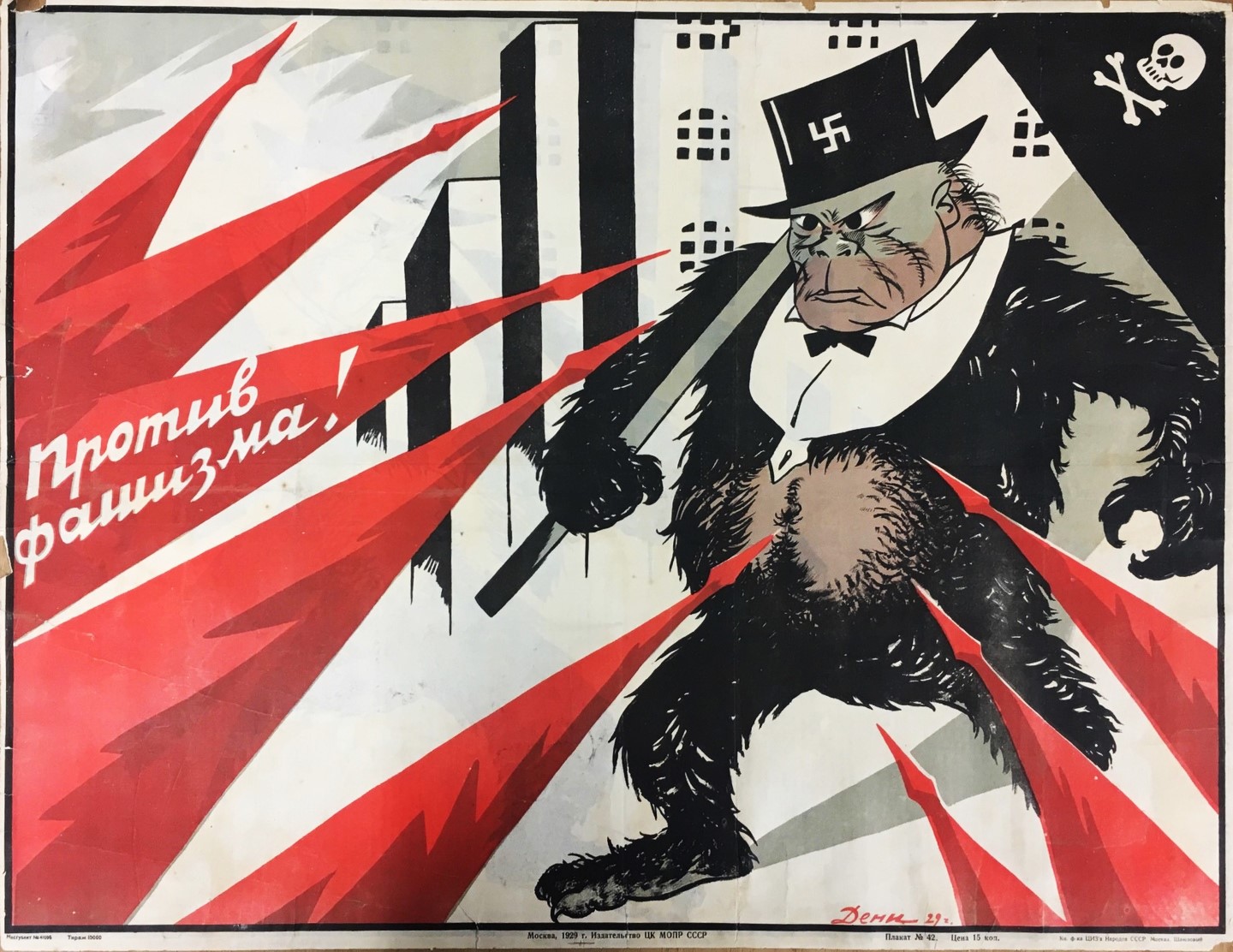
Frey (Austria): In Austria Fascism was called forth solely by the policy of the social-democrats. Fascism is today very strong in Austria and is becoming bolder and more insolent from day to day. When, in the early period after the break-up of the Austrian monarchy, the so-called “home guards” were formed, we pointed out the danger they implied. The social-democrats, however, continued to sabotage and not only prevented the arming of the proletariat which we demanded, but also the formation of workers’ guards. The Security Police which were then formed, were so organised as to be the reliable guards of Social Democracy against the communists. In my opinion it is our duty to work among the Security Police, for they are a possible instrument of the united front which is worth developing and revolutionising. In Austria, there are two distinct kinds of Fascism: the so-called “Hacken-kreuzler” (swastica), who carry on an agitation for a Greater Germany, and the “Frontkämpfer” (front line fighters), who would be content with a Fascist Austria under the Hapsburg Dynasty as a starting point for the restoration of the old monarchy. Experience has shown that both organisations are united in their ruthlessness towards the working class. So far we have, rejected the slogan of union with Germany because we did not wish to encourage the illusion amongst the workers that union with Germany could help them. But as the situation is now changing, owing to the increasing activity of the working class, it may become necessary to adopt the slogan of unity in conjunction with the revolutionary fight. In this way, too, we shall have a moral weapon against the Greater Germany fascisti movement. The fight against Fascism must be conducted theoretically, militarily, and politically. The Austrian Party will exert every effort in this fight.
Serra (Italy): Clara Zetkin has made a clear distinction between terrorism and Fascism. The Italian Fascisti always boasted to the bourgeoisie that they prevented revolution in Italy. From the point of view of history the very contrary was the case: Fascism sprang up owing to the check to the revolution. When the factories were occupied, the Socialist Party found itself faced with a dilemma: participation in the bourgeois government, or immediate revolution. The left wing prevented the entry into the bourgeois government, which indeed the masses did not want. The immediate seizure of power was out of the question and the party was unable to make concrete preparations for it or to indicate the way. Since that time the deceived masses began to hearken to Fascism.
The two ideological phases of Fascism noted by Clara Zetkin, viz. the republican phase and the monarchist phase, are justified on closer, examination. Mussolini was at first a republican in order to flatter the old revolutionary and radical elements whom he needed, and in order to cause dissension in military circles. As soon as he succeeded, he abandoned republicanism. Whatever the ideological premises of Fascism were, by developing exclusively in the direction of the suppression of the workers’ movement, it must take an orientation to the right.
The immediate problem in Italy is principally that of the relation of forces. We must oppose our ideology to that of Fascism, and do so practically, at the same pointing out, the bankruptcy of the latter. Clara Zetkin has done well to lend her authority to this. The Fascist ideology can be summed up briefly: it consists in opposing the “national” to the “international”. Mussolini said recently that he would seize the bourgeoisie by the throat in order to compel it to be a true bourgeoisie, and the Socialists, to make them take the consequences of their position. Julian the Apostate in the same way persecuted the Christians to compel them to be true Christians, but we must not allow Fascism to exclude us from the life of the nation. We must present our internationalism in a manner intelligible to all workers and even the sympathetic sections of the middle classes as the only solution to the practical problems of Italian life.

The speaker pointed out the necessity of fighting Fascism from its very commencement. Once it has seized power, it is very difficult to combat it. He considered the boycott of Italy impracticable since it demanded too much preparation and could not be effective at some decisive moment which was still very far distant. The Italian communists, he said, cherish no illusions. We are only at the very outset of a long period of struggle in which communists from other countries can do little to help us directly. But they will help us greatly if they do their duty in their own countries, that is, if they draw all the necessary lessons from our experiences and from our defeat.
Smeral (Czecho-Slovakia): Until recently there were no Fascist organisations in Czecho-Slovakia worth mentioning. We feared that the Legionaries who had returned from Siberia might be converted into a Fascist corps, but it soon became evident that this fear was groundless owing to the predominance of the proletarian element in these legions. It is only during the last few weeks that there are symptoms of serious attempts being made to organise Fascism in Czecho-Slovakia. By the way of illustration, I will mention two facts. On June 10th, Dr. Kramarsch the leader of the National-Democratic Party, which is still part of the government coalition, spoke at a public meeting of the possibility of the present bourgeois-socialist coalition government being replaced by another government. He meant of course by a Workers’ and Peasants’ Government including also German workers and peasants. He said: Those who reject the coalition today, are saddling themselves with an awful responsibility. We do not want to give up our State, and if parliamentary means prove inadequate, we must employ other means. A similar tendency was voiced in an article in the Youth organ of the Kramarsch Party. The Czech social-democrats are to blame for this arrogant and confident attitude of the bourgeoisie. The turn which British policy towards Soviet Russia has taken and events in Bulgaria are also contributing factors in this situation. It is significant, that the Fascist movement, in the first phase of its development, is not as yet directed against the communists as a mass Party. On the contrary, in some places the Fascists are positively coquetting with the communist demands. On the other hand, they are decidedly opposed to the Benes-Masaryk policy. The Czecho-Slovakian Communist Party is confronted with responsible tasks. It may happen that the bourgeois and social-democratic elements inimical to Fascism, will invite us to joint action against Fascism. We must make it quite clear that the methods of the opportunists are not good enough for us. The Fascist offensive cannot be over- come by parliamentary means only. It must be met by deeds. We must organise the working masses into a fighting front, and we must arm them in such a way as to make them a real force capable of successfully resisting the armed attack of bourgeois reaction.
In Czecho-Slovakia, national reasons had much more to do with the rise of Fascism than social reasons. The result is that Fascism with us is nationally divided, that we have beside the Czech Fascism, a German and a Hungarian Fascism which to a certain extent paralyse each other. In Slovakia there are Fascist organisations on the model of the “Awakening Hungarians”. In the German districts, Fascism is represented by the German National-Socialist Party. Lately, this Party, which hitherto shared the standpoint of the German Majority Socialists, has transferred its sympathies to the Bavarian National Socialists, led by Hitler, and has even entered into a certain organisational alliance with them. It is rather interesting that in Czecho-Slovakia the Fascists, who are followers of Huss, are collaborating with the Clerical People’s Party. It is difficult to say as yet if this is purely accidental or not. But it is just possible that an attempt will be made to bring the Catholic States of Central-Europe-Bavaria, Austria, Horthy-Hungary and Poland into line, politically, and that efforts will also be made to incorporate Czecho-Slovakia in this bloc.
Gypfner (Germany): I want to deal with three main points in connection with the fight against Fascism: 1. The proletarian hundreds. 2. Our activities in rural districts. 3. The international fight against Fascism. The communist youth holds the point of view that the working class youth from the age of 17 should be included in the proletarian hundreds, otherwise the danger will arise that they will either form their own organisations–which is not desirable from the point of view of the working class movement-or go where they can find activities, i.e. to the Fascist organisations. In this connection I should like to point out that the party cannot exercise a theoretical influence upon the factory hundreds because the party has no factory nuclei.
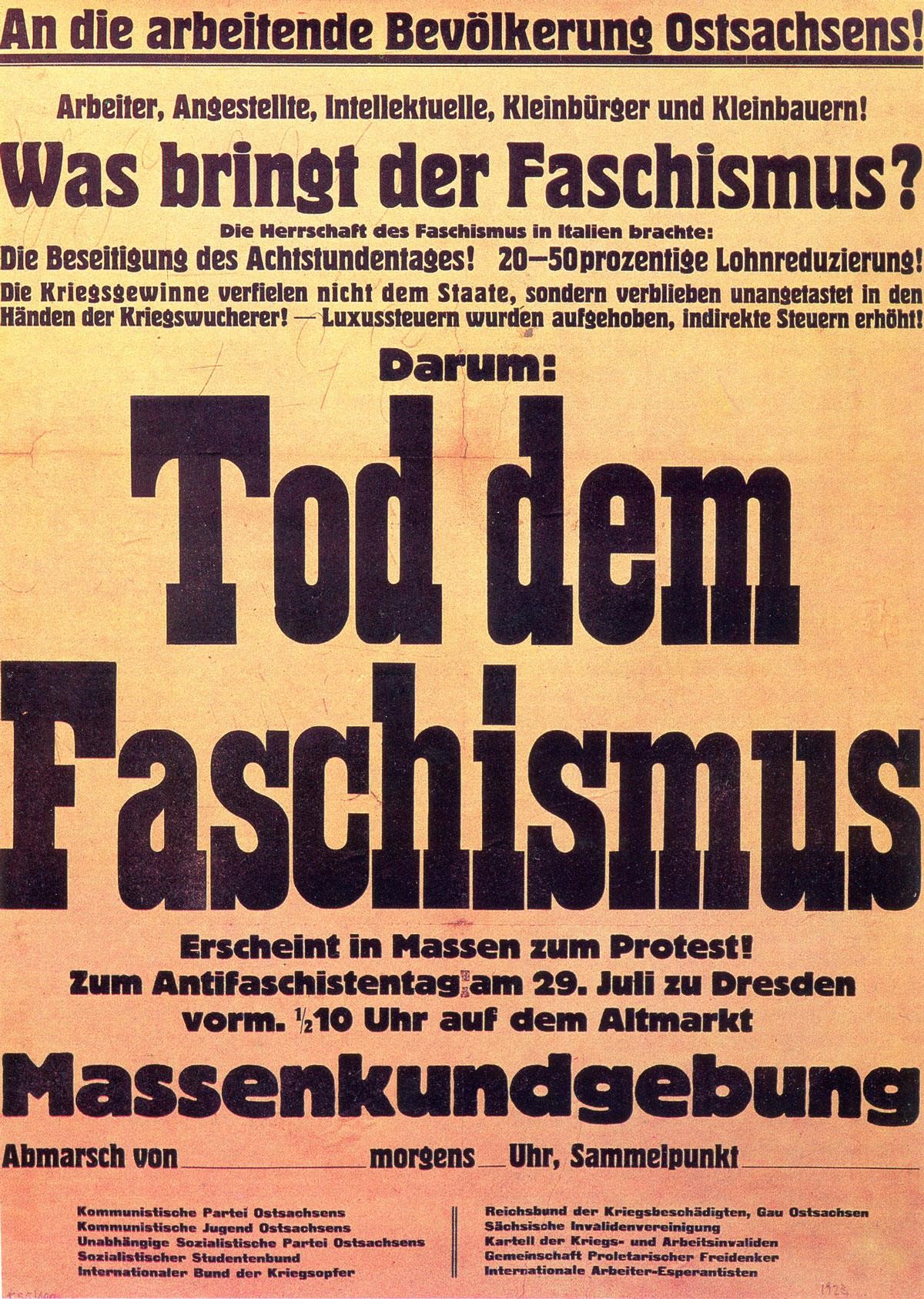
Our activities in the country side have hitherto been in sufficient. We must develop a much more lively propaganda so as to avoid our experiencing in Germany what was experienced in Italy, in Italy, namely, Fascist expeditions upon the towns organised in the country. As to the international struggle against Fascism, our actions hitherto have been too feeble. We see that Fascism is conducting its fight internationally, yet the proletariat of one country has been unable to count upon the parallel activity of the proletariat of other countries in the fight against Fascism. I hope that just as the activities of the Comintern in the fight against the danger of war have been intensified, so will the struggle against Fascism be intensified. The communist youth will do all in its power to assist the communist parties in their fight against fascism.
The chairman read a declaration from Comrade Koritschoner (Austria) wherein in reply to the criticism of Comrade Frey on the question of the fight against Fascism, the tactic of the Austrian Communist Party was stated to be the only correct one. Frey did not speak as the representative of the Austrian Communist Party.
Comrade Radek: We have just heard the comprehensive and deeply impressive report of Comrade Zetkin on International Fascism, that hammer meant to crush the head of the Proletariat, but which will fall upon the petty bourgeois class who are wielding it in the interests of large capital. I can neither supplement nor complete the speech of our venerable leader. I could not even follow it clearly, because there hovered before my eyes the corpse of German Fascism, our class enemy, which was sentenced to death and shot by the hirelings of French imperialism, that powerful organisation of another section of our class enemy. Throughout the speech of Comrade Zetkin on the contradictions within Fascism, the name of Schlageter and his tragic fate was in my head. We should remember him here when we are defining our attitude towards Fascism. The story of this martyr of German nationalism should not be forgotten nor passed over with a mere phrase. It has much to tell us, and much to tell the German people.
We are not sentimental romanticists who forget friendship when its object is dead, nor are we diplomats, who say: By the graveside say nothing but good, or remain silent. Schlageter, a courageous soldier of the counter-revolution, deserves to be sincerely honoured by us, the soldiers of the revolution. Freksa, who shared his views, published in 1920 a novel in which he described the life of an officer who fell in the fight against Spartacus. Freksa named his novel The Wanderer into the Void”.
If those German Fascisti, who honestly thought to serve the German people, failed to understand the significance of Schlageter’s fate, Schlageter died in vain, and on his tombstone should indeed be inscribed: “The Wanderer into the Void”.
Germany lay crushed. Only fools believed that the victorious capitalist Entente would treat the German people differently from the way the victorious German capitalists treated the Russian and Roumanian people. Only fools or cowards, who feared to face the truth, could believe in the promises of Wilson, in the declarations that the Kaiser and not the German people would have to pay the price of defeat. In the East a people was at war. Starving, freezing, it fought against the Entente on fourteen fronts. That was Soviet Russia. One of these fronts consisted of German officers and German soldiers. Schlageter fought in Medems, Volunteer Corps, which stormed Riga. We do not know whether the young officer understood the significance of his acts. But the then German Commissar, the Social-democrat Winnig, and General Von der Golz, the Commander of the Baltic troops, knew what they were doing. They sought to gain the friendship of the Entente by performing the work of hirelings against the Russian people. In order that the German bourgeoisie should not pay the victors the indemnities of war, they hired young German blood, which had been spared the bullets of the Great War, to fight against the Russian people. We do not know what Schlageter thought at this period. His leader, Medem, later admitted that he marched through the Baltic into the void. Did all the German nationalists understand that? At the funeral of Schlageter in Munich, General Ludendorf spoke, the same Ludendorf who even today is offering himself to England. Schlageter was mourned by the Stinnes press. Herr Stinnes and to France as the leader of a crusade against Russia. was the colleague in the Alpina Montana, of Schneider-Creuzot the armourer, the assassin of Schlageter. Against whom did the German people wish to fight: against the Entente capitalists or against the Russian people? With whom did they wish to ally themselves: with the Russian workers and peasants, in order to throw off the yoke of Entente capital or for the enslavement of the German and Russian peoples?
Schlageter is dead. He cannot supply the answer. His comrades in arms swore to carry on his fight at his graveside. They must supply the answer: against whom and on whose side? Schlageter went from the Baltic to the Ruhr, not in the year 1923 but in the year 1920. Do you know what that meant? He took part in the attack of German capital upon the Ruhr workers; he fought in the ranks of the troops whose task was to bring the miners of the Ruhr under the heel of the iron and coal kings. The troops of Waters, in whose ranks he fought, fired the same leaden bullets with which General Degoutte quelled the Ruhr workers. We have no reason to believe that it was from selfish motives that Schlageter helped to subdue the starving miners.
The manner in which he chose to die speaks on his behalf, and proves that he was convinced he was serving the German people. But Schlageter thought he was best serving the people by helping to restore the mastery of the class which had hitherto led the German people, and had brought such terrible misfortune upon them. Schlageter regarded the working class as the mob that must be governed. And in this he shared the view of Count Reventlow, who calmly declared that no war against the Entente was possible until the internal enemy has been overcome. The internal enemy for Schlageter was the revolutionary working class. Schlageter could see the profound mistrust of the workers towards the German government and the German bourgeoisie. He could see how the deep cleavage in the nation hampered its defensive power. He could see more. Those who share his views complained of the passivity of the German people. How can a defeated working class be active? How can a working class be active which has been disarmed, and from whom it was demanded that they should allow themselves to be exploited by profiteers and speculators? Or should the activity of the German working masses be replaced by the activity of the German bourgeoisie? Schlageter read in the news- papers how the very people who pretended to be the patrons of the German nationalist movement, sent securities abroad so that they might be enriched and the rich impoverished. Schlageter certainly could have no hope in these parasites, and he was spared reading in the press low the representative of the German bourgeoisie, Dr. Lutierbeck, turned to his executioners with the request that they should permit the iron and steel kings to shoot down sons of Germany, the men who were carrying out the resistance on the Ruhr, with machine guns.
Now, that the German resistance, through the rascally trick of Dr. Lutterbeck, and still more through the economic policy of the possessing classes, has been turned into a farce, we ask the honest, patriotic masses who are anxious to fight against the French imperialist invasion: How will you fight, on whose support will you rely? The struggle against Entente imperialism is a war, even though the guns are silent. There can be no war the German people by regarding the majority at the front when there is unrest in the rear. A minority can be Concluding kept under in the rear, but not a majority. The majority of the German people are the working men, who must fight against the poverty and want which the German bourgeoisie is bringing upon them. If the patriotic circles of Germany do not make up their minds to make the cause of the majority of the nation their own, and so create a front against both Entente and German capital, then the path of Schlageter was the path into the void, and Germany, in the face of foreign invasion and the perpetual menace of the victors, will be transformed into a field of bloody internal conflict, and it will be easy for the enemy to defeat her and destroy her.
When, after Jena, Gneisenau and Scharnhorst asked them- selves how the German people were to be raised from their defeat, they replied: only by making the peasants free. From submission and slavery shall come freedom. Only the free German peasantry can lay the foundations for the emancipation of Germany. What the German peasantry meant for the fate of the German nation at the beginning of the nineteenth century, the German working class means at the beginning of the twentieth century. Only by it can Germany be freed from the fetters of slavery, and not against it.
Schlageter’s comrades talked of war at his graveside. They swore to continue the fight. It had to be conducted against an enemy that was armed to the teeth, while Germany was unarmed and beaten. If the talk of war is not to remain an empty phrase, if it is not to consist of bombing columns that blow up bridges, but not the enemy; that derail trains, but cannot check the armoured trains of Entente capital, then a number of conditions must be fulfilled. It demands that the German people should break with those who have not only led it into defeat, but who are perpetuating the defeat and the defencelessness of the German people as the enemy. Only when the German cause becomes the cause of the German people, only when the German cause becomes the fight for the rights of the German people, will the German people win active friends. The most powerful nation cannot endure without friends, all the more so a nation which is defeated and surrounded by enemies. If Germany wants to be in the position to fight it must create a united front of workers, and the brain workers must unite with the hand workers, and form a solid phalanx. The condition of the brain workers cries out for this union. Only old prejudices stand in the way. United into a victorious working people, Germany will be able to draw upon great sources of resisting power which will be able to remove all obstacles. If the cause of the people is made the cause of the nation, then the cause of the nation will become the cause of the people. United into à fighting nation of workers, if will gain the assistance of other people who are also fighting for their existence. Whoever is not prepared to fight in this way is capable of deeds of desperation but not of a serious struggle.
This is what the German Communist Party and the Communist International have to say at Schlageter’s graveside. It has nothing to conceal, for only the complete truth can penetrate into the suffering, internally disintegrated masses of Germany. The German Communist Party must declare openly to the nationalist petty bourgeois masses: Whoever is working in the service of the profiteers, the speculators and the iron and coal magnates, to enslave the German people and to drive them into desperate adventures, will meet with the resistance of the German Communist Workers. They will oppose violence by violence. Whoever, from lack of comprehension, allies himself with hirelings of capital, we shall fight with every means in our power. But we believe that the great majority of the nationalist minded masses belong not to the camp of the capitalists but to the camp of the Workers. We want to find, and we shall find, the path to these masses. We shall do all in our power to make men like Schlageter, who are prepared to go to their deaths for a common cause, not wanderers into the void, but wanderers into a better future for the whole of mankind; that they should not spill their hot, unselfish blood for the profit of the coal and iron barons, but in the cause of the great toiling German people, which is a member of the family of peoples fighting for their emancipation. This truth the Communist Party will declare to the great masses of the German people, for it is not a Party fighting for a crust of bread on behalf of the industrial Workers, but a Party of the struggling proletariat, fighting for its emancipation, an emancipation that is identical with the emancipation of the whole people, of all who toil and suffer in Germany. Schlageter himself cannot now hear this declaration, but we are convinced that there are hundreds of Schlageters who will hear it and understand it.

Concluding Speech of Clara Zetkin: We may look back on this debate with satisfaction. Its level was much higher than that of the Hamburg Congress. There, the question was not dealt with theoretically at all, and practically it ended in a call to fight the communists. The mountain, labored and brought forth a mouse’s tail, a Bureau that is to collidet material. Only the Hungarian, Kunfy, and Wels, one of the foremost assassins of the proletariat, took part in the debate. Their wisdom amounted to this: if there were no communists there would be no Fascism.
The debate has born out my statement that Fascism must and intellectually. The speakers supplemented my review of the be fought and conquered not only militarily but also politically situation, Smeral gave à particularly good analysis of the situation. Radek’s speech moved me greatly. Serra expressed the opinion that there was no contradiction between the former attitude of Fascism and its present conduct. This in itself is correct. But in the imagination of the masses, between what was represented to them by Fascism and what Fascism has actually accomplished, there exists a mighty contradiction, and that must be insisted upon, Serra is of the opinion that a boycott of Fascism would be valueless. This demand was put forward by the Frankfort Conference, and we must adhere to it however great the difficulties are. Italian industry is built up exclusively upon foreign coal and iron. If the boycott has the slightest success, the capitalists will feel the effects. Italy imports a considerable quantity of American cereals. The boycott will in itself not be of much significance. It will however rouse up the workers of the boycotting countries. It must moreover be remarked that this demand was advanced by a conference at which representatives of all parties and industries participated. This conference was the first success of our united front tactics, and we should therefore be very slow to neglect its demands. The boycott of Horthy’s Hungary also did not give the results desired, but it however served to arouse the workers. It appears that, apart from Germany, very little has yet been done practically in the fight against fascism. The best of theory is valueless if it is not accompanied by practice. The standing armies are the hot-beds of Fascism and our agitation must be carried into the armies. We must also win over to our side those elements who sympathise with Fascism in good faith. We, who are not marching into the void, but into a bright future, must reveal this future to the sincere elements amongst the Fascists. We must strive to bring the fight home to every single soul. If we do that, we can confidently cry: Though the world be full of devils, we shall overcome them all! (Enthusiastic applause,)
International Press Correspondence, widely known as”Inprecorr” was published by the Executive Committee of the Communist International (ECCI) regularly in German and English, occasionally in many other languages, beginning in 1921 and lasting in English until 1938. Inprecorr’s role was to supply translated articles to the English-speaking press of the International from the Comintern’s different sections, as well as news and statements from the ECCI. Many ‘Daily Worker’ and ‘Communist’ articles originated in Inprecorr, and it also published articles by American comrades for use in other countries. It was published at least weekly, and often thrice weekly. Inprecorr was a major contributor to the Communist press in the U.S. and is an invaluable English-language source on the history of the Communist International and its sections.
PDF of full issue: https://www.marxists.org/history/international/comintern/inprecor/1923/v03n52-jul-23-Inprecor-loc.pdf
 Revolution's Newsstand