Forgive this rare editorial introduction. Having read this essay several times as transcribing it, it was inevasible. There is no way to understand the political world, and the decisions made, of the past without absorbing this history, which played such a defining role in the debates in the most crucial of decades.
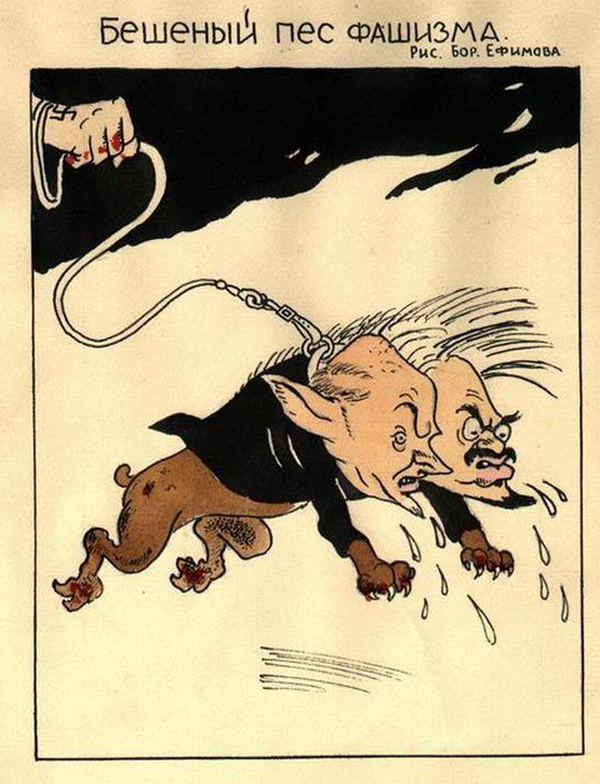
Spread over two issues of the Communist Party’s theoretical journal, V. .J. Jerome delivers the indictment against Bukharin as a counter-revolutionary to U.S. audiences. Though the gun put to the head of Nikolai Ivanovich Bukharin had already rendered its verdict. Nikolai Bukharin was among the best known Communists internationally, his A.B.C. of Communism was the first introduction to Bolshevism for many around the world. He played a central in the Comintern and the Party, edited of Pravda, produced theoretical work, and lead the Soviet’s premiere scientific institution. His personality and erudition made him an icon and a ‘favorite of the whole Party.’ A Bolshevik since 1906, he was on the C.C. of the of the Party since October, 1917 when he helped lead the Moscow insurrection, on the Political Committee after 1924 became Secretary of the Comintern in 1926. A comrade of immense talent, charisma, vision, and authority whose ideas developed through the complicated experiences of a real revolution. The level of his accomplishments required a long, increasingly incendiary campaign to discredit him.
Not, of course, that he was without weakness aside strengths; failings and mistakes. However sharp or fundamental divergences or disagreements one may have with the historical Bukharin, the charges leveled here, after his execution, are only serious because of the seriousness of the vitriol in which they are offered. That Bukharin and his co-thinkers were able to completely fool no less than Lenin himself (along with the entire international workers movement, including Stalin) while acting as traitors and assassins, imperialist agents, mass terrorists, and fascist spies for decades….all while unable to quote Marx accurately seems…farfetched.
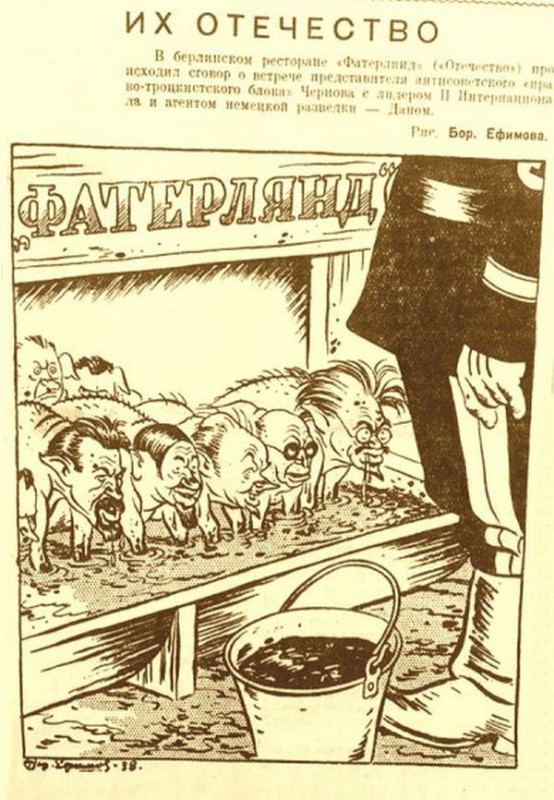
Formally accused with plotting to assassinate Lenin, Sverdlov and Stalin during the 1918 Brest negotiations, attempt to start a war with the SRs against Germany so it could invade and destroy the Soviets system, murder writer Maxim Gorky with poison, conspire with Germany, Japan, AND Great Britain to invade and dismember the Soviet Union; all done under the direction of Leon Trotsky (who was previously Bukharin’s fiercest opponent and Stalin’s chief ally against.) The last large public Purge Trials in the Soviet Union took place from March 3-13, 1938. The ‘Case of the Anti-Soviet “Bloc of Rightists and Trotskyites, “or the ‘Trial of the Twenty-One’ of leading veteran revolutionaries and Bolsheviks. Among those tried were Nikolai Bukharin, Alexei Rykov, Nikolai Krestinsky, Christian Rakovsky, Vladimir Ivanov, Mikhail Chernov, Faizulla Khodjayev, and more. All were found guilty and 18 sentenced, including Bukharin, to immediate death. Two days later on March 15, the condemned met Vasily Blokhin, NKVD’s chief executioner who boasted 10,000 personal executions. Bukharin was not ‘rehabilitated’ until 1988.
‘Bukharin—The Path of a Traitor’ by V.J. Jerome from The Communist. Vol. 17 Nos. 6 & 7. June & July, 1938.
“The dying classes resist, not because they have become stronger than we are, but because socialism is growing faster than they are, and they are becoming weaker than we. And because they are becoming weaker, they feel that their last days are approaching and are obliged to resist with every means and method in their power.
“Such is the sharpening of the class struggle and the resistance of the capitalists at the present historical moment.” (Joseph Stalin, Leninism, Vol. II, pp. 128-9.)
Bukharin whom the bourgeoisie and all the enemies of Marxism-Leninism find it in their interest to play up as the great “theoretician,” was basically, in theory and practice, never a Marxist. His whole outlook and activity were alien to Marxism and Marxian dialectics. He maintained a wrong position, which recurred continually—on historical materialism, in which he revealed himself as a crass mechanist; on the question of the analysis of imperialism, the state and revolution, the national question, the role of the peasantry and the allies of the proletariat, the vanguard role of the Communist Party—on the entire prospect and program of socialist construction. With cliques about him, now “Left,” now “Right,” he carried on chronic factional struggles against the Party, entering into shady relationships with anti-Party and anti-Soviet elements, and finally degenerating into counterrevolution and fascism.

Bukharin, very early, fought the Marxist-Leninist teaching on the state and revolution; Lenin branded his position as “half anarchism.”
Bukharin gave expression to his anarchistic views on the state and revolution in an article, signed Nota Bene, published in The Youth International, in 1916. He asserted that Marxism “must now more than ever emphasize its hostility to the state in principle,” and that the task before it was that of “blowing up” the state.
Thus, Bukharin set himself against revolutionary Marxism. For Marxism is, axiomatically, not opposed to the State per se, but postulates the establishment of a new, transitional state power, the revolutionary dictatorship of the proletariat, which supplants the shattered state machinery of the bourgeoisie and creates the conditions for, and promotes the construction of, the socialist order.
In his notebooks on Marxism and the State, Lenin sharply criticized Bukharin’s position, saying:
“What distinguishes us from the anarchists is (a) the use of the state now and (b) during the proletarian revolution. (‘the dictatorship of the proletariat’)—points of extreme and immediate importance in practice. (But it is these very points that Bukharin forgot!)
Sbornik Sotzial-Demokrata, (Social Democrat Collection), of which Lenin was editor-in-chief, rejected an article by Bukharin expressing his anarchist views. After Lenin’s death, however, Bukharin sought again to pervert the Leninist teaching on the state, by publishing the rejected article in the periodical Revolyutsitya Prava (Revolution in Law), No. 1, 1925, with the following footnote:
“The reader will readily see that I did not commit the mistake that was attributed to me, because I distinctly saw the need for the dictatorship of the proletariat; on the other hand it will be seen from Ilyich’s [Lenin’s] note that he was wrong in his attitude towards the postulate of blowing up the state (the bourgeois state, of course) and confused this question with the question of the withering away of the dictatorship of the proletariat…After studying the question, Ilyich arrived at the same conclusion about blowing up the state.” (Quoted in Lenin’s Selected Works, Vol. VII, Notes, p. 429.)
In flaying the Right opportunist faction, headed by Bukharin, at the Plenum of the Central Committee of the Party, April, 1929, Comrade Stalin subjected to severe criticism Bukharin’s non-Leninist theory of the state, thoroughly exposing it as semi-anarchistic, as meaning, in fact, that “the workers should emphasize their hostility in principle to the state as such, and, hence, to the state of the transition period, to the working class state.” (Leninism, Vol. Il, p. 146.) After dealing with the footnote referred to, Stalin said:
“Bukharin decided that henceforward, not Lenin, but he, i.e., Comrade Bukharin, was to be regarded as the creator, or at least the inspirer, of the Marxian theory of the state. Hitherto we have regarded ourselves, and we continue to regard ourselves, as Leninists. But now it appears that both Lenin and we, his pupils, are Bukharinites. Rather funny, comrades. But what can we do when dealing with the puffed-up pretentiousness of Comrade Bukharin?” (ibid., p. 150.)
Bukharin’s struggle against the Marxist-Leninist teaching on the state asserted and re-asserted itself through his entire later activity. From fighting the Marxist-Leninist theory of the state, Bukharin soon passed to fighting the proletarian state itself—the living embodiment of that theory.
Bukharin fought the Marxist-Leninist teaching on the peasantry and the revolutionary alliance of the classes.
At the Sixth Congress of the Bolshevik Party (August, 1917), the Congress which charted the road to the proletarian, socialist revolution, Stalin delivered the political report on the work of the Central Committee, Bukharin put forward an “independent” scheme. While not openly denying, like Rykov and Kamenev, the possibility of a proletarian revolution in Russia, he lined up with them, in effect, with his “theory” of two phases. According to this scheme, the first phase would be a peasant revolution, with which the workers’ revolution would coincide. Then the second phase would begin—the desertion of the revolution by the now land-possessing peasantry, and the dependence of the proletarian revolution solely on the aid of the Western European workers—in essence the position taken by Trotsky. The imperialists, Bukharin claimed, had made a bloc with the peasantry—the entire peasantry, against the revolution. Stalin severely criticized Bukharin at the Sixth Congress of the Bolshevik Party, laughing out of court his “two phases” scheme, and driving to the very heart of the matter by his question: “But against whom is this revolution [of the proletariat that has already made its revolution] directed?”
And as for the bloc, against whom— Stalin asked—is it directed?

“Comrade Bukharin has not told us. This is a bloc of Allied and Russian capital, of the officers and the upper strata of the peasantry, represented by Socialist-Revolutionaries of the type of Chernov. This bloc has been formed at the expense of the lower strata of the peasantry, at the expense of the workers.” (Preparing for October, Workers Library Publishers, p. 43.)
Bukharin’s attitude to the peasantry was inextricably connected with his anti-Leninist presentation of the question of the state. Misrepresenting the nature of the state, he distorted the relation of the forces within it, and, of course, the strategy of the proletarian-peasant alliance arising from that relation of forces. His negative attitude to the state, also to the dictatorship of the proletariat, had to result in a negative attitude to the peasantry as a component force in the essence of the proletarian state and in its historic task of building socialism.
In the stand adopted by Bukharin at the Sixth Congress of the Party we can see the basic identity with the anti-Leninist, Trotskyite position on the peasantry. The counter-revolutionary outcome of this position will be discussed in the later section on socialist construction.
Bukharin fought Lenin’s correct policy in regard to the Brest-Litovsk peace negotiations.
Proceeding from his anarchistic opposition to the proletarian state and his ingrained lack of faith in the Russian working class to maintain its revolutionary power and advance to socialism, Bukharin and his group of “Left Communists,” resorted on the very morrow after October to organize blocking of the onward course of the revolution.
Thus, the factional organ of these “Lefts,” Kommunist, put out by Bukharin and Pyatakov, stated in the second issue of 1918:
“Without depending on a European revolution, the Russian revolution would write its own death sentence. In our backward country it is impossible to realize socialism.”
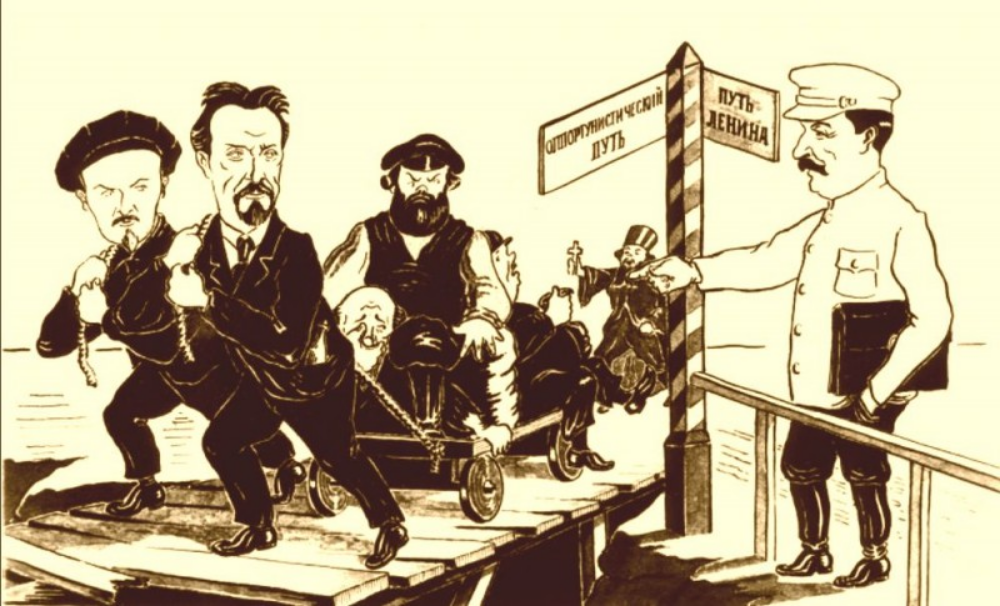
One of the earliest acts of this “Left Communist” disruption—the deep going extent of which was then not known—was the struggle of Bukharin and Co., early in 1918, against Lenin’s policy for negotiating peace with German imperialism, that was threatening to crush the young Soviet Republic. In a bloc with Pyatakov, Radek, and Trotsky, Bukharin conducted a vicious struggle against Lenin, seeking by the foulest means to disrupt the peace negotiations.
Bukharin and his group sought to turn the Soviets against Lenin by working hand in glove with the Left Socialist-Revolutionaries. Being in control of the Moscow and Petrograd Committees of the Party, they utilized their position for waging a furious, unprincipled struggle, which had the effect of delaying the negotiations. This delay was maneuvered by the Bukharin-led “Lefts” in opposition to the view of Lenin and Stalin— confirmed by history—that immediate conclusion of peace with Germany was necessary, even on the harsh terms offered, to gain for the dictatorship of the proletariat a “respite” that would enable it to consolidate its power in preparation for the historic task of building socialism. When, on February 18, it was discovered, true to Lenin’s prediction, and against the assurances of Bukharin to the contrary, that the Germans were advancing, the Central Committee, adopting Lenin’s position, decided to renew negotiations. Five days later it accepted the German ultimatum, with Bukharin and three others voting against, and Trotsky and Krestinsky among those who abstained. In consequence of the sabotage of the Bukharin-Trotsky groups, the Soviet Union was compelled to accept terms far worse than those originally put forth by German imperialism.
The “Lefts” were bent on continuing their struggle against the line of Lenin. When they found themselves defeated, the “Left” members of the Central Committee, acting with characteristic indiscipline, immediately resigned from all their Soviet and Party posts, with the declaration that they “reserved the liberty to carry or agitation within the Party and outside of it.” The Bukharin-controlled Moscow Regional Bureau of the Party adopted a resolution expressing “lack of confidence in the Central Committee” and concluding with the statement that “a split in the Party was hardly to be avoided in the near future.” (Cited in Lenin’s Selected Works, Vol. VII, p. 491.)
The criminal adventurism of these “Lefts” was evidenced by the Moscow Regional Bureau’s further declaration, which foreshadowed their future betrayal:
“In the interests of the international revolution we consider it expedient to risk the possible loss of the Soviet power which has now become purely formal.”1 (Ibid., p. 492.)
How starkly meaningful these words became in the light of the revelations brought out in the course of the trial twenty years later!
Exposing these criminal “Left” phrasemongers and charging them with playing into the hands of the imperialists, Lenin wrote:
“For, until the international socialist revolution breaks out, embraces several countries and is strong enough to overcome international imperialism, it is the bounden duty of the Socialists, who have conquered in one country (especially a backward one), not to accept battle against the giants of imperialism. Their duty is to try to avoid war, to wait until the conflicts between the imperialists weaken them still more, and bring the revolution in other countries still nearer…
“But our ‘Left’ Communists—who are also fond of calling themselves ‘proletarian’ Communists, although there is very little that is proletarian about them and very much that is petty-bourgeois—are incapable of giving thought to the relation of forces, the calculation of the relation of forces by their vacillation the ‘Lefts’ are helping the imperialists to provoke the Russian Soviet Republic into a clearly disadvantageous war, they are helping the imperialists to draw us into a snare.” (Ibid., pp. 354-355)
And Lenin foretold the inevitable fate of these carriers of enemy class purposes:
“The flaunting of high-sounding phrases is characteristic of the declassed pettybourgeois intelligentsia. The organized proletarian Communists will certainly punish this ‘habit’ with nothing less than derision and expulsion from all responsible posts.” (Ibid., p. 356. Our italics—V.J.J.)
Lenin did not then know what was to be fully revealed twenty years after, that, as the trial established, Bukharin had conspired in 1918 with Trotsky and the Left Socialist-Revolutionaries to arrest and kill Lenin, Stalin, and Sverdlov, with the intention of setting up a government of the Bukharinite-Left Socialist-Revolutionary bloc.
The one-time Left Socialist-Revolutionary leader, Karelin, examined in the office of the Procurator of the U.S.S.R., on February 19 and 20, 1938, gave the following testimony on the conspiratorial activities, in 1918, of the Socialist-Revolutionaries and the Bukharinites:
“On the instructions of the Central Committee of the Left Socialist-Revolutionaries, the negotiations with the ‘Left Communists’ were conducted by Kamkov, Proshyan, and myself.”
Karelin stated further:
“Bukharin proposed that we should not stop at the arrest of the government but bring about the physical extermination of the leaders of the Soviet power, and in the first place, of Lenin and Stalin.” (Report of Court Proceedings, p. 24.)
It was during these revelations that what had appeared twenty years earlier as an “ideological” struggle on the part of the Bukharinite-Trotskyite factionalists in regard to the Brest-Litovsk negotiations had in reality been a sinister, organized attempt to wreck the negotiations as a means of overthrowing the Soviet government.
And now too we know that the assassination of the German Ambassador, Mirbach, in July, 1918, by Left Socialist-Revolutionaries, calculated to embroil the Soviet Union in a war with Germany, was carried through with the knowledge of the “Left Communists,” who hoped to achieve through this what they had been balked of in the Brest-Litovsk settlement.
Bukharin fought the Lenin-Stalin policy of restoration.
The “Left Communists” opposed Lenin’s theses On the Immediate Tasks of the Soviet Government (April, 1918). They slandered the Leninist line of the Central Committee as being “Right opportunist,” as being expressive of “the increasing declassing of the proletariat.’” They took the position that the alliance between the proletariat and poor peasantry (a fundamental of the Marxist-Leninist teaching on the proletarian revolution) was leading the Soviet Power “into the channels of petty-bourgeois policy of a new type.”
With the insolence of splitters they brought forward their notorious anti-Party Thesis 15:
“The proletarian Communists [sic!] define their attitude towards the majority of the Party as that of a Left wing of the Party and of the vanguard of the Russian proletariat, which preserves complete unity with the Party to the extent that the policy of the majority does not create an unavoidable split within the ranks of the proletariat itself.”
And they followed this statement with the threat of “a businesslike and responsible proletarian opposition”! (Lenin: Selected Works, Vol. VII, p. 508.)
Condemning their schismatic tactics, Lenin declared that their utterances “are a disgrace and imply the complete renunciation of Communism in practice, complete desertion to the camp of the petty bourgeoisie.”
Again openly manifesting their opposition to the basic program of building socialism, the “Left” factionalists organized themselves to hinder the efforts of the proletarian state to advance the economy of the land to the requisites for socialist construction. They set themselves against the Party’s policy of transition from confiscation to socialization; of control and accounting, of labor discipline and individual management, of the use of bourgeois specialists. Resorting as usual to ’Left” phrasemongering, they charged Lenin and the Party with abandoning the “Commune State” for state capitalism.
Lenin refuted the demagoguery of these opponents of socialist construction, declaring
a. As regards control and accounting:
“Yesterday, the main task of the moment was, as determinedly as possible, to nationalize, confiscate, beat down, and crush the bourgeoisie, and break down sabotage. Today, only a blind man could fail to see that we have nationalized, confiscated, beaten down and broken down more than we have been able to keep account of. And the difference between socialization and simple confiscation lies precisely in the fact that confiscation can be carried out by means of ‘determination’ alone, without the ability to count up and distribute properly, whereas socialization cannot be brought about without this ability.”
b. As regards the use of bourgeois specialists:
“Is it not clear that the peculiar nature of the present situation creates the need for a peculiar type of ‘buying off’ which the workers should offer to the most cultured, the most skilled, the most capable organizers among the capitalists who are ready to enter the service of the Soviet government and to help honestly in organizing ‘state’ industry on the largest possible scale?”
c. As regards state capitalism:
“When the working class has learned how to defend the state system against smallowner anarchy, when it has learned to build up a great, nationwide state organization of production on state capitalist lines, it will have…all the trump cards in its hands, and the consolidation of socialism will be assured.

“It is precisely because Russia cannot advance economically without traversing the ground that is common to state capitalism and to socialism (national accounting and control) that the attempt to frighten others as well as themselves with the bogey of ‘evolution towards state capitalism’…is utter theoretical nonsense. To talk nonsense of this sort is to let one’s thoughts wander away from the true road of ‘evolution,’ is to fail to understand what this road is. In practice it is equivalent to dragging back to small-owner capitalism.” (Ibid., pp. 359 to 379.)
The “Left” phrases of Bukharin and his faction in reality concealed their unceasing opposition to the consolidation of proletarian state power under the dictatorship of the proletariat: they therefore blurred the distinction between proletarian state and bourgeois state—in this way misrepresenting the phase of state capitalism under the proletarian state as bourgeois state capitalism. By their opposition to the leading role of the proletariat—since its hegemony without proletarian-peasant alliance is unthinkable—they essentially, as Lenin branded their activity, championed the resistance of an “enraged petty bourgeoisie” to the proletarian state control which is the necessary condition for the transition to socialism.
Small wonder, then, that in the course of this struggle the organ of the Left Socialist-Revolutionaries, Znamya Truda,2 was able to declare:
“The present position of our Party coincides with that of another trend in Bolshevism (Bukharin, Pokrovsky and others).”
And Lenin pointed to Bukharin’s counter-revolutionary confreres:
“Therefore, while it is to Comrade Bukharin’s credit that on the C.E.C. he ‘felt ashamed’ of the ‘service’ rendered him by Karelin [Left Socialist-Revolutionary, earlier referred to] and Ge [Anarchist], nevertheless, as far as the ‘Left Communist’ trend is concerned, the references to their political comrades-in-arms still serve as a serious warning.” (Selected Works, Vol. VII, p. 72.)
Well might Lenin have put the words “felt ashamed” in quotation marks, since in 1918, Bukharin, in conjunction with the Menshevik Martov and the Anarchist Ge, came out with a vicious attack upon the decree issued by the Soviet government designed to put the railroad service in order through centralization of management. And well, too, might he have questioned the sincerity of that contrition when its avower was at that very moment in a complot with the camp of Karelin for the physical destruction of the very leaders of the Central Committee before whom he professed to feel ashamed!
Bukharin opposed to the Leninist analysis of imperialism the Menshevik theory of “Organized capitalism.”
At the Eighth Party Congress, in March, 1919, Bukharin again tried to bring his opportunist views into the Party program.
He proposed to discard from the program the Marxist-Leninist analysis of the laws of motion of the capitalist system, its commodity economy and its recurring crises. He likewise sough: to eliminate from the Party program all evaluations of pre-imperialist forms of economy, since he denied, together with Trotsky, the law of accelerated uneven development of capitalism in the imperialist epoch— from which position derived his denial of the possibility of the victory of socialism in one country alone— in actuality, for that matter, in any number of countries. He had in mind his own theory of “pure imperialism,” according to which the principal contradictions of capitalism “disappear” in the era of imperialism insofar as the individual capitalist country is concerned—essentially, in other words, the Menshevik theory of “organized capitalism.”
As far back as 1915, Bukharin had taken the position (in his work, World Economy and Imperialism), that the monopoly stage of capitalism transforms each “national economy” into a “union of unions,” into a “state capitalist trust,” within which competition is “reduced to a minimum” and the economic contradictions of capitalism tend to disappear, becoming transferred exclusively to the “arena of the world market.”
In 1917 he declared:
“What was previously scattered and unorganized capitalism is replaced by organized capitalism.” (Spartak, No. 2; quoted in Inter national Press Correspondence, No. g. 1938.)
In an article entitled ‘The Collapse of Capitalism,” he wrote:
“Will this new type of capitalist relations destroy the contradictions in capitalist society? Will it destroy, first of all, the anarchy of the present-day method of production?”
To which he replied:
“If we limit ourselves only to the state organization, i.e., the confines of a capitalist country, we can reply to this question in the affirmative.” (Spartak, No. 10; cited place.)
Lenin, refuting Bukharin’s position, said at the Eighth Party Congress:
“Pure imperialism, without the fundamental basis of capitalism, has never existed, nowhere exists, and never will exist. This is a wrong generalization of everything that was said of the syndicates, cartels, trusts, and finance capitalism, when finance capitalism was depicted as though it had none of the foundations of the old capitalism under it.
“If the program were to be rewritten in the way Comrade Bukharin wanted, it would be a false program.” (Selected Works, Vol. VIII. pp. 335-336.
Bukharin never surrendered this position, deriving from his eclectic method and his mechanical (i.e., anti-dialectic, non-Marxian) materialism.
Thus, in 1929 he brought forward anew (Pravda, May 26 and June 30) his apologia for imperialism, by speaking of “the dying out of competition within each capitalist country”—denying thereby the general crisis of capitalism and advocating the possibility of planned capitalism without crises.
This notion of the possibility of overcoming the contradictions of capitalism by organization within imperialism, i.e., the decaying stage of capitalism) paves the way for the ultra-reactionary “theories” of fascism, with its corporative state, its ‘“elimination” of classes, its National-“Socialism.” It furnishes an approach to the understanding of the “ideological” and subsequently practical affinity of Bukharin and Co. with the “Socialists” of the Third Reich.
History, however, soon made patent: to everyone the treacherousness of this position. Bukharin’s accommodation to imperialism was giving aid and comfort to all the Right opportunists and concealed anti-Party elements everywhere. In the United States, the unprincipled Lovestone faction, endeavoring to disarm the Communist Party and the American workers in the face of the great struggles to come, was predicting, in concert with all the imperialist apologists, a new, “victorian era” for American capitalism.
And it was in mid-1929, when all the apologists of Wall Street were singing hosannas to the health and long life of capitalist stabilization, that Comrade Stalin, basing himself on Lenin’s scientific analysis of imperialism, made his declaration of great omen:
“The three millions now unemployed in America are the first swallows indicating the ripening of the economic crisis in America.”
Before that year was over, the words of Stalin were a living reality.
The cleansing from the American Party of the Lovestoneite camp was a signal victory for the revolutionary principles of Lenin-Stalin over the traitor policies of the Bukharinite servitors of imperialism.
Bukharin fought the Leninist-Stalinist teachings and policy on the national question.
BUKHARIN together with Pyatakov, published a thesis in 1915 in which they proved themselves at variance with the basic tenets of Leninism in regard to the national question.
In keeping with its general policy of surrendering the struggle for democracy in the epoch of imperialism, the Bukharin group rejected the principle of the right of nations to self-determination, maintaining that this principle was not realizable under capitalism, while under socialism it was superfluous. Thereby, the Bukharinites set themselves against the liberation movement of the oppressed nations and colonies, and manifested again their denial of the very principle of the dictatorship of the proletariat, which cannot be established, and of the victory of socialism, which cannot be achieved, save on the premise of the right of nations to self-determination.
Shortly afterwards Lenin took sharp issue with Bukharin:
“On the question of self-determination h presents us with the same kind of rubbish…
“The question is important. It is a vital question. It is linked inseparably with the question of annexations: one of the most burning questions of the day.” (Letter to A. G. Shlyapnikov, Zurich, March, 1916.)3
In April, 1916, Lenin published his theses, “The Socialist Revolution and the Right of Nations to Self-Determination”4 directed at the ant-Marxist position on the national question adopted by Bukharin and Pyatakov as well as the Polish Section of the Left Zimmerwaldists, headed by Karl Radek. In these theses, Lenin refuted the opposition to the right of nations to self-determination, showing that such opposition meant capitulation to the propaganda of the oppressing bourgeoisie for holding weaker nations in subjection. As to the realizability of self-determination under capitalism, he pointed to the secession of Norway from Sweden in 1905 and indicated the eventuation of Poland’s independence. While as to its “superfluity” under socialism, he demonstrated that the complete democracy which the socialist society sets itself to achieve must therefore, “not only of nations, but also give effect to the right of oppressed nations to self-determination, i.e., the right to free political secession.”
His trenchant words cut at the core of the anti-Marxism of Radek-Bukharin-Pyatakov:
“Socialist Parties which fail to prove by all their activities now, as well as during the revolution and after its victory that they will free the enslaved nations and establish relations with them on the basis of a free union —and a free union is a lying phrase without right to secession—such parties are committing treachery to Socialism.” (Lenin, Selected Works, Vol. V, p. 267, International Publishers, New York.)
Bukharin and Pyatakov set themselves against Lenin and Stalin at the Eighth Party Congress (March, 1919), also on the national question. In this, they proceeded from the basic identity of their position with that of Trotsky in attempting to cut off the proletariat from its natural and historical allies and reserves, and to thwart the exercise of its role of hegemony. This position gave definite aid to the nationalist forces of counter-revolution. In declaring, at the Eighth Congress, that the right of nations to self-determination was in contradiction to the principle of the dictatorship of the proletariat, that he was for “self-determination of the toilers,” Bukharin was characteristically flourishing phrases of revolution in the interests of counter-revolution.
Comrade Stalin, who, together with Lenin, fought at the Eighth Congress for the decisive defeat of Bukharin’s disastrous policy, later wrote:
“The Russian revolution would not have been victorious, Kolchak and Denikin would not have been defeated, unless the Russian proletariat had had the sympathy and support of the oppressed peoples throughout the area which was formerly the Russian empire. But to secure their sympathy and support, the Russian proletariat had, first of all, to break the chains that had been imposed on these peoples by Russian imperialism, to free them from the tsarist yoke. Otherwise it would have been impossible to consolidate the Soviet power, to inculcate true internationalism, to create that remarkable organization for the collaboration of the peoples which is known as the Union of Soviet Socialist Republics and is the forerunner of the coming union of the nations to form a world-wide economy.” (Leninism, Vol. I, p. 142.)
Bukharin conducted his struggle against Lenin, Stalin, and the Central Committee by means of unprincipled anti-Party factionalism, subversion, and splitting tactics.
Very early, during the World War, Lenin had characterized Bukharin as “devilishly unstable in politics.” (Letter to Shlyapnikov, cited place.)
At the 1915 conference of the foreign section of the R.S.D.L.P. (Russian Social-Democratic Labor Party) Bukharin, with his “Boggi group” (named after a town in Switzerland), endeavored to set up an “independent” center, against Lenin.
Bukharin and Pyatakov further showed their baseness by the fact that they sought to use their control of the Party’s financial resources and the means, therefore, of subsidizing its official organ, as a whip-hand to demand of Lenin that he publish all articles setting forth the anti-Party views of their grouping. Excoriating their unprincipled conduct, Lenin wrote: “This is not discussion but the depth of intrigue and baseness.” (Collected Works, Vol. XXIX, p. 239, Russian edition.) Their factional control of the Moscow Regional Party Bureau and the Moscow and Petrograd Party Committees, and the anti-Party struggle which they waged against Lenin and Stalin in regard to the Brest-Litovsk peace negotiations have already been referred to.
Steadily, the influence of “Left Communists” waned, until it practically disappeared from the Party ranks. In the middle of May, 1918, the Moscow Regional Conference adopted Lenin’s theses On the Immediate Tasks of the Soviet Government, thus ending the control of the “Left” factionalists. The Urals Regional Committee likewise went over to the side of Lenin and Leninism. Bukharin and Co. continued their opposition, threatening a split, unless a special congress of the Party would be convened. Some months later they admitted their guilt and (outwardly) liquidated their faction—with what sincerity time later showed.
This step was taken only to deceive the Party and the masses; for we now know that these confessions and the “dissolution” of the faction were undertaken only as a cover for carrying on illegal work. It was at this time that they planned, together with the Left Socialist-Revolutionaries and Trotsky, to arrest and kill Lenin, Stalin, and Sverdlov, and to install their own government with Pyatakov at the head.
As the trial of Bukharin has shown, they knew and approved of—in fact, were Lo a great extent responsible for —the attempt to kill Lenin by Dora Kaplan, Left Socialist-Revolutionary, who inflicted the bullet wound that shortened his life.
In the ensuing years, many of the “Left Communists” identified themselves with new opposition factions, particularly Sapranov’s Group of “Democratic Centralism” of 1920-21 and the Trotskyite opposition of 192324 and 1926-28, finally landing in the camp of counter revolution and fascism.
Bukharin fought Lenin and Stalin on the trade union question.
In 1920-21, Bukharin again came forward with an opportunistic program in opposition to Lenin and Stalin, this time on the trade union question. This opposition, launched by Trotsky, brought discord into the Party at a time when all its forces were needed to cope with the difficult conditions at the beginning of 1921.
The transition from the period of War Communism to the stage of the N.E.P. and Reconstruction demanded that the trade unions come vitally into play as a factor in schooling the masses and drawing them into the work of building socialism. To this end, Lenin and Stalin, realizing the imperative necessity of the N.E.P. as the means of initiating the economic reconstruction of the Soviet Republic, as the stage from which to advance to socialist construction, stressed the need for instituting in the trade unions workers’ democracy and education; for bringing the trade unions to concern themselves with the cultural and social, as well as the economic, advance of the working masses; for realizing in all its fullness Marx’s conception of trade unions as a school of socialism.
Against this program of the Party, Trotsky advanced his own platform. Not democracy, but intensified compulsion in the trade unions. Not concern with the economic, cultural and social interests of the millions of workers, with schooling the masses for socialism —this is an affair of the state alone. (Note how the op position of Trotskyism to the victory of socialism is here reflected!) The trade Trotsky contended, would have to become state organs, with their main function the directadministration of economy. “Nationalization of the trade unions!” was the central slogan that Trotsky advanced in that struggle against the Party—the proposal to coalesce the trade unions with the state: in other words, an inverted form of syndicalism. (Let it be borne in mind that in seeking to transfer the administration of industry from the proletarian state to the trade unions, Trotsky hoped thereby to deny any governmental participation to the peasantry, whose revolutionary alliance with the proletariat, and the dictatorship of the proletariat based on that alliance, he had set himself to destroy—however devious and foul the means.5
Bukharin, with Serebryakov and Preobrazhensky, organized the “buffer group,” ostensibly a group to conciliate between the Central Committee and Trotsky; but in actuality Bukharin served only as an ally of Trotsky and an opponent of Lenin.
Lenin this roundly condemned buffer group:
‘…the theses of Bukharin & Co. are the acme of ideological disintegration…This is a complete rupture with communism and a transition to the position of syndicalism.” (Selected Works, Vol. IX, p. 35.)
With Bolshevik foresight Lenin warned:
“The more Comrade Bukharin defends his deviation from communism, which is obviously wrong theoretically and deceptive politically, the more deplorable will be the fruits of his obstinacy.” (ibid., p. 79.)
Lenin pointed out that Bukharin’s position meant an essential repetition of Shlyapnikov’s slogan “Unionize the state”; it meant transferring the apparatus of the Supreme Council of National Economy to the corresponding trade unions; it means annulling the Marxian conception of the trade unions as schools of Communism and concentrating in the hands of the trade unions the entire management of the national thus denied the guiding role of the Party economy; it and the historic tasks of the proletarian state follows logically. (This from Bukharin’s anarchistic position on the state.) Lenin, therefore, condemned Bukharin’s stand as being anti-Communist and Anarcho-Syndicalist. Lenin stated in this connection:
“The political errors committed by Comrade Trotsky, and aggravated, made more profound, by Comrade Bukharin, distract our Party from economic problems, from ‘production’ work, and unfortunately compel us to waste time on rectifying these errors, on arguing against the syndicalist deviation (which leads to the fall of the dictatorship of the proletariat), on arguing against a wrong approach to the trade union movement (an approach which leads to the downfall of the Soviet government), on arguing about general ‘theses,’ instead of engaging in businesslike, practical ‘economic’ argument…” (Ibid., p. 57.) Bukharin fought the Party’s program for socialist construction.
Proceeding from his position in regard to “organized capitalism” and his essential denial of the general crisis of capitalism, Bukharin exaggerated the relative and partial stabilization of capitalism (1923-29). Denying the possibility of building socialism in the U.S.S.R. and being fundamentally opposed to the dictatorship of the proletariat, denying also the revolutionary capacities of the peasantry, he set himself against the program of industrialization and farm collectivization—against the path of advance to socialism. At a time when the proletariat had to strengthen its alliance with the middle peasantry for intensifying the struggle against the kulak class, Bukharin, holding, against Leninism, that after the establishment of the dictatorship of the proletariat, the class struggle dies down, issued, in 1925, the notorious slogan to the kulaks, “Enrich yourselves!” Thereby he grouped the kulaks together with the poor and middle peasantry, rejecting the Party’s historically imperative policy of decisively defeating the kulak resistance to the building of socialism.
Ostensibly Bukharin’s slogan was addressed to the whole peasantry. But at a time when, with the exception of very few experimental communal and collective farms, agriculture was carried on on the basis of individual holdings, this slogan expressed the kulak interests and encouraged their resistance to the proletarian policy of restricting the kulaks through measures of state regulation, taxation and limitation of free trade. Bukharin was immediately called to order by the Party and was compelled to repudiate the slogan. But it indicated Bukharin’s conception—which later found open expression in the opposition of the Rights to the socialist program of industrialization and collectivization —as that of the development of Soviet economy along capitalist lines.
During the period of socialist reconstruction Bukharin, Rykov, Tomsky and Uglanov again set themselves in opposition to the Party line.
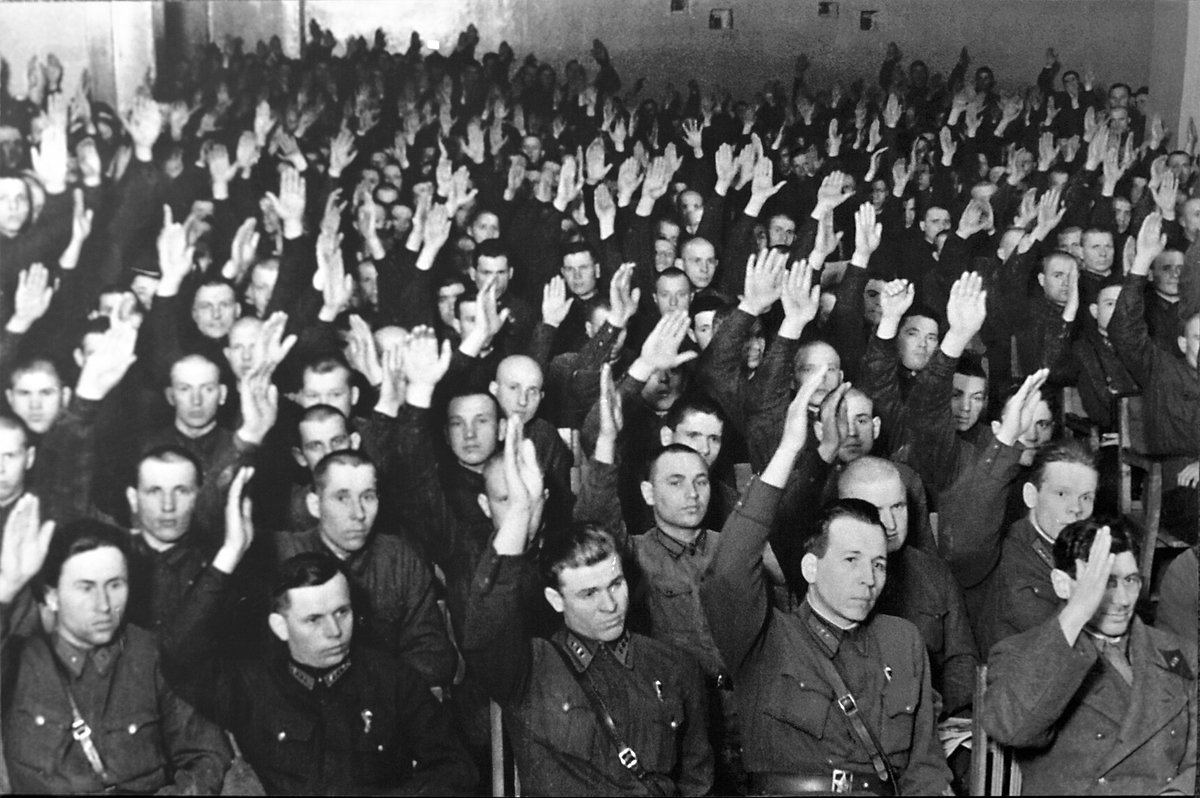
This grouping, in the period of socialist reconstruction, dropped _ its earlier “Left” phrases and operated as a Right camp, entering into a struggle against the central _ resolutions adopted by the Communist Party at its Fifteenth Congress, in December, 1927. At this Congress, Comrade Stalin advanced as the historic task confronting the Communist Party and the Soviet people:
“To expand and strengthen our socialist commanding heights in all branches of national economy in city and village, maintaining the course of liquidation of capitalist elements in the national economy.”
Resolved to overcome completely the resistance of class enemies in this period of the sharpening of the class conflict, the Party and the Soviet masses now launched the decisive struggle for the attainment of socialism. The Right opposition thereupon began a new series of attacks, which they continued unceasingly, against the Leninist Central Committee, now under the leadership of Comrade Stalin, the closest co-worker of Lenin during his lifetime, and his best disciple.
In the autumn of 1928, Bukharin came out with an attack upon industrialization, voicing his slogan of sabotage: “Out of the bricks of the future you cannot build factories now.” At a time when the Soviet government was setting out to eradicate the very roots of capitalism in the land, the Right opportunists, headed by Bukharin, Tomsky and Rykov—three members of the Central Committee— set themselves against the program of industrialization (ostensibly on the issue of “tempo”’), against the development of collective farms; and came forward with defenses of the kulaks (contentions that the kulaks really were poor peasants), opposing the government’s emergency measures for grain collections, opposing the general line for creating a socialist economy, for the socialist transformation of agriculture, for the victory of socialism over kulakism. In this, Bukharin, as the “ideological head” of the Right deviation, was translating into life his “theory” (deriving from his mechanistic materialism) of the termination of the class struggle under the dictatorship of the proletariat, with the corollary that the kulak would grow into socialism. In the words of Comrade Stalin:
“The abolition of classes by means of the bitter class struggle of the proletariat—such is Lenin’s formula.
“The abolition of classes by means of the dying down of the class struggle and the capitalists growing into socialism—such is Comrade Bukharin’s formula.” (Leninism, Vol. II, p. 124.)
Bukharin and Co., hence, became spokesmen and agents of kulakism; they aided and abetted the counterrevolutionary circle of kulakist apologists, headed by Kondratiev and Chayanov; the slogans of the Right opportunist camp were taken up by the counter-revolutionary wreckers of the Industrial Party (Ramzin and Co.).
In October, 1928, the Plenum of the Moscow Committee of the Party, by a decisive majority, defeated and routed the Right-opportunist anti-Leninist forces represented of late by the Secretary of the Committee, Uglanov, who had the backing of Bukharin, Rykov and Tomsky. In place of Uglanov, Comrade Molotov was then chosen as Secretary of the Moscow Committee.
At that Plenum, which completed the ideological shattering of the Right opportunist line, Comrade Stalin declared:
“There cannot be the slightest doubt that the triumph of the Right deviation in our Party would release the forces of capitalism, would undermine the revolutionary position of the proletariat, and increase the chances for the restoration of capitalism in our country.” (Leninism, Vol. II, p. 145.)
Early in 1929, it was discovered that Bukharin had been instructed by the Right Center, through Sokolnikov, to carry on secret negotiations with Kamenev who, after admission of his errors, had recently been readmitted into the Communist Party. Kamenev and Bukharin had discussed the formation of a bloc for intensified struggle against the Central Committee and the Five-Year Plan of socialist construction.
It thus became apparent that the Rights were prepared to form a bloc with the Trotskyites, that in their struggle against the Party they were prepared to coalesce with the Trotskyites.
The Rights leveled against the Five-Year Plan accusations of ‘“military-feudal exploitation of the peasantry.”6 They proposed to substitute importation of wheat from abroad for grain collections from the kulaks (coupled with diminished investment in industry). In place of collective and Soviet farms, they proposed the development of the individual sector of Under the demagogic slogan of “normalizing the market,” they proposed to base the entire economic policy on free trade. They proposed, in short, a policy of retreat to capitalism.
In regard to the capitalist world, Bukharin, Rykov and their camp denied all perspectives of revolution or revolutionary struggle. Proceeding basically from the theory of “organized capitalism,” they magnified greatly the temporary and partial stabilization of capitalism. Bukharin became the rallying point of all the opportunist elements in the Comintern—the Brandler-Thalheimer Germany, the Lovestoneites in the U.S.A.,7 the Kilboom group in Sweden, Jilek and Co. in Czechoslovakia.
In a special resolution, the April, 1929, Plenum of the Central Committee condemned the Right opportunist factional activity of Bukharin, Rykov and Tomsky. In July of that year Bukharin was removed from the Presidium of the E.C.C.I. In November he was removed from the Political Bureau.
The aid and comfort that the Right opportunists rendered to the camp of counter-revolution, and the very capitalist-restorationist character of the Bukharin-Rykov platform were thus attested to by Ramzin at the trial of the leaders of the counter-revolutionary Industrial Party,8 in November, 1930:
“The basic method of sabotage was the artificial decrease of tempo in the development of the national economy. -This line coincided with the position of the Right deviation in the Communist Party, and explained why the carrying through of artificially lowered minima plans through the State Planning organs, created an original bloc in the Center with the Right Communists, which greatly helped the Center to confirm similar plans.”
And now we have from Kerensky’s own mouth (speech delivered at Carnegie Hall, New York, April g, 1938), the admission that the traitors —Bukharin, Kamenev, and Zinoviev, were carrying on negotiations with him through emissaries in 1927. He told that a proposal for cooperation with these three counter-revolutionaries had been laid before him in Paris as early as 1927 with a plan to work together for the overthrow of the Soviets:

“We [Kerensky admitted] were ready to accept the proposition and cooperate with Bukharin, Zinoviey and Kamenev. To our misfortune, Stalin interfered, and all our trial in November, plans were wiped out.” (Daily Worker, April 12, 1938.)
From unprincipled opposition to counter-revolution and fascism.
In 1928-29, the Rights organized surreptitious conferences and set up an illegal center.
The launching of the Five-Year Plan saw a great intensification of the class struggle. The kulaks met the program of the Party with sabotage, hoping with resistance to halt the policy of collectivization. Bukharin, Rykov and Tomsky aided their efforts through their illegal counter-revolutionary organization. Bukharin, in his testimony at the trial, stated:
“The inception of the idea of the coup d’etat among us Right conspirators relates approximately to the years 1929-30…At that period we were already discussing the question of the overthrow of the Soviet government by force, with the aid of a group of military participants in the plot.
“In 1931-32, in connection with the changed political situation, the main stress was laid on the development of the insurrectionary movement, and the counter-revolutionary Right organization, headed by the center of the Rights, provoked several kulak revolts…” (Report of Court Proceedings, PP- 394, 395-6.)
The year 1932 brought the successful completion of the first Five-Year Plan in four years. Capitalist stabilization had ended, and world capitalism was in crisis; the masses in all lands were following the road of open struggle. Against the dark clouds of capitalist crisis, shone the sun of victorious socialist construction in the U.S.S.R.; and the authority of communism grew among the masses in all lands. History confirmed the correctness of the Leninist-Stalinist policy and revealed the miserableness of the various camps of opposition to communism.
The Right counter-revolutionary center (Bukharin, Rykov, Tomsky, Uglanov, Yenukidze) took the step from which there was no return. Bukharin related in his testimony:
“About the autumn of 1932 the next stage in the development of the Right organization began, namely the transition to tactics of a forcible overthrow of Soviet power…
“Proceeding to the tactics of forcible overthrow in general, I make note of the time when the so-called Ryutin platform was formulated…It was called the Ryutin platform for reasons of secrecy, as an insurance against exposure; it was called the Ryutin platform in order to conceal the Right center and its top leadership…
“At the end of 1932 the bloc of Rights, Trotskyites and Zinovievites was formed on the basis of the Ryutin platform. By that time terrorist sentiments had already begun to develop among the participants of the counter-revolutionary organization of the Rights. They were to be marked among my so-called disciples, in the Matveyey group surrounding Uglanov, among Rykov’s supporters and among certain trade union functionaries, as was at one time disclosed in the press. The formation of the group of conspirators in the Red Army relates to that period.” (Ibid., pp. 388, 393)
The Ryutin program, accordingly, showed the bloc of Rights and Trotskyites as one conspirative camp for the destruction of the Soviet power. There were: Ryutin himself, a Right opportunist during 1928-30, expelled from the C.P.S.U.; the remnants of the “Workers’ Opposition,” headed by Shlyapnikov; the closest pupils of Bukharin—Slepkov, Maretsky, Petrovsky; and active collaborators within the Trotskyite counterrevolutionary organization. The leaders were Bukharin, Tomsky, Rykov, on the one hand, and Zinoviev and Kamenev, on the other—with Trotsky as the “guiding genius.”
In 1932, the Presidium of the Central Committee exposed the Ryutin group as trying to create a kulak organization with the design of restoring capitalism in the U.S.S.R. The resistance of the kulaks to socialization was reflected in the Ryutin program.
Another counter-revolutionary underground organization was the Eismont-Tolmachev group, a branch of the organization of the Rights, discovered in 1932. The Rights had resorted to terrorism. Rykov, Tomsky, and Schmidt were caught having relations with the Eismont group and others. Again these “leaders” tried to deceive the Party, denying their crimes, trying to cover up the traces of their criminal activities and underground links, by “confessions” of error.
At the trial Bukharin testified: “I sent Slepkov to prepare a counter-revolutionary kulak revolt in the Kuban. Rykov sent Eismont to the Caucasus, and he entered into connections with the Right-winger Pivovarov and the Trotskyite Beloborodov…In addition…I was informed by P. Petrovsky and Zaitsev of kulak sabotage as a sort of preliminary stage preceding sharper forms of struggle.” (Ibid., p. 396.)
But the steady march of the Soviet millions building socialism spelled doom for the plans of Bukharin and his “pals.” Their real support could no longer be the kulaks, now liquidated. They had to rely for aid with increasing feverishness upon the spearhead of the anti-Soviet forces abroad—fascism. Their hope for the restoration of capitalism on Soviet soil threw them into active collusion with the would-be invaders of Soviet territory for the dismemberment of the Soviet: Union.
Bukharin and Rykov at the trial took responsibility for Karakhan’s secret negotiations with Nazi German circles. Rykov stated:
“The characteristic thing is that Karakhan reported that the German fascists were, of course, very well disposed towards the prospects of the Rights coming into power and would welcome it very much…He said that the Germans insisted on the national republics receiving the right freely to secede from the Union.” (Ibid., p. 179.)
The trial has definitely established that, acting under the direct orders of Trotsky, Bukharin and Rykov, the members of the bloc of Rights and Trotskyites were engaged in espionage against the U.S.S.R. in accordance with plans worked out in the General Staffs of Japan, Germany, Great Britain, and Poland. Trotsky is the arch-enemy of the Soviet people, and has been exposed as having conducted espionage for the Foreign Intelligence Service of Germany since 1921 and for the British Intelligence Service since 1926.
The anti-Soviet bloc of Rights and Trotskyites planned and carried through the assassination of Kirov; they planned attempts upon the lives of leaders of the Bolshevik Party and the Soviet government. With the help of corrupt physicians blackmailed by the fiendish Yagoda they put to death Kuibyshev, Chairman of the Supreme Council; Menzhinsky, People’s Commissar for the Interior; and the world-beloved literary genius, Maxim Gorky, intimate of Lenin and Stalin, loyal adherent of the Communist Party.
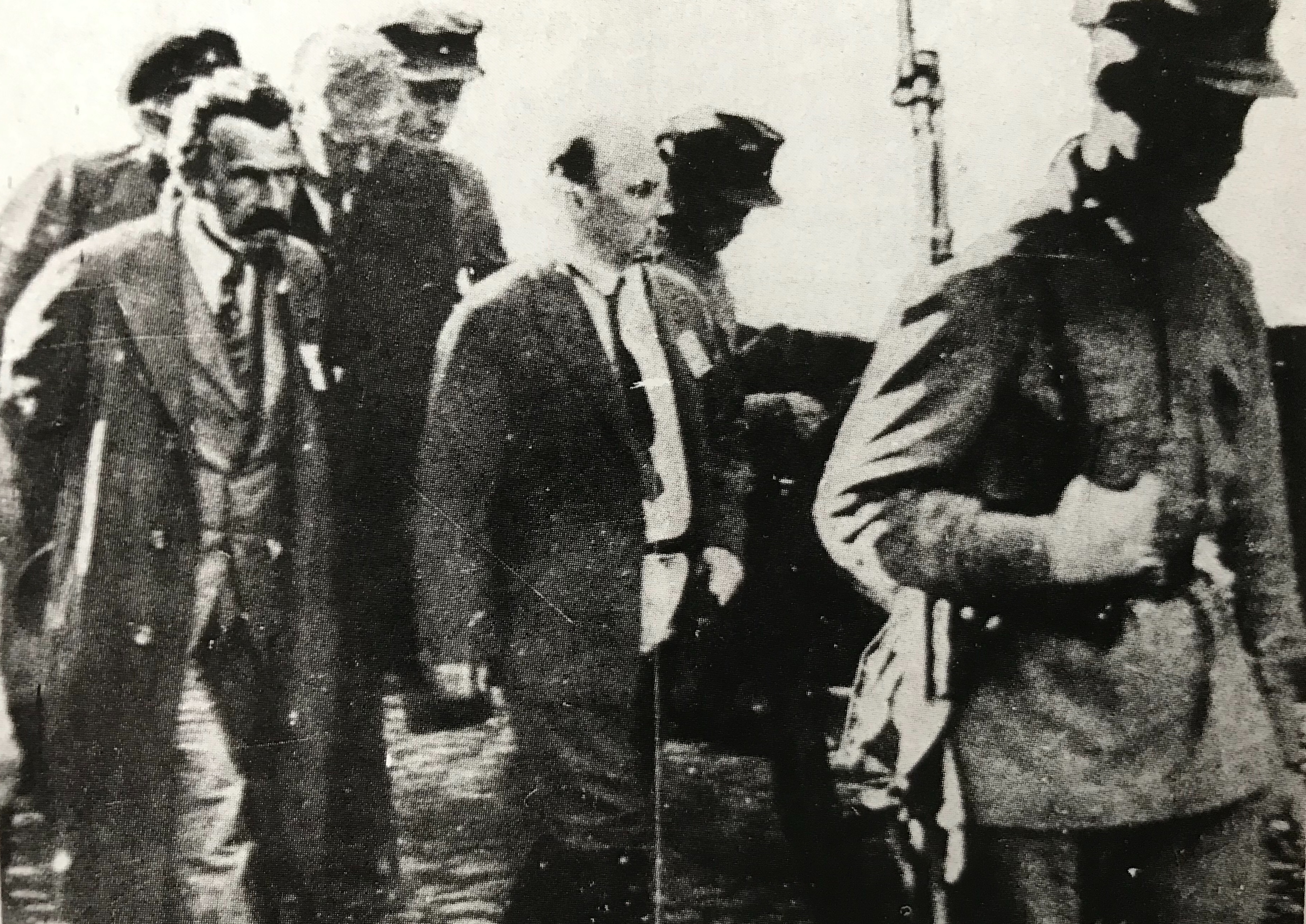
The Trotsky-Bukharin gang promised their imperialist allies to work from within as the “Fifth Column” and by the “opening of the front” bring about the defeat of the Red Army. To this end they worked, as revealed in the testimony, in collusion with Tukhachevsky, Yakir and the other traitor generals. To this end they promised to secure the dismemberment of the Soviet Union and prepared for this dismemberment with bourgeois-nationalists in a number of Soviet republics.
The bloc of the Rights and Trotskyites set itself the task of restoring capitalism in the Soviet Union through the military intervention of fascist armies.
The Soviet court—and the judgment of all who hold dear the cause of socialism, of all who stand for peace, democracy, and human advancement—have meted out to this traitorous band the full measure of proletarian justice.
NOTES
1. The testimony at the trial showed Bukharin to have been the author of the resolution here referred to. Report of Court Proceedings in the Case of the Anti-Soviet “Bloc of Rights and Trotskyites,” Moscow, 1938, “The flaunting of high-sounding phrases is characteristic of the declassed pettybourgeois intelligentsia. The organized proletarian Communists will certainly punish this ‘habit’ with nothing less than derision and expulsion from all responsible posts.” (Ibid., p. 356. Our italics—V.J.J.)
2. Banner of Labor, in its issue of April 25, 1918.
3. The Letters of Lenin, translated and edited by Elizabeth Hill and Doris Mudie. Harcourt, Brace and Co., New York.
4. Printed in Vorbote (The Herald), the theoretical organ of the Zimmerwald Left, Issue No. 2. bring about the complete equality,
5. Note the resemblance of Trotsky’s trade union program with Mussolini’s corporative unions and Hitler’s Gleichschaltung.
5. Who does not remember Lovestone’s smug saying: “Bukharin is good enough for me’’?
7. Bukharin testified at the trial: “Yet I myself in 1928 invented the formula about the military-feudal exploitation of the peasantry, that is, I put the blame for the costs of the class struggle, not on the class which was hostile to the proletariat, but on the leaders of the proletariat itself.” (Report of Court Proceedings in the Case of the Anti-Soviet “Bloc of Rights and Trotskyites,” Moscow, 1938, English edition, p. 381.
8. The Industrial Party, a counter-revolutionary organization which united all the separate sabotage groups of various branches of industry into one organization. It acted on the instructions of the international organizations of former Russian, as well as foreign, capitalists, with regard to wrecking activities and the overthrow of Soviet power through armed intervention. Ramzin, a professor at the Moscow Technical College, was one of the chief conspirators, brought to 1930.
There are a number of journals with this name in the history of the movement. This Communist was the main theoretical journal of the Communist Party from 1927 until 1944. Its origins lie with the folding of The Liberator, Soviet Russia Pictorial, and Labor Herald together into Workers Monthly as the new unified Communist Party’s official cultural and discussion magazine in November, 1924. Workers Monthly became The Communist in March, 1927 and was also published monthly. The Communist contains the most thorough archive of the Communist Party’s positions and thinking during its run. The New Masses became the main cultural vehicle for the CP and the Communist, though it began with with more vibrancy and discussion, became increasingly an organ of Comintern and CP program. Over its run the tagline went from “A Theoretical Magazine for the Discussion of Revolutionary Problems” to “A Magazine of the Theory and Practice of Marxism-Leninism” to “A Marxist Magazine Devoted to Advancement of Democratic Thought and Action.” The aesthetic of the journal also changed dramatically over its years. Editors included Earl Browder, Alex Bittelman, Max Bedacht, and Bertram D. Wolfe.
PDF of full issue: https://www.marxists.org/history/usa/pubs/communist/v17n06-jun-1938-The-Communist-OCR.pdf
PDF of issue2 : https://www.marxists.org/history/usa/pubs/communist/v17n07-jul-1938-The-Communist-OCR.pdf
 Revolution's Newsstand