
Thurber Lewis reports on the founding of International Labor Defense, one of the most important Communist Party projects of the 1920s and 30s.
‘A Solid Line of Proletarian Defense’ by Thurber Lewis from Workers Monthly. Vol. 4 No. 10. August, 1925.
THE first time a national conference of workers ever convened in this country for the sole purpose of creating a movement for the defense of ALL workers was on June 28th last. It was called the National Conference for Labor Defense and it met in Ashland Auditorium, Chicago. More than a hundred delegates attended representing workers’ organizations in all parts of the country. The conference did tangible things for workers’ defense that had not been done before.
The delegates who came to Chicago on June 28th, founded a movement whose effect on the current American class struggle is destined to be tremendous and far-reaching. The name of the new movement is INTERNATIONAL LABOR DEFENSE.
The Double Need for United Labor Defense.
The Labor Defense Council called the conference. There were two reasons. Objectively, the conditions of Labor Defense showed unquestionable signs of another campaign of jailing and persecution of workers in prospect. Subjectively, Labor Defense generally was not in position to meet a new onslaught. There was too much disunity, there were too many defense committees doing the same thing in different ways. Although the call was issued as late as May 30th, when June 28th came, the response was discovered to be beyond expectation.
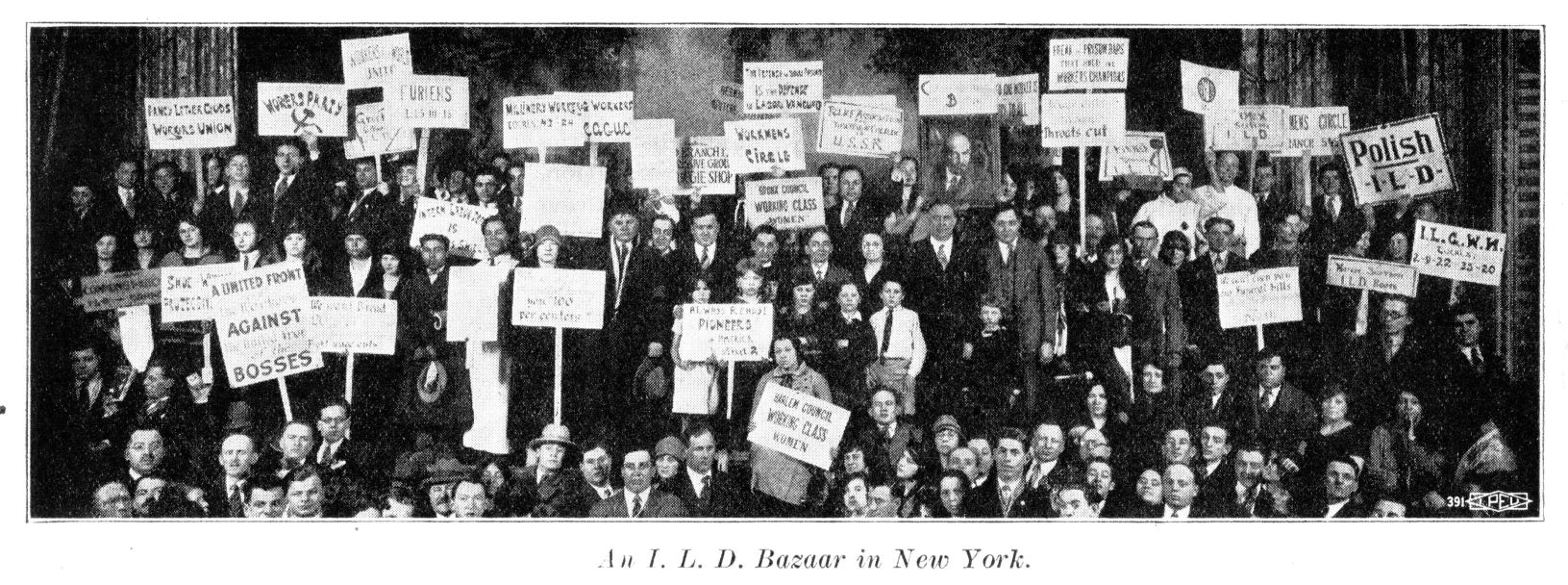
The unity slogan was taken seriously. Credentials were presented from local trade unions, central bodies, local defense bodies and workers’ fraternal and benefit societies. In addition there were individuals who had distinguished themselves in their efforts on behalf of labor defense. Ex-political and industrial prisoners were invited. They came in force, I.W.W.’s, Communists, trade unionists; all ex-class-war prisoners, were seated in the conference.
James P. Cannon was elected chairman, Andrew T. McNamara of Pittsburgh vice-chairman and Wm. Mollenhaur, representing the Detroit Federation of Labor, secretary. There were few formalities. Only one day was available for deliberation and there was much work to be done. While the credentials committee was out, greetings were read and a few speeches made. The greetings came from all over the world. Eugene V. Debs, Upton Sinclair, Scott Nearing, Alice Stone Blackwell, and other individuals prominent in the labor and radical movements of the country expressed solidarity with the move. Workers’ organizations wired their support. Many men sent greetings from prison.
Wm. F. Dunne and others called up memories of older battles in and out of the courts. You felt that, after all, the American working-class has a tradition behind it, young as it is. It was with a full sense of this tradition and the responsibility resting upon them that the delegates set to work.
Founding of “International Labor Defense.”
Three committees were elected: Manifesto, Constitution and Resolutions. The first committee reported a document which was unanimously adopted, calling for the founding of an organization to be called “International Labor Defense,” non-partisan and non-sectarian. It will defend all workers, regardless of political opinion or industrial affiliation. International Labor Defense is to be built on the firm foundation of individual membership supplemented by collective affiliations from all working-class bodies. The dues are low, ten cents a month. Every worker whose heart is in the right place should stand ready to support it. A great mass organization is in view.
A large national committee representing all shades of working-class belief was elected to supervise the organization. What was more necessary to the progress of the workers’ cause in America?
This constitution was adopted unanimously. International Labor Defense, the first non-sectarian workers’ defense organization ever created by the labor movement in America, was born.
The first paragraph of the manifesto summed up the general situation: “There are not less than 128 workers confined in American prisons because of political opinions or activity in behalf of the workers’ cause. A half-hundred more await trial. No crime has been proved against any of these workers. They are in prison because they fought against capitalist exploitation and because they organized, inspired and led workers in the struggle for class betterment They are class-war prisoners.”
A Broad Program.
The resolutions submitted were more than a mere series of statements. Taken together they made a complete program for the guidance of the new organization. An ex-class war prisoner, Harrison George, reported the resolution for the release of political and industrial prisoners. It reminded the labor movement in this country of its imprisoned soldiers: Mooney and Billings, Ford and Suhr, Sacco and Vanzetti, Rangel and Cline and many others, and called for a new fight for their release: “The International Labor Defense will take the initiative to organize a wide-spread campaign for the unconditional release of imprisoned fighters of the class struggle.”
When Andrew T. McNamara of the Machinists’ District Council of Pittsburgh reported the resolution against injunctions and anti-labor legislation he told of a worker in Western Pennsylvania who was arrested for having a red lamp in his parlor. Thirty-five states have criminal syndicalist laws that can send any worker to jail any time the bosses want him there.
The labor movement was warned that the jailing of Communists and I.W.W. members under these laws were mere rehearsals. The labor movement as a whole is next.
“Unknown Soldiers” of the Working Class.
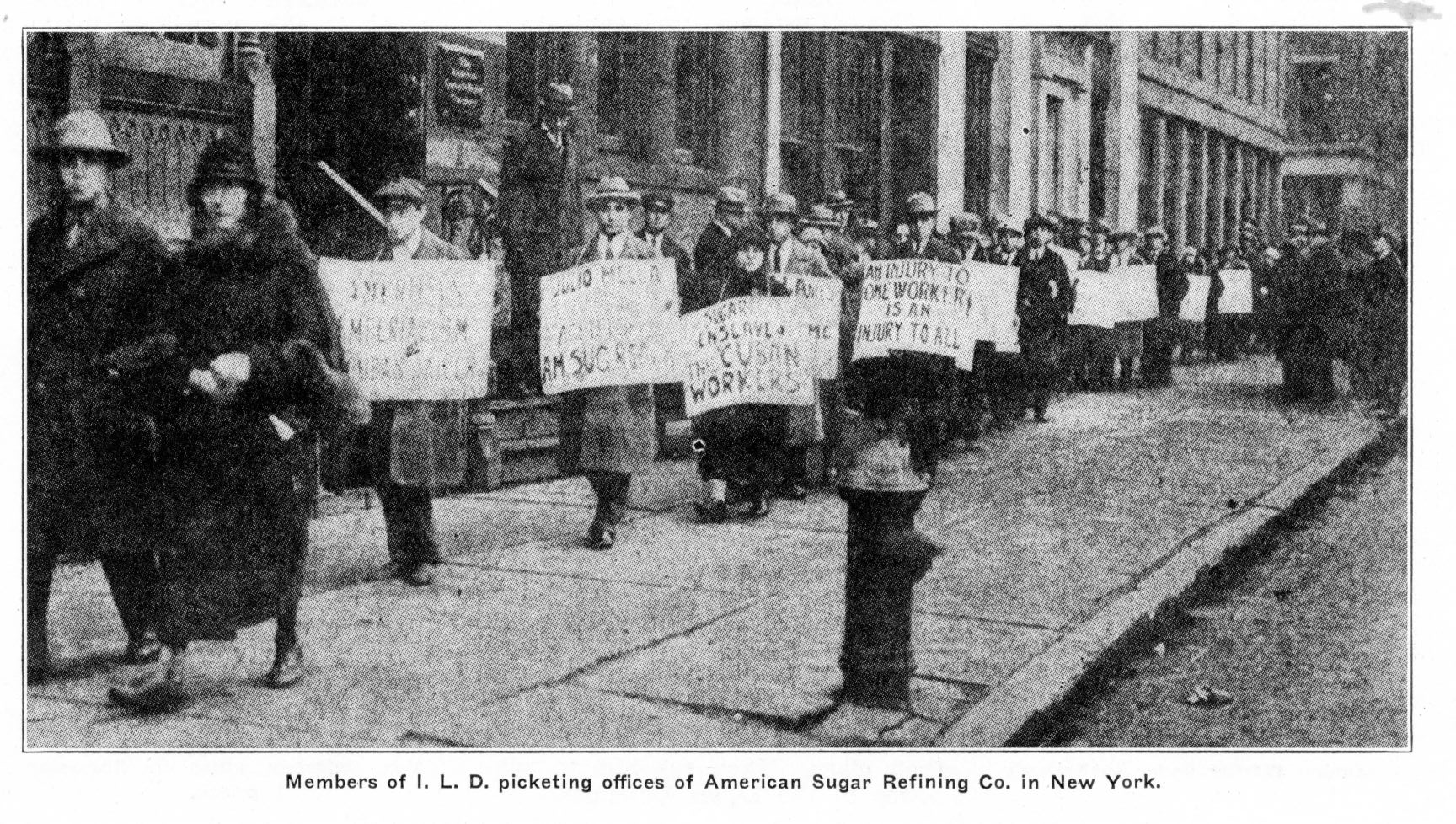
The International Labor Defense was pledged to stand ready to supply legal aid to any and all workers attacked for their activity in the class struggle. Legal defense is necessary. Frame-ups must be made as difficult as possible. Then, publicity: “Not a single instance of labor-baiting shall be allowed to escape the attention of the labor movement.”
The question comes: how many “unknown soldiers” of the working class have been hidden away in prison? And what about those living martyrs wasting away in the prisons that we know of: 128 of them? They are to be looked after, “The International Labor Defense will raise special funds for the systematic provision of material comforts and the necessaries of life to class-war prisoners.” And working-class families will be cared for too.
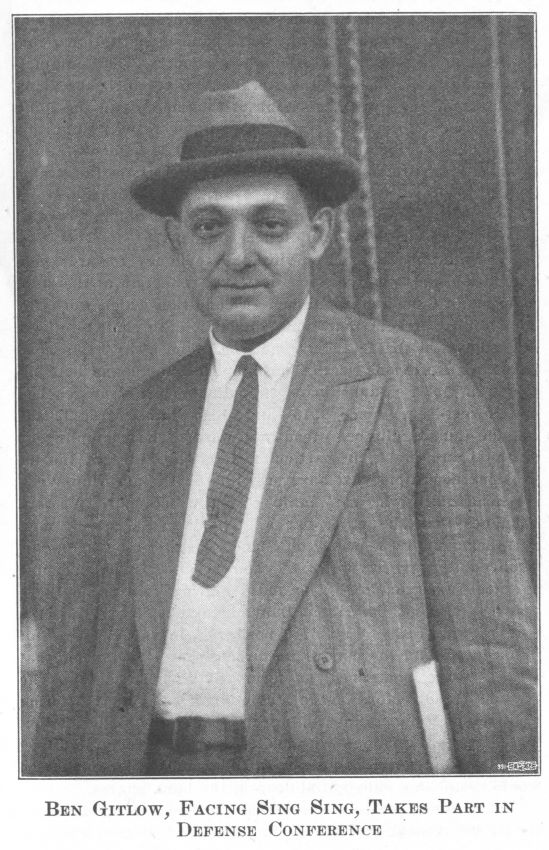
The delegates to this “National” conference were not unmindful, as delegates to such conferences usually are, that the class struggle is an international affair. Benjamin Gitlow, who any minute expected a call back to Sing Sing, told the story of White Terror that the workers abroad have to contend with. There was a feeling that our own little brand of terror is gradually approaching it. The conference expressed its unconditional solidarity with all exploited and oppressed workers the world over and promised the support of the International Labor Defense in aid of the victims of capitalism everywhere.
Watchword of the Conference.
The watchword of the conference was unity. “The defense of persecuted fighters for the cause of labor and the fraternal support of their dependents is a common platform upon which all sincere workers who believe in the principle of the class struggle can unite.” So begins the key resolution of the conference. It is this sentiment of unity that will make International Labor Defense a vital organization.
A National Committee of 37 was elected in the same spirit. This committee was representative of all shades of opinion and many diverse working-class groups. Eugene V. Debs, Upton Sinclair, Wm. Z. Foster, Benjamin Gitlow, Alice Stone Blackwell, Fred Mann, William Mollenhaur, Andrew McNamara are on the committee.
A Rousing Send-Off.
A word should be said about the mass meeting with which the conference closed. Temple Hall was jammed to the doors by two thousand workers who came to give the new organization the send-off it deserved. Here too was the atmosphere of unity. Bishop William Brown spoke for the new organization. Ralph Chaplin of the I.W.W. made a rousing speech for the men in jail. Benjamin Gitlow was there to throw the challenge of the Supreme Court back into its teeth and brand its decision in his case for what it is:
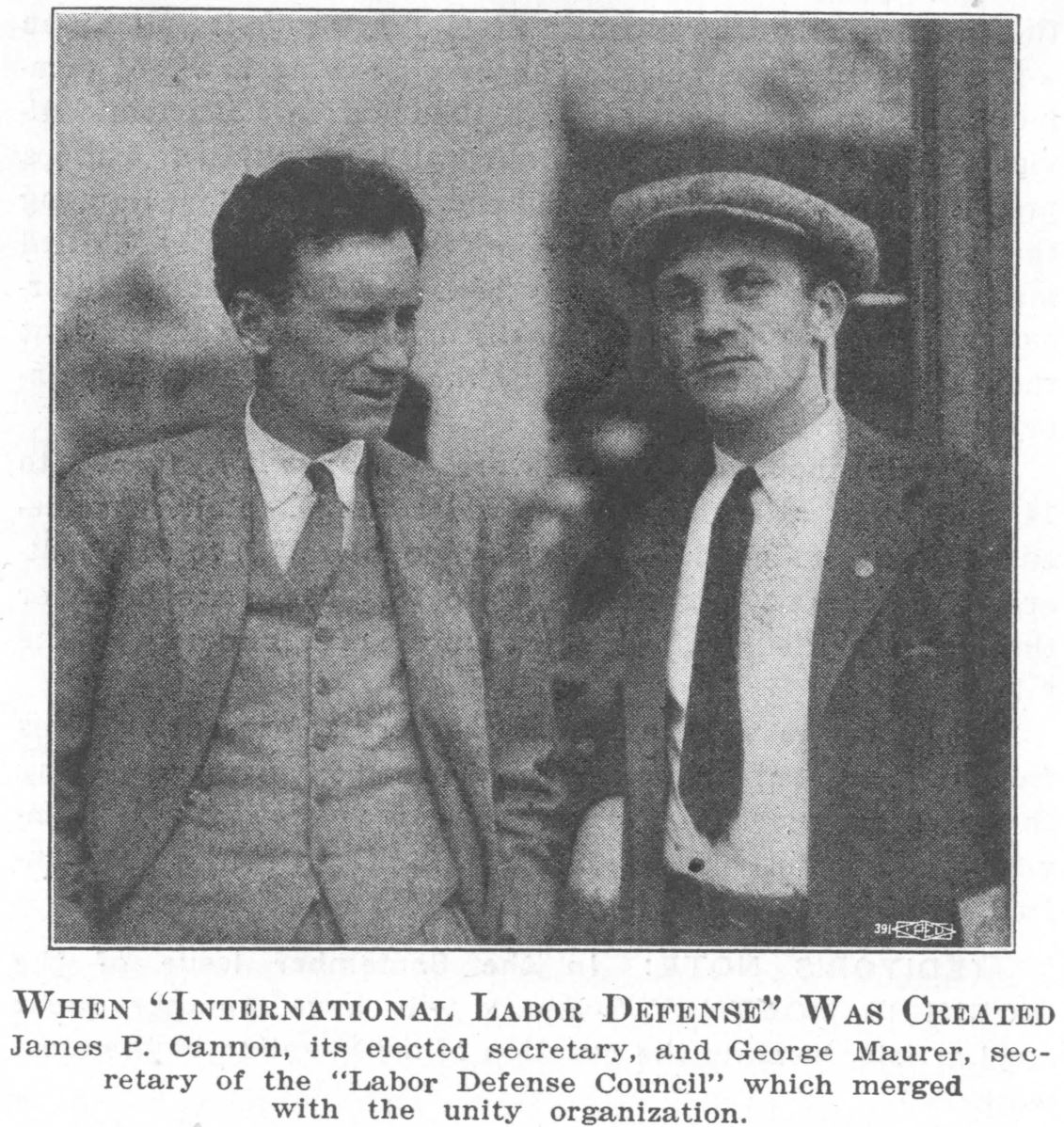
“An edict of the robed executive committee of Wall Street.” Andrew McNamara, the newly elected Chairman of International Labor Defense, told of the persecution of workers in Western Pennsylvania. Otto Hall of the American Negro Labor Congress expressed the solidarity of the class-conscious members of his race for this notable achievement. James P. Cannon, secretary of the unity organization, reviewed the program of the International Labor Defense and called for support in the great task to carry its banner into every local union and every working-class body.”
This great enthusiastic meeting of workers was a proper setting for the launching of an organization that is destined to occupy a place of honor in the record of the struggles of the working class of America.
Labor Defender was published monthly from 1926 until 1937 by the International Labor Defense (ILD), a Workers Party of America, and later Communist Party-led, non-partisan defense organization founded by James Cannon and William Haywood while in Moscow, 1925 to support prisoners of the class war, victims of racism and imperialism, and the struggle against fascism. It included, poetry, letters from prisoners, and was heavily illustrated with photos, images, and cartoons. Labor Defender was the central organ of the Scottsboro and Sacco and Vanzetti defense campaigns. Editors included T. J. O’ Flaherty, Max Shactman, Karl Reeve, J. Louis Engdahl, William L. Patterson, Sasha Small, and Sender Garlin.
PDF of full issue: https://www.marxists.org/history/usa/culture/pubs/wm/1925/v4n10-aug-1925.pdf
 Revolution's Newsstand