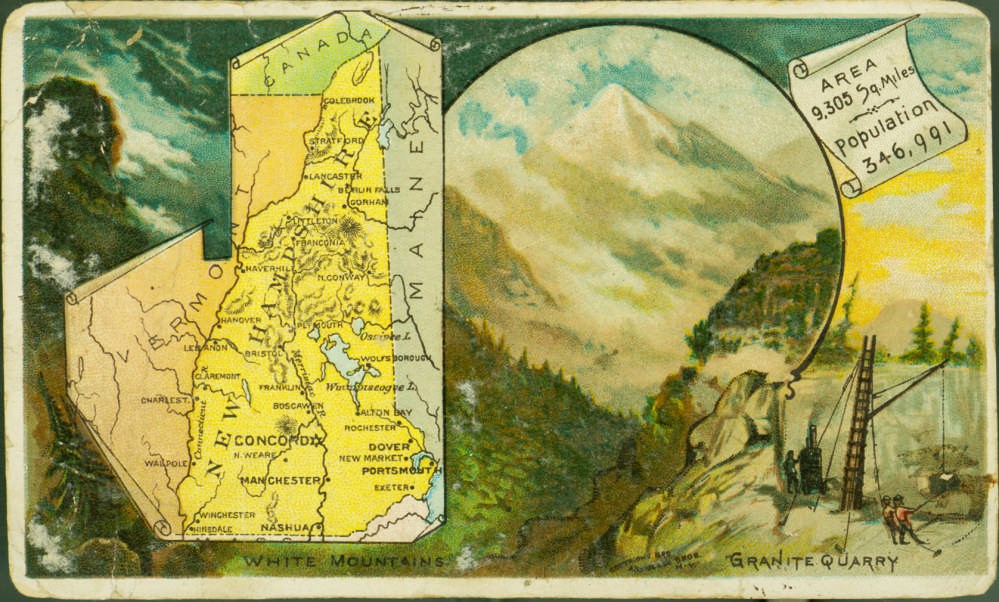
Not now, not then, not ever, would New Hampshire be called a hot-bed of radicalism. However, like everywhere, the Granite State had its radicals; many of them quarrying that granite. As the Communist movement finally unified (mostly) into the Workers (Communist) Party at the end 1922, the new organization sought to reactivate areas and people lost in the tumult of the three years since the 1919 Socialist Party split. Max Lerner reports on his New Hampshire organizing trip.
‘After Three Years the Party Comes Back in New Hampshire’ by Max Lerner from The Worker. 4 No. 260. February 3, 1923.
NOTE. Here is a report from Max Lerner, one of the Michigan defendants, now touring the New England states, that ought to hearten the Workers Party members still submerged by black reaction in other sections of the country. After three years the party membership is getting back into the struggle at Nashua, N.H. and we are sure they will be in the lead in party activity in this section of the country soon. Lerner writes as follows:
NASHUA, N.H. During the 1920 raids some 300 people were marched thru the streets of this city to the local jail and crowded five in a cell to await punishment for the terrible crime of attending a meeting held under the auspices of the Communist Party.
Thirty or 38 of these were weeded out and sent to Deer Island to await deportation. The rest were warned that if they ever appeared at a radical meeting again they should expect the same.
Ever since anyone known as a radical in Nashua has been hounded and blacklisted wherever he has gone to seek work–most of the active comrades have had to depart to seek work elsewhere. But there still remain a handful, the handful that staged my meeting in the town which boasted with pride that it was one of the glorious Open Shop Centers. It seems that the workers of Nashua had been thoroly intimidated and also remembered the famous march of 1921. Very few showed up. But it was a beginning. It was the first meeting held since that march of the 300 thru the streets.
After the meeting was over and I had had my say on the United Front policy of the Workers Party, the village sleuth who had been hovering conspicuously around the doorway of the hall to listen in, inconspicuously on what must have been to him a very engrossing description of the capitalist system and what we desired to do with the latter, trotted over to me and pompously inquired wherefrom I hailed and who I was.
“Pray, whom have I the honor of meeting at this most auspicious moment” I asked.
“Me. I’m the police representative, and say Mister,” he continued, “Don’t ever come to this town again with that line of bunk you handed out, or else we’ll give you a free ride and free board. We want no guys who speak this radicalism stuff in this town. Any guy who comes here preachin’ this abolition of the capitalist system isn’t gonna get very far around here. We don’t want them kind of guys, see?” Thus is the ultimatum of Nashua, N.H. This does not however daunt our comrades there in the least. They are determined to put the matter to the test if it must come to it and will continue to arrange meetings in the future.
This is my first test of New Hampshire. I am looking forward to my other meetings in New Hampshire with great interest.
Jan. 25 and 26, Lerner will be at Worcester, Mass.; Jan. 27, at Clinton, and Jan. 22, at Maynard.
Scandinavians Become Active
WEST CONCORD, N.H. After meeting here on Labor Party the secretary of the former branch of the Scandinavian Federation before it joined the Workers Party assured Comrade Max Lerner who was the speaker for the evening that they would organize or reorganize the branch which had in the meanwhile disintegrated, to be affiliated with the Scandinavian Section of the Workers Party.
The former secretary was very enthusiastic about the program of the Workers Party and felt that within two or three weeks a branch would be functioning.
The Workers Party in West Concord will be appreciably strengthened by the coming back of these active comrades as most of them can speak English well and therefore can help a great deal in the work.
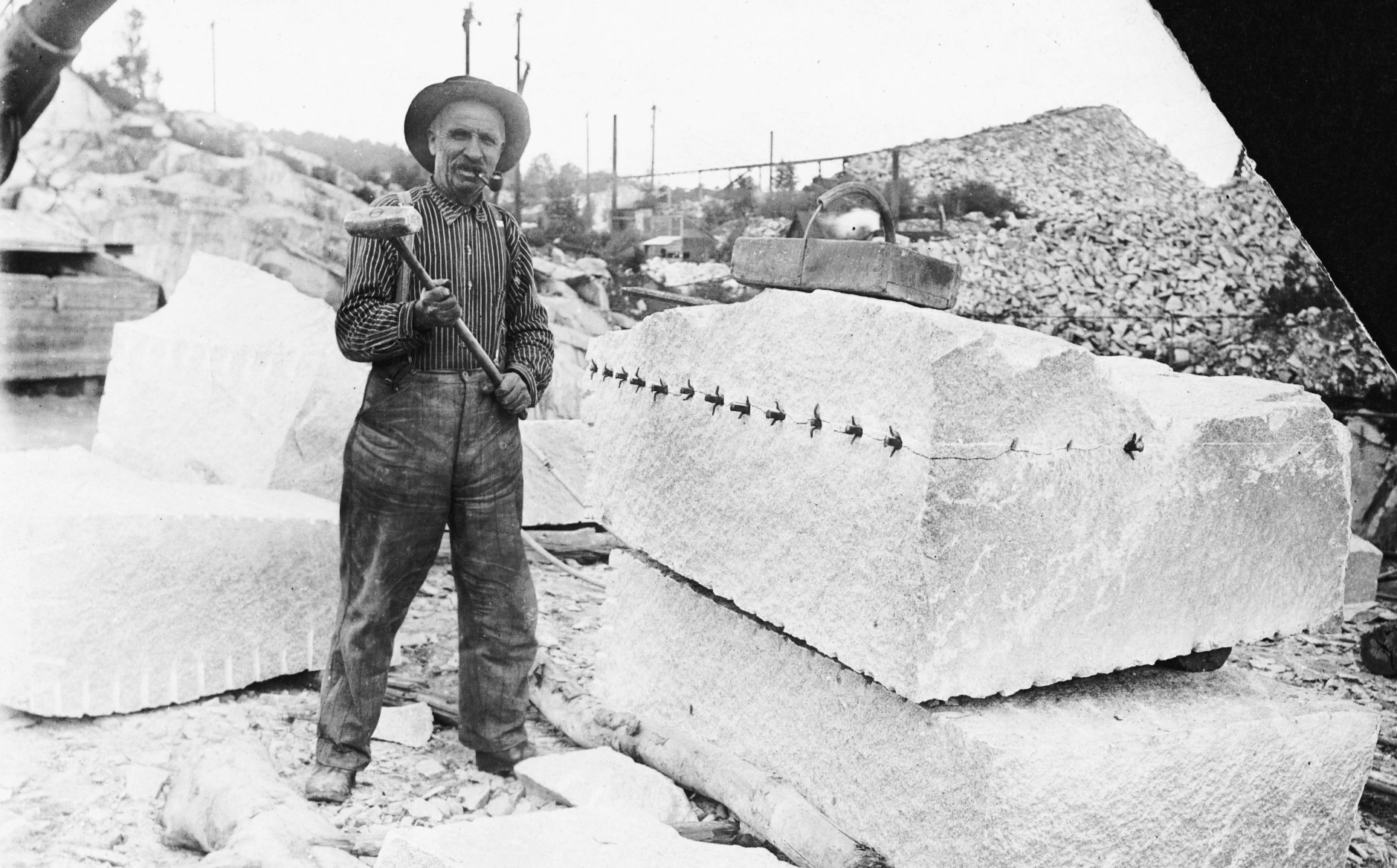
In the course of his speech Lerner took note of the local situation where three unions had been on strike in the quarries and had refused to go back to work separately. He said:
Oppose “American Plan”
“Your own strike, here in Concord brothers, has shown what can be done by sticking together. You know what would have happened if one of the locals had gone back to work on an agreement while the others were still out. Everyone would have been discouraged and disgusted. The strike as a whole would be lost. The American plan started would control your industry within a short time. It would take a long time to rebuild that which you would have lost.
“Your fight is a shining example of the United Front. You have learned thru your own bitter experience that it pays. You have your unions left and your spirit intact where otherwise you would have had no organization and in its place the bosses’ American Plan. Keep the United Front idea agoing. You have made a fine beginning. Keep it up and show your brothers that it pays to go even further, to make your three crafts one organization thru their amalgamation. In the political arena carry the united front idea, that you have learned so well, forward to aid in the organization of Labor’s own political Party, a Labor Party.”
After the meeting Comrade Lerner was informed of the cheerful tidings that the quarry owners had settled the local strike in the quarries that very day and that the time had arrived when all three unions concerned could go back together.
After a great show of opposition the employers in Concord had agreed to pay fifty dollars a head in fine for every member of any one of the unions that they had gotten back to scab and to dismiss the strikebreakers who had come in from the outside. The strike had started with a lockout before the agreements between the various locals of the quarry workers and the company had expired. When the agreements had expired the locals countered the lockout with a strike and had stayed on strike for more than nine months. The stone cutters and the paving cutters, the more skilled of the three crafts, had been offered agreements but had refused to go back to work on stab stone until the third local, the quarrymen’s, had been settled with. In West Concord the settlement came today. In other places in New England the quarry workers are still on strike on the same basis. The reason for the original lockout by the employers had been the attempt to establish the Open Shop and the “American Plan” in the quarries.
REFUSE TO OPEN HALL KEENE, N.H. Meeting on Labor Party to have been addressed here by Comrade Max Lerner who is touring New England on an organizational tour called off after proprietor of hall refused to open hall which had been rented for the occasion. A large crowd had to be turned back on this account. There is no doubt that the day of the meeting the proprietor of the Eagle hotel, the place where the meeting was to have been held, was warned by someone to prevent the meeting from taking place.
Keene is one of the string of Open Shop towns in New Hampshire. Any attempt to organize anything which might turn out for the benefit of the workers is stopped in one fashion or another before it begins. The Finnish comrades under whose auspices the meeting was called were, however, not discouraged and immediately got as many comrades and sympathizers as could be crowded together into the home of one of the comrades where Comrade Lerner delivered his talk and appealed to those present to help organize an English speaking branch in Keene.
After the talk was over, the Finnish comrades present who could speak English promised to do all in their power to help start an English branch.
The Daily Worker began in 1924 and was published in New York City by the Communist Party US and its predecessor organizations. Among the most long-lasting and important left publications in US history, it had a circulation of 35,000 at its peak. The Daily Worker came from The Ohio Socialist, published by the Left Wing-dominated Socialist Party of Ohio in Cleveland from 1917 to November 1919, when it became became The Toiler, paper of the Communist Labor Party. In December 1921 the above-ground Workers Party of America merged the Toiler with the paper Workers Council to found The Worker, which became The Daily Worker beginning January 13, 1924.
PDF of full issue: https://www.marxists.org/history/usa/pubs/theworker/v4n260-feb-03-1923-Worker.pdf
 Revolution's Newsstand