A detailed report on the context and work of the small group of Chinese Trotskyists during the war with Japan given by Frank Glass for the Emergency Conference of the Fourth International. Written just before the Nazi invasion of the U.S.S.R. and U.S. imperialism’s entry into the World War radically changed its dynamics.
‘Report on the Chinese Situation and the Activities of the Communist League of China’ by Li Fu Jen (Frank Glass) from International Internal Bulletin (Fourth International). Vol. 1 No. 5. April, 1941.
The Communist League of China is, after the American S.W.P, oldest Trotskyist organization in the world. The original cadre consisted of comrades expelled from the Chinese Communist Party at or after the time of the fight between the Russian Left Opposition and the Stalinist machine. They were expelled during the period between 1928 and 1930.
Three organizations were formed during the expulsions–these remained separate until about 1921. They carried on correspondence with Comrade Trotsky in which they aired their differences on the question of the concrete application of the slogan of the National Assembly. The differences were largely tactical. As a result of Comrade Trotsky’s advice, the three groups held a unity conference early in 1931, decided to get together and formed the Communist League of China.
Persecuted from the First.
Six weeks after the unity conference there was a sudden wave of arrests against the organization and practically the entire National Committee went to prison. Slowly the organization began to work again. Another wave of arrests within a few months took the entire National Committee of the organization. This resulted in the almost complete paralyzation of the organization for nearly a year. Those removed in the arrests were the most able and experienced comrades in the organization. But again, the organization gradually got a new committee together, though of less experienced and able comrades.
Growth in Spite of Difficulties.
In 1937 the membership of the Chinese organization was approximately 100, distributed between Shanghai, Hongkong, Peiping, where the bulk was located, and individual comrades in different parts of the country. Today the Communist League of China has more than 200 members The large majority of these are active workers in the organization. The principal centers of the organization are at Shanghai and Hongkong. The Central Committee is at Shanghai and the largest section is there 80 comrades. The Hongkong branch organization has 40 comrades. The balance of 80 are scattered in small towns, villages, a few in Chungking, but these, do not function as branches.
Two ports had been left open by the Japanese in Chekiang province and from 1939 on, there were branches of the organizations in these two ports Ningpo and Wenchow. But eight months ago, when relations between the Communist Party and the Chinese government became strained, our organizations also got it in the neck. The local garrison commander suddenly ordered house-to-house raids and succeeded in arresting a number of our comrades. These arrests practically liquidated the organization in both these places. There were about 30, and the police, got about 25. The 200 membership figure excludes these 30.
To a large extent the improvements in the work of the Chinese organization have been due to the fact that almost at the beginning of the war the comrades arrested in the 1931-32 police raids were released from prison in Nanking. These capable comrades reinforced the organization toward the end of 1937. Only one comrades wasn’t let out at that time. He was apparently over looked but managed to save himself just as the Japanese came into the city, when he was released by a friendly jailer. Without these comrades we might not have made any progress at all during the war. We had good comrades, but they were inexperienced and lacked theoretical and journalistic talent in particular.
The Activities of the Organization in Shanghai.
The Central Committee is located in Shanghai and meets regularly, once a week or once in two weeks. It generally supervises the work of the organization and maintains contacts with individual comrades and with other branches. Shanghai is the principal center of our publishing activity. There are two regular party organs published on an illegal printing press. One is a paper which combines the features of the Militant and the Fourth International, with the weight on the theoretical side. It is published monthly and has a circulation of about 500.
There is also a weekly paper for workers with an approximate distribution of 1000. These figures do not suggest the actual extent to which the propaganda really circulates, with 85% of the population, so there is a tendency for hunger to Illiteracy in China is the case and read know what is going on. There is a certain camaraderie among the workers and city poor and even among the peasants. There is a readiness of the literate to read to the illiterate. It is probable that the issues of the monthly magazine are read by at least two or three thousand people. The same is the case as regards the weekly paper.
The weekly paper puts forward programs of action, deals with the terrible cost of living situation and has become quite popular among those who read it. Every copy of the paper gets to the workers.
The party literature is distributed in the following ways:
1. Concealing it in respectable bourgeois papers for mailing to other parts of the country.
2. In Shanghai through worker members.
3. Leaving copies on the seats of buses and street cars when workers are going to or coming from work.
A large number of leaflets are published, dealing with the local issues of the day. The same method of distribution is used, plus drop- ping packages from the roofs. Anything dropped on the street is immediately snapped up by the people, including those who cannot read.
Published a Legal Organ for a Time.
In addition to the publications already mentioned, about a year ago a legal publication was started, called The Living Age. It was devoted very largely to translations of articles by Comrade Trotsky on the war situation, etc. It was very popular on the bookstands. It was legally published and got into the book stands and the bookstores sold very well. Intellectuals bought the magazines 2000 copies used to be published once a month. It would be sold out within 48 hours. This was published under a permit from the Shanghai municipal police. After about a half a dozen issues, the police withdrew the permit.
“The Living Age” was sold for 20 c. Chinese currency. The workers’ papers are both given away. They are not sold.
The possibilities for publication in Shanghai have improved considerably since the war because the Kuomintang’s authority has been completely expelled from there. The dominating authority in the International settlement consists of British officials and as in the last two years they have come more and more in conflict with Japan, they have tended to leave alone any organization that conducts anti-Japanese propaganda, etc. That is one reason we have been left alone.
Program of Publications.
Also, our organization is so small there would be no point in their making a sizable attack upon it. The result is that we have been able to do much more in the publication field than ever before. We have undertaken sizable publication jobs in connection with the works of Comrade Trotsky. Translations have been published of the Revolution Betrayed, Whither France, Third International After Lenin, Trotsky’s speech before the Dewey Commission, the introduction to the Living Thoughts of Marx. Translations of the History of the Russian Revolution and Isaacs’ Tragedy of the Chinese Revolution are in preparation. These works are published legally and openly sold, with the exception of the local pamphlets. This was impossible three and one half years ago, before the war. Today they can be openly sold in the International settlement.
Local Paper in Hong-Kong.
The Hong-Kong branch also publishes an organ it is a paper for workers and has a circulation of 600 to 700 copies. They also use an illegal press. This paper circulates largely among the workers of a very large company the Taikoo dockyards in Hong-Kong. Distribution is a comparatively simple problem the comrades hand it around to their fellow workers. 10,000 men are usually employed in this plant There have been several strikes at this dockyard in the last few years, in which our comrades have had an active role. There have been four strikes in the last three years of the war.
Activities in Shanghai.
The Shanghai section of the party is divided into a series of territorial groups which conduct their activities in various parts of the city this is necessary because of the semi-legal status of the organization and also because of the peculiar nature of the city itself the industrial section is strung out along the outskirts of the city. The sections meet once a week. District committees coordinate the work of groups operating in adjoining districts.
In addition to the ordinary work, the organization in Shanghai also runs a school. We started the school about a year and one-half ago in the Western district of the city a large industrial area. To provide a legal cover it was decided to have a day school and a night school. The day school is used for educating workers’ children in reading and writing. In return for this, the adults come to the night school. Simple instruction in the elements of Marxist economics are taught. The attendance in the school is in the day between 60 and 70 children, and at night between 40 and 50 adult workers. We have been able to recruit quite a few members from the school.
Two summer schools are held every year, one in Shanghai and one in Hong-Kong, for the benefit of out of town comrades. Very excellent results have been obtained. It is possible by this means to keep the comrades in remote places up to date with developments and news of other sections of the Fourth International.
On Strike Activity.
There have been a lot of strikes in Shanghai during the past year or 18 months, Shanghai is the exception to the rule of complete passivity in the labor movement. We have attempted to associate ourselves with every strike that has arisen.
Work in the Peasant Movement.
Another phase of party activity, which was comparatively short- lived, was in the peasant movement and its relation to the struggle against Japan. We had a comrade Chen in Hong-Kong who was a fighter in the Canton insurrection of 1927. He went to Chungshau in Kwangtung province in 1938. here he organized an armed force of peasants. They raided arsenals of the landlords for arms. 800 or 900 peasants joined this force. There was a feeble Kuomintang military organization in that territory at that time.
In August, 1939, when this peasant force had been established for some time, the Japanese made their first attack on the Chungshau Peninsula. They landed with a small force and started moving inland. They had not gone more than a few miles before they met the peasant force under the leadership of our comrade and these fighters licked the Japanese force in 24 hours.
A second attack was launched in December, 1939. The Japanese force met with the same fate. Then they used their aviation for bombing the supply route instead of attempting to use their infantry.
The fame of this peasant force in Chungshau spread throughout the country. The Stalinists helped to draw attention to its activity by pointing out that it was led by a ‘disruptive’ Trotskyite. Comrade Chen learned of a plan of the Chiang-Kai-shek government to attack and dissolve his force. It was decided that the best policy was to disband the force and for Chen to leave and go to a safe place. The arms were hidden. It would have been impossible to fight a government force advancing from the mainland. It is as yet difficult to say what was gained politically out of this. In any case, it contradicted the slanders of the Stalinists, who attack us as agents of Japanese imperialism.
Prospects for the Future.
Regarding the prospects of our organization in the coming period Because of the atomization of the labor movement, the fact that there are no trade unions in China today, and as a terrific crisis bears down on the people, I do not think we can expect any considerable gains in the membership or influence of our Chinese movement in the next period. Such gains as we will make will be individual gains among intellectuals who have either been with or in the Communist Party. A mass advance of the party to gain influence in the labor movement is impossible because there is no organized labor movement.
Strikes: Strikes in Shanghai have all been conducted by ad hoc committees elected by the workers once they have decided to go out on strike. These committees resemble nothing like a permanent and established working class organization. The workers meet in groups, discuss their grievances and decide that a strike is necessary. The different groups elect a committee to have charge of the different functions in the strike, as long as it lasts. These committees function effectively. They disappear when the strike is over. One reason for their impermanence is the continuing atmosphere of illegality and their memories of repression by the Kuomintang and foreign police. Through long years the workers have learned to work out a technique of strike action which affords the greatest possible protection to those obliged to assume positions of leadership in their ranks. It is a very good system The strike committee must be very carefully concealed while the strike is in progress so that repressions will not be visited upon the strike and the leaders kidnapped.
Strikes, however, are not illegal in Shanghai because the Kuomintang does not function there. Chinese law cannot be administered in the International settlement. So there is much greater opportunity for class struggle activity in Shanghai and much less danger basing themselves on recollections of the old system, the workers still show a special amount of caution.
Imperialist United Front Against Strikers.
A transport strike started several months ago with the bus workers in the International settlement. A British company holds the franchise for the operation of the bus service. Four thousand Chinese workers are employed by this company. The depot of the bus company is on the outskirts of the city in the Italian defense sector. A demonstration of the workers brought out the combined forces of British police and Italian and American marines, who descended on the depot and sent ultimatums to the strikers to get out. The strikers refused and barricaded themselves inside. The forces outside hurled tear gas bombs into the waiting room and drove the workers out into the open. Several workers were killed and wounded in this action. Here we had the cooperation of the imperialist forces against Chinese workers. They put aside their own differences to deal with this main danger.
In the Japanese Occupied Territory.
In Shanghai, although a large number of Japanese enterprises are located there, there has been no strike in a Japanese factory during the entire period of the war. This means that the Chinese workers have not yet gotten to a position where they are prepared to face the Japan ese Army The same situation prevails in all the other big cities, with only one exception to this general rule the action in the coal mines of Northern China, last year. Japan had been suffering an acute coal shortage because India began sending all its supplies to British territories. The Japanese thought they would be able to increase the production of the mines in Northern China to make up the shortage. They established a military regime in the mines. Established a speed-up system. However, the workers carried out a well-organized sabotage. The Japanese found they were getting less coal under the new system that they were before the speed-up was instituted.
Present Position of the Communist Party in China.
For many years the C.P. has steadily lost whatever positions it. had in the big cities. In the first years after 1927, the Communist Party took the most militant workers out of the factories in the cities and sent them off to be commanders of the peasant armies in the interior. This miserable business was passed off by the Stalinists as giving proletarian leadership to the peasantry. It still further depressed the labor movement. Today in the cities the Communist Party has no base and no influence at all. They do not attempt to conduct any activity there is no Communist Party paper in Shanghai. The only Stalinist organ anywhere outside of their own territory is published in Chungking and is a “united front” organ with no real connection with the masses. The Stalinist forces and their influence are confined exclusively to the areas in which their armed forces are in control.
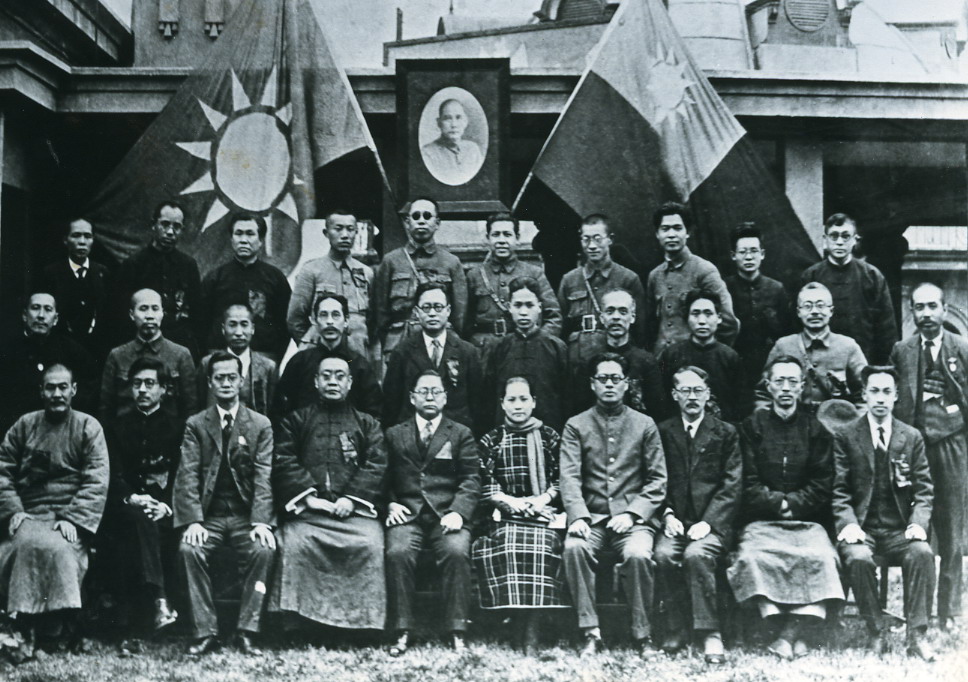
When the Stalinists enlarged their territory, particularly in the southern central section, friction began between Chiang-Kai-shek and the Stalinists. All the Stalinists have done was to reduce taxes, take over big landlord’s estates, convert public lands, begin a popular system of education which has not gone very far the mildest bourgeois reforms. Already in 1939 they proceeded to establish themselves due west of Shanghai the New Fourth Army and this was Chiang-Kai-shek chief worry. They became quite popular in this rural area. They stimulated peasant activity to the extent that it was necessary to build up their position there, but inevitably this brought them into conflict with Chiang-Kai-shek and then they would retreat. They used the peasants as pawns in their game with Chiang-Kai-shek.
That contradiction remained until the cleaning up of the New Fourth Army by Chiang Kai-shek and the Japanese.
The Peasant Movement.
According to very conservative estimates, there are about 50 million civilian refugees in China today, the majority of whom are peasants. Peasant families were driven off their land and are unable to return today because the land will not support them due to the damage caused by Japanese troops. This enormous refugee problem has had a very depressing effect on the economics of the country as a whole. Refugees coming to the cities have made the positions of workers engaged in industry very insecure. The situation in Shanghai is somewhat different from the rest of the country, but it also has been affected.
Apart from the problem created by the enormous army of refugees, there is the tremendous rise in the cost of living. The standard of living has declined catastrophically since the war began. Malnutrition, poor health and all these adverse factors have, in their turn, the effect of holding back the revival of the labor movement on anything like a large scale,
The Conduct of the War.
As regards the war itself, the peak of Japanese striking power was reached at the end of 1938. From then on there has been a noticeable decline. The economic resources of the Japanese Empire are not equal to a long war. In the first year and a half of the war they rode along on their old resources. After the fall of Hankow and Canton it became apparent that the military machine had exhausted itself. They had to sit tight on what they had conquered. From that time onward they began adopting a totally new strategy. They decided they had to create a counter-weight to the Kuomintang regime.
They bribed Wang Ching-wei and set him up as head of a new central government, hoping he would get sufficient support. They hoped that the peace faction in Chungking would gradually filter into this camp. But this calculation, too, has not exactly worked out. While there is a sizable peace faction in the Chungking government, they have no armed forces at their control, which means they have no real weight on the Chinese scene. So the Wang Ching-wei peace movement has been unable to make any appreciable headway. In view of this situation, the military stalemate is likely to continue for an indefinite period of time, unless and until the United States enters the war against Japan.
The Japanese cannot penetrate any further into the interior. While the Japanese cannot advance, Chiang-Kai-shek cannot stage any counter-offensive the troops are demoralized. And so the situation. is approximately the same on both sides. Chiang-Kai-shek also has less disposition now than ever before to rely on his own forces. He relies mainly on the prospects of American imperialism entering the war against Japan.
Now with the war situation in the Pacific developing very rapidly in the direction of a war between Japan and the United States, the prospects of a pact between Stalin and Japan recede more and more into the background. Stalin understands that Japan will be defeated by American imperialism. Therefore, he will string them along with trade pacts, etc., but sign no binding agreement.
Chiang Kai-shek has now reached a position where he is much less dependent on Moscow than he was during the early stages of the war. Previously, he was dependent on Moscow for military supplies. But here also was a contradiction. For the last six months nothing has gone into China from Russia, ever since the cracking down on the Stalinist troops.
Loans from Washington, reinforced by recent statements regarding material assistance to China under the Lease-Lend Bill all this has made Chiang-Kai-shek feel less dependent on Moscow.
Meanwhile, the war is becoming more and more involved with the second world war. Chiang-Kai-shek’s close advisers now are the American diplomats. Early in the war it was the Soviet diplomats who were inner During recent months the Americans have edged out the Russians. This is also proceeding on the economic front. The United States can advance its colonial interests in a much more subtle way than the Japanese–the Japanese must send armies and seize the land–the United States can appear more magnanimous and secure control through loans to the Chinese government. They will probably pour more and more money into the country, create positions the defense of which they will be able to justify later before the American people.
Today American investments are only 300 million dollars, one- sixth of the British. But now I think the tendency will be to increase this figure in all sorts of ways. It is possible there may be an open military alliance between Chiang-Kai-shek and the United States. This may end in a complete change in the war in the Far East–American imperialism would take over the war following the beginnings of a war with Japan.
April, 1941.
The U.S. Trotskyist movement began official, semi-regular internal bulletins to host political debate and discussion as the Communist League of America in 1930. In 1931, an International Bulletin was also produced running through 1934 to separate out the international debates. After the formation of Workers Party of the United States bulletins continued. With the entry of the Workers Party into the Socialist Party in the ‘French Turn’ internal bulletins were discontinued. In a reflection of the different size and resources of the CP, the CLA-WP-SWP bulletins were largely mimeographed rather than printed. A new set of Bulletins for internal discussion of the newly formed SWP in January of 1938 were produced, as well as another International Bulletin for discussion of the founding of the Fourth International. As a whole, these bulletins, unlike the internal bulletin of the CP, focus on long-form debate and internal discussion of Party resolutions and policy with the movement’s top leaders and thinkers contributing. Often, before congresses or plenums, special bulletins would be printed to host the relevant debate. The International Bulletins contain many of Trotsky’s and other international voices’ first English-language translations. Often those voice used pseudonyms, Crux is Trotsky. An invaluable resource for students of US Communism, Trotskyism, and the larger US workers’ movement.
PDF of full issue: https://www.marxists.org/history/etol/document/fi/ib-1940-45/v01n05-apr-1941-FI-internat-bul.pdf
 Revolution's Newsstand