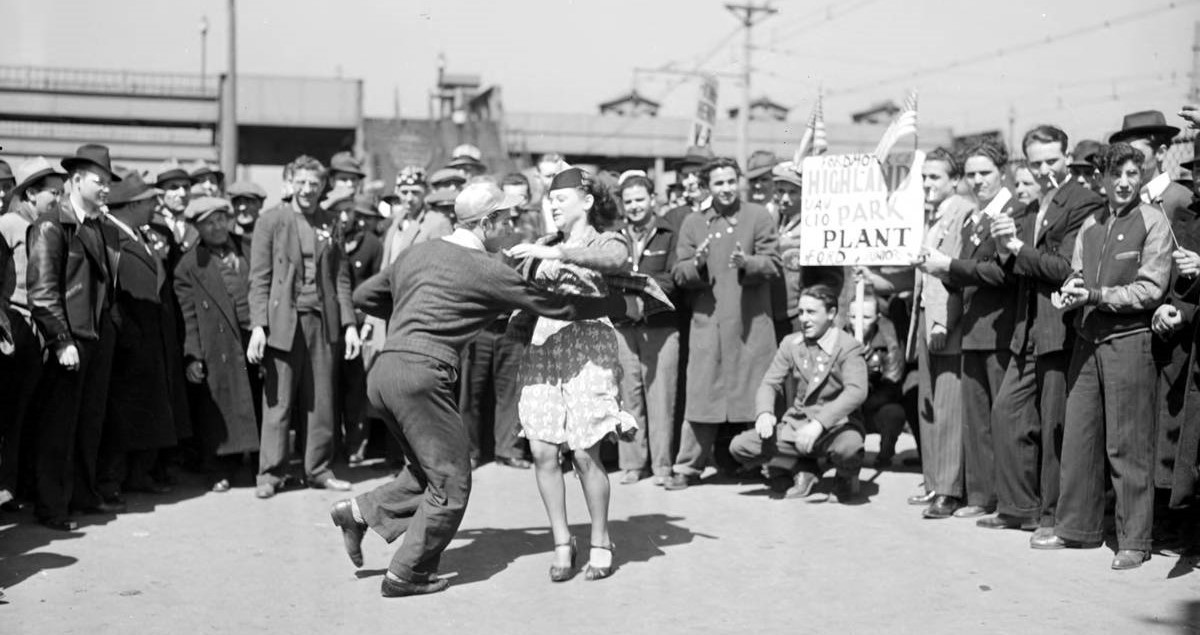
One of the most important battles in U.S. working class history. Ford, vehemently anti-union, was the last auto-maker to fall to the C.I.O., in part because of the racial politics employed by ‘King Henry.’ It took a dramatic shift to Black workers for the U.A.W. to win there.
‘Ford Is Shut Down at Last’ from The Militant. Vol. 5 No. 15. April 12, 1941.
Ford Workers Show Hank Their Power; Bold And Confident, Workers Stand Firm; Not So The Leaders.
DETROIT, April 8. The great Ford strike, now in its seventh day, continues with all production completely shut down.
This strike, aimed against the symbol of the open shop, against the “old American way” in industry, is symbolic of what American workers understand by a fight for democracy, and what they feel is worth fighting for.
Those outside this area, who are reading about the strike in the daily press and hear about it on the radio, receive a warped picture of the actual state of affairs. They hear the venomous statements of the paid company hirelings, read the slanders and lies of the newspaper columnists, get a picture of the army of government mediators and their barrage of governmental pressure upon the Ford workers.
They imagine, from all this, that the Ford workers must be overcome by the sheer weight of the pressure brought to bear from all sides.

But the workers of Detroit are in a different world. They dwell apart from the venal columnists and the babbling flunkeys on the radio newscasts. The men on the Ford picket lines are cheerful optimistic and above all determined. The Ford workers know only the justice of their case. They are oblivious of all the high- pressure attempts to demoralize and defeat them. They are swimming in a sea of solidarity, and are insulated by the sheer massiveness of their strength from the pricks and jabs of their enemies.
The strike leadership, unfortunately, does not lie in the hands of a broad and representative strike committee. It is in the hands of a few top figures such as Michael Widman, Jr., director of the CIO drive, R.J. Thomas, UAW President, George F. Addes, Secretary-Treasurer of the UAW, Alan Haywood, CIO organization director, and one or two other individuals. This leadership has a psychology different from the militant and confident ranks.
UNINSPIRING PUBLICITY
In greatest contrast to the spirit and strength of the ranks is the publicity department. There is an ample volume of publicity pouring out of the strike headquarters, but in its content the publicity represents the most backward sector of the strike. The union radio talks are a repeated blather about the patriotism of the Ford workers, about the refusal of the Ford company to put out Rolls Royce engines for Britain, for which the strike leaders had volunteered to send in workers.
Repeatedly, day after day these talks reiterate the same uninspiring and worthless trash, the aim of which is to show that the Ford workers went on strike in order to make a good patriot and friend of England out of Henry Ford.
This useless stuff is all the work of the ex-Norman Thomasites who have monopolized the publicity department from the first day of the strike. All this so-called publicity meets with a complete lack of interest on the part of the Ford workers, other auto workers in the vicinity and just about everyone else in Detroit.
As soon as the strike was officially called a set of demands was presented publicly to the company, outlining the chief points for which the strike was being fought. These were: bargaining rights, the establishment of a shop steward system; full seniority rights; the abolition of the spy system and the service department, a ten cent hourly wage increase, and the reinstatement of all fired workers.
For the first two days of the strike, however, all union publicity on these demands was couched in very vague terms; it was impossible to determine whether the union demanded a signed contract embodying the demands, or merely an oral agreement.
The Ford officialdom adopted the old Judge Gary formula of sitting tight. They refused to meet with or negotiate with the union.
The Ford company sent only minor officials and service department men to represent the corporation in meetings with the state and Federal mediators. Harry Bennett confined himself to hurling wild charges of a plot “to take over the Ford factory, destroy the plant and wreck the government.”
DEMANDS WATERED DOWN
On Friday, out of a clear sky, the union leaders issued a statement in the form of a letter to Governor Van Waggoner and Federal Mediator Dewey, outlining a new set of union proposals.
These consisted of: Recognition of the union for its members in the Rouge plant; that the company establish standards of wages and seniority, and handling of grievances, which are part of the union’s agreements with General Motors and Chrysler; the details of the agreement to be worked out in joint conference within a week. Then this: “Upon acceptance of the above points, operations in the plant to be resumed with reinstatement of all strikers and all workers discharged.”
The new set of demands were obviously a step backward from the original demands and reduced the stake for which the men on the picket line were fighting.
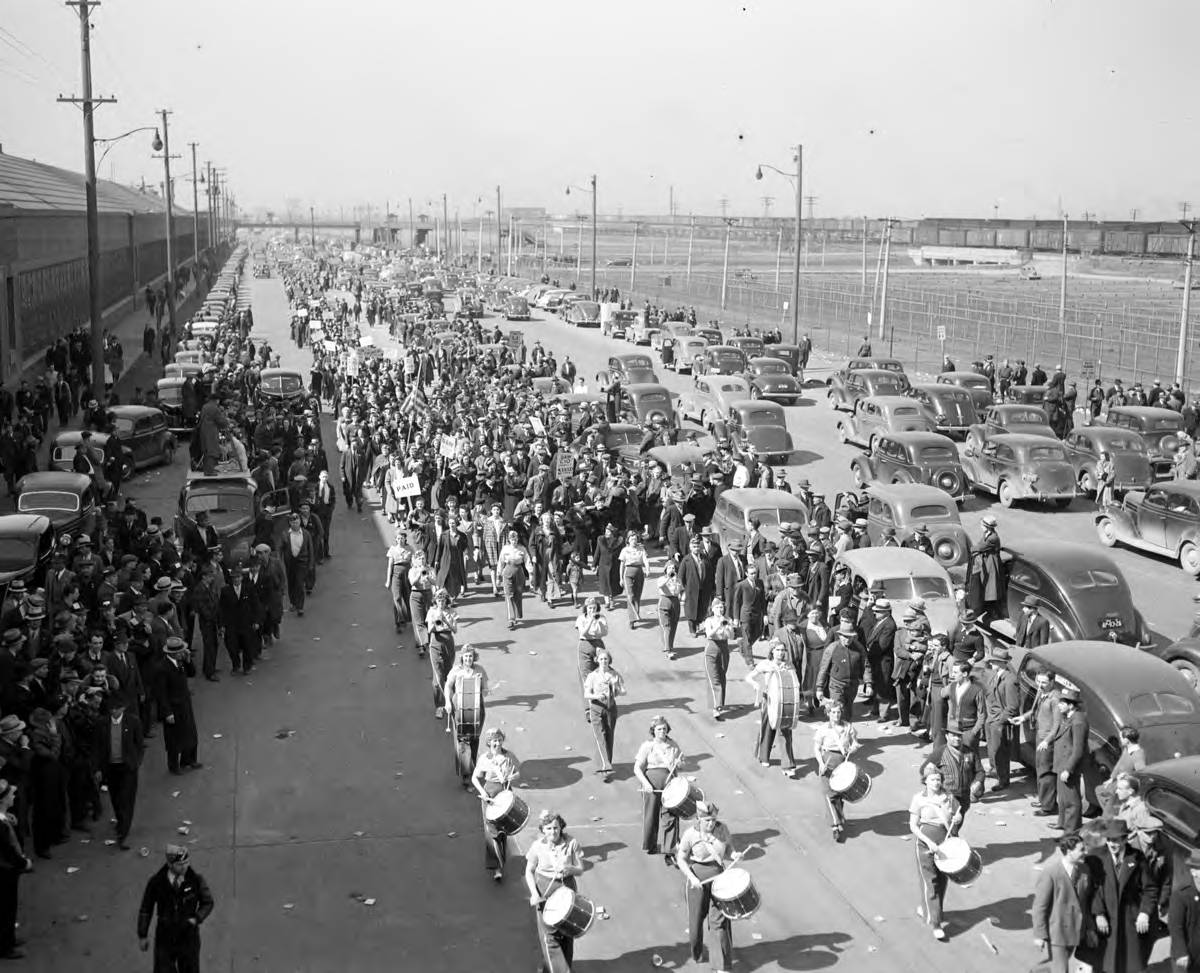
Over the weekend, fortunately, the pressure of the many militants on the scene put a little more backbone into the union statements, and once again now we hear talk of a signed contract and a return to the original set of demands.
The union’s strength is overwhelming; the Ford men are so fired with fighting spirit; the auto workers throughout the state are aroused to such a furious pitch! Harry Bennett does not have access to manpower of any significance with which to start a “back to work” movement. Powerless and impotent, he can only wait, snipe at the union and try to gather together his badly dispersed forces which were so thoroughly crushed in the first major engagement.
NEGROES IN THE UNION
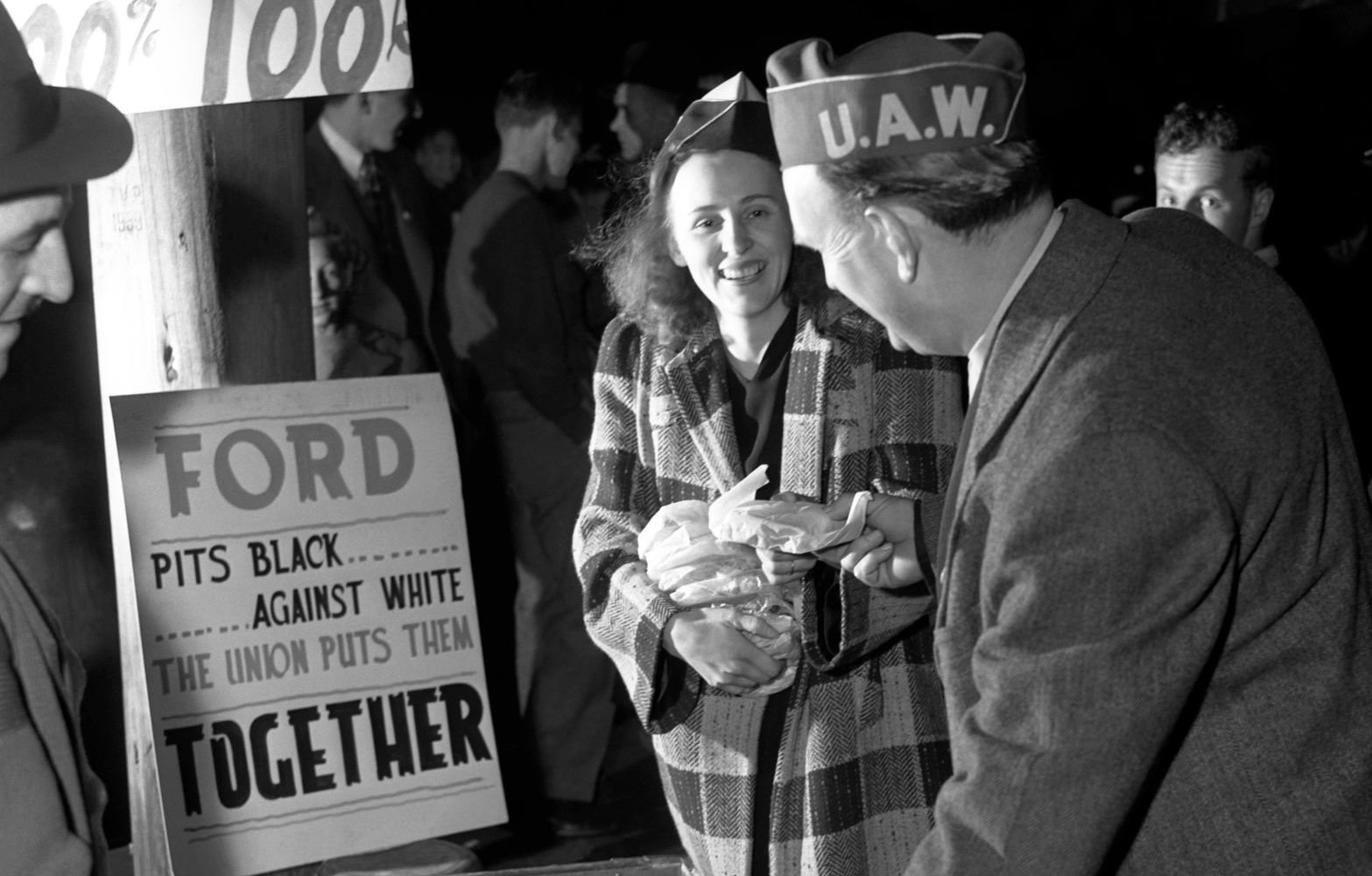
Even Ford’s ace-in-the-hole, the Negro workers, have become union forces. 1500 of them remain inside the Rouge plant. But that’s all. All of Ford’s years of effort to form an anti-union army of Negroes, for which he spent hundreds of thousands of dollars in propaganda, have failed. This immense mass movement drew them in and thousands have joined the UAW-CIO since the beginning of the strike and many are out every day on the picket lines side by side with the white workers.
The crew of petty-bourgeois Negro “leaders” who tried up to the last to straddle the fence between Ford and the labor movement, were soon so alarmed at the size and strength of the strike movement that they were forced to back down. The Detroit edition of the Pittsburgh Courier, anti-union and pro Ford all during the Ford drive of the CIO, lost its grip on the public opinion of the Negro community of Detroit.
The doctors and lawyers among the Negroes called a meeting un- der the auspices of the Plymouth Junior League, the NAACP and the leading Negro churches. The overwhelming majority of the audience, comprised of workers, howled down Albert Cleague, of the Plymouth Junior League, when he tried to throw the blame for the situation on the CIO. That meeting revealed the cleavage be tween the masses of Negro workers and the petty bourgeois elements of the race.
Emil Mazey, recently defeated President of the Briggs Local in Detroit, has been placed in charge of the Negro Division of the Ford drive. Special Negro literature is being distributed throughout the Negro districts of the city, pointing out the need for solidarity of all races in the struggle for jobs, decent wages and working conditions.
Harry Bennett is attempting to gather a new strikebreaking army together. Utilizing the huge financial resources of the Ford Motor Company, he is trying to buy an army of thugs of sufficient strength for an effective back-to- work movement.
In this nefarious scheme he has the aid of the American Federation of Labor, which has set up an “Organizing Headquarters.” William Green is repeating his scabbing on the General Motors strike, when he wired Governor Frank Murphy at the crucial moment of the negotiations, demanding the corporation not sign with the UAW-CIO. On Friday he wired Governor Van Waggoner demanding that the rights of his non-existent AFL workers be protected.
Homer Martin, who was driven out of the labor movement by the auto workers, became a paid agent of Ford, negotiating as representative of the Ford Motor Company with union committees on grievances now suddenly turned up as official head of the AFL’s Ford “organizing drive.”
DETROIT AFL PROTESTS
This brazen act of treachery so incensed the local AFL membership that Frank X. Martel, President of the Detroit and Wayne County Federation of Labor, was forced to wire Green and every single member of the Executive Council of the AFL to demand that Martin be removed. By Friday Green reluctantly withdrew Martin’s credentials, and appointed John Murphy to take the helm of the strikebreaking attempt.
Murphy spouts his fink program every day on the radio. The AFL top hierarchy is today committing the blackest crimes of its foul career. But in spite of the services of the AFL, Bennett and his service department’s back to work movement is thus far bereft of all results.
UNION GROWS STRONGER
The UAW-CIO gains in membership every day. The statement of an assistant organization director of the drive that “there aren’t many more members to sign up at Ford” is no exaggeration.
The CIO called a mass meeting of Ford strikers at the state fair grounds Friday night. In spite of a heavy downpour of rain, some 20,000 Ford workers thronged the huge Coliseum.
The AFL foolishly attempted to do likewise with a meeting Saturday, and drew an audience of from 300 to 500 people at most, mostly Ford Service men.
THE MAIN DANGER
This is a solid strike. It is enthusiastically backed by the overwhelming majority of the workers of Michigan. The auto workers all over this area will come out if necessary and fight the strike to à finish. In view of this unprecedented solidarity it is safe to say that the main danger right now does not lie in the company’s attempt to o smash the picket lines with a head-on back-to-work attack.
THERE IS MUCH DANGER OF THE MORE FORD STRIKERS BEING TRICKED OUT OF THEIR GAINS THAN IN BEING WHIPPED.
To give the greatest amount of morale to the strike, and to provide the leadership with a transmission belt into the heart of the ranks, many locals are demanding that a broad strike committee of Ford strikers be set up to meet and set policy from day to day. They are also demanding that the union stand absolutely pat on the original minimum demands, and that this strike continue until Ford signs his name on a written contract.
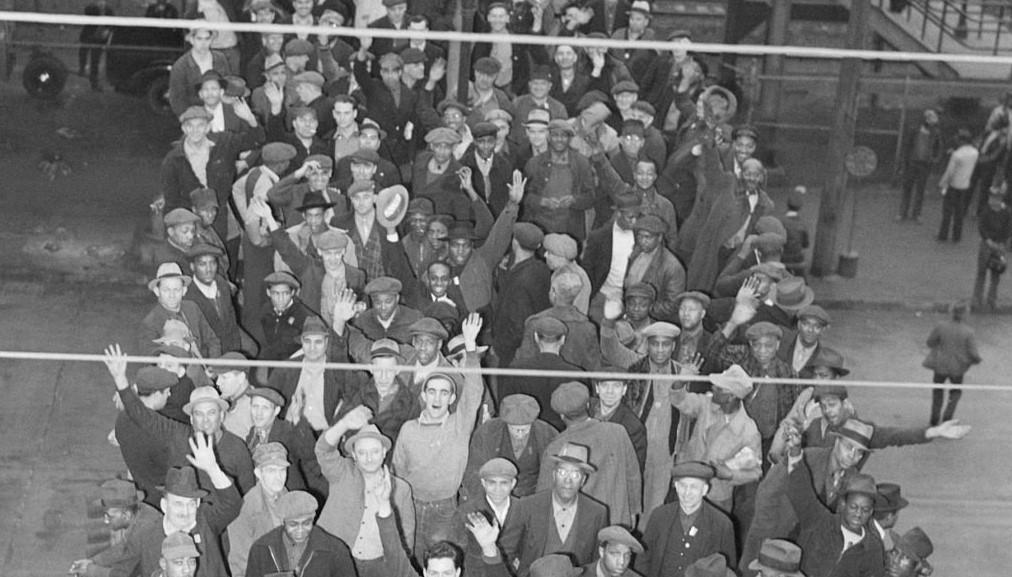
A step in the right direction, reflecting the pressure for a voice on the part of the broad mass of strikers, was taken Monday by the calling of departmental meetings of the Ford workers.
Through these meetings the voice of the Ford workers must make itself heard loud and clear, so that the spirit and the wishes of the men on the picket lines make themselves felt at the conference table and the deepest wish of the men is fulfilled: that the great Ford strike continue solid and strong until senile old Hank comes out of hiding and puts his signature on a signed contract with the UAW-CIO.
The Militant was a weekly newspaper begun by supporters of the International Left Opposition recently expelled from the Communist Party in 1928 and published in New York City. Led by James P Cannon, Max Schacthman, Martin Abern, and others, the new organization called itself the Communist League of America (Opposition) and saw itself as an outside faction of both the Communist Party and the Comintern. After 1933, the group dropped ‘Opposition’ and advocated a new party and International. When the CLA fused with AJ Muste’s American Workers Party in late 1934, the paper became the New Militant as the organ of the newly formed Workers Party of the United States.
PDF of full issue: https://www.marxists.org/history/etol/newspape/themilitant/1941/v5n15-apr-12-1941.pdf
 Revolution's Newsstand