
An important political moment in U.S. history was the 1912 election which saw the first serious challenge to the two-party system since the Civil War with both Progressives and Socialists running strong campaigns. After losing the Republican nomination to Taft in 1912, Theodore Roosevelt and his supporters split to form the National Progressive Party. In that year’s Presidential election, they beat their Republican rivals, coming in second and garnering 27.4% nationally (Debs received 6%). Though the conservatives around Taft retained control, most ‘Progressives’ returned to the Republican fold by 1916 in the event of the World War and intervening electoral failures. Frank Bohn analyzes their formation.
‘The National Progressive Party’ by Frank Bohn from International Socialist Review. Vol. 13 No. 3. September, 1912.
THE National Progressive party has not resulted from the egotism and spite of one man, nor yet of a group of men. Parties do not grow that way—at least, not parties which are or bid well to be permanent.
The fundamental cause of the National Progressive party lies deep in the history of the past generation in America. On first thought it seems strange that it was so late in coming. But upon careful analysis it is plain that the panic of 1893 and the after results could not possibly have produced a party of constructive radicalism because the most important discontented element of that time was the debt-ridden farmer class of the west. Hence Populism and the Free Silver campaign rolled like a tidal wave over the feeble efforts put forth by the then labor movement to express itself politically. The Henry George movement died with Henry George. The Free Silver movement would have risen had every Populist been laid in his grave.
From the fundamental cause of rapidly increasing poverty on the one hand and a top-heavy plutocratic industrial machine on the other, comes this new party of today. Four specific immediate causes may be discerned. First, corruption in political office. Second, the muck raking campaign beginning in 1904, which has made this corruption known and destroyed the faith that the American middle class hitherto has reposed in national, state and local governments. This accounts for the purely political demands for the initiative and referendum, the recall and direct election of senators. Third, the increasing poverty which happens to take the form of the high cost of living. The middle class in part feels this poverty and in part is becoming ashamed of its wretched effects upon the national life. Fourth, the political fortunes of Theodore Roosevelt.
The panic of 1907-8 for the first time brought the whole nation face to face with the modern social problem in its most critical form. In 1893 the Republicans blamed the Democratic tariff and the working class believed them. The Democrats blamed the gold standard and the western farmers believed them. In 1907 Wall street attempted to lay the cause of the panic at the door of Roosevelt and that wily gentleman proceeded to develop his national constructive platform. He has before his eyes the success of the English Radical-Liberals lead by the extremist, Lloyd George. The simple game of selecting the greatest ass in the whole country to sit in the President’s chair while he prepared himself to again assume possession was soon patent to all but the totally blind. When the Republican machine beat him there was only one possible thing left for him to do and his illimitable egotism braced his nerve to do it. Had Bryan been nominated in Baltimore any new party even with Roosevelt at its head would have cut a sorry figure. But his proverbial good fortune did not forsake hm. The Democratic nominee is he whom Roosevelt would have himself have chosen. Wilson is a staid, quiet creature of the older school even in university life, a man whose whole life and work belies the position he is now attempting to assume. He could not stir up a hungry lion with a red-hot poker. The only hope for Wilson’s election is the solid South against a divided North and West. And that is quite likely to make him President. And so under the best possible conditions comes forth the National Progressive Party. To personally assail Roosevelt is to be both ineffectual and silly. Although he has cleverly taken advantage of the movement, Roosevelt is not the new party by any means, The National Progressive party has grown naturally out of conditions and makes its appeal to three elements in American society. These elements constitute a portion of each class—the plutocratic class. the middle class and the working class. Among the plutocratic element are George W. Perkins, late of the J. Pierpont Morgan group, George Speyer, President of the Fifth Avenue bank, Frank Munsey and Medill McCormick. These names represent a very large contingent of the American plutocrats who are perfectly willing to back a policy of constructive reform. To the uninitiated this crowd seems to be playing a trick for personal advantages. This is absolutely wrong. These men are class conscious in the most intelligent way possible. Furthermore, many of them imagine that they are soldiers of the new social war, heroes in a fight which will give them much personal satisfaction and national distinction. An after dinner speech of one of these people is always couched in the following style:
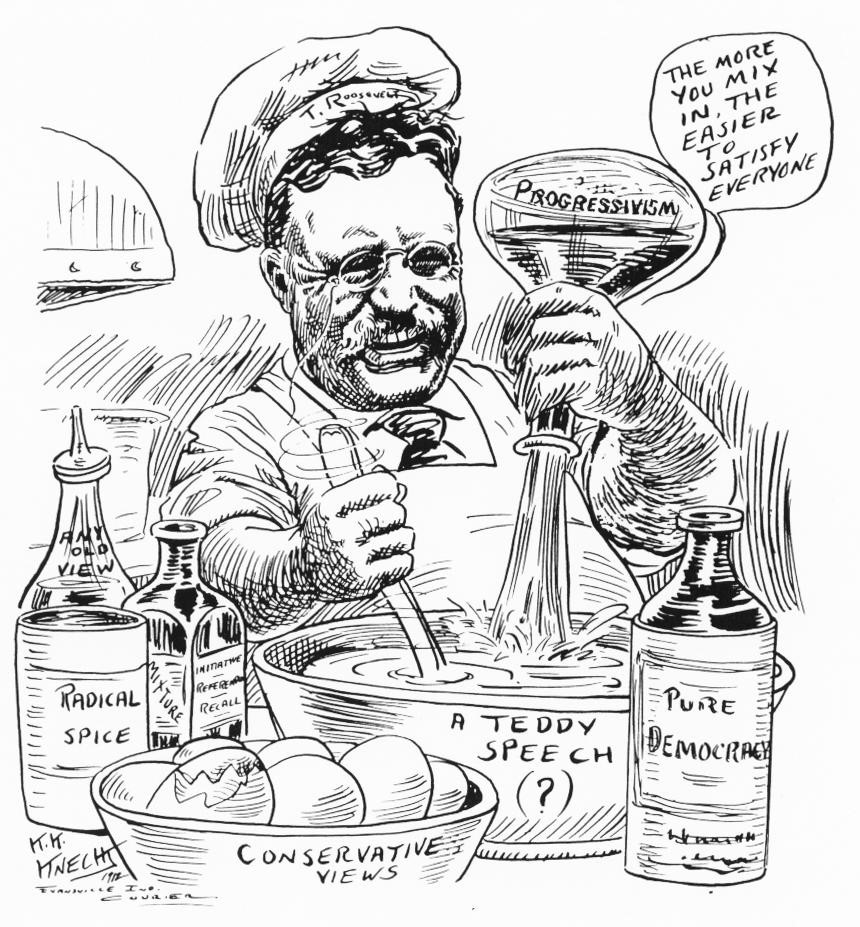
“Fellow citizens, the nation is in a bad way and we alone can save it. If America cannot find hope in us, where is she to look for salvation? Poverty is increasing and the starving poor are raising the blood cry. I hear it and I want you to hear it. Child labor and twelve-hour shifts for women are a disgrace to the country and when I go home and meet my own wife and children and think of it I am heartily ashamed of myself., Our exorbitant tariff is an iniquity and is, furthermore, no longer needed. Our government is the most rotten west of Turkey. Political conditions cannot be changed until respectable large-minded men like you and me go into politics and take the offices, as they do in England. Why, I was in England last year and everybody despised me because I was not in politics and had no ideas upon social and political questions. You and I, gentlemen, have plenty of money. What we ought to desire more than greater riches are public service and public honors for ourselves and our sons. We must find solutions for the problems that now face us and bring our government abreast of the times so that when we go to Europe we shall not be ashamed of ourselves and our country. I propose a toast to that fearless leader of social progress, Theodore Roosevelt.” (Loud applause from everybody under 70 years of age.)
THE MIDDLE CLASS.
A matter of much more significance is the position of the new party toward the middle class. Up to the panic of 1907 and the announcement of Roosevelt’s constructive policy there was not a middle class politician representing any group or any shade of opinion but who clamored for the smashing of the trusts. For of all the people on earth who can read and write this same American middle-class shopkeeping and professional crowd is as ignorant as any. It developed the habit of shrieking in unison with any one who howled against the trusts no matter what his political label might be. Most of this element have been driven into clerical positions and are now more interested in lowering the cost of living than they are in trust busting. So the Bull Moose party could well afford to throw overboard the still independent element of middle class business men, bag and baggage. They were forced to do this because to toady to them would have meant a continuation of the fatal and reactionary trustbusting policy still advocated by Bryan and La Follette. “We stand for the elimination of the middle men in order to reduce the cost of living,” said Roosevelt in his “Confession of Faith.” And the party platform in pointing to co-operation between government and business in Germany declares:
“It should be remembered that they are doing this on a national scale and with large units of business, while the Democrats would have us believe that we should do it with small units of business, which would be controlled not by the national government but by forty-eight conflicting sovereignties.”
True, we have here raised up “a new prophet who knows not Joseph.”
The Progressive party makes its appeal to those two elements of the middle class which are still mighty with power in votes and in the creation of opinion among the working class–the small farmers and the new middle class in the cities. To the former of these elements it makes the following appeal:
“We pledge our party to foster the development of agricultural credit and cooperation, the teaching of agriculture in schools, agricultural college extension, the use of mechanical power on the farm, to re-establish the Country Life Commission, thus directly promoting the welfare of the farmers and bringing the benefits of better farming, better business and better living within their reach.”
Special paragraphs on the development of good roads and parcels post are also calculated to appeal strongly to the small farmers. To the new middle class of the cities, those hundreds of thousands of clerks and professional people, who receive, let us say, over fifteen hundred dollars a year income each, an appeal is made on the basis of lowering the high cost of living (a promise, which, of course, can never be fulfilled), the promotion of the public health, the extension of the civil service and the raising the burden of taxes through a graduated inheritance and income tax.
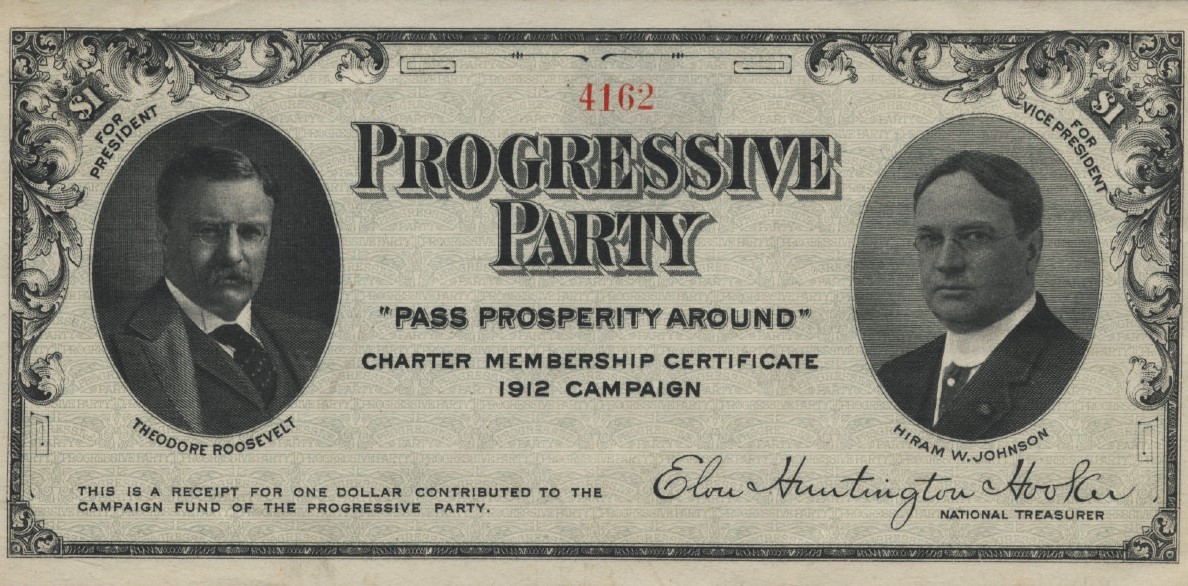
A further influence with the middle class and a very strong one must not be overlooked. Whatever is left of the Protestant religion in both England and America is a middle class affair. Anybody familiar with this class realizes that religion has by no means lost its hold. The climax to a Lloyd George speech in England is usually a denunciation of the aristocratic Episcopal church and an appeal to Sectarian hatred of church establishment. The same political game is being played here and with probably greater success. The Massachusetts delegates on their way to the Bull Moose convention joined in a prayer meeting service in the Pullman car. The convention as a whole sang, “Onward, Christian Soldiers,” “The Battle Hymn of the Republic,” and closed some of its sessions by singing the old Trinitarian doxology. The wide success of the anti-saloon league proves the strength of this element and the Protestant churches are likely to be rallying centers of Progressivism.
THE WORKING CLASS.
In 1867 when Gladstone and Disraeli were the titanic opponents of English politics, Gladstone thought to wrest the government from Disraeli by an extension of the suffrage. But the utterly unscrupulous Disraeli was not to be outdone in that fashion. He flung his “principles” to the winds, proposed a bill much more radical than any Gladstone dared to write and so won the election. “Disraeli stole the Whig’s clothes while the latter was in bathing,” was the terse phrase which then went the rounds in England. And that is what the Bull Moose party has now done to the reform Socialists here. They picked them up clean, too–undershirt, shoestrings and all. Reform Socialist speakers, now stricken naked to the skin, will be seen going to campaign meetings dressed in empty barrels or perhaps in the fig leaves of personal invective against Roosevelt. “I shall be called a Socialist,” said Roosevelt before he made his speech. Not by THE INTERNATIONAL SOCIALIST REVIEW, Teddy.
In the development of a sound Socialist movement the National Progressive party is likely to be of inestimable value. Elements of the middle class which cannot understand Socialism and would turn their backs quickly upon it if they did understand it, will find a safe abiding place in the new party. Labor leaders in the American Federation of Labor who are looking for public office, and who produce nothing but turmoil when they come into the Socialist party, will be speedily won over and given their heart’s desire by the Roosevelt crowd.
The greatest possible danger to the Socialist party, has been that, with its largely increased voting strength, the grafter, the trimmer and the job-hunter would come to it in numbers so great that the fight to keep it clean and straight would be rendered hopeless. Roosevelt, Tim Woodruff and Jimmy Flynn are welcome to this element. Also a certain portion of the craft unionists of the American Federation of Labor are much more closely allied in interest to the new middle class than to the great body of the unskilled workers. These belong at present in the Progressive party and will go there. Not until the conditions of their lives are changed by industrial progress and until they can be reached by sound revolutionary Socialist education will they be ready for the Socialist party.
SOCIAL AND INDUSTRIAL JUSTICE.
Lazarus, feeding hungrily upon the crumbs which fall from his master’s table, finds his body from head to foot broken by blows. Here come again our old acquaintance, the dogs of social reform to lick his wounds. Careful, Lazarus, don’t move, don’t speak, keep your eyes shut, or the dogs will leave you. Industrial insurance to be paid to somebody else after you are dead! Pensions for paupers over seventy when most of the working class die before they are five years of age and nine-tenths, at least, before they are sixty! A wages minimumery law which will make harmless Sunday reading matter for the inmates of a lunatic asylum! Of such is the program of Progressivism.
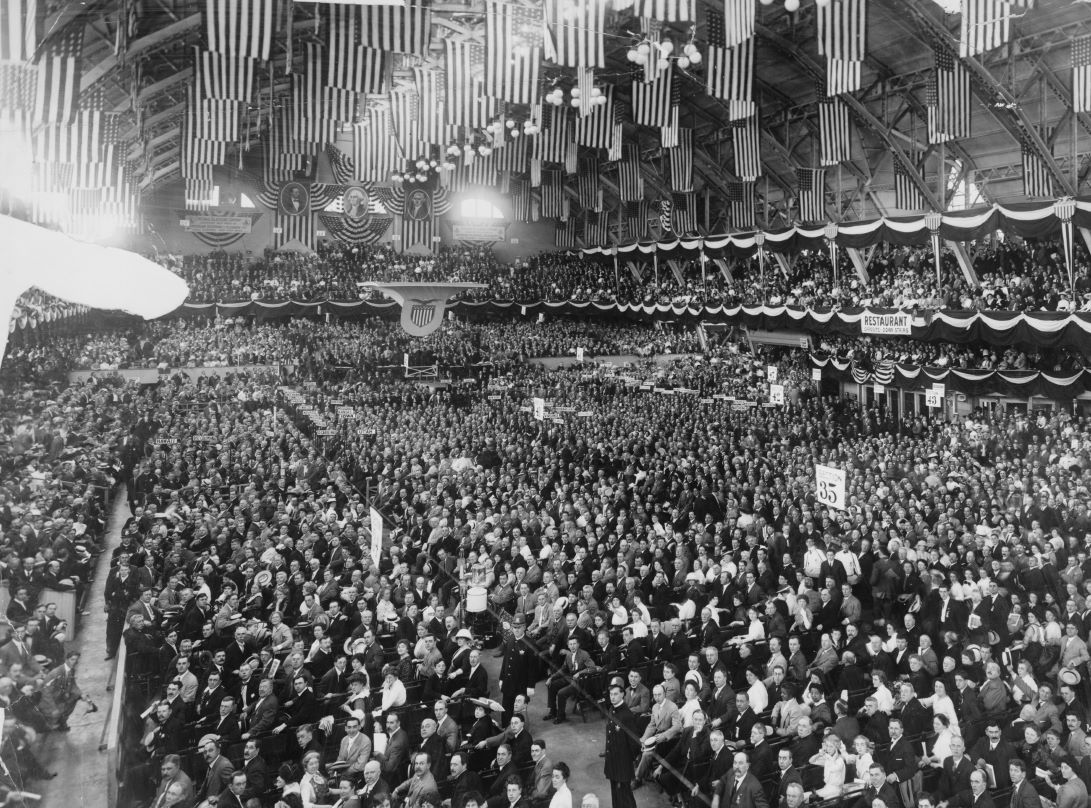
For men like ex-Senator Beveridge, Governor Johnson, Gifford Pinchot and Harry Garfield we have much genuine respect. But their politics are bound to remain nine parts talk and one part a snare and a delusion for the working class.
THE NEW PARTY AND THE SOCIALIST PARTY.
For fifteen years there has raged in the American Socialist movement a battle unceasing. The struggle has not been due to the character of individuals in the movement. It has been everywhere and always a struggle of principles. On one hand were those who declared that the Socialist movement must proceed by means of political reforms—taking a “step at a time,” and emphasizing those reforms, generally to the exclusion of Socialist education. On the other hand are those who maintained that emphasis on reforms should form no part of Socialist propaganda; that it was the business of the Socialist party primarily to awaken the working class and teach economics and political science; and that only by emphasizing with our utmost strength the need of social revolution could the Socialist party be of any benefit to the working class. These latter always maintain that whatever good could be accomplished through national reforms would come through a reform party when the time for that party was fully ripe. Such a party developed on the Continent thirty years ago and in England ten years ago. We have waited long for its arrival in America, but to the student of European and American history as to those familiar with the trend of current events, its coming was as sure as the coming of the tide.
WHY?
The mission of the National Progressive party is to make the final attempt to save the capitalist system from the impending social revolution. In this mission it is bound to fail and to fail utterly. It will honestly strive to carry out its platform. It will actually attain something of what it seeks. It will be one of the main forces in building up the Socialist party which will overthrow it. It must finally be swept as chaff before the rising floods of the social revolution because
It cannot stay industrial progress.
It cannot lower prices.
It cannot raise wages, its wages minimumery notwithstanding.
It cannot furnish enough jobs in time of unemployment.
It cannot prevent the industrial organization of the unskilled workers.
It cannot prevent the capitalists from fighting the strikers.
It must, much more outspokenly than the English Liberal party, take the capitalist side in time of strikes.
In England the Labor Party is the wagging tail of the Liberal Party. During the recent great strike of the London dockers, when thousands of workers and their families were literally starving to death, the “labor” politicians were occupied in waging a campaign in connection with the insurance legislation of the Liberals. To the working class of the whole world and throughout the coming struggle this disgusting conduct of the “Labor” crowd will stand as an example of hopeless political degeneracy. For what do we behold?

Just this: The chief weekly organ of the Liberal Party, The Nation, takes the leaders of the “Labor” Party to task for their desertion of the dockers and urges that they quickly get into the fight and help raise funds for the starving. The Laborites, who for some years have spent their time in trying to appear comfortable in swell clothes and who have simulated the manners and speech of the middle class commoners as well as their political policies, come at last to find themselves ridiculed and spit upon by these same Liberals, and yet the Liberal Party could not have maintained itself in office a week without the acquiescence of the Laborites. This history must be written large before the eyes of our American Socialist Party during the present crisis. We anticipate no Labor Party stumbling and crawling here. The Socialist Party will refuse to ally itself to the National Progressives and it will also with equal firmness refuse to enter into competition with these wholesale distributors of chloroform to the ignorant and slavish portion of the working class. The sham of political reform can be successfully opposed only by exposing the sham, not by greater shamming. Reform Socialists, however, must work with the Rooseveltians or change their tactics completely.
Revolutionary Socialists will fight the new party all along the line because they recognize in that party the most advanced enemy of the ever growing army of the unskilled workers. To its coming partial success and ultimate failure in saving a social system based upon private property we shall not be silent onlookers. This may be their day. Tomorrow belongs to a working class too intelligent for the chloroform bottle and too keen upon realizing industrial freedom to accept the hand-me-down palliatives mis-named “social and industrial justice.”
The International Socialist Review (ISR) was published monthly in Chicago from 1900 until 1918 by Charles H. Kerr and critically loyal to the Socialist Party of America. It is one of the essential publications in U.S. left history. During the editorship of A.M. Simons it was largely theoretical and moderate. In 1908, Charles H. Kerr took over as editor with strong influence from Mary E Marcy. The magazine became the foremost proponent of the SP’s left wing growing to tens of thousands of subscribers. It remained revolutionary in outlook and anti-militarist during World War One. It liberally used photographs and images, with news, theory, arts and organizing in its pages. It articles, reports and essays are an invaluable record of the U.S. class struggle and the development of Marxism in the decades before the Soviet experience. It was closed down in government repression in 1918.
PDF of full issue: https://www.marxists.org/history/usa/pubs/isr/v13n03-sep-1912-ISR-gog-ocr.pdf
 Revolution's Newsstand