
Make a note: After the revolution a school, or a library, or a park, something in Cleveland gets named after comrade Lockwood.
‘Ten Years on the Firing Line’ from The International Socialist Review. Vol. 17 No. 7. January, 1917.
Ten years devoted exclusively to the propaganda of Socialism. This is the remarkable record of Comrade Theodore Lockwood, of Cleveland, Ohio, who is sixty-four years old this month.
Over ten years ago Comrade Lockwood, a machinist by trade, found himself blacklisted by the employers of Cleveland. He had been too active in the Socialist and Labor movement. Whenever he took a job his first effort was to induce his fellow workers to organize. For fifteen years he worked for the Standard Oil Company and the time came when the employing class tagged his as “dangerous” and “undesirable.” Besides, he had lost several fingers from each hand in the unguarded machinery at which he was compelled to work, and this added to his difficulty in securing other employment.
Comrade Robert Bandlow, one of the best loved comrades who ever carried a red card in the State of Ohio, came to his assistance. He suggested that he secure a stock of literature and devote his time to the work of enlightening other workers. Lockwood was without funds and Bandlow loaned him $10.00. The money was returned in three days, and since that time, ten years ago, he has kept steadily at work. From that day to this he never leaves his home without his pack of books and papers.
He worked out routes thruout the city and covers them once a month. On this day it is a railroad yard to be visited, and on the next probably he will be found handing his literature thru the pickets of a high fence surrounding a steel mill. He has worked up a big trade among the office workers down town in the big buildings.
Union meetings are not neglected and many of the men that are now active in the revolutionary movement, secured their first knowledge of Socialism and industrial unionism from this untiring comrade.
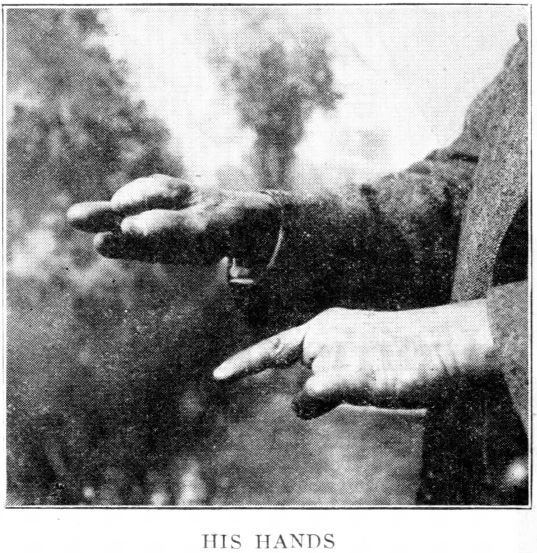
Thru the cooperation of Local Cleveland, Comrade Lockwood has a stand at all of the party meetings, which adds to his sales, altho, even the hardest kind of work brings him only a scanty income. Comrade Lockwood keeps at his work tirelessly and undiscouraged, altho, many a day he has gone without a square meal, and second hand clothing has been his “Sunday best.” He despises charity and has turned down repeated offers of financial assistance from the comrades.
When he lands a steady customer he never lets up on him until he secures the name of a near friend who might be interested. This works like an endless chain. Now and then, he is barred out by the boss, but he has long since solved the problem of how to reach the worker in spite of opposition.
Comrade Lockwood has handled from 200 to 700 copies of the International Socialist Review every month during the past ten years. Or, an average of over 5,000 copies a year.
He has sold as many as 700 Socialist papers in one day on the public square, and has handled thousands of pamphlets and books. A conservative estimate covering the 10 years would be around 360,000 pieces of Socialist literature sold.
If you should ask our comrade how to become successful in this work, he would tell you as follows: First of all one must be posted and able to read character; know the literature you are selling and something interesting about the author; never lose your head in an argument; be patient and reason with your prospective customer, and finally, make your route on schedule time.
When the capitalists of Cleveland blacklisted our comrade they forced him into work thru which more Cleveland workers have been started toward the movement which makes them enemies forever of the system which has the power to blacklist, than thru any other single cause. More power to you, Comrade Lockwood, and on with the revolution!
The International Socialist Review (ISR) was published monthly in Chicago from 1900 until 1918 by Charles H. Kerr and critically loyal to the Socialist Party of America. It is one of the essential publications in U.S. left history. During the editorship of A.M. Simons it was largely theoretical and moderate. In 1908, Charles H. Kerr took over as editor with strong influence from Mary E Marcy. The magazine became the foremost proponent of the SP’s left wing growing to tens of thousands of subscribers. It remained revolutionary in outlook and anti-militarist during World War One. It liberally used photographs and images, with news, theory, arts and organizing in its pages. It articles, reports and essays are an invaluable record of the U.S. class struggle and the development of Marxism in the decades before the Soviet experience. It was closed down in government repression in 1918.
 Revolution's Newsstand