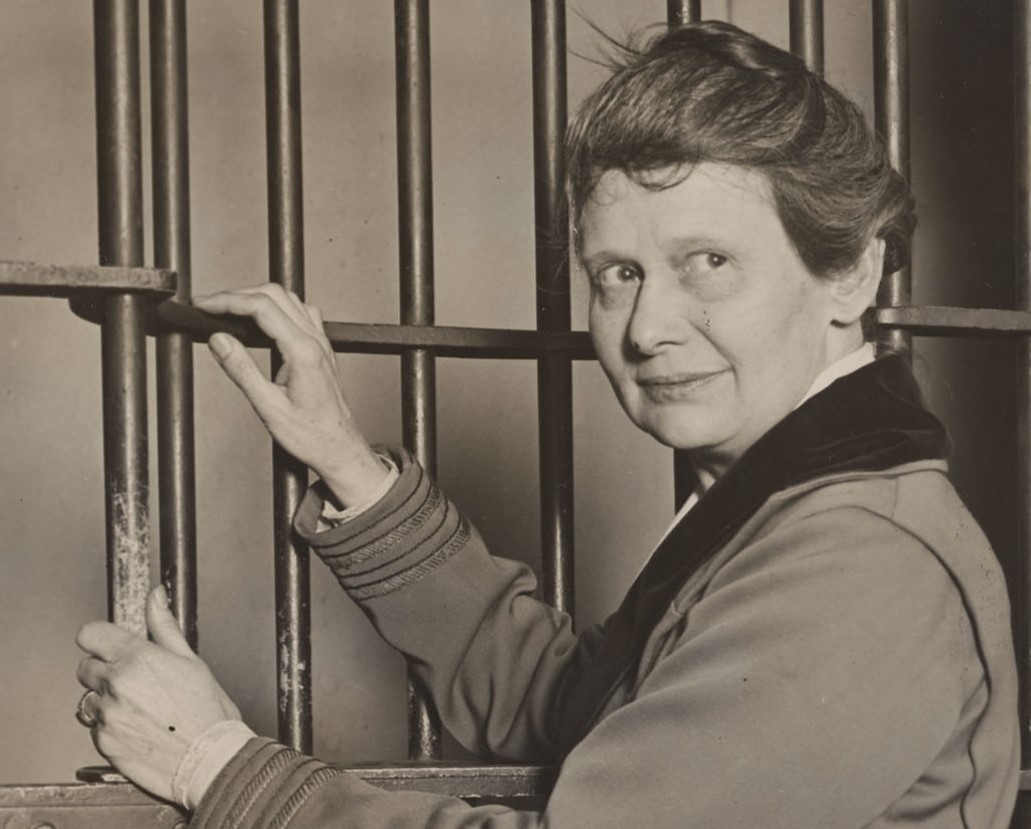
Charlotte Anita Whitney was born into the Bay Area bourgeoisie in 1867 with a Supreme Court Justice in the family. Increasingly radicalized in her life, she joined the Socialist Party at the outbreak of World War One and was a key supporter of persecuted wobblies in California. In 1919 she became a founding member of the Communist Labor Party for which she was California state organizer. Arrested for ‘criminal syndicalism’ in 1919, she was convicted and sentenced to 14 years in prison. The appeals process went to the Supreme Court which took until 1927 to uphold the verdict. Then 60-years-old and a popular activist, Whitney was given an unconditional pardon by the California governor. Continuing her Communist activities, she was a founder of the San Francisco Workers School in 1934, ran for state office a number of times (receiving upwards of 100,000 votes), was arrested again in 1935, and in 1936 became State Chair of the Communist Party of California. Anita Whitney, class traitor, lived a remarkable life and died in 1955 at 87. James H. Dolsen who offers this appreciation, was himself a C.L.P. founder and charged under California’s criminal syndicalism laws in 1919.
‘Charlotte Anita Whitney: An Appreciation’ by James H. Dolsen from the Daily Worker Saturday Supplement. Vol. 2 No. 267. November 21, 1925.
It took the highest legal agency of plutocracy in this country-the United States supreme court a number of years to decide that it had no jurisdiction in the case of Charlotte Anita Whitney. On the other hand whenever a matter involving any curtailment of the rights of exploitation is concerned, such as a child labor law, these black-robed priests of ruling class justice are quick to discern a jurisdiction. “God Knows” Bill Taft, with his pension from the Steel Trust, however, along with the rest of the corporation hirelings who grace the bench, are clever enough to evade an unpopular issue when they can gain their point by a negative decision regarding their power of intervention.

By its action in these matters the supreme court has in effect declared that the guarantees of freedom contained in the federal constitution the bill of rights are restrictions only on the power of congress itself, thus leaving the individual states to restrict such liberty in any measure they see fit. Thus it disposes once more of the fetish that there is any liberty in a capitalist state except that which the exploiters are willing to allow the workers as a vent for their discontent.
Miss Whitney deserves the high regard of all Communists and working class rebels for her attitude during her appeal. She has never flinched a particle from her interest in the cause of labor nor her activities in behalf of the persecuted. Particularly has this been true of her fight for justice to the Wobblies in California–a battle she has never flinched from in the most hectic days of their history in the state of “orange groves and jails.” In California this dementia raged longer than anywhere else in the country. Ambitious, scheming, politicians, utilizing the fact that the I.W.W. had not the slightest interest in politics and would not therefore have the least influence, aside from a group of sympathizing liberals, in such affairs, engaged in wholesale campaigns of intimidation. Of course, they were egged on to this course by the open-shop business interests, in particular by certain officials in the Better American Federation whose job was the capitalization of anti-Red hysteria in order to prove their salaries should be continued by the business groups.
Miss Whitney’s friendship for the victims of the numerous frameups perpetrated by the district attorneys of the state against the Wobblies was well-known thruout the state. The class to which by antecedents she naturally belonged–the old native aristocracy–treated her as an infamous deserter from their ranks. A niece of a United States supreme court justice, the friend and advocate of the lowest and most despised social rebels! It was enough to make them froth at the mouth. What Miss Whitney suffered in those long years no one can realize who has not known what a daily atmosphere of such misunderstandings and hostilities means. Thru it all she has been an inspiration to her friends.
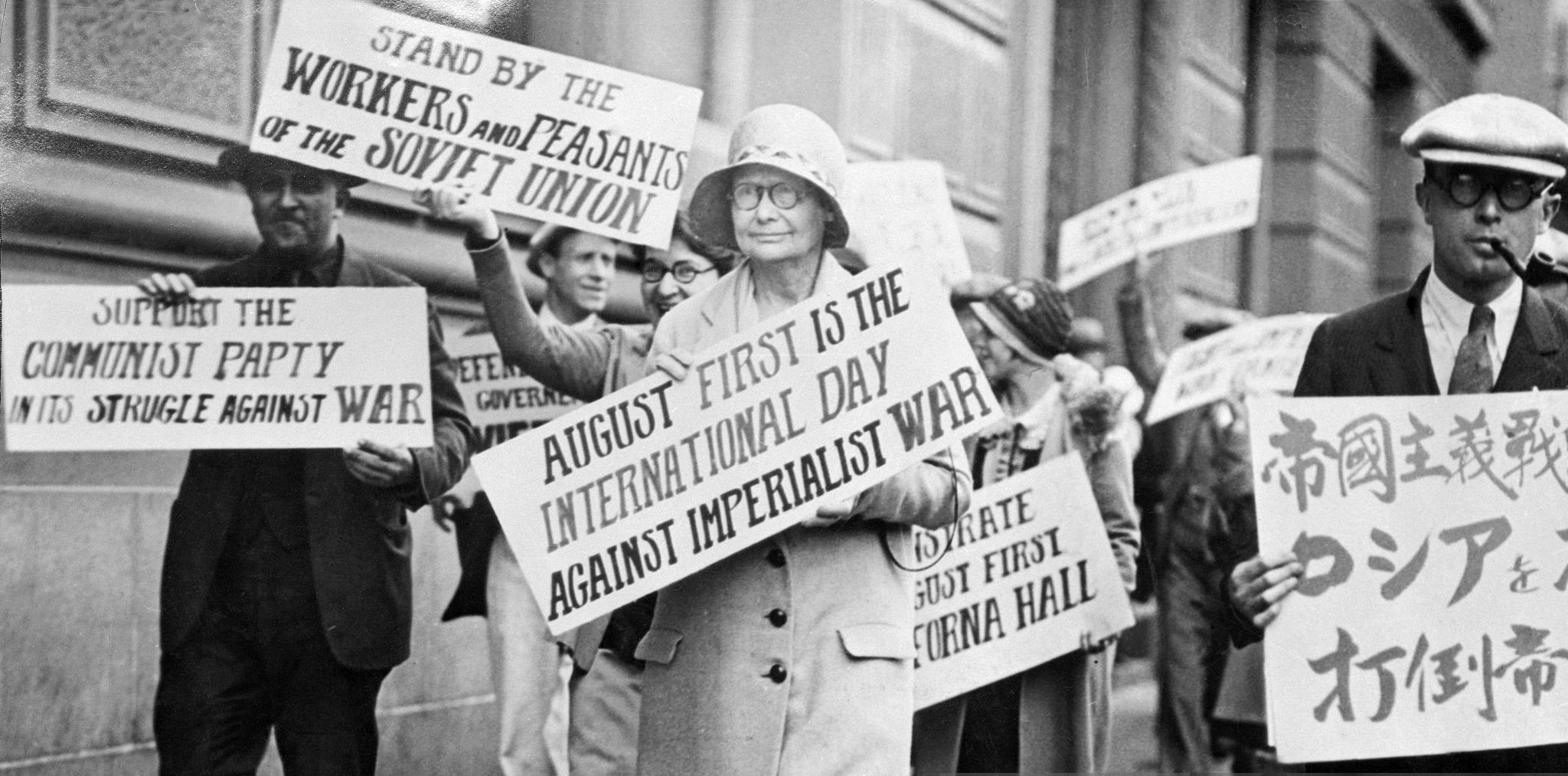
I have known Miss Whitney for about seven years and count her acquaintance as most precious. I would we had a thousand like her in constancy and personal courage, in willingness to face the bitterest social ostracism and the hatred of former associates, in an instinctive desire to stand by the most oppressed and a readiness to subordinate self to the movement, in counting sacrifice for ideals as one of the most worthwhile objects in life.
If she has to go finally to San Quentin penitentiary, the cowardly and sanctimonious politician who sits in the governor’s chair at Sacramento will find that his troubles have just begun. The white light of nation-wide publicity will be focused on the intolerable conditions at the state penitentiary. The nearly-forgotten Wobblies will be heard and the lid will be ripped off the festering mess of pottage which has been long brewing in the state.
The Daily Worker began in 1924 and was published in New York City by the Communist Party US and its predecessor organizations. Among the most long-lasting and important left publications in US history, it had a circulation of 35,000 at its peak. The Daily Worker came from The Ohio Socialist, published by the Left Wing-dominated Socialist Party of Ohio in Cleveland from 1917 to November 1919, when it became became The Toiler, paper of the Communist Labor Party. In December 1921 the above-ground Workers Party of America merged the Toiler with the paper Workers Council to found The Worker, which became The Daily Worker beginning January 13, 1924.
PDF of full issue: https://www.marxists.org/history/usa/pubs/dailyworker/1925/1925-ny/v02b-n267-supplement-nov-21-1925-DW-LOC.pdf
 Revolution's Newsstand