
George Padmore responds to the Italian and German fascists’ claim of ‘over-population’ justifying their colonial campaign in Africa.
‘Hitler, Mussolini and Africa’ by George Padmore from The Crisis. Vol. 44 No. 9. September, 1937.
THE Italo-Ethiopian War and the demand of Hitler for the return of the former German colonies in Africa has served to focus attention on the question of the “Haves” and “Have Nots” more than at any other time since the Versailles settlement. For as long as Germany was weak and disarmed, the Allied Powers were able to ignore her colonial demands which Stresemann had raised as early as 1926 at the time of Germany’s entry into the League of Nations. But with Hitler’s repudiation of the Treaty of Versailles and the revival of Germany as a great military power, her colonial demands can no longer be ignored.
It is no exaggeration to say that there never was a period in the history of post-war Europe when the issue of peace or war has been so inseparably bound up with the scramble for colonies in Africa as at the present time.
Not without reason, Lord Salisbury once declared that “Africa has been created to plague Ministers of Foreign Affairs.” There is much truth in this, for in the epoch of Imperialism the Colonial Question represents the most important problem for industrialised nations. And precisely for this reason, we find Germany, Italy and Japan, great powers with few or no colonies, demanding a redivision of the world at the expense of England and France, the two powers with the most extensive colonial empires; as well as the Soviet Union, which covers one-sixth of the earth’s surface.
The first-named states are sometimes referred to as the “Have-Nots,” while the latter powers are considered the “Haves.”
With the reopening of the colonial question, Africa is once more being used as a pawn in the European diplomatic game, and as such will undoubtedly influence the new alliances and alignments among the great powers, as she did during the decade prior to the World war. The African problem (Abyssinia) has already given rise to serious political repercussion, unleashing the forces of revolution and counter-revolution in Spain, which in turn has intensified class conflicts on the one hand and imperialist antagonisms on the other, all of which are accelerating the danger of another World War.
Colonies and War
These political events, especially the Abyssinian crisis, have forced large sections of public opinion in Europe and America to realise for the first time the close relationship which the colonial question bears to modern wars. There is no international issue apart from the Versailles settlement which has such propaganda value as the colonial question, with its appeal to “national prestige” and “honour,” and in this way everything is being done to arouse in the German and Italian peoples the most reactionary, chauvinistic and militaristic sentiments.
Commenting upon the question “Colonies and Peace,” the Daily Herald, the mouthpiece of the British Labour Party writes: “What is the colonial problem? Is it economic, or is it psychological?” And goes on to say, “Primarily it is not a question of trade, it is a question of prestige, of status. The dangerous tensions are not economic, but psychological. The origin of impending trouble is a sense of inferiority.” While there is much truth in this, the fact nevertheless remains that the chief reason for colonies is economic. Capitalists ceaselessly pursue profit and interest. They are more concerned with these concrete assets which colonies represent than such abstract ideas as “prestige.” Germany, Italy and Japan need markets, sources of raw materials and spheres for capital investment.
“Italy will not resign herself to the abused commonplace that she is poor in raw materials. It must be said instead that she does not possess certain raw materials. This is a fundamental reason for her colonial demands,”
thundered Mussolini to the Second National Assembly of Corporations on March 23, 1936. The satisfaction of these economic needs dictates the foreign policy of the Fascist-Imperialists of these countries.
These needs, however, are nothing new. They existed before the World War and arise in the life of every capitalist nation at a particular stage of its industrial development–the stage of imperialism. “The desire to acquire markets and to possess new lands rich in natural resources…was also one of the compelling motives of national policy in the case of certain of the great powers of Europe in the closing quarter of the nineteenth century, and in fact, to the very eve of the World War itself.”
Expanding Populations
The only new claim which the Fascist dictators have put forward as an additional justification for colonial expansion is the need to find space for their “surplus” populations. And strange to say, it is precisely this question of “overpopulation” for which the dictators are themselves largely responsible.
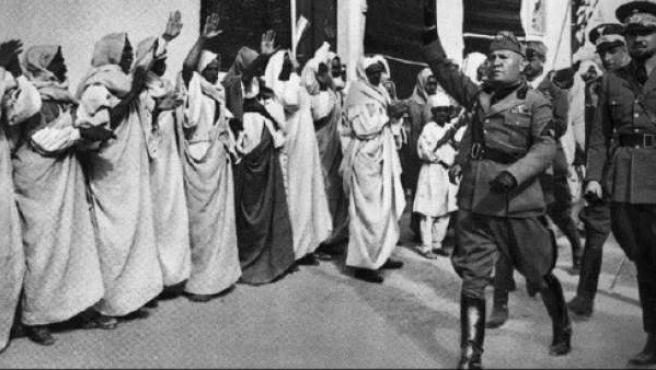
Mussolini and Hitler have encouraged the increase of population by every possible means. They have taxed bachelors, offered premiums for large families, and organized mass marriages. The only thing they have not yet done is to nationalise the Italian and German women. This artificial stimulation of population has naturally intensified the problem of unemployment, which every capitalist nation, especially in its period of decline, is permanently confronted with. Therefore, it is sheer humbug on the part of the dictators to be exploiting the question of “over-population” as a means of furthering the economic-imperialist aims of the bourgeoisie. However, because of the dangers involved in this demand for suitable territories for colonization, the issue has to be faced. “For,” says Mussolini, “we are hungry for land because we are prolific and intend to remain so.” While Alfred Rosenburg, the Nazi racial theoretician and Director of the Foreign Affairs Bureau of the Nazi Party, declares: “Germany demands the right to expand in order to procure sufficient territory for its future 150 million inhabitants. In this great battle for existence of the future-the struggle for honour, freedom and bread people must be forced eastwards, in order to free the territory for German there be the possibility for the German peasants to cultivate. Only thus can people to breathe again.”
Italian Philosophy
Let us examine the so-called “over-population” problem as it is supposed to exist in Italy, before dealing with the economic aspects of the colonial question.
Italy is a country of 121,000 square miles, poor in mineral and agricultural resources, called upon to maintain a population of 42 millions, which increases at the rate of about half a million a year.
Prior to the introduction of rigid immigration restrictions in 1924, about 400,000 Italian workers and peasants went to the U.S.A. annually. Since then, emigration has fallen off considerably, although France and her North African colonies–Tunis and Algeria–as well as Brazil, Argentina and other Latin American republics ab- sorbed several millions until the world economic blizzard burst over those countries.
Today, this safety valve of immigration is more or less definitely closed, and as the years go by unemployment and starvation will increase in Italy. Such a situation will naturally lead to social unrest, which might have the effect of endangering the Fascist regime. So Mussolini resorted to war against Abyssinia in order to distract the attention of the Italian workers from their misery. And now that the Abyssinians have been conquered, the dictator believes that he can solve “over-population,” that is, unemployment, in that country, despite the fact that Italian colonization in Libya, Eritrea and Somaliland has been a complete failure. What are the facts?
Not more than 25,000 Italians, including some of the very poorest Sicilian peasants, have settled in Libya, which is three times the size of Italy. The truth is that there are six times more Italians living in the French territories of Tunis and Algeria than in all the Italian colonies in Africa. Why is this so? Because, unlike the French North African possessions, the Italian colonies are backward. They are backward precisely because Italy is poor and cannot afford the necessary capital to turn these desert areas into lands suitable for white colonization.
But apart from the poverty of Libya, tropical colonies as a rule offer very few economic opportunities to Europeans as settlers, except people with large amounts of capital, such as the Britons in Kenya, who are drawn from the upper classes–retired colonial officials and ex-army officers. And even they are largely subsidized by grants-in-aid from the British treasury and Kenya government in the form of agricultural bank loans which are saddled upon the native taxpayers. Then there is another problem: that of climate. In this respect, Africa of all continents is the least suitable for white colonization, except in the extreme south (the Union) and north (Tunis, Algeria, Morocco) and the highlands of Kenya and Kilamanjaro. But even in these areas fertile land is limited, and then, the whites are entirely dependent upon black labour.
Colonization Costly
Italian emigrants, unlike the British in Africa, would be drawn from among the poorest of the poor-unemployed workers and land-hungry peasants. Then apart from this, the Italian government has no capital with which to subsidize them. Until recent years the Italian government gave an annual subsidy of 23,000,000 lire to Eritrea, and 42,000,000 lire to Somaliland, but has had to abandon colonization precisely because it was too costly. Even if Mussolini succeeded in borrowing money from bankers in Paris, London or New York to finance his colonization scheme in Abyssinia, he would have to guarantee these countries an “open door” policy in his East Africa “Empire.” But this would deprive the Italian capitalists of monopoly. For the only way by which they can compete against their more powerful European, American and Japanese rivals is by pursuing a policy of economic nationalism carried out behind a protective tariff wall and currency manipulation. Mussolini has already instituted such a policy by expelling the well-known British-Indian firm of Mohammed Ali from Abyssinia.
History has shown that no people have ever voluntarily migrated from a country where they enjoyed a higher standard of living to one which offered not only less social and economic opportunities but greater hardship and misery. And this, by the way, has nothing to do with race; it is a question of cultural standards. The Japanese, for example, have had to face the same problem as many European peoples. For years Japan has had control over large colonial possessions in close proximity to the motherland. Nevertheless, the Japanese workers and peasants, whose conditions of life are not very high, judged by Western standards, have not availed themselves in any large numbers of the possibilities of settling in these territories, for the very simple reason that, as bad as their conditions are at home, they are still higher than those of the Koreans, Manchurians and Chinese, with whom they could never hope to compete. It is precisely for this reason that European immigrants, including Italians, Poles and Balkans peoples, whose standards are among the lowest in Europe, have never gone to Africa and Asia. They have always migrated to the Americas-Brazil, Argentine and especially the United States -as well as the more industrialized European countries where they could hope to find employment and better their economic and social conditions. Even the British Dominions offer few inducements to English workers, much less the African colonies.
Let Mussolini proceed. The Italian masses will soon discover that they have been duped. For regardless of the lip service which capitalists, be they Fascist or non-Fascist, give to racial solidarity and national patriotism, they are all after the same goal–super- profits. And this can only be obtained by exploiting the cheapest labour possible. In Abyssinia, the cheapest labour will be black and not white. This fact is so commonplace that it is hardly necessary to emphasise the point that Italian workers will be at a disadvantage in selling their labour power in Africa.
Competition with Native Labor
For example, take South Africa, where the proletariat is composed of two races: European and African. And what do we find? Things have gone so badly for the white workers that the government has had to resort to Colour Bar Acts and other forms of discriminatory racial legislation in order to safeguard their interests. But even these measures have not solved the problem, for since the overwhelming majority of European workers are unable to find protection within the Colour Bar scheme, they are forced to compete with the natives, with the result that South Africa has one of the biggest social problems on its hands–the “poor white” class.
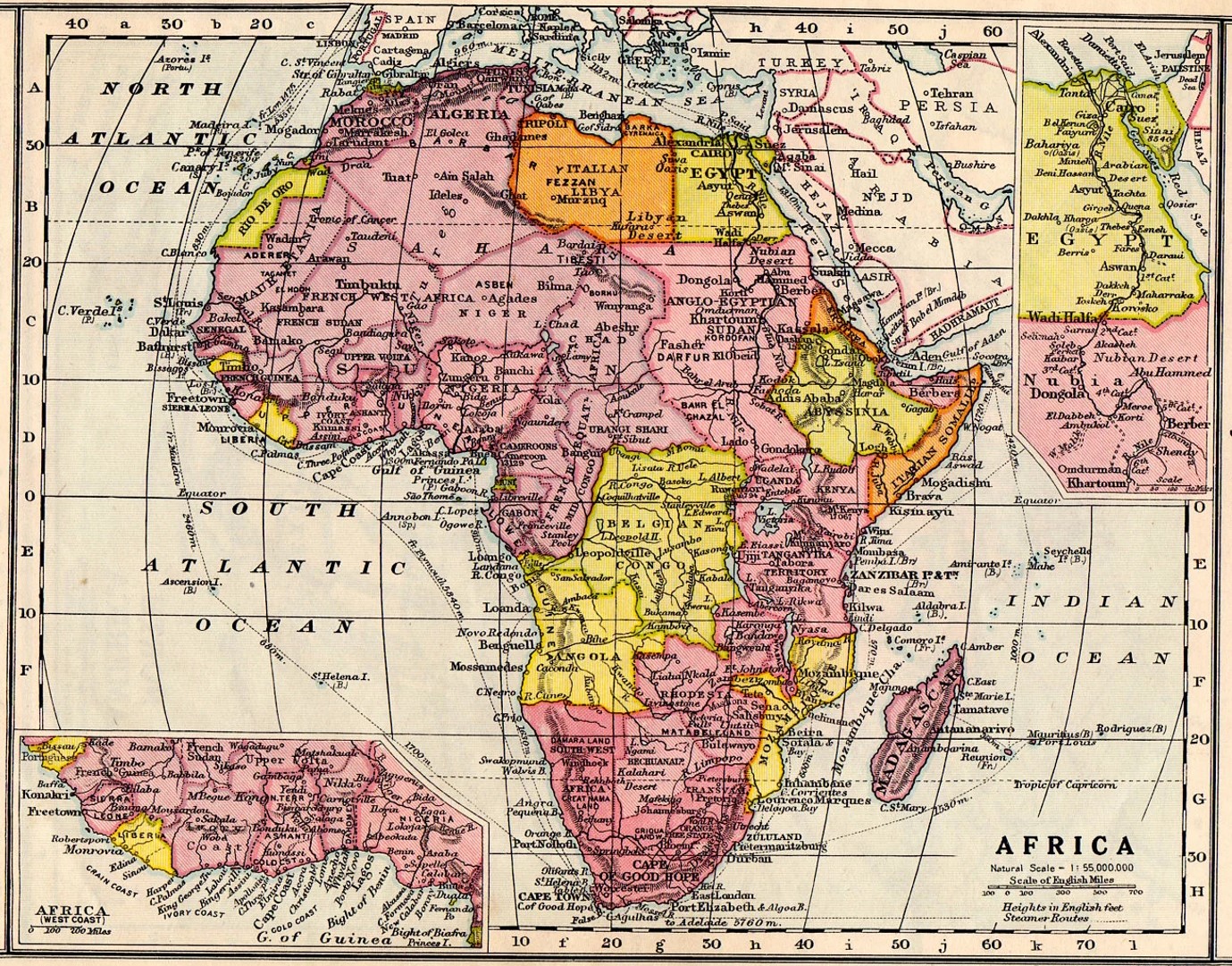
While it is true that the standard of life of Italian workers is among the lowest in Europe, nevertheless it is still much higher than that of the Abyssinian serfs, and when considered in relation to the climatic conditions under which they will have to live, theirs would be hopeless lot indeed. Furthermore, in a world of surplus stocks of raw materials, Abyssinian products would have to be produced by the lowest paid labour in order to compete on the world market. Under such conditions what chances could Italian immigrants in Africa have against indigenous labour?
The same applies to the Germans to an even greater extent, since they are accustomed to a much higher standard of living than the Italians. And precisely for this very reason, when Germany was a great colonial power, there were only 18,000 Germans, including Canada and Australia traders, civil and military officials, gentlemen farmers, in all her African possessions. The truth of the matter is that there were more Germans gainfully employed in Paris on the eve of the war than in all the oversea German territories.
Africa was, and still is, no place for German colonists, except the privileged few with sufficient capital to guarantee them the status of employers. Even Hitler seems to realise this, for while stressing the need of colonies sources for raw materials, markets and outlets for capital, he has always emphasised the fact that when he talks of new lands as the future home for German peasants he means the Soviet Ukraine.
Professor Sir Arthur Salter, of Oxford university, supports our contention that Africa is unsuitable for European colonisation. He says:
“I think it is well to say as emphatic ally as possible that as a contribution to the surplus population of the world by immigration, colonies offer just nothing at all…Whatever Japan does in regard to Manchuria in ten years’ time, there won’t be as many Japanese in Manchuria as the increase of Japanese population over six months. If Italy conquered the whole of Abyssinia and planted settlers there as hard as ever she could in ten years’ time she would not have dealt with the increase of population of Italy in two months. If you take central tropical Africa, all the Europeans in all the colonies established in the course of more than a quarter of a century, do not amount to as much as the increase of the Italian population in a year. There is no such thing as a surplus population anywhere except one that is relative to and caused by the economic system.”
We wholeheartedly agree with the learned professor that “there is no such thing as a surplus population,” for the U.S.S.R., a country with 175 millions population and an even more rapidly increasing birth rate than that of Italy and Germany, is not only able to accommodate its population, but is continually raising the standard of life of the people; while that of the German and Italian workers goes from bad to worse. There is no mystery about this. It simply proves the superiority of the Socialist economic system over capitalism. The Soviets have solved “over-population” to such an extent that they are fighting hard to give their people more bread; while the Fascists want war because they cannot provide any bread for theirs.
Assuming for the sake of argument that their exists a legitimate demand on the part of Italy and Germany for territories on which to settle their “surplus” populations, it seems to us that Canada and Australia offer by far more suitable conditions for European emigrants than Africa. Quite true, the Dominions also have their unemployment problems, but so have the African colonies. None the less, these white men’s lands, thanks to the tremendous areas which they cover, on the one hand, and their small populations on the other hand, should certainly be thrown open to Germans and Italians, especially since they debar non-Europeans. Would this not be a worthy gesture in the cause of world peace?
So much for the population issue. In our next article we shall discuss the more important reasons why Germany, Italy and Japan are demanding a redivision of the colonial world.
The Crisis A Record of the Darker Races was founded by W. E. B. Du Bois in 1910 as the magazine of the newly formed National Association for the Advancement of Colored People. By the end of the decade circulation had reached 100,000. The Crisis’s hosted writers such as William Stanley Braithwaite, Charles Chesnutt, Countee Cullen, Alice Dunbar-Nelson, Angelina W. Grimke, Langston Hughes, Georgia Douglas Johnson, James Weldon Johnson, Alain Locke, Arthur Schomburg, Jean Toomer, and Walter White.
PDF of full issue: https://archive.org/download/sim_crisis_1937-09_44_9/sim_crisis_1937-09_44_9.pdf
 Revolution's Newsstand