Annual report on the work the Socialist Party’s National Women’s Committee, in 1913 consisting of May Wood-Simons, Reporter. Meta Berger, Winnie Bransetter, Grace Brewer, Ella Carr, Lena M. Lewis, and Luella Twining.
‘Report of the Socialist Party National Women’s Committee’ from the Progressive Woman. Vol. 7 No. 72-73. June-July, 1913.
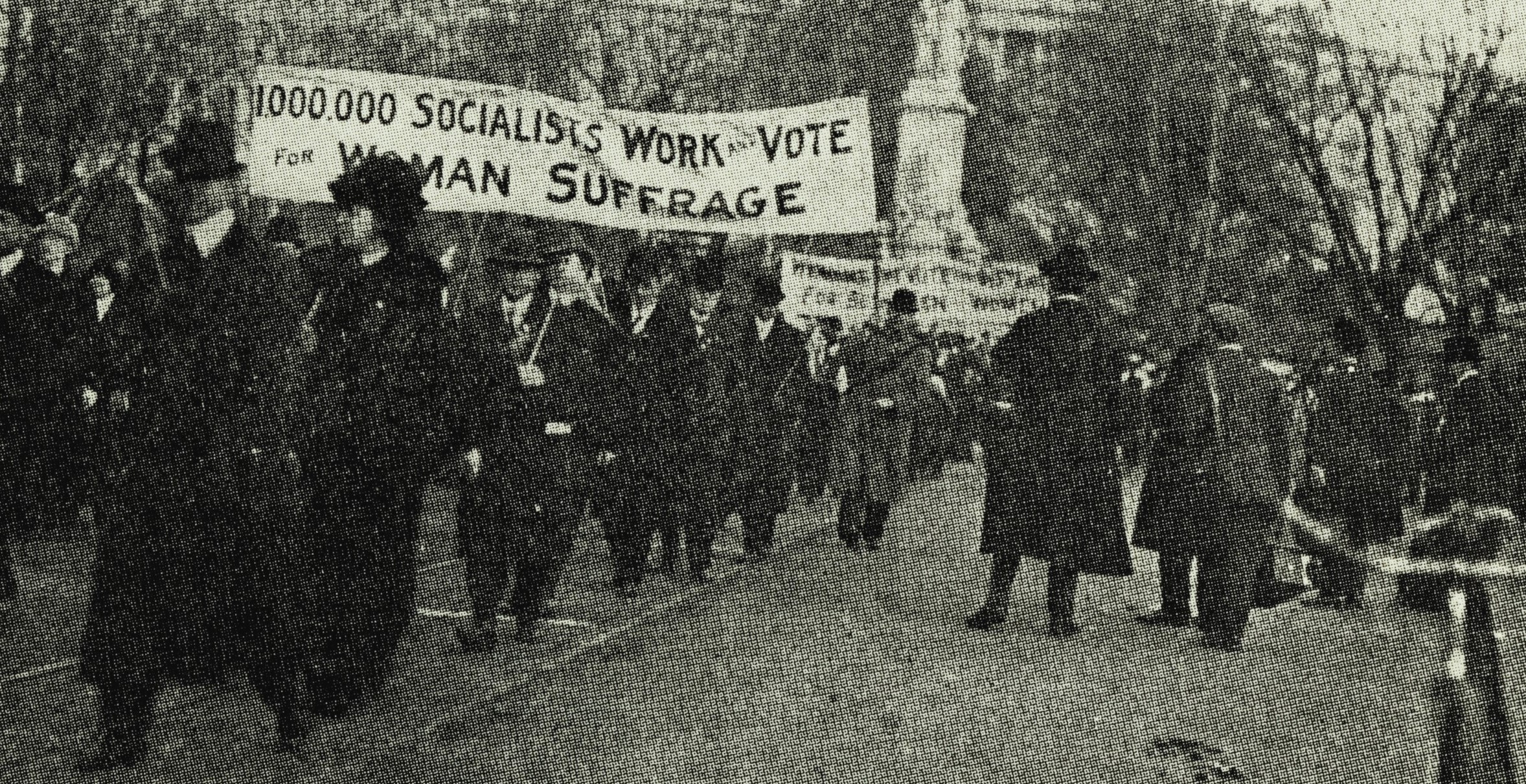
Woman Suffrage.
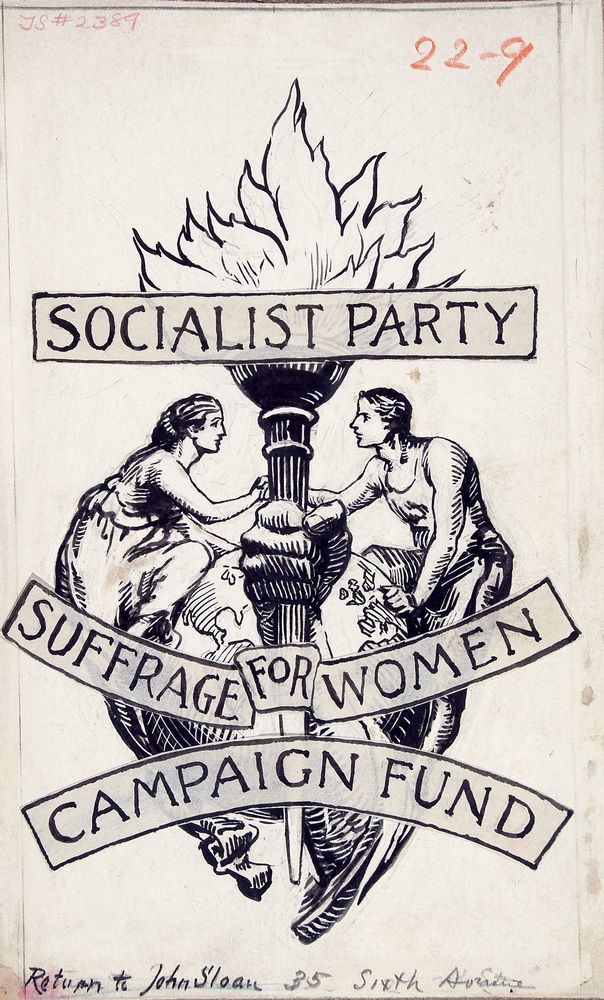
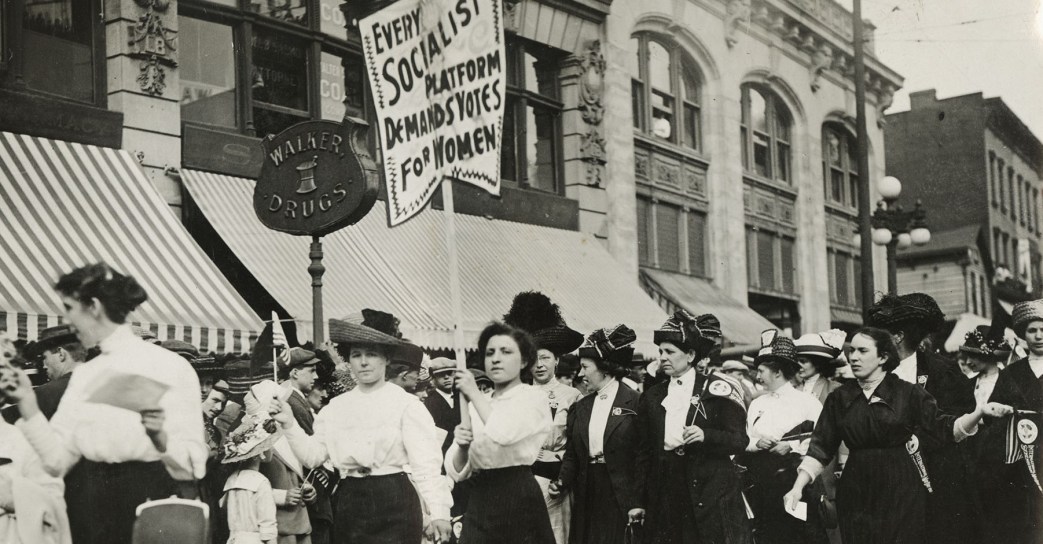
During the past year the number of states granting full suffrage to women has been increased to nine. The women voters in these states are now a force sought by the capitalist politicians. Within the past year a party polling the second largest vote in the country has declared for woman suffrage and secured thereby the support of large numbers of women. The National Socialist Woman’s Committee recommends that in every state where the suffrage does not yet exist the Socialist party make a determined effort to secure the vote for women, introducing bills to that effect wherever Socialist state legislators have been elected, and taking the necessary steps to bring it before the people for a vote in states where the initiative and referendum exists. That the position of the Socialist party as the largest world organization working for woman suffrage be made clear at all Socialist meetings.
Second: The enfranchising of a large number of women unacquainted with Socialism means that the educational work among women must be carried on with even greater energy that heretofore. This education should be along the lines of the economic class struggle, bringing clearly to women who are not yet even in economic organizations the reasons why they should vote the Socialist ticket.
Third: We recommend that the women of the party bring this question more carefully to the attention of the men of the party, and invite and utilize the assistance of the men comrades in all suffrage meetings and propaganda.
Work Among Women Engaged in the Industries.
The need of women for remunerative employment and the demand of employers for cheap labor has brought over 5,000,000 women into wage-earning positions in the United States. Seven per cent of the women in trades are in economic organizations. The National Socialist Woman’s Committee recommends that the women of the Socialist party, wherever engaged in any trade, unite with the economic organization of their trade, that they assist women when engaged with their employers in an economic struggle, and that they lend their help in securing legislation on all questions bettering the conditions of women in industry.
To this end we recommend that in every industrial city the Socialists elect a committee, not necessarily of women, who shall attend to the systematic distribution of literature, acquaint itself with all questions affecting the women in the industries of their city, and that a report of their work be sent yearly to the National Woman’s Correspondent, to be used as reference material for other cities.
Agitation and Organization Among Farmers’ Wives.
There are in the United States over six million wives of farmers that may be classed with the propertyless wage-earners. In nine states of the West these farmers’ wives are now voters.
To reach these women, the National Woman’s Committee recommends that in each state a system of schoolhouse meetings be held. This plan has been used with marked success in the state of Kansas, where the organizer is passed on from school district to school district, arranging meetings in the school houses, organizing locals, reaching the farmer’s whole family, and within a brief period going back over the same route to make her work more permanent.
Such organizers should have made an especial study of farm conditions, and the literature for distribution should have special reference to the industrial conditions as affecting the farm industry, with the broader emphasis on the necessity for the united action of the agricultural and industrial workers.
Women Organizers.
The committee recommends that wherever possible the women organizers be so routed that they may stay at least two days in each place, and that, if feasible, they be rerouted at a later time over the same road, so that they may instruct and help the women in getting the educational work among women started.
Woman’s Day.
Woman’s Day was originally a day celebrated only in the United States. At the Woman’s Conference at Copenhagen the women of Europe voted to hold a special woman’s day. Since it has seemed advisable to the Socialist women of Europe to hold this special day on March 19, the National Woman’s Committee recommends that that day be also the one set for Woman’s Day in the United States. It also recommends that the day be used as a special agitation day for woman’s suffrage and for the securing of women members for the party.
The election of the Woman’s National Committee and the establishment of a Woman’s Department in the National Office was based upon a realization that the rapidly increasing number of women in the industries would result in her becoming a political factor. National developments during the past year not only justify the Socialist party in its efforts to reach these potential voters, but make the continuance of special propaganda and organization work among women imperative.
General Result of Work, 1912-1913.
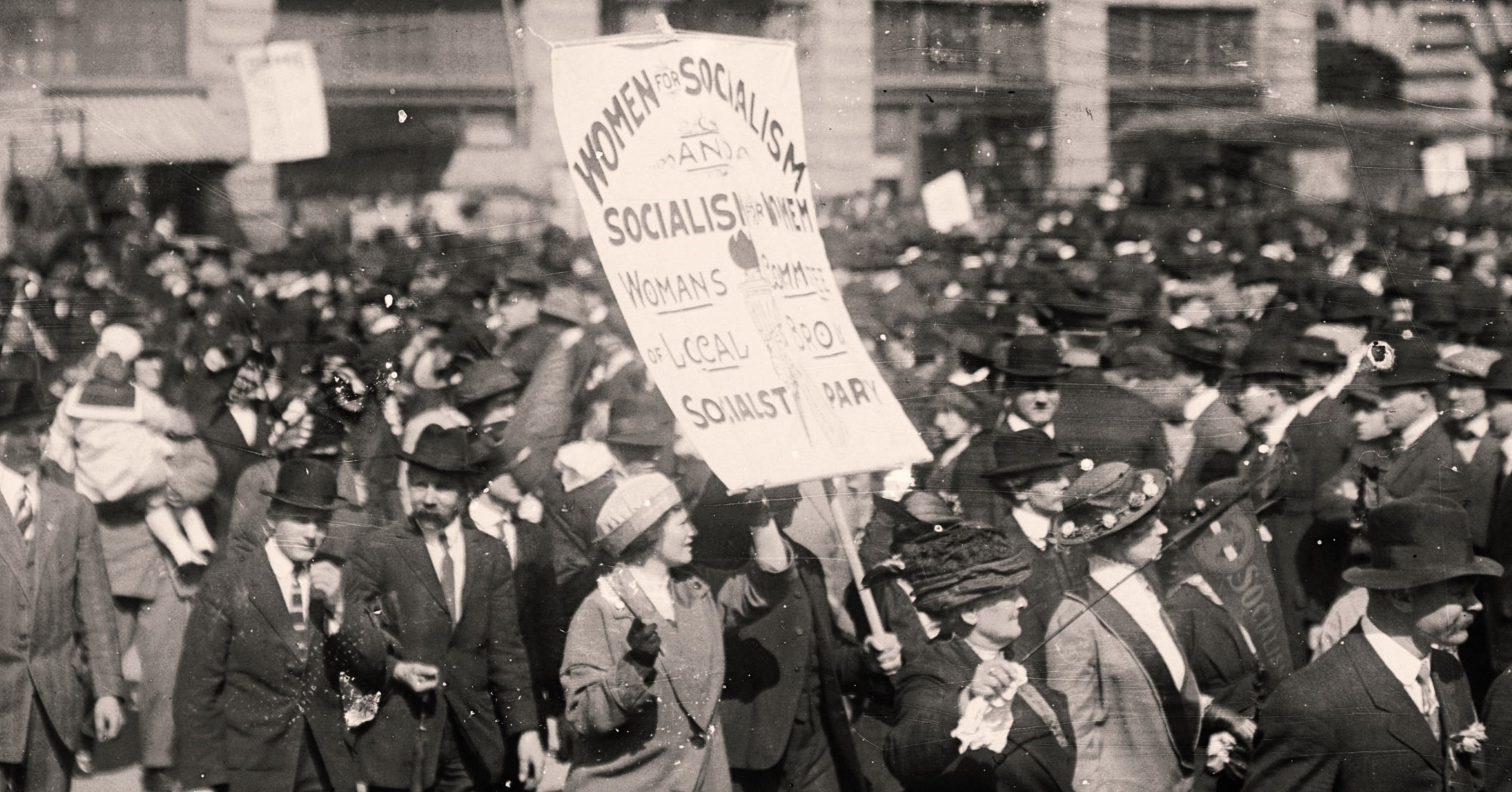
The past year witnesses a remarkable increase in the membership of women in the Socialist party, and a greatly increased effectiveness of our work. Last year the Woman’s National Committee reported a ten per cent woman membership. This report was based upon reports made by thirty-five scattered locals. This year we have a fifteen per cent woman membership, based upon complete reports made by twenty- two state secretaries. Thirty-five states have now adopted our Plan of Work Among Women, having elected state correspondents to carry out these plans. Separate organizations for women are not almost unknown, the entire work being carried on directly under the auspices of the local through woman’s propaganda committees The majority of these committees do not have: separate treasury, receipts and expenses being handled by the local treasurer.
Detailed personal correspondence relative to our work has been established between this department and 1,200 women. We are in close touch with practically all state officials and many local secretaries. Sixty-eight thousand eight hundred and fifty-five circular letters have been issued from this department, urging some phase of organization or propaganda work. We have a mailing list of 4,763 names.
Organizers.
Semi-conscious of their industrial and political responsibilities, women are eager for the message of Socialism. The demand for capable woman speakers has been very much greater than we can supply. Classes for the training of local workers to meet this demand are being organized in the larger cities, and should receive the support of national and state organizations.
in Indiana, Minnesota, Arizona, Kansas, Ohio, six woman organizers have done special work California and Michigan. In addition to this work, all available women speakers have been used continuously by the campaign committee and by the Lyceum Bureau.
Literature.
Caught in the world-wide movement for universal suffrage, women of all nationalities are taking the first steps toward naturalization. During the next year a woman’s naturalization leaflet will probably be issued from the National Office.
During the past year our leaflets for women have been revised and reprinted in a uniform, four-page style. Those out of date have been dropped, and new ones published until we now have in stock twenty-two special leaflets for women treating of conditions in practically every phase of industrial life.
Our Book Catalogue contains nineteen special books and pamphlets for women and thirteen compilations suitable for entertainments.
One million five hundred and twenty thousand eight hundred and seventy-four special woman’s leaflets have been sold. In addition to this 3,662 special woman’s books have been sold, ranging in price from five cents to $2.50.
Press.
The National Office Propaganda Press Service has made it possible for us to supply the labor and Socialist press with special press articles written by our foremost men and women. Forty- three special woman’s articles have been sent out by us and have reached approximately three hundred publications with 3,000,000 readers.
Many special editions of Socialist and labor papers have been published. The last week in February it would be fair to say that at least one- half of the Socialist press was devoted to a discussion of universal suffrage or some phase of woman’s struggle for freedom. Copy for special press articles relative to woman’s activity in the Socialist party has been sent out to several national and international publications upon the re- quest of the editors or contributors.
The Progressive Woman is a Socialist monthly publication for women of exceptional organization and propaganda value. While it is not the official organ of the Woman’s National Committee, it has at all times received the indorsement and support of the Woman’s National Committee. During the past year $200 cash was donated from the party treasury. The party membership has been circularized from time to time urging the sale of stock, purchase of subscription cards and bundle orders, 30,424 circular letters having been sent from the Woman’s Department. Over $500 worth of stock has been sold in a proposed stock company.
(Address, Progressive Woman Publishing Co., 5445 Drexel Ave., Chicago.)
The Socialist Woman was a monthly magazine edited by Josephine Conger-Kaneko from 1907 with this aim: “The Socialist Woman exists for the sole purpose of bringing women into touch with the Socialist idea. We intend to make this paper a forum for the discussion of problems that lie closest to women’s lives, from the Socialist standpoint”. In 1908, Conger-Kaneko and her husband Japanese socialist Kiichi Kaneko moved to Girard, Kansas home of Appeal to Reason, which would print Socialist Woman. In 1909 it was renamed The Progressive Woman, and The Coming Nation in 1913. Its contributors included Socialist Party activist Kate Richards O’Hare, Alice Stone Blackwell, Eugene V. Debs, Ella Wheeler Wilcox, and others. A treat of the journal was the For Kiddies in Socialist Homes column by Elizabeth Vincent.The Progressive Woman lasted until 1916.
PDF of full issue: https://www.marxists.org/history/usa/pubs/socialist-woman/130600-progressivewoman-v7w72+73.pdf
 Revolution's Newsstand