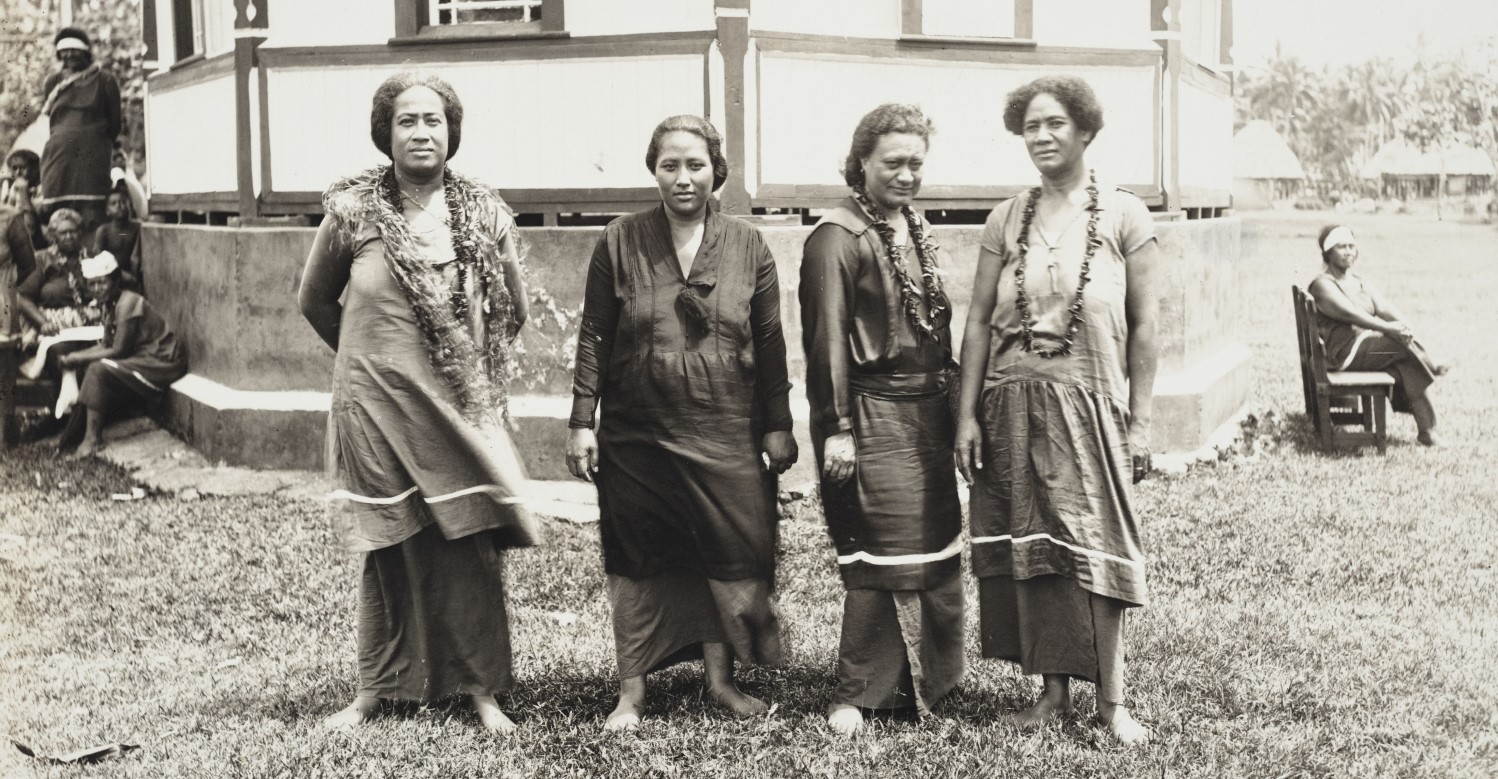
A report on the Mau movement for Samoan independence from New Zealand in the aftermath of the December 29, 1929 ‘Black Saturday’ massacre.
‘Samoa for Samoans’ by G. Kirkpatrick from The Pan-Pacific Monthly (San Francisco). No. 37. June-July, 1930.
WITH a determination which is magnificent when one considers the forces arrayed against them, the Samoan people are carrying on their struggle against British-New Zealand imperialism.
Their national political organization, the Mau, still stands intact notwithstanding the policy of extermination carried out by the New Zealand Administration during the weeks following Christmas of last year.
When asked what the Mau is, the Samoans simply say: “The Mau is Samoa.” It is that organization thrown up on the basis of their primitive communal relationships to give centralized expression to their struggle against imperialism, and for the restoration of certain privileges and customs that have been taken from them.
Far from being cowed by the insensate fury of the New Zealand Administration, the Samoans have to date defeated the main. mission of New Zealand’s expeditionary force, viz., to liquidate the Mau.
OPPRESSION INTENSIFIED
The open and naked use of force having failed to repress the Mau, the Administration is intensifying its policy of fining and jailing. Recently four Samoan chiefs were brought before the Court at Apia and sentenced to seventeen months on each of two charges. The charges were (1) for threatening to kill a witness in a case involving the Mau; and (2) for “conspiring to defeat the course of justice” (i.e., imperialism).
On the first charge it was alleged against the chiefs that they had sent a letter to a witness threatening to kill him if he gave evidence. Parts of the letter are couched in the following terms:
“If by any words which you may say in the Court case detrimental to the honor and sacredness of the Mau of Western Samoa or the country–
“It will be upon you, together with any others who may do the abovementioned things, the punishment from the largest portion of Western Samoa–that is, put an end to your lives; this is in conjunction with the previous punishment now still in existence. You are both no longer recognized as Samoans, because you both, together with others who have been treated likewise, are the people who have betrayed the country.
“And another matter, you are both to realize this thing: The arm of Samoa is very long, thus enabling it to put its hands on both of you, regardless wherever you may be in refuge in any corner of the world.”
The special attention that “justice” is paying to the chiefs is a definite attempt to behead the Mau. The fact that chiefs lead the Mau is not necessarily evidence of “bourgeois” differentiation within the Mau, but is the necessary and logical outcome of the primitive nature of Samoan society.
The fact that the above letter was sent by the Mau chiefs to Samoan witnesses against the Mau, brings us to another aspect of imperialist policy: that of the old, old method of “divide and conquer.”
When imperialism fastens on any country it seeks for allies and tools within that country, and Samoa, small and all as it is, has supplied its quota. In this instance, they have come to light in the planting and trading elements and timid, degenerate scab elements (called “loyalists” by the Administration) amongst the Samoans themselves.
PETTY TRADERS WITHDRAW
In the early stages of the Mau the trading and planting element were united with the Samoans in the struggle. But here again Samoa reproduced in miniature the distinctions which have become a classical feature of the national struggles of India, China and Egypt, etc.
When the activities of the Mau threatened to disrupt trade and so threaten their petty-bourgeois interests, these elements put the brake on and ultimately withdrew. The imperialists also brought pressure to bear through the restriction of credits, etc. With the withdrawal of the bourgeois elements the movement of the Mau crystallized to a certain extent. The movement became less confused and nebulous–it fell back upon its native strength and adopted the slogan: “Samoa Mo Samoa.”
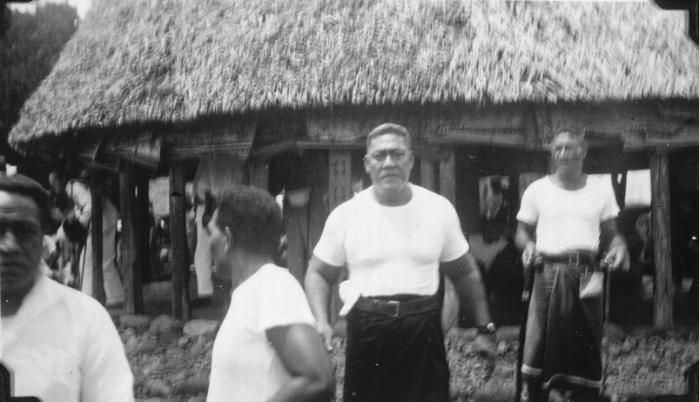
There is no doubt that following the December massacre and the manhunt for the Mau men in the Samoan bush that followed, the Samoans will be much surer of their aims and the necessity for struggle along certain lines than they were.
The manhunt instituted by the Administration with the help of seaplane, sailors and native “loyalist” beaters, was practically futile. The Samoans simply played ring-ring-a-rosy with the searchers and lived meanwhile on the food provided by nature in tropical abundance. While the Mau men were in the bush, the imperialists bravely made war on their women and children by night raids and similar scare tactics.
These tactics evoked spirited protest from the women of Samoa, and ultimately led to the imprisonment of Mr. T. B. Slipper who signed a letter on their behalf. As Mau legal adviser, Mr. Slipper sent certain communications to the Administration protesting against the treatment meted out to the women and children. For this “crime” he was fined 150 pounds and sentenced to three months in jail. Subsequently, 1,200 Samoan women petitioned to take the “blame” and the “punishment.”
During the course of the war on Samoa the imperialists have suppressed freedom of speech and assembly and have declared certain areas “infected.” The suppression of the “Samoa Guardian” and the deportation of its editor caused a great outburst of protest.
Not to be outdone, certain elements at the head of the Mau with the help of friends, established a paper in Auckland, New Zealand. “The N.Z. Samoa Guardian” and have published it each week for upwards of two years.
PSEUDO SUPPORTERS
As their struggle develops and intensifies the Samoans will find that they have friends and “friends.” They have found this to be the case in respect to the planting and trading elements in Samoa itself. In the days to come they will find it to be true in the Labor Movement of New Zealand, from which at the present juncture they are obtaining a certain amount of moral support.
Considering British-New Zealand imperialism as one (which they are), we come across one of those paradoxical contradictions typical of international reformism. In the heart of the Empire a Labor Party, kept in office by Liberals, carries on a policy of bloody repression in India, Egypt, and Palestine. In New Zealand a Liberal Government does the same with regard to Samoa and is kept in office by the Labor Party. Yet this same Labor Party “protests” against the repressive policy in Samoa and keeps in office the Government responsible for it!
This situation provides conclusive objective proof that the colonial policy of reformist Labor Parties is one of active support of imperialism in the exploitation and oppression of the colonial peoples.
“LABOR” IMPERIALISTS
The differences are differences of words only. When, in the years to come, the turn of the political wheel lands the Labor Party of New Zealand on the Treasury benches, the Samoan people will find that imperialist oppression is the same whether handed out by Tories, Liberals, or Labor.
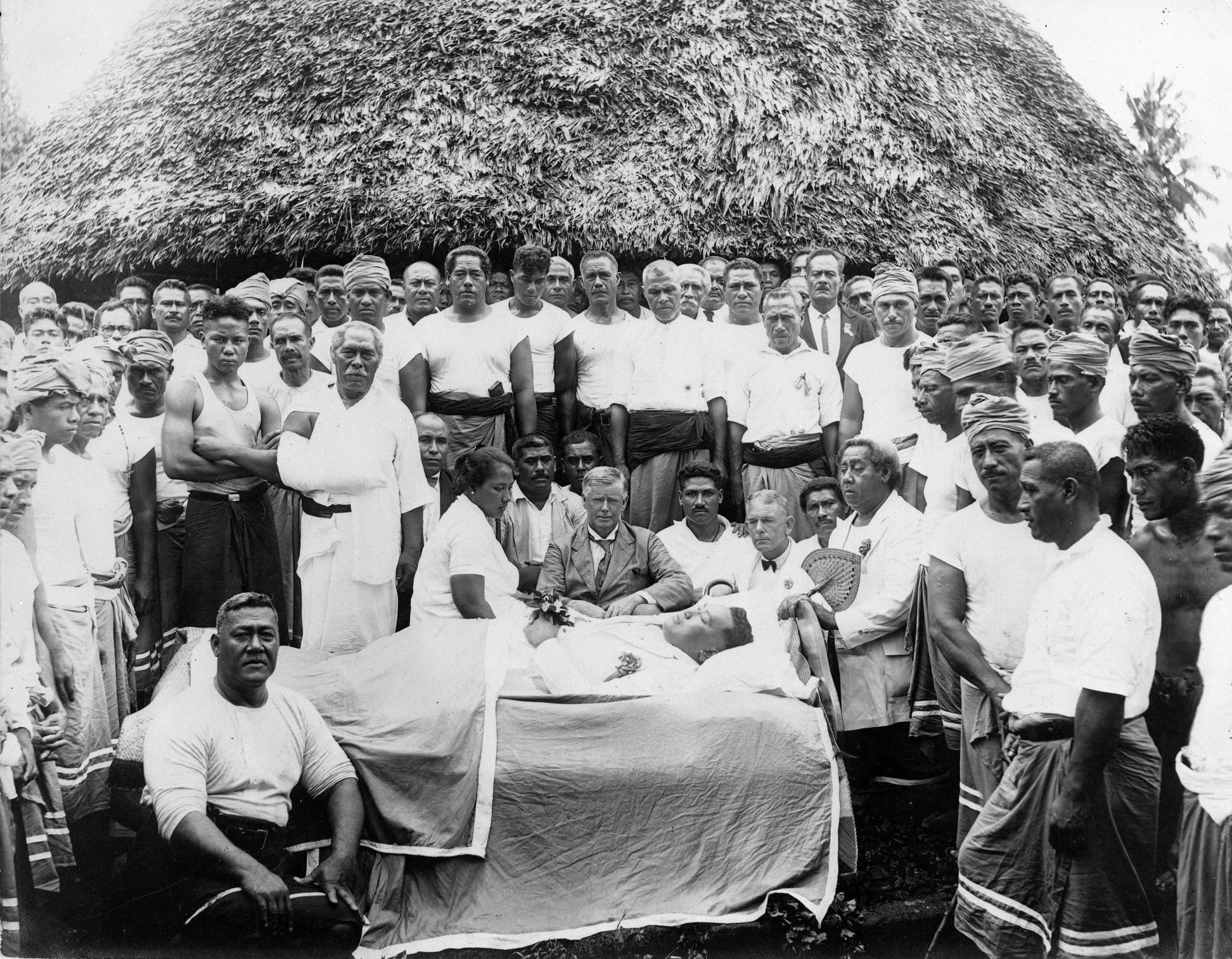
The specific importance of Samoa is not great. The Samoan people do not live around an all-important “ditch” as do the Egyptians, or live as the down-trodden millions of China do on vast natural resources. They are, to a great extent, isolated from the mainstream of the world’s social and national emancipatory movements.
Yet in spite of their isolation the Samoans have to a considerable extent confounded the imperialist machinations of a “great” Power. They have done this almost entirely on the basis of their own poor resources, allied to their native shrewdness and solidarity. They can only hope for success in the future to the extent that they realize that their struggle is an integral part of the world-wide struggle against imperialism, and to the extent that the working-class movement of the outside world helps them to realize this and moves forward with them in the common fight against imperialism.
(Note: “Mau in Samoan means at once an opinion and something firm, settled, immovable.”)
For a splendid analysis of present-day Samoan society readers are advised to get the March issue of the English “Labour Monthly.”
The Pan-Pacific Monthly was the official organ of the Pan-Pacific Trade Union Secretariat (PPTUS), a subdivision of the Red International of Labor Unions, or Profitern. Established first in China in May 1927, the PPTUS had to move its offices, and the production of the Monthly to San Francisco after the fall of the Shanghai Commune in 1927. Earl Browder was an early Secretary of tge PPTUS, having been in China during its establishment. Harrison George was the editor of the Monthly. Constituents of the PPTUC included the Australian Council of Trade Unions, the All-China Federation of Trade Unions, the Indonesian Labor Federation, the Japanese Trade Union Council, the National Minority Movement (UK Colonies), the Confédération Générale du Travail Unitaire (French Colonies), the Korean Workers and Peasants Federation, the Philippine Labor Congress, the National Confederation of Farm Laborers and Tenants of the Philippines, the All-Union Central Council of Trade Unions of the Soviet Union, and the Trade Union Educational League of the U.S. With only two international conferences, the second in 1929, the PPTUS never took off as a force capable of coordinating trade union activity in the Pacific Basis, as was its charge. However, despite its short run, the Monthly is an invaluable English-language resource on a crucial period in the Communist movement in the Pacific, the beginnings of the ‘Third Period.’
PDF of full issue: http://fau.digital.flvc.org/islandora/object/fau%3A32140/datastream/OBJ/download/The_Pan-Pacific_Monthly_No__37.pdf
 Revolution's Newsstand