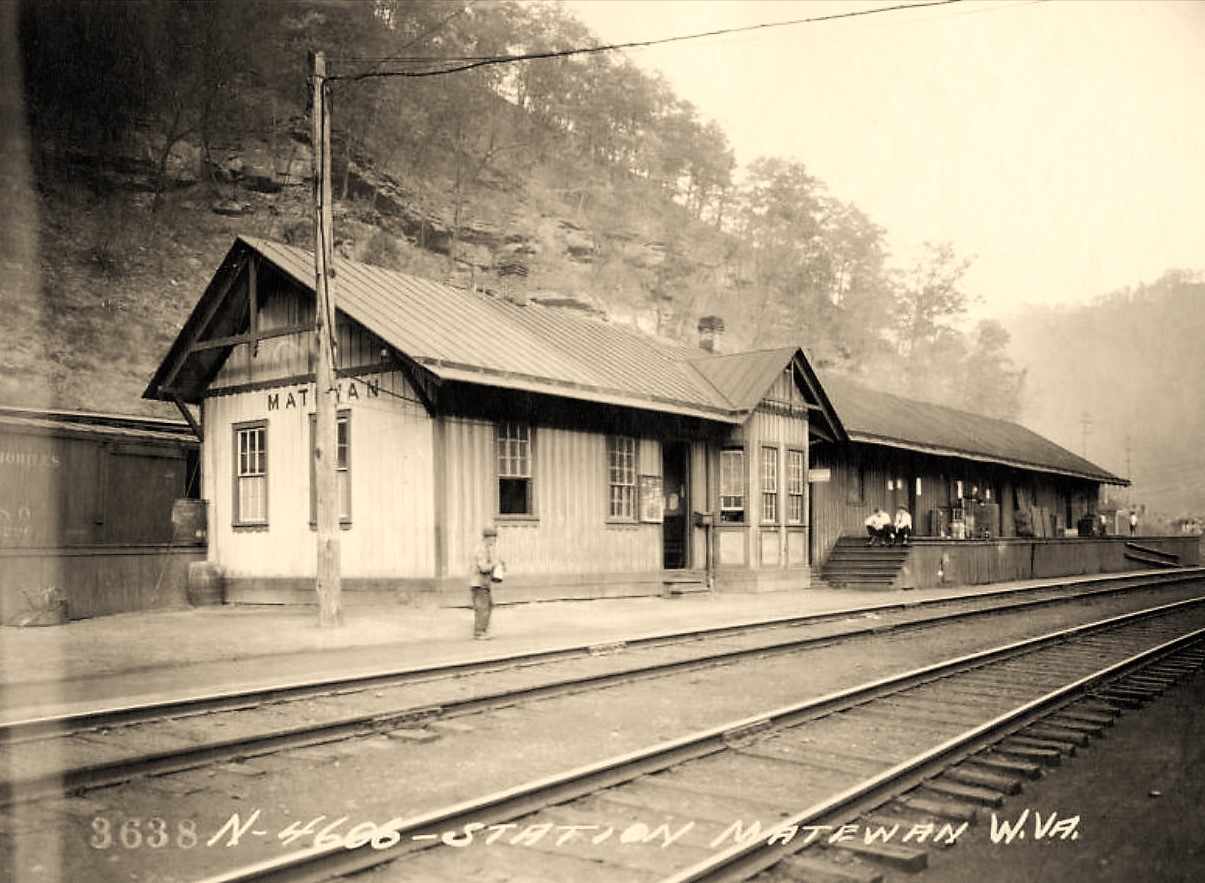
‘The Battle at Matewan’ from The Toiler. No. 121. May 28, 1920.
Another bloody clash has been added to the already long list of affrays between American coal miners and the scum of this vicious industrial system, the hordes of private detectives which infest every locality when the workers attempt to better their conditions.
Matewan, a mining hamlet among the West Virginia mountains is the scene. Responsive to their economic needs, the miners had organized themselves into a labor union for better protection against the excess exploitation to which they were subjected thru the greed of their employers, the Coal Barons.
The employers immediately dispatched a contingent of their private army armed to the teeth with revolvers and Winchesters to make war upon the new union. This private army proceeded to ferret out the organizers and active members of the union and to evict them and their families from the properties of the mining company. Like most mining centers, Matewan is owned chiefly by the coal companies.
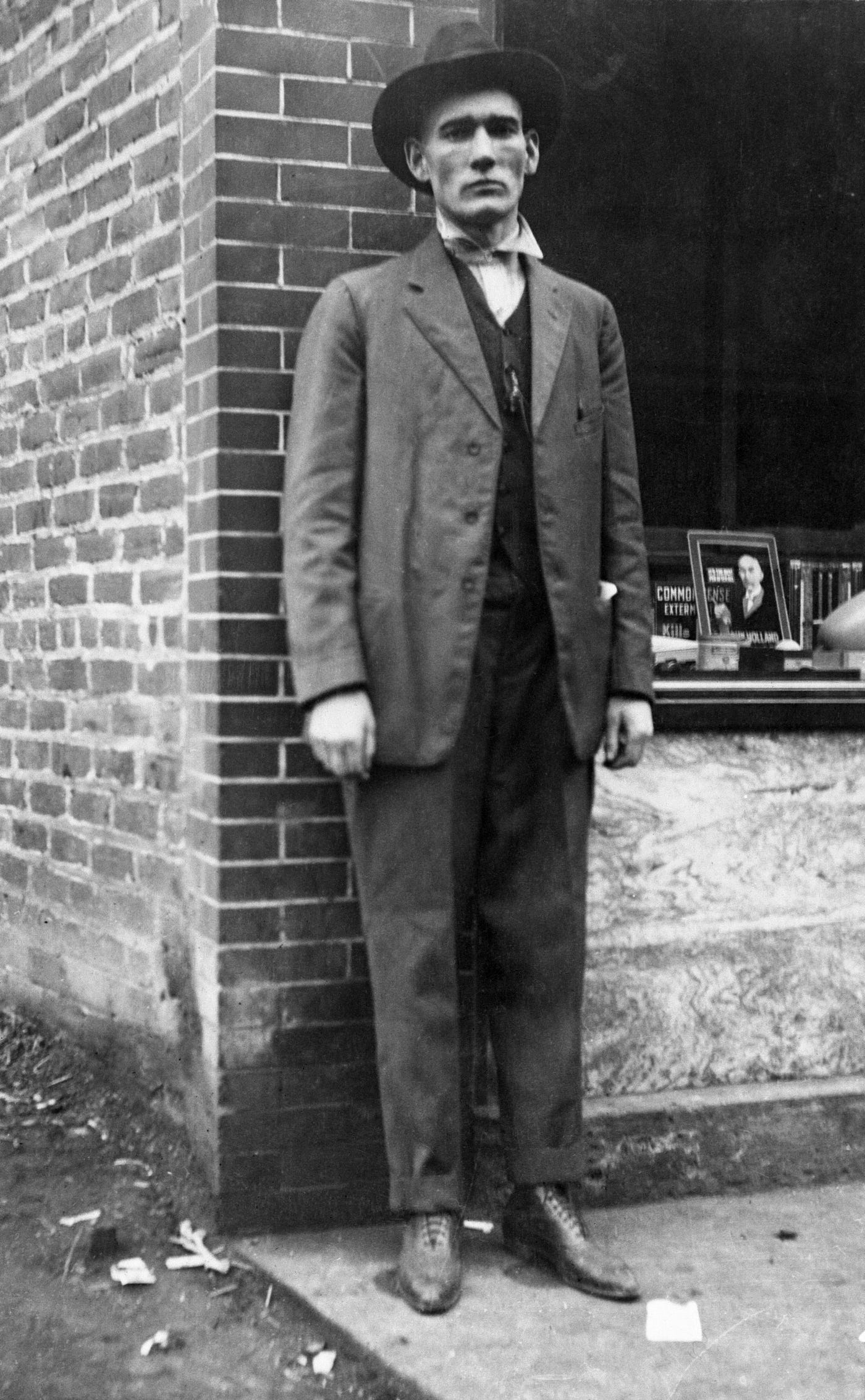
Having completed their work, the detectives waited at the station for their train to depart and there placed the chief of police under arrest. Sentiment against the actions of the detectives was running high in the village, and, like all American small towns, the arrival of a train being an event of importance, a goodly assembly of residents were on hand to witness it. Among these was the Mayor who interceded when he saw is chief of police arrested. He was immediately killed outright. His murderer being as quickly despatched by the police chief. In a moment a dozen or more men, chiefly private detectives lay dead and wounded on the spot. State troops have since patrolled the few dingy streets of this tiny centre of industry and the class struggle.
Thus, in a few days, has again been run the whole gamut of how many industrial battles? Beginning in the inhumanity and greed of conscienceless exploiters, which in turn, drivers the workers into a league for defense, which, instead of being met in a spirit of tolerance, becomes an object of destruction by the exploiters, cost what it may. With an elemental viciousness equaled only by the power of wealth and the capitalist made laws, the destruction of the workers’ union is executed. The class struggle bares its fangs and stamps its iron hoofs. Force, naked and weltering in blood amid the rattle of death volleys ensues. And chances are, those who have the most guns and use them first prevail, for power comes thru the operation of physical force now, as when the world was young and man fought man for the mastery of when the s man fought man for the his hunting grounds.
A distressing scene certainly. But an excellent likeness in miniature of an economic system wherein the lives and welfare of the workers are subjected to the whim and desire of the class of robbers who own and operate for individual profit the industries of the nation. Such examples as Matewan teach the workers the innate criminality of such a system. Only workers’ control of the mining industry with the title of ownership residing in a workers’ government can right this criminal wrong. Let the workers prepare to own as well as operate the mines. By the workers, for the workers thru workers’ control All power to the workers!
The Toiler was a significant regional, later national, newspaper of the early Communist movement published weekly between 1919 and 1921. It grew out of the Socialist Party’s ‘The Ohio Socialist’, leading paper of the Party’s left wing and northern Ohio’s militant IWW base and became the national voice of the forces that would become The Communist Labor Party. The Toiler was first published in Cleveland, Ohio, its volume number continuing on from The Ohio Socialist, in the fall of 1919 as the paper of the Communist Labor Party of Ohio. The Toiler moved to New York City in early 1920 and with its union focus served as the labor paper of the CLP and the legal Workers Party of America. Editors included Elmer Allison and James P Cannon. The original English language and/or US publication of key texts of the international revolutionary movement are prominent features of the Toiler. In January 1922, The Toiler merged with The Workers Council to form The Worker, becoming the Communist Party’s main paper continuing as The Daily Worker in January, 1924.
PDF of full issue: https://www.marxists.org/history/usa/pubs/thetoiler/121-may-28-1920-toiler.pdf
 Revolution's Newsstand