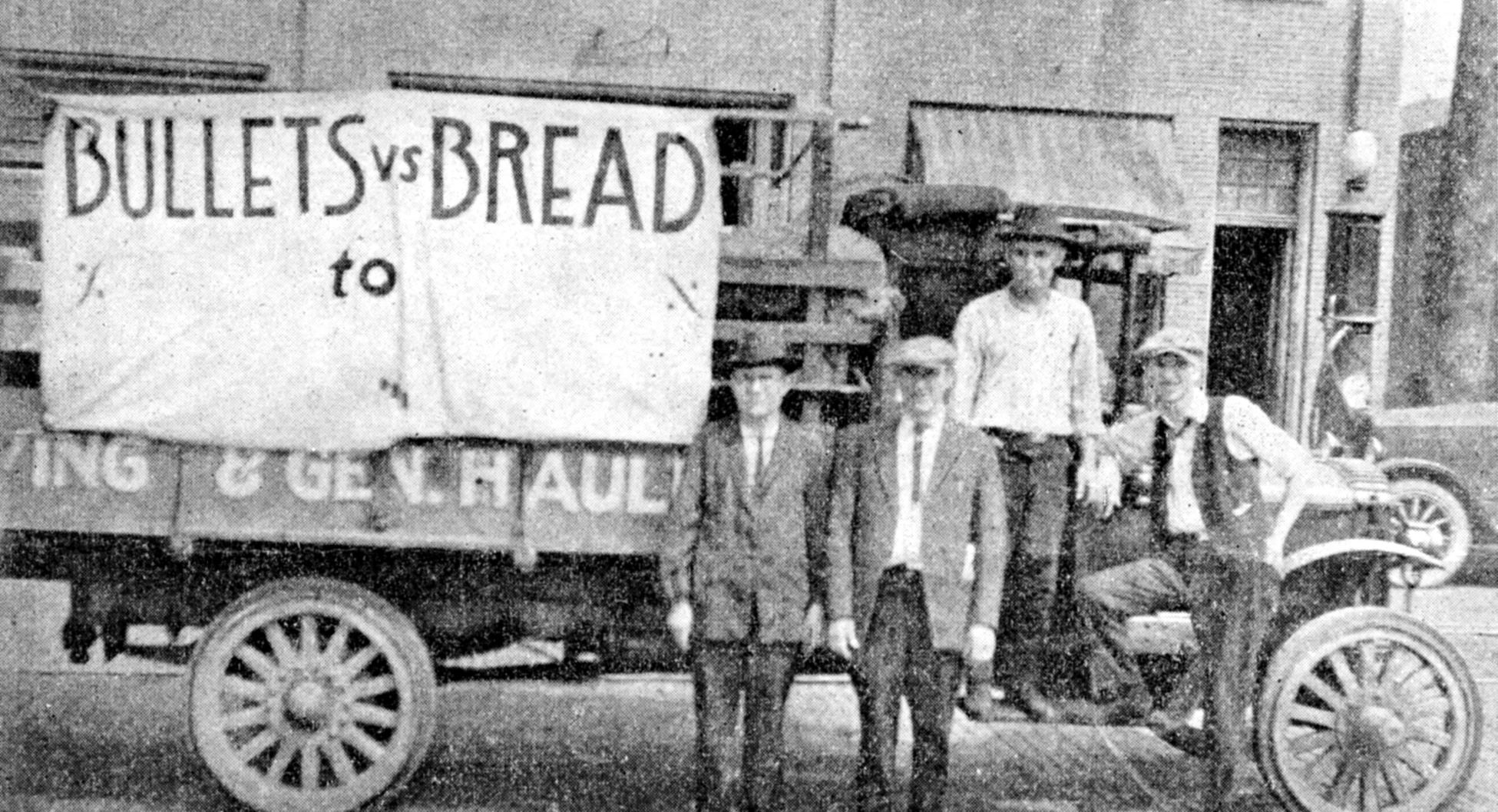
Tens of thousands of non-union miners answered the call of the U.M.W.A. for a national strike in 1922, many from southwestern Fayette County–a key resource for Pittsburgh’s enormous industries. Evicted from company homes, miners families were forced to live in tent colonies during the winter of 1922-3. Staking everything on their fight, the Fayette County miners were betrayed by the U.M.W.A. when they ordered the end of the national strike, leaving the communities without work or homes. Those momentous struggles are accounted for in this excellent work of social history from the collaboration of three active participants.
‘Betrayal of the Fayette County Miners’ by William Guiler, Thomas Myerscough, and Frank J. Indof from Labor Herald. Vol. 1 No. 9. November, 1922.
By William Guiler, Local Union No. 593, U. M.W. A.; Thomas Myerscough, L. U. No. 4561 and Frank J. Indof, L. U. No. 2353, Publicity Committee of the Miners’ Group, District Five, United Mine Workers.
One of the blackest spots in the history of American trade unions is the betrayal of the heroic miners of the Connellsville region, Fayette County, Pennsylvania. In the following pages the committee of the miners gives the background of this monumental piece of treachery, and tells the story. But they are not resting content with complaints; they have a program for preventing another like betrayal in the future. A great rank and file movement is arising in District Five, which will play a part in the coming inevitable cleansing of the United Mine Workers. The following story of the District Five miners is one of the most important matters now before the labor movement. ED.
THE Pittsburgh district has inspired literary explorers to coin pretty phrases, such as “The Romance of Steel,” “Workshop of the World,” etc. These dilettante reactions reflect the popular conception of Pittsburgh as a steel town; despite this impression, the fundamental industrial fact underlying the whole economic structure of Pittsburgh is, in reality, COAL.

Failure to grasp this fact may lead to serious blunders, particularly on the part of labor leaders. That it is a fact is easily demonstrated. Why is it that, despite the long haul for iron ore from Minnesota, Pittsburgh has no difficulty whatever in maintaining its supremacy as the steel center of America? The answer is so simple that it is apt to be overlooked. A most suitable grade of coal for large scale production can be delivered to Pittsburgh steel mills cheaper than to any other point in the United States.
This industrial situation will not soon be changed. The presence of cheap coal has determined the development of this district, from the time when the first Pittsburgh iron workers crudely fluxed iron along the coal creek beds among the gnarled hills, until the Steel Corporation made its recent improvement of by-product equipment at Clairton costing several million dollars. Upon this basis industrial evolution has gradually transformed the banks. of the Monongehela River, so that today, along 28 miles of waterfront, there is fabricated the most gigantic, complex, and revolutionary industrial unit on the face of this whirling globe.
The casual visitor, and even the trained labor leader, is apt to stand on Mt. Washington and look with bewildered admiration at this marvelous complexity of river, railroads, and steel mills and forget that this whole structure has its foundation deep in the coal mines further up the river.
Corruption in the Labor Unions

When one has thoroughly grasped this fact he will have the key to the sordid story of corruption in the organization of the miners of this district, which is potentially one of the most revolutionary sections of the miners of America, if not of the world. Because of the enormous profits in steel, and because the supremacy of Pittsburgh steel manufacturers rests entirely upon the uninterrupted flow of cheap coal from further up Monongehela River, there has for many years been an almost equally steady flow of money for the corruption of the officialdom of this district, No. 5, of the United Mine Workers of America.
Undoubtedly the environment created by the economic situation has played a large part in determining the integrity of union leaders. Men who in another district might have been perfectly honest have become corrupted here. For the steel manufacturers of Pittsburgh, who are largely the employers of the coal miners, it is easier to spend the large sums necessary to corrupt formerly honest men, than it would be for coal operators. in other districts. This is the principal explanation why here, more than in almost any other part of the country, radical union officials have gone “bad” and become the willing tools of the employers.
Revolts in the Past
Struggles against the domination of the miners’ union by agents of the employers, have been many and bitter. Space does not permit an elaborate review of the history of these attempts. They have all of them, however, been doomed to ultimate failure because in each instance they were built around individual leadership, unbacked and uncontrolled by organized group effort. A classic example of this was the terrific struggle between Pat Dolan and Francis Feehan. Dolan was an old-country type of Irishman, with the reactionary views of an A. F. of L. conservative, and he developed a strong machine which completely controlled the district. He did not hesitate to defy the will of the rank and file in the most brazen manner. Francis Feehan appeared on the scene, however, to dispute the control with Dolan. Feehan was a big six foot, strapping, Irish-American, a member of the Socialist Labor Party, well grounded in Marxian economics and probably very sincere in those early days. He was capable, a fluent speaker, fearless and physically fit.

Feehan soon rallied behind him all the progressive elements and a terrific battle ensued lasting several years. The ultimate outcome was the ousting of Dolan and the triumph of Feehan. But the change had no permanent effects whatever. The weakness of the Feehan revolt and all the other numerous rebel movements in District No. 5, has been this extremely individualistic character of the movements. Francis Feehan was looked up to by the miners in the early days as a superman. There was no organized group to direct the movement of revolt; Feehan did that, and the rest was merely the spontaneous support of the masses in the district. The necessity of group control on the part of the class-conscious element in the district was not realized.
The Present Campaign
Growing out of the flagrant betrayal of the Fayette County strikers, there is now crystalizing a new rebel movement, which is organized on a different basis, avoiding the mistakes of the past. It is the outgrowth of many months spent in conferences between the militants of the district which have resulted in an organized group being developed to direct the movement. Before the progressive candidates for official positions of District No. 5 were nominated a comprehensive platform was adopted to which each candidate was pledged. The organized groups of progressive miners know, however, that this is not sufficient. They will continue to function, guarding the interests of the organization, by continually co-operating with and watching the conduct of their representatives. They will continue to carry on an educational campaign with the rank and file, stirring them up continuously to an active interest in the organization questions.
As in all other unions where the machine has become corrupt, District No. 5 has been cursed with dual unionism. This was one of the first obstacles which had to be overcome. Dual unionism had to be definitely stamped out. This, the first step toward a successful campaign, was recognized from the beginning in the platform adopted by the progressive miners. That document also takes a clear stand on the questions of National Agreements, Alliance between Miners and Railroad Workers, Reinstatement of Kansas Miners, Progressive Organization Campaign, Election of Organizers, Reduction of Salaries of Officials, Investigation of the Notorious Three Million Dollar Defense Fund, and particularly, condemnation of the handling of the Connellsville coke field strike in which these miners were left out of the settlements reached and abandoned without any adequate relief; these are the outstanding features of the progressive platform. The ticket which has been nominated for this fight is as follows:
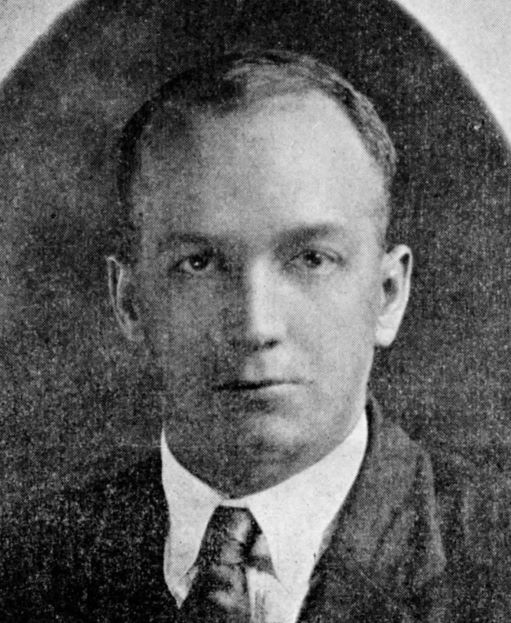
President, Thomas Myerscough, Local Un. 4561, Lawrence. Vice-President, Michael W. Brajdich, Local Un. 3257, Wyano. Secy.-Treas., Thomas Ray, Local Un. 1973, McDonald. Auditor, Tony Rosena, Local Un. 2398, Van Voorhis. Auditor, August Arnal, Local Un. 1724, Houston. Teller, John Usnick, Local Un. 5085, Coverdale. Teller, Joseph Mautino, Local Un. 3257, Wyano. Teller, D. P. Taucher, Local Un. 3600, Burgettstown. International Board Member, W. A. Guiler, Local Un. 593, Charleroi.
For Sub-District Board Members First, Robert Baird, Local Un. 1089, Raccoon. Second, Peter Messock, Local Un. 4561, Houston. Third, Charles E. Shaw, Local Un. 2398, Van Voorhis. Fourth, Frank Leithold, Local Un. 2396, Fayette City. Fifth, Frank J. Indof, Local Un. 2353, Smithton. Sixth, James C. Hickey, Local Un. 1188, Kaylor. Seventh, R. T. Henderson, Local Un. 1230, Parnassus.
Fayette County Betrayal
The decisive importance of the strike of the hitherto unorganized miners in Fayette County, which had a tremendous influence in carrying through the Miners’ Union, is already familiar to those who have followed the story of the strike in the articles of John Dorsey in THE LABOR HERALD. The 100% walk out of these non-union miners on April 1st, at the invitation of the officials of the U.M.W.A. was one of the most serious blows ever dealt the capitalist class of America. It struck directly at the power of the most sinister group of employers in the United States, the United States Steel Corporation and its subsidiaries.
All summer long the miners of Fayette County had an instinctive dread that they might be abandoned. At various mass meetings they repeatedly put their leaders on record as to whether Fayette would be included in these settlements. In some cases letters were sent to the international headquarters and assurances came back with Lewis’ name signed to them, pledging the Fayette miners his loyalty to the end. Just before the conference in Cleveland, while Lewis was in Washington, some of the miners wired to him warning him not to leave them out of the settlement. But in spite of all of this, Fayette County was deserted.

Immediately after the Cleveland agreement, conferences were held in Pittsburgh for District No. 5, but not only did the District Executive Board ignore the coke field miners, but in at least one case signed a contract with the Hillman Coal and Coke Company for only those mines near Pittsburgh and did not require them to sign for their mines in Fayette County. While treachery of this kind is more or less familiar to all acquainted with the history of the United Mine Workers’ settlements, yet in view of the tremendous services rendered the union by the Fayette County strikers, this was a particularly nasty betrayal.
The Failure to Give Relief
Not only was the Fayette region left out of the settlement, but they were even abandoned so far as relief was concerned. After a six month’s strike wholesale evictions, with starvation, and death from exposure facing tens of thousands of helpless men, women and children, no definite action for relief has been taken nor has even a definite promise of action been given.
Vague promises, however, have been plentiful. The miners claim that at the convention at Footedale, August 22nd, 1922, organizers there assured the men that if the strike continued $3,000,000 a month would be paid out to that section for relief. There is a general impression that funds could be had for that purpose. In 1913, so it is charged in a suit now pending in the local courts, there was a “Defense Fund” created for which purpose a definite assessment of 1⁄2 of 1% of the total earnings of each member was levied. This fund was to be used for relief, and amounted on April 1st, so it is estimated, to approximately $3,000,000. The Fayette miners, however, have gotten relief from no official source of any consequence.
To meet the situation a voluntary organization of trade unionists and progressives in the Pittsburgh district, known as the “Pittsburgh Miners’ Food Relief Conference,” was formed. In spite of the handicaps facing this body, it has, up to the present time, done more for relief than the union itself has done. In order to force some definite action from the indifferent officialdom, a representative of this organization went through Fayette County, leaving resolutions in the hands of local unions which demanded an investigation of the relief distribution in District No. 5. This brought some help, but not enough. One result, however, has been that the miners of this district and elsewhere have been stirred up. The meeting of the International Board on October 9th, has been bombarded with a large number of protests against the failure to care properly for the heroes of Fayette County and with demands for adequate relief.
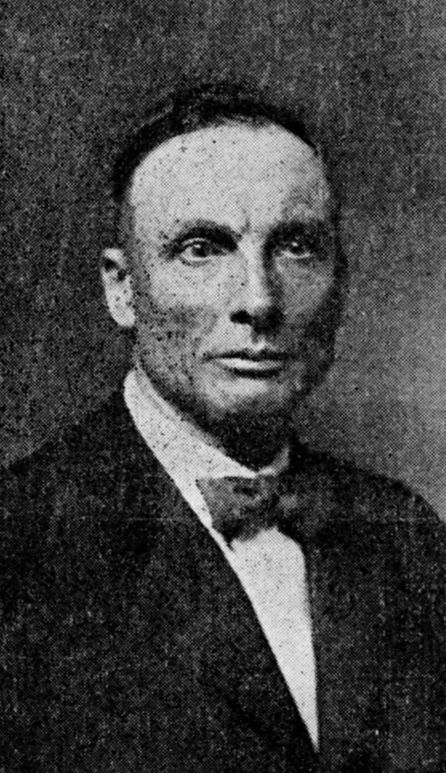
The miners of the coke region feel that they have been deliberately deserted. It is almost impossible now to convince the majority of them that they are really wanted in the U.M.W. of A. They firmly believe that they are being sabotaged out of the organization. If they are now driven back to work by starvation and exposure, the revenge which they will wreak upon the miners’ union next April will be something terrible.
With the signing of the Cleveland agreement, there should have been an immediate meeting of the International Board and an assessment should have been levied to take care of this relief. Now, even if the International levies that assessment, it will be November 1st before relief will begin to trickle into Fayette County. Over 5,000 evictions have occurred since June 1st in this district. Thousands are facing cold, foggy nights in flimsy tents with very little food and no winter clothing. Typhoid fever is raging in several of the camps, prospective mothers have not adequate shelter, and many miners’ children are only escaping death through being cared for in the homes of Pittsburgh workers. The situation is desperate.
Every miners’ local union and district organization should immediately demand quick action. from the International. But more immediate aid is also required. Some local unions in the old organized district have refused to send their money either through Wm. Hargest, Secretary-Treasurer of the District Office, or through John O’Leary, International Board Member in charge of the office at West Brownsville. Under these circumstances it seems shameful that the miners should starve through lack of food when there is an agency which can do the necessary work. Any reader of THE LABOR HERALD wishing to make contributions, should send them to J.A. Hamilton, Secretary, Pittsburgh Miners’ Food Relief Conference, 35 Miller St., Pittsburgh, Pa., and a full accounting to each contributor will be made of the disposition of the relief funds. The Fayette County miners must be saved to the labor movement and only the most energetic and immediate action will accomplish this end.
The Labor Herald was the monthly publication of the Trade Union Educational League (TUEL), in immensely important link between the IWW of the 1910s and the CIO of the 1930s. It was begun by veteran labor organizer and Communist leader William Z. Foster in 1920 as an attempt to unite militants within various unions while continuing the industrial unionism tradition of the IWW, though it was opposed to “dual unionism” and favored the formation of a Labor Party. Although it would become financially supported by the Communist International and Communist Party of America, it remained autonomous, was a network and not a membership organization, and included many radicals outside the Communist Party. In 1924 Labor Herald was folded into Workers Monthly, an explicitly Party organ and in 1927 ‘Labor Unity’ became the organ of a now CP dominated TUEL. In 1929 and the turn towards Red Unions in the Third Period, TUEL was wound up and replaced by the Trade Union Unity League, a section of the Red International of Labor Unions (Profitern) and continued to publish Labor Unity until 1935. Labor Herald remains an important labor-orientated journal by revolutionaries in US left history and would be referenced by activists, along with TUEL, along after it’s heyday.
PDF of full issue: https://www.marxists.org/history/usa/pubs/laborherald/v1n09-nov-1922.pdf
 Revolution's Newsstand