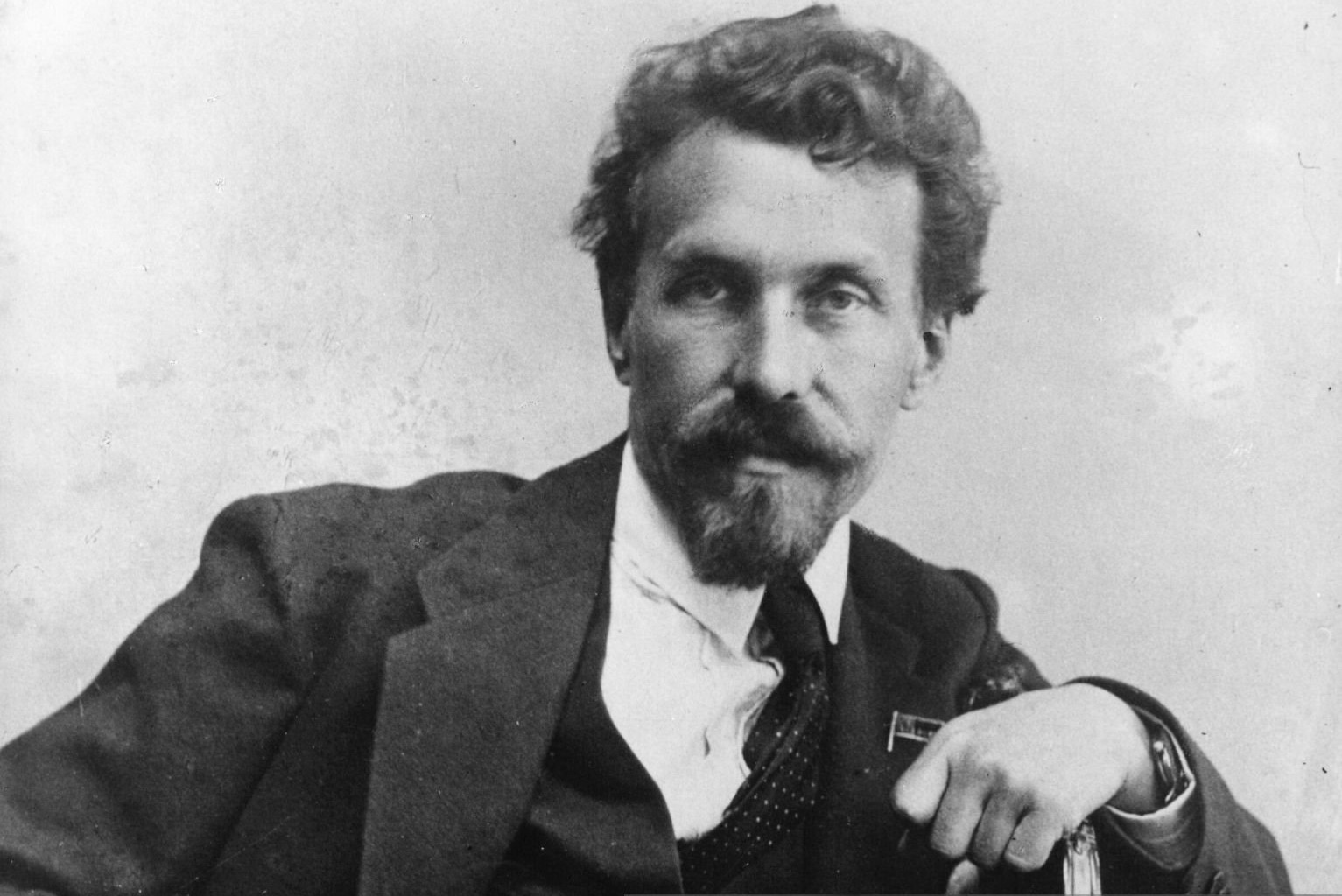
Alexei Rykov, in late 1925 at the height of his authority, Chairman of the Council of People’s Commissars and Premiere of the Soviet Union, explaining why the Soviet Union would not join the League of Nations. The League was founded at the behest of the victorious imperial powers after World War One and acted much like today’s United Nations. The Soviets stayed outside the League until, moving to the Popular Front, it joined in September 1934. The U.S.S.R. was expelled by the league in December 1939 following the invasion of Finland.
‘The Soviet Union and the League of Nations’ by Alexei Rykov from International Press Correspondence. Vol. 5 No. 89. December 24, 1925.
We publish below a verbatim report of that part of Comrade Rykov’s great speech on the activities of the Central Committee of the C.P. of Russia at the party conference in the Moscow governmental district, which deals with the relations between the Soviet Union and the League of Nations. Ed.
The League of Nations an Instrument of War and not of Peace.
Judging by the expressions of opinion of a number of responsible statesmen of the bourgeois world, plans have been made for a whole series of conferences of an economic and political character in the immediate future. The bourgeoisie is endeavouring to bridge over in some way the antagonisms which exist and those which are maturing, in order, as they love to express it, “to establish peace in Europe”.
This enormous number of conferences, treaties and agreements between the separate States do not and cannot in any way solve the questions of vital interest to capitalism, neither can they, in the slightest degree, prevent the danger of war.
It is very symptomatic that in recent times, the bourgeois and Menshevist Press as well as statesmen of great repute have begun to invite the Soviet Union also to join the “League of Nations”. It was especially pleasing to read invitations of this kind in English newspapers, which have hitherto regarded the government of our Union as a gang of robbers. Only a year ago, the Conservative party won the election by means of the forged Zinoviev letter and under the slogan of the fight against the Soviet Republics. If one of us were asked whether he believes in the sincerity of such an abrupt right about turn, I do not doubt for a moment that he would answer “no” without any hesitation.
When our enemies begin to speak so kindly of us, we must ask: “Does this not mean some change in their tactics; do they not wish to attack us from another side and beat us by other means?” In the present political circumstances the newspaper campaign for including the Soviet Union in the League of Nations aims at discrediting us in the eyes of that part of the working class which still cherishes pacifist illusions.
The “MacDonalds” of the whole globe are persistently spreading amongst the working class the version that the League of Nations is an institution which is to ensure peaceful development to mankind. As long as there are sections of the working class who, in their hatred for war, place any kind of hopes in the League of Nations, it is more advantageous, from the political point of view, for our enemies to carry on the discussion with us just in this direction, in order to represent the Soviet Union as an enemy of peace. For this reason, Chamberlain in his fight against the Soviet Union, for this reason the 2nd International in its fight against our Party, are endeavouring to find ways to stir up even part of the working class against us, to influence even isolated groups of workers in their favour through agitation. Every step in this direction, however small it be, naturally represents for Chamberlain, for MacDonald, for the 2nd International, a great victory.
On principle we take up and carry through a fight for the point of view that the League of Nations is an instrument not of peace but of war, not of liberation but of oppression, further that the propaganda for the opinion that capitalist countries might find a remedy for war within the capitalist society, is a crime and not an error on the part of the 2nd International. In our opinion, war was, is and will be inevitable under the rule of capitalism; war is insolubly bound up with capitalism, is part of its very nature.
Locarno.
The chief significance of Locarno is that Germany has once more been forced on to her knees, that she has once more been compelled to take her oath on the monstruous Treaty of Versailles, that Germany has been dragged into the League of Nations, in which, in view of the present situation, she cannot carry on any independent policy. Today, after Locarno, there are two governments in Europe which have maintained complete independence in their foreign policy: the British Government in London and the Soviet Government in Moscow. All the other governments are in the bonds of the Anglo-American Bloc and are dependent on the treaties dictated by this Bloc which, for the sake of form, are registered under the League of Nations, the League of Nations however being a direct instrument of the policy of imperialism. The last (6th) autumn session of the League of Nations showed sufficiently clearly that in this institution, England is the mistress of the situation.
An American newspaper correspondent describes the policy of England in the League of Nations, as follows:
“In any conflicts which may occur, Great Britain trusts more to her navy, her air force and her army than to obligatory arbitration procedures. The arbitration agreement is binding for all except London which intends to be the arbitrator in conflicts between other countries.” (“New York Times”.).
In Locarno also, England carried on this policy. In spite of its being an advantage to the bourgeoisie to advertise Locarno in every possible way, in order to deceive the vigilance of the peoples, in order to mitigate the mistrust of the masses in the present governments, even the bourgeois journalists reveal part of the truth about Locarno. Thus, one of the English newspapers of best repute, which is closely connected with the diplomatic world and with the English Foreign Minister, writes:
“It must not be believed, that permanent equilibrium in Europe can be achieved or war prevented by means of new treaties and guarantees. Neither the drawing up of documents, nor a protocol, nor guarantees can turn that which by its nature is unstable into something stable. There are many and various European questions which have already become dangerous and which may lead to sharp controversies in the comparatively near future. For Great Britain it is at any rate very important that, at the time when these questions come up for decision, she should have a completely free hand.” (September number of the “Round Table”).
In all our newspapers and in a considerable part of the foreign Press, it was pointed out that Locarno was aimed against the Soviet Union, although nothing was said about the Soviet Republics. In order to put this assertion in a more concrete form, I quote the explanations that were given by England and France in connection with the entrance of Germany into the League of Nations in the question of article 16 of the constitution of the League of Nations. This article states that every country which belongs to the League of Nations, is, on the basis of the resolutions of the League and in proportion to its own strength, under the obligation of participating in the armed conflicts of the League, i.e. in carrying out military sanctions for enforcing the resolutions of the League of Nations. In the present international situation and in the present relation of forces, we can be sure, from the beginning, that, if any bourgeois country which is a member of the League of Nations, begins a war against the Soviet Union, the League of Nations will find the necessary formula for representing us, and not its member, as the attacking party. Through her membership of the League of Nations, Germany will automatically be under the obligation of carrying out the resolutions of the League of Nations even if they be directed against us.
Germany tried to make reservations for herself with regard to this article. In our opinion however, she did not achieve anything positive. In the letter to the Allies, the following concrete explanation was given:
“The obligations which the said article (article 16) imposes on the members of the League of Nations, must be understood in the sense that every Power which is a member of the League of Nations, is under the obligation of co-operating loyally and in fact to ensure the observation of the statutes of the League of Nations, and of resisting any attack in a measure which corresponds with the military and geographical situation of the country in question.”
The Treaty of Locarno is signed, consequently Germany has placed herself under the obligation of fulfilling the regulations of the League of Nations in the direction indicated above, that is to say that, thanks to Locarno, Germany is threatened with the danger of becoming an instrument of English policy.
Moreover, through the Treaty of Locarno, the Entente was dissolved, i.e. the war alliance between England and France lost its force and significance. England has freed herself from the fetters of the Entente but, being in a situation in which, thanks to the dictatorship of the League of Nations and thanks to the circumstance that she is in the nature of things the intermediary between Europe and American capital, she still remains the dictator in Europe.
All this together points to the fact that a regrouping of forces is taking place in Europe under the hegemony of England. When we take into consideration England’s endeavours to keep a free hand for herself in the solution of various questions concerning Eastern Europe, and her antagonism to the Soviet Union, we have every reason to be cautious.
Why Do We not Join the League of Nations?
What significance does the bourgeoisie itself attribute to the question of our joining the League of Nations? I have read in a bourgeois paper a very exact political characterisation of what the bourgeoisie expects from our joining the League of Nations. In this characterisation it is stated that it is expected that the entrance of the Soviet Union into the League of Nations will bring about a “political capitulation in the East and an economic capitulation in the West.” This is expressed very clearly and exactly.
The League of Nations is a shop which deals in peoples and sells them as it sees fit, in the form of “mandates” to the so-called States of high culture. The latter however defend their rights of mandate by force of arms and mercilessly enslave the peoples under their tutelage. For this reason, the East would naturally regard us as traitors if we were to stand behind the counter of this shop. We shall not agree to this. We shall continue to rejoice in the development of the movement for national freedom among the oppressed colonial peoples.
Joining the League of Nations would mean for us an economic capitulation in the West, because we should then be bound by the resolutions of the bourgeois majority in economic questions also.
I do not believe that those governments or those papers which propose our joining the League of Nations, or at least write about it, are honest. I believe that they know from the beginning that we shall not join the League of Nations and I am convinced that the only object of these invitations is to enable MacDonald and his comrades to say to the workers, whom they continue to deceive by maintaining that the capitalist world is capable of avoiding war and by representing a conference which prepares for war, as a peace conference, that: “The Soviet Union, by refusing to join the League of Nations, is responsible for its own isolation”, as was said in the resolution of the 2nd International.
They hope to bring about a political and economic renunciation on the part of the Soviet Republics of everything they have done hitherto, a renunciation of their programme, of the October revolution and of the most essential principles of their existence. They have not achieved this in open fight, they now hope to do it through an enveloping manoeuvre.
New Wars Are Being Prepared Under the Mask of Pacifism.
The present period can be characterised as one of a fresh attempt to consolidate imperialism under the mask of pacifism. This attempt is dictated on the one hand, by the extremely straitened financial situation of the most important imperialist countries of Europe, on the other hand by America’s attempts to have her debts in Europe paid more or less punctually, further by the. fear of new wars which prevails among the peoples, but also by the unsuccessful endeavours of last year to ensure the rule of imperialism by the method of direct military action (occupation of the Ruhr, Morocco, Syria, events in China, anti-Soviet Bloc etc.).
I believe that the task of the day for the Communist International and the revolutionary trade unions is to reveal the danger inherent just in this pacifism, for under the mask of pacifism, new wars have been and are being prepared.
A notice recently appeared in the papers on “Red Imperialism”. This theme was first brought up by Kautsky who invented “the danger which threatens from Red imperialism”. This idea now crops up from time to time in other foreign newspapers. We must combat this stupid calumny with all the means in our power. It must be pointed out that as long ago as at Genoa, the Soviet Republic was the first country to propose the only possible plan for the complete disarmament of all States. We did the same in 1922 in the negotiations with our Baltic neighbours. Every worker within and without the Soviet Union should thoroughly understand that our Party is absolutely in favour of disarmament, that the Soviet Government will be the first to declare itself prepared to dissolve the armed forces of our country and to destroy our whole war industry, on the one and only condition that other countries do the same.
I recall a conversation I had with Lenin about peace and disarmament in which, in referring to some international conference or other, he said that the bourgeois governments are making all kinds of hocus pocus in the questions of disarmament and of limiting the construction of large and small warships, and that by such measures they will deceive one another and the workers.
“Is it not better”, said Lenin, “to propose the limitation of military expenses on the condition that there be a real, genuine and objective control as to whether these limitations are observed? In carrying out this control, the workers ought to participate to such an extent as to guarantee that the classes which are interested in war cannot practice deception in this connection.”
If such measures are proposed for disarmament and the limitation of armaments in Europe, the Soviet Union will be the first to support and defend consistently such an initiative.
It would be stupid beyond words to believe that the economic stabilisation and a so-called “political pacification” of the bourgeois countries would solve the questions of vital interest to capitalism. Capitalism is, it is true stronger today than it was in 1920/21 in the period of the most serious crisis the period of the most radical fight for power of the working class in a number of countries. The stabilisation in itself is transitory. The whole period of stabilisation will be accompanied by crises of varying intensity, by crises which the Labour movement in the West must make use of in order to organise the revolutionary forces, to prepare itself for the period when further attempts to stabilise capital will prove impossible.
International Press Correspondence, widely known as”Inprecorr” was published by the Executive Committee of the Communist International (ECCI) regularly in German and English, occasionally in many other languages, beginning in 1921 and lasting in English until 1938. Inprecorr’s role was to supply translated articles to the English-speaking press of the International from the Comintern’s different sections, as well as news and statements from the ECCI. Many ‘Daily Worker’ and ‘Communist’ articles originated in Inprecorr, and it also published articles by American comrades for use in other countries. It was published at least weekly, and often thrice weekly. The ECCI also published the magazine ‘Communist International’ edited by Zinoviev and Karl Radek from 1919 until 1926 monthly in German, French, Russian, and English. Unlike, Inprecorr, CI contained long-form articles by the leading figures of the International as well as proceedings, statements, and notices of the Comintern. No complete run of Communist International is available in English. Both were largely published outside of Soviet territory, with Communist International printed in London, to facilitate distribution and both were major contributors to the Communist press in the U.S. Communist International and Inprecorr are an invaluable English-language source on the history of the Communist International and its sections.
PDF of full issue: https://www.marxists.org/history/international/comintern/inprecor/1925/v05n89-dec-24-1925-inprecor.pdf
 Revolution's Newsstand