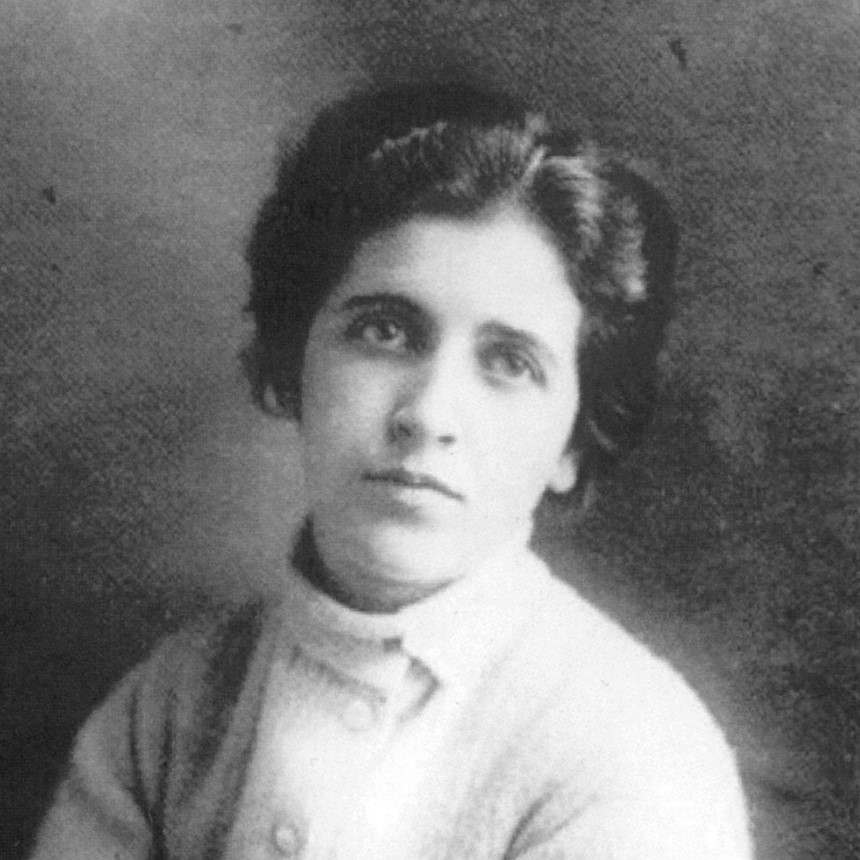
Flynn stumps in Rhode Island for the National Industrial Union of Textile Workers visiting mill workers in Providence and Woonsocket.
‘Elizabeth Gurley Flynn in Rhode Island’ by F. Miller from Solidarity. 2 No. 30. July 8, 1911.
Providence, R.I., June 26. Providence had four days’ work laid out for Elizabeth Gurley Flynn in the tour arranged under the auspices of the National Industrial Union of Textile Workers.
Her first meeting, June 8, was held in Labor Temple under the auspices of Clothing Workers No. 151. Every seat in the big hall was taken, and the crowd stayed until the last question had been answered. The audience was with the speaker and applauded every point made in favor of the industrial union. All the literature on hand was disposed of.
The following night an open air meeting was held on Olneyville Square. A large crowd stuck through the meeting until half past ten. The audience was fairly spellbound; and the inevitable smart aleck that crops up at open air meetings had a hard time of it. One chap who could not restrain himself was promptly yanked in by one of the half dozen or more policemen on hand.
The next night we went to Woonsocket, where we had a corking meeting on Depot Square, Tom Powers acting as chairman. Some of the socialists told us after the meeting that it was the biggest open air meeting held in Woonsocket in a long time.
Here the police butted in, and helped us to get a tremendous crowd to start with. A “permit” is required in Woonsocket to hold open air meetings. A friend of mine had secured the permit early in the week, but he was not in sight when we got to the square, so after waiting some time, we decided to start the meeting. Powers started off in good shape and made a little speech without interference from the “powers that be,” but Miss Flynn had hardly mounted the box and started to talk, when policeman made his way to the speaker and called for the permit. Tom assured him we had one, but as the cop insisted on seeing it, had to admit that it was not at hand. Tom is not used to having cops doubt his word; so he sailed in and gave Mr. Policeman a gentle roasting.
While this was going on the square, was filling up fast from the surging crowds coming from the various streets. Miss Flynn, who had remained on the stand through all this, then quietly “butted in,” and wanted to know whether it was best to wait until the permit came, or to go right ahead with the meeting. This took with the crowd; and I’ll wager that this I policeman was the most pleased individual in that crowd when my friend with the permit, showed up. Meeting lasted until 10.40, and all literature on hand was sold. Sunday night the meeting in Textile Hall was a rousing success; every bit of space in the hall was utilized, with extra settees in the aisles collection was taken up for the defense of Fellow Worker Buccafori, which netted over $10.00. This with $7.50 that had been collected from the members of the local was sent to the treasurer of the defense fund.
From all reports, this is the most successful tour of an I.W.W. speaker in the East. Big meetings are reported from every place, and increasing interest in the idea of “The One Big Union.”
The most widely read of I.W.W. newspapers, Solidarity was published by the Industrial Workers of the World from 1909 until 1917. First produced in New Castle, Pennsylvania, and born during the McKees Rocks strike, Solidarity later moved to Cleveland, Ohio until 1917 then spent its last months in Chicago. With a circulation of around 12,000 and a readership many times that, Solidarity was instrumental in defining the Wobbly world-view at the height of their influence in the working class. It was edited over its life by A.M. Stirton, H.A. Goff, Ben H. Williams, Ralph Chaplin who also provided much of the paper’s color, and others. Like nearly all the left press it fell victim to federal repression in 1917.
PDF of full issue: https://www.marxists.org/history/usa/pubs/solidarity-iww/1911/v02n30-w082-jul-08-1911-Solidarity.pdf
 Revolution's Newsstand