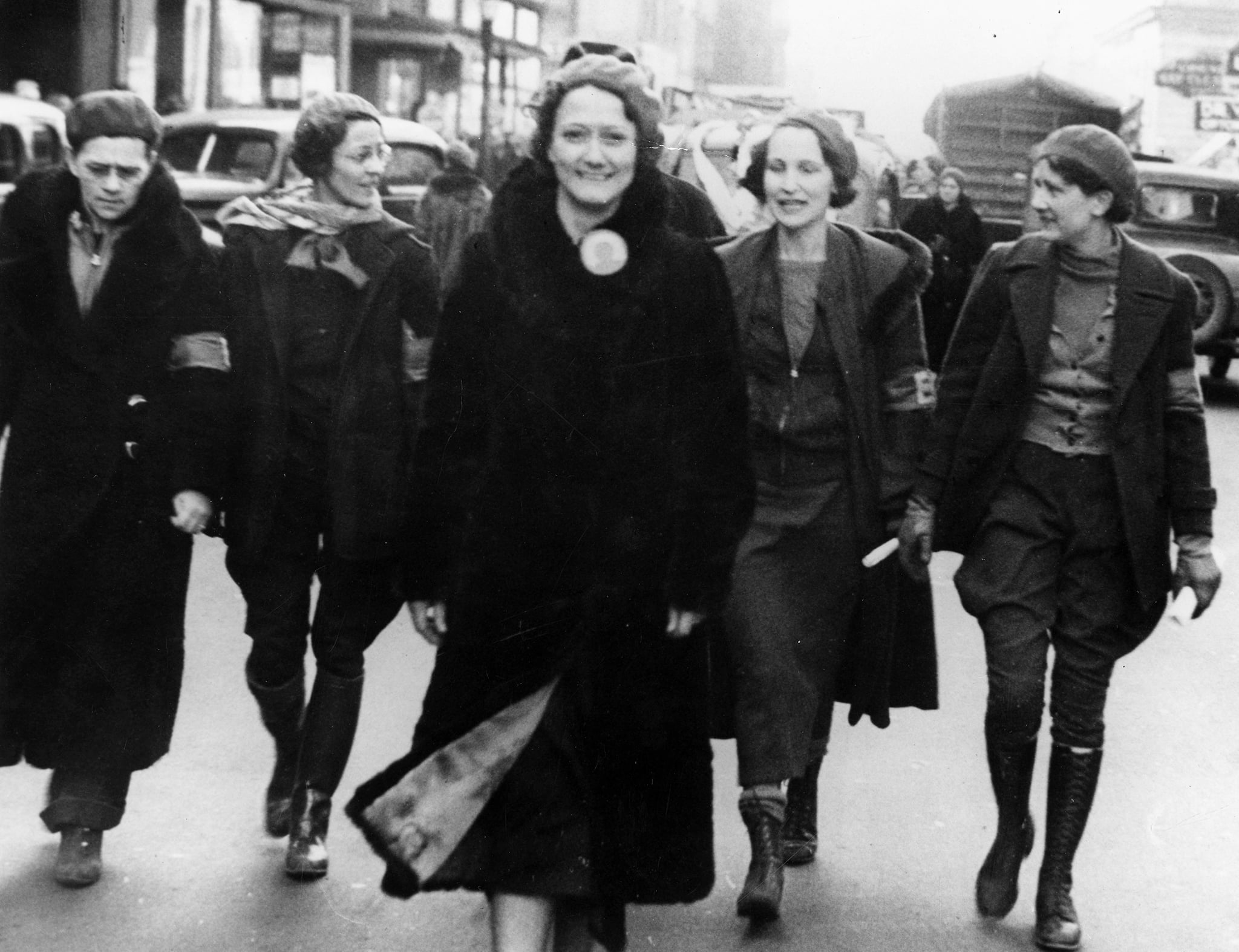
A key to the victory of the U.A.W. at the Flint Sit Downs of 1937, a strike that changed labor history, was the development of the Women’s Auxiliary early in the struggle. Out of the Auxiliary was born the crack-squad of militants, the red-tammed Women’s Emergency Brigade. Captain of the Brigade was the indefatigable Genora Johnson, then a member of the Socialist Party. Your host had the honor of meeting her before her 1995 death. Here is her original recounting of those events while the strike was still underway. Wonderful.
‘Women’s Brigade Gives Militant Aid To Auto Strikers’ by Genora Johnson from Socialist Call. Vol. 2 No. 100. February 13, 1937.
The women of the Emergency Brigade of the Women’s Auxiliary in the auto strike here in Flint proved their mettle and usefulness. I am proud to say that not one woman ran away from the scene of trouble. Women from 16 to 65 went into action that would have made a cattle stampede on a ranch look like an afternoon stroll.
When company police gassed their men inside Chevrolet Plant No. 9 there was a flash of red at every window, and window panes broke and shattered before this red fury. When bullets and gas bombs came through the windows, these women did not flinch. They kept fighting.
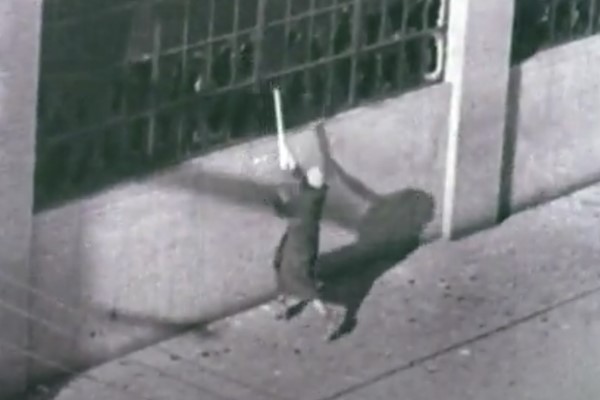
After the men had been clubbed and beaten and forced out of the plant, the women formed a parade and marched back and forth in front of the plant. They made a colorful and dramatic picture which those who saw will not forget. A large American Flag flew at their head. They sang the Auxiliary theme song and “Solidarity” as they marched.
Cops Arrive
When reinforcements of city police arrived and formed a long line in front of the large crowd of union men and the union sound car, the Women’s Brigade formed a threatening line in back of the cops.
This is the role we played at Plant 9 on Hearsley Street. After receiving orders from the union sound car to disband and return to headquarters, we relinquished our position and followed orders. However, all women, still remained on duty.
At plant No. 4 on Chevrolet Averie five of us women found no violence, but mingled in the crowd in front of the plant. The men inside had sat down and were receiving orders from, another union sound car.
Very soon a contingent of city cops from Kearsley Street arrived. We had received orders to keep the gates closed, so when the cops halted in front of the gates they found four determined women in red tams and armbands.
Call Out Brigade
After ordering to disperse with no results, one aggressive flat-foot started to shove the first woman in line, but thought better of it and accused the men standing near of putting women at the gates to protect them. The women retorted that they were not protecting anyone but their husbands on the inside, and no one was going to get through. At that time the order was given to the fifth woman to call out the Brigade.
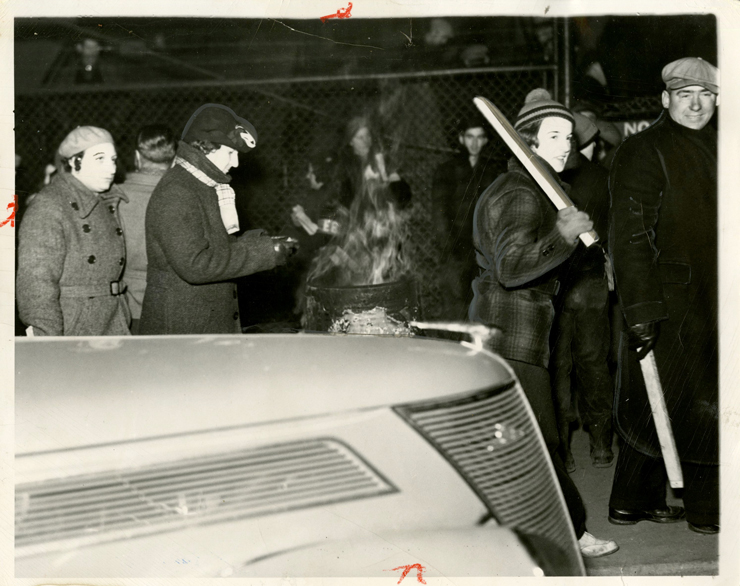
Shortly after, while the police stood looking around baffled, the brigade of women marched down Chevrolet Avenue with the flag at their head amid wild cheers that went up from the crowd.
I directed these women from the sound car loud speaker to prevent violence by establishing a large picket line in front of the gates. A fine picket line was immediately established and the red tams bobbed up and down to the rhythm of Labor Songs.
Sat Down Last Year
Fisher Body No 2 sat down on December 30. On New Year’s Eve we, the pickets, had a street dance in front of plant No. 2. It was on this occasion that some of us women recognized the need for an efficient Women’s Auxiliary to the local union.
Some of the strikers’ wives, who did not understand why the men were striking, called up and threatened to “step out” on their husbands if they refused to, come down and g out with them. Within the next two weeks five divorce suits were started!
On January 12 about 50 women met in a small union room filled with camp cots. Sitting on these cots we voted to become an auxiliary to the local union; elected our officers and laid out our plans. The wives of sit-in strikers were already busy preparing food in a restaurant which had been donated to them by a union sympathizer. But our duty was to get all the wives interested and active in this crisis.
Women Raise Funds
Since that time we women have raised money by having strike benefit dances and raffles. We’ve set up a Women’s Speakers Bureau, a publicity department, a hall committee, mapped out schedules for women pickets, elected a contact committee, a sick committee, and a first aid department with trained nurses on duty from 9 A.M. to 12 midnight.
After the brutal attack in front of Fisher No. 2 we saw the need for courageous women to join together and to stand by those we love in any emergency. So the Women’s Emergency Brigade was formed as a unit of the auxiliary, with 50 members joining immediately upon its formation and at present the membership numbers over 350.
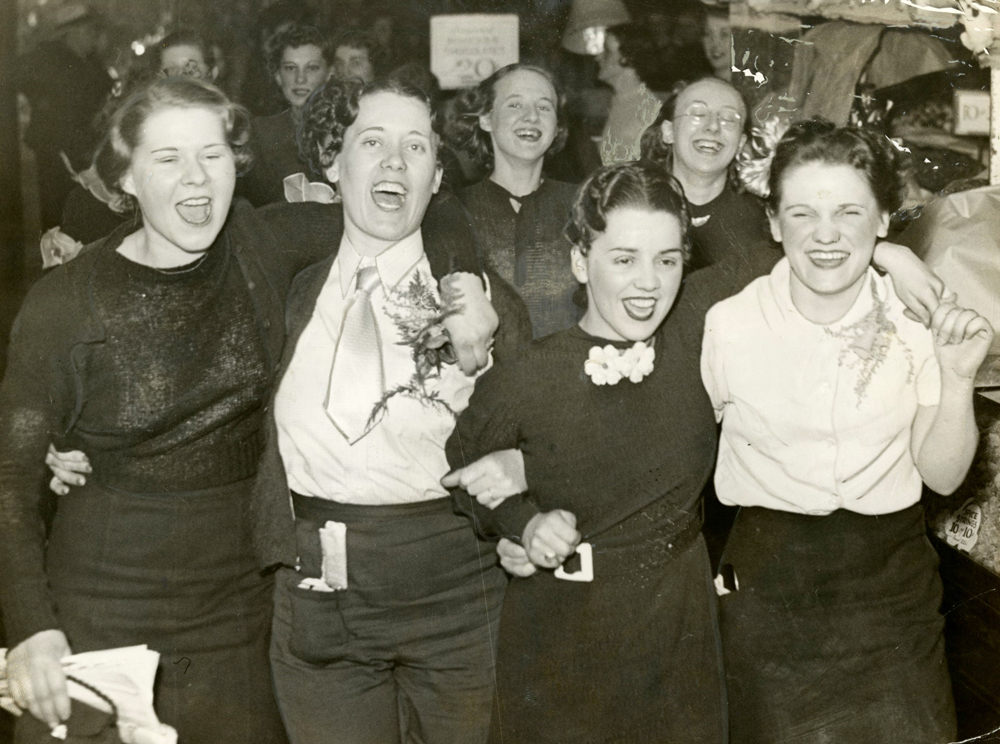
A week ago Monday the effectiveness of the Brigade was demonstrated to those who wondered “if the women might not get cold feet.” But we women showed our mettle in the Chevrolet No. 9 fracas.
Yes, we women are as brave as our men any old day, and they’ll fight to the finish, and so will we. Six hours a day means happier homes for us. Collective bargaining means security and a release from fear.
Socialist Call began as a weekly newspaper in New York in early 1935 by supporters of the Socialist Party’s Militant Faction Samuel DeWitt, Herbert Zam, Max Delson, Amicus Most, and Haim Kantorovitch, with others to rival the Old Guard’s ‘New Leader’. The Call Education Institute was also inaugurated as a rival to the right’s Rand School. In 1937, the Call as the Militant voice would fall victim to Party turmoil, becoming a paper of the Socialist Party leading bodies as it moved to Chicago in 1938, to Milwaukee in 1939, where it was renamed “The Call” and back to New York in 1940 where it eventually resumed the “Socialist Call” name and was published until 1954.
PDF of full issue: https://www.marxists.org/history/usa/pubs/socialist-call/call%202-100.pdf
 Revolution's Newsstand