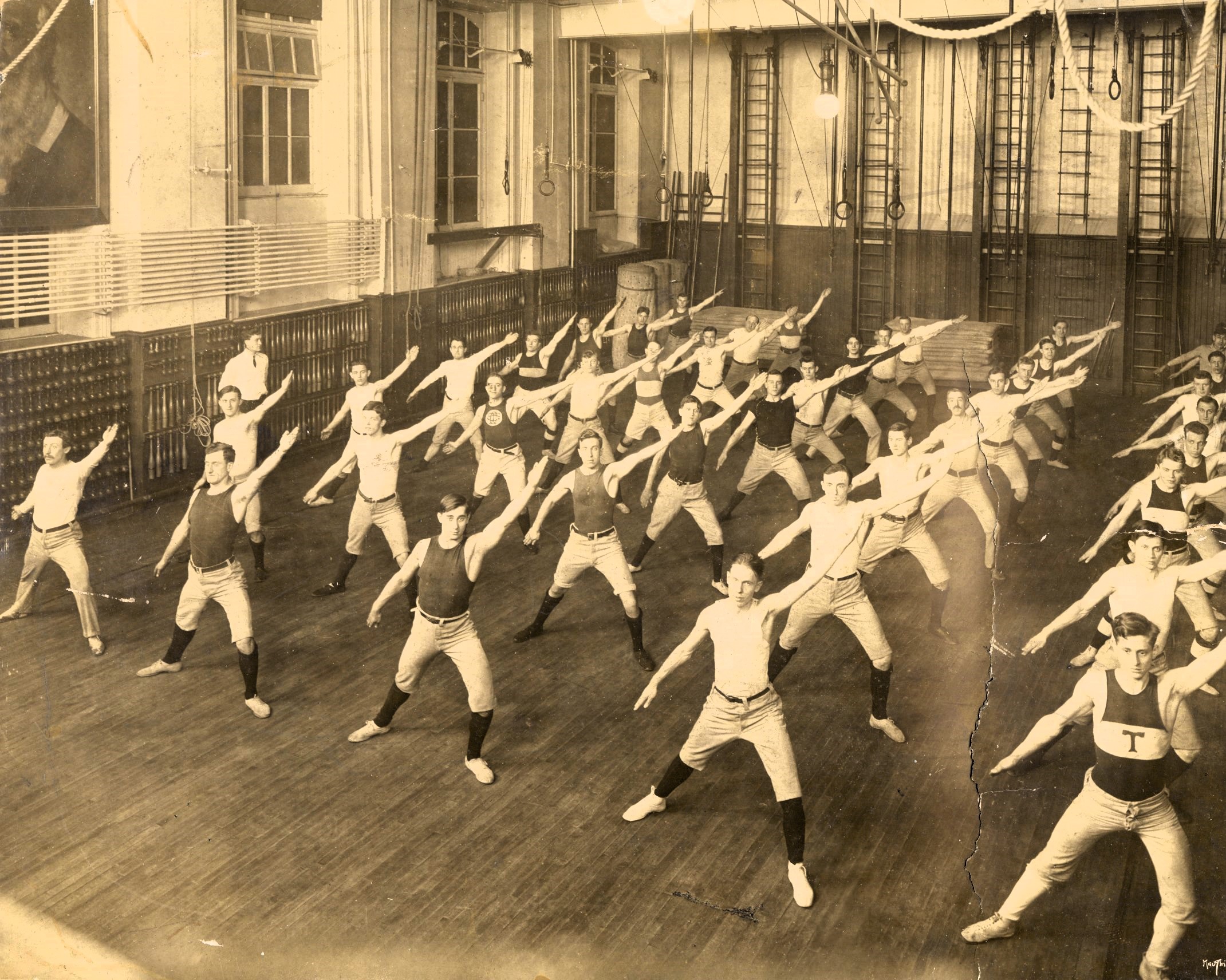
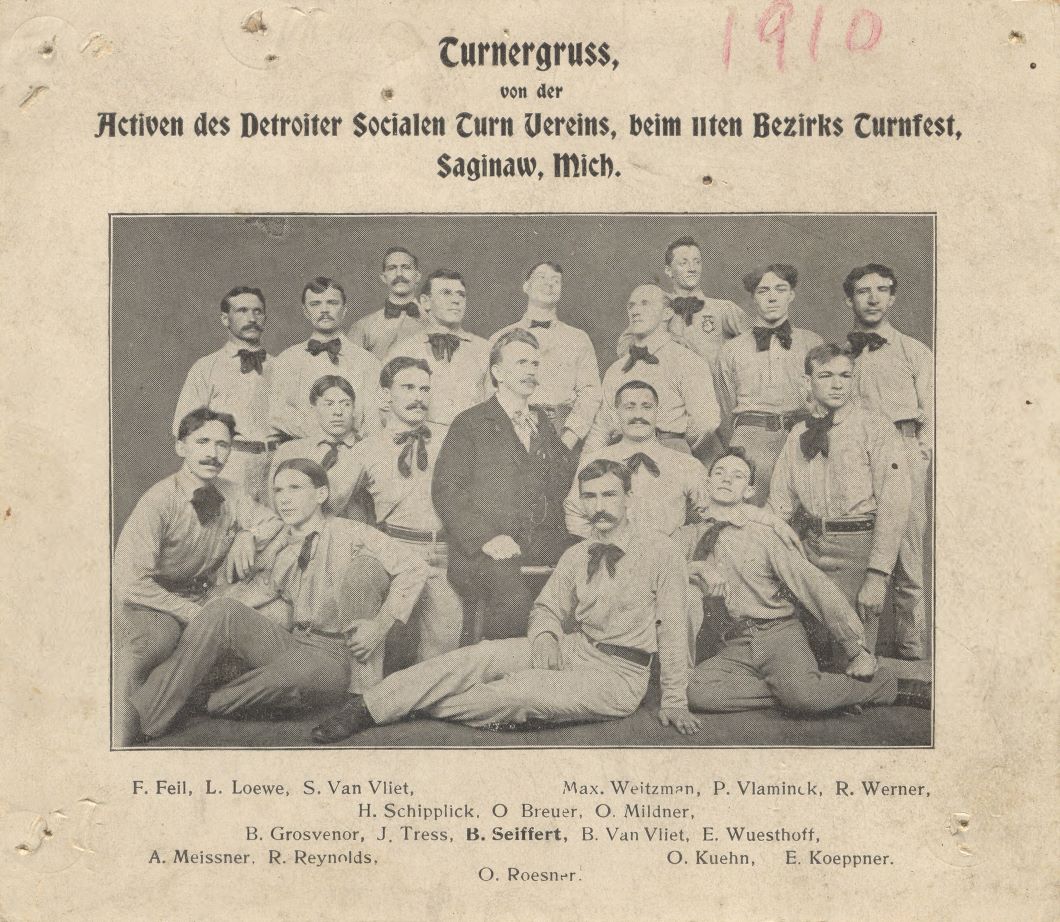
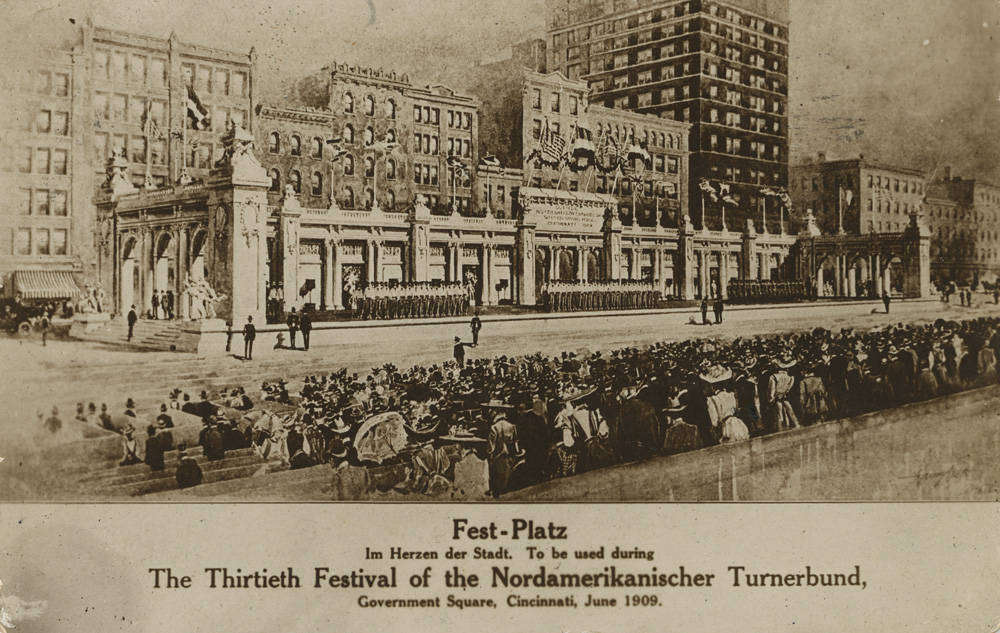
At the 1908 meeting of the North American Turnerbund, with tens of thousands of working-class members, a new left wing platform was adopted. Much of whatever is civilized among the culture of white workers in the U.S. can be traced to the influence of German gymnasts.
‘Gymnastic Union Becomes More Revolutionary’ from the New York Call. Vol. 1 No. 32. July 6, 1908.
CHICAGO, July 6. The delegates to the national convention of the North American Turnerbund, in session here last week, have expressed themselves in no uncertain terms. The closed the important part of the convention by demanding personal liberty, passing resolutions protesting against the censorship by postmasters over Socialist newspapers and denouncing prohibition. A new platform was unanimously adopted and reports of various committees were submitted,
The fight which was expected to result when the new platform was presented did not come. This was a surprise to the progressives, for they expected the conservatives to fight it to a standstill, as the platform is much more radical than any before presented.
Text of the Platform.
The platform declares the organization to be in no sense political, touches strongly upon social conditions as they now exist and demands popular rights, just laws, preventing the exploitation of labor by capital, and among other things favors the settlement of international disputes by legal and judicial procedure. The following is the platform, in part:
The North American Turnerbund (Gymnastic Union) is an association of liberty-loving and progressive men, organized for the purpose of fostering and disseminating such ideas, views and doctrines as are founded upon scientific research and discoveries and which guarantee the realization of the physical, moral, mental and material welfare of humanity at large as well as the individual.
We make it obligatory upon our societies to maintain uniform gymnastic exercises among their members and in the schools of the respective societies, upon rational principles, and also to uplift the mental and moral standard of their pupils and members by arranging scientific lectures and debates.
We are for religious liberty in the most far-going sense of the word, but we also will work with all our powers toward the dissemination of such ideas and such a philosophy as are founded upon the knowledge of the laws and the powers of nature, and which find an explanation of the natural phenomena in such laws and powers.
Man is a social being; his whole existence grows out of the conditional and environments of society, and society is the fountain of civilization and progress.
The state, as it exists from time to time, with all its institutions, laws, rights and duties, forms a step in the evolution of society. As little as the state always was what it is today, just as little will it remain what it is now. The best evidence of the progress in the political institutions of the state is the continually growing protection of the rights of the individual and the equality before the law, the growing of the influence and the sphere of power of the masses of the people against the classes.
When we have such industrial conditions that such extremes are being created like a millionaire on one side and beggars and tramps on the other, and if everything that lies between these two extremes seems to be forced either to one or to the other side, a small number up and a large number down, then it must be expected that certain classes will usurp the political powers. We therefore are in favor of such institutions which will create an equalization in the industrial and economical life of the nation.
We favor arrangements and legal enactments, which on the one hand tend to prevent the exploitation of labor by capital, secure to the work man the fruits of his labor and gradually prevent the division of the people into classes, but which, on the other hand, also prevent acts of injustice in the struggle between labor and capital.
Under our present law more attention is paid to property than to man. Greater protection of the citizens against the dangers of carelessness in the management and construction of our means of transportation and of the workman against the dangers of his calling is an absolute necessity.
To every human being must be given the possibility to secure by the use of his intellectual or physical labor an existence worthy of man, and to enjoy the fruits of the cultural progress of humanity through the thousands of years past.
History shows in the course of evolution the growth of the power of right over might in all social and political relations from the individual upward to the whole nation. The time for further extension of the recognition of Right as superior to Might has come.
We are, therefore: in favor of the settling of all international disputes by legal and judicial procedure and the furtherance of all common cultural endeavors between nations.
We consider it one of our special duties to preserve German customs and habits and the German language. We are not a political party, we do not charge our members with the observation of certain dogmas or special demands, but we expect them to live and act as men and citizens in the sense of a philosophy of which the principal points are laid down in the foregoing declaration.
The New York Call was the first English-language Socialist daily paper in New York City and the second in the US after the Chicago Daily Socialist. The paper was the center of the Socialist Party and under the influence of Morris Hillquit, Charles Ervin, Julius Gerber, and William Butscher. The paper was opposed to World War One, and, unsurprising given the era’s fluidity, ambivalent on the Russian Revolution even after the expulsion of the SP’s Left Wing. The paper is an invaluable resource for information on the city’s workers movement and history and one of the most important papers in the history of US socialism. The paper ran from 1908 until 1923.
PDF of full issue: https://www.marxists.org/history/usa/pubs/the-new-york-call/1908/080706-newyorkcall-v01n32.pdf
 Revolution's Newsstand