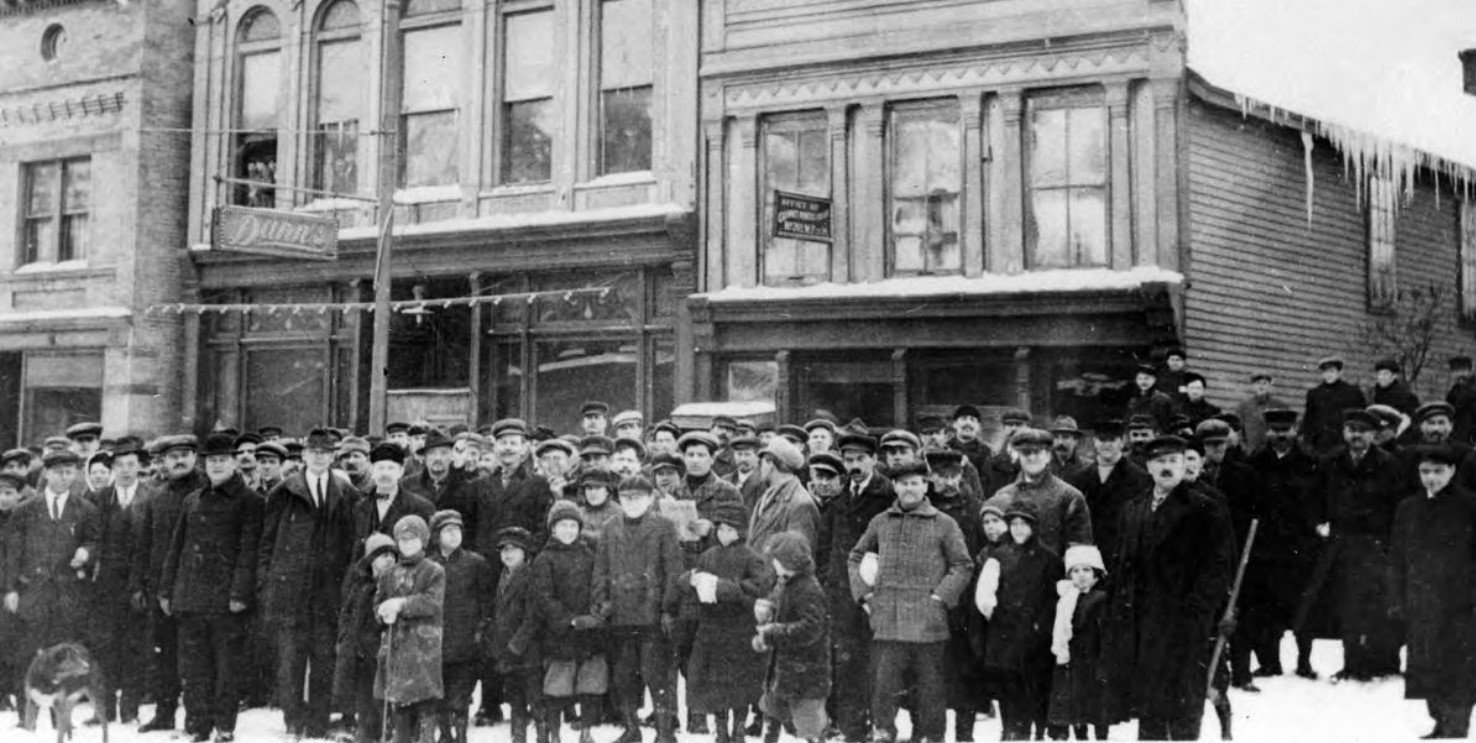
The story of Michigan’s Upper Peninsula long, grinding strike led by the factionalized Western Federation of miners among Finns, Cornish, Italian, and Irish copper miners. Four months after this was written, the ‘Italian Hall Disaster’ saw dozens of miners’ children die in a fire at a Christmas party.
‘Copper Miners Revolt’ by T.F.G. Dougherty from Solidarity. Vol. 4 No. 36. September 13, 1913.
Grand Rapids, Mich., Aug. 31. The strike of the copper mine workers in the upper peninsula of Michigan is still on, notwithstanding statements of the capitalist press that “large numbers of miners were returning to work,” that the strikers were “breaking away” from the W.F. of M. and that “many strikers would return to work, but were afraid to do so,” and various other statements, some correspondents contradicting themselves many times in the sensational “bull” they send to their respective sheets.
Every day since the strike and lockout was inaugurated by the workers on the one side and the mine bosses on the other, the various newspaper correspondents have been “expecting trouble to occur today or tomorrow” and also every day they have stated that the “expected trouble” did not occur, but “that it surely may be looked for tomorrow,” when this, that or the other will happen. Every day these wealth producers now in revolt against the oppression imposed upon them for years, have been described as going about “with sullen, desperate looks” only awaiting the opportunity to do some terrible deed. Five weeks ago these workers were of no interest to the “general public;” they probably looked no different then than they may have looked just as “sullen” and “desperate” before the strike as they are said to appear at this time. There may have been much rough house play and even some pretty stiff fights among them prior to the strike, al of which was taken care of by a few inconspicuous cops and a dignified parasite known as a police court judge. No notice was taken of this other than a few lines of “personal mention” for the most serious offenders in the police court news of the local papers. But you see prior to the strike there was little or no solidarity among these workers (there is not a great deal now) and then they fought among themselves and against each other. But now they are trying to fight the boss, and that is different; that is why they are now described in column articles with big headlines as “sullen” and “desperate.” You may look as “sullen” and be as “desperate” as you please, Messrs. Workers, so long as you fight among yourselves, and little attention will be paid to you. But just as soon as you begin to fight the boss, well, look out for trouble.
Everything possible has been done by the bosses and their hirelings of all sorts, to goad the strikers into committing arts that would give an excuse for the declaration of martial law, when, as one newspaper correspondent puts it, “all state laws would be in abeyance, even the law against capital punishment.” These correspondents have been able assistants to the mine bosses, as their articles have had a tendency to inflame the minds of many persons throughout the state against the strikers, thus making it easy for the murderous gunmen to pull off some “trouble” and blame it on the strikers.
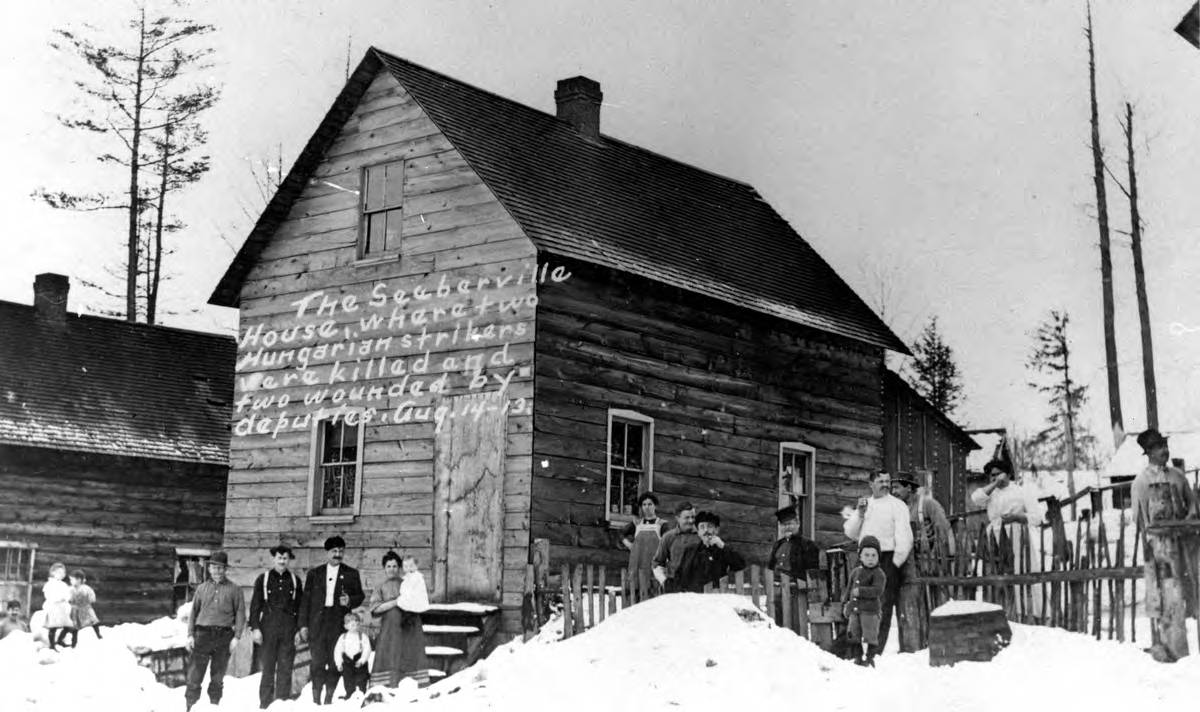
The bosses and their hirelings, thinking that they had everything ready to make their play, attempted to put it into effect on the night of August 14. It is alleged that when the strikers got word that the Champion mine at Zeberville was hoisting rock, they assembled there and began to taunt the gunmen used as guards, and the scabs. It is claimed that the strikers hurled rocks at the scabs and. that night the deputies and gunmen went to a boarding house for the purpose of arresting two strikers who, it is claimed (by the gunmen) had made the assertion “that the streets would run with blood as soon the troops were withdrawn.” These deputies and gunmen, fully armed, and with their guns in their hands, went into the kitchen where fifty persons were assembled and selected two men as their prisoners and started to leave with them. Now get this, from the capitalist press:
“Hardly had they (gunmen and deputies) set foot out of doors when a striker sent a bullet by the head of the officers (note the positive statement.) Deputy Sheriff Polkins then raised his gun and fired. His shot was returned with a volley. Shooting became general as the deputies took to cover and the strikers dodged from doors and windows.”
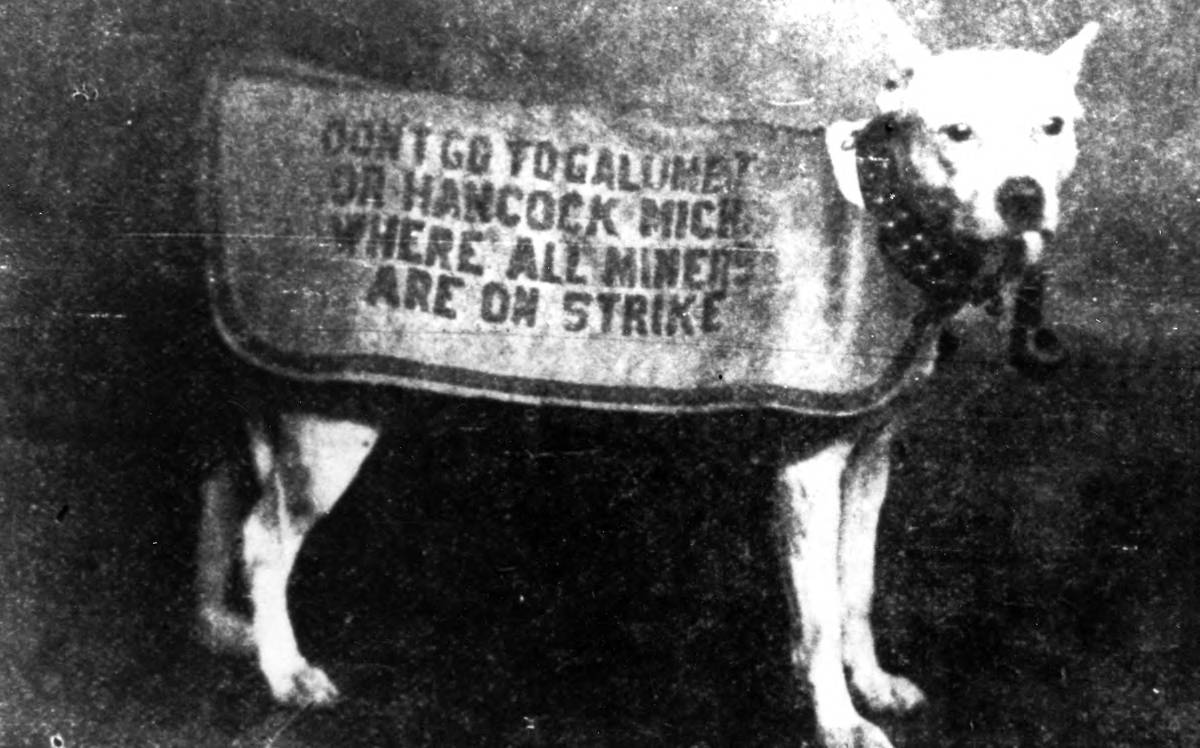
The result of this “battle” was that two strikers, Alozie Zejon, 18 years old, and Steve Petrich were killed and three strikers and two deputies were wounded. It was stated that Zejon, from the position of his body, had been shot by his friends. The deputies then arrested two strikers–John Kallon and Joseph Pargon, [damaged paper] the capitalist press put it [damaged paper] charge them with murder.” D’ye see?
However, as Ould Bobby Burns (no relative to Defective) was wont to say, “The best laid plans of mice and men gang aft aglee.” The W.F. of M. got on the job and so did County Prosecutor Lucas and an investigation resulted in disclosing the fact that none of these “desperate” strikers who were alleged to have put up such a fierce battle were armed. They had no guns, no clubs, no knives, therefore could have neither wounded nor killed anyone. And even the capitalist press had to back water and tone down its lurid reports of many things that never took place and the exaggeration of small occurrences into large and terrible deeds, and, alas for the mine owners, the “trouble” by which they expected to have martial law declared has failed of its purpose and is likely to prove a boomerang to them.
The county prosecutor who, up to date has proved to be a man who is not controlled by the mine bosses, has issued warrants for the arrest of the foremen and deputies for the killing of the two strikers and wounding three others. Sheriff Cruse, apparent tool of the mine owners, dodged about. all over the country to escape these warrants, but was finally nailed. Two of the deputies were arrested, but it is said the four gunmen escaped. The wounded deputies were shot and clubbed by their fellow murderers.
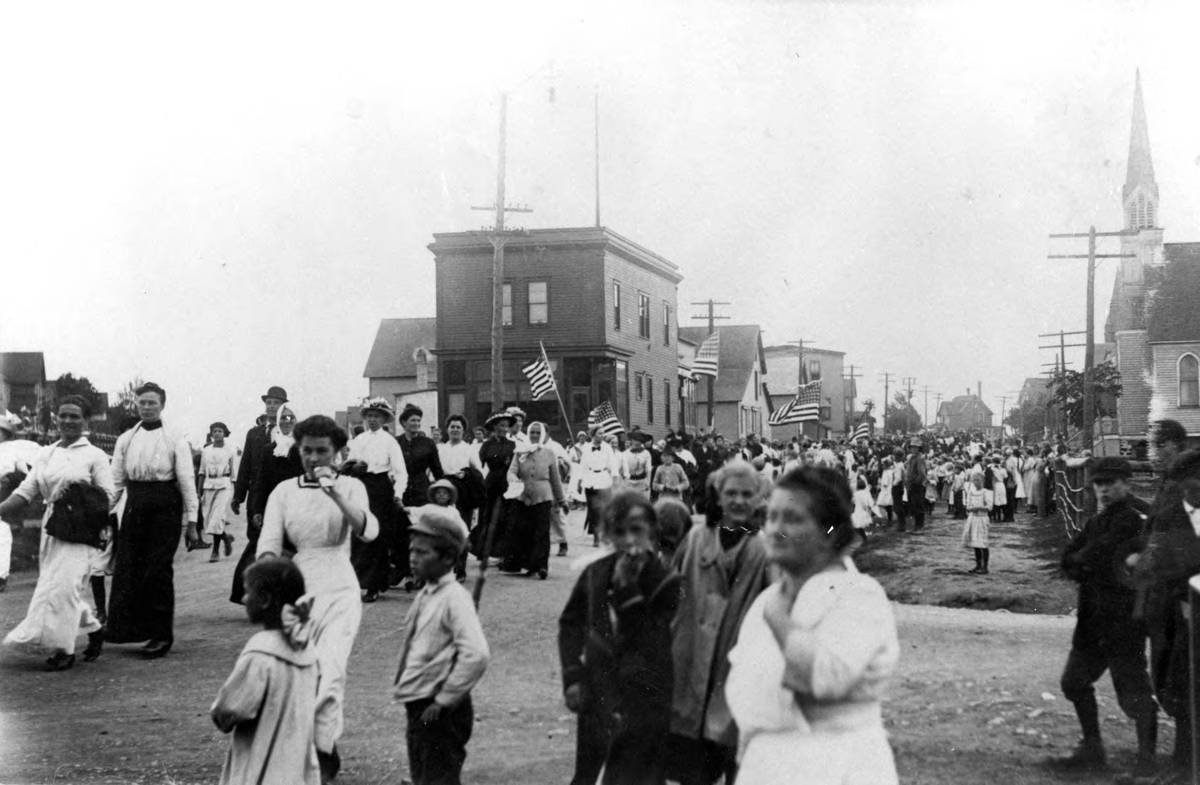
Ten thousand copper mine workers attended the funeral of the two strikers so foully murdered by men of their own class in the interests of their capitalist masters.
The inquest into the death of the two strikers has been postponed from time to time and the county supervisors, apparently acting at the direction of the mine bosses, has petitioned the state attorney general to remove Prosecutor Lucas or to appoint an assistant to him who shall have charge of all strike cases. Lucas has made a strong protest against this and it remains to be seen what the outcome will be. There are antagonistic capitalist forces at work here, but the copper mine group appears to be pretty strong.
Governor Ferris appointed Judge Murphy some time ago to investigate the strike, the wages and working conditions of the miners, and in the report he submitted he condemns the mine bosses and upholds the strikers, and states that the deputies and gunmen were to blame for killing and wounding the strikers. The mine owners in answer to questions by Judge Murphy stated that the workers would be “reemployed upon the same terms and conditions of labor as existed at the several properties prior to the inception of the strike.” “But we (the) bosses) severally reserve the right to use our individual discretion as to the reemployment of any who may be known to have engaged in acts of agitation, lawlessness, violence or inciting thereto.”, As to wages, a uniform minimum wage scale is “impracticable,” but the bosses are willing to submit their payrolls and “other” data to the governor for his inspection, to prove their contentions as to the shorter workday. Why, the mine bosses had intended all along to introduce the eight hour day as soon as and whenever found “practicable,” don’t you know.

In regard to the one-man drill, (familiarly called by the miners “the widow maker”) the bosses assert: “We can only state that with respect to this, as to all our operations, our efforts, in advance of all other considerations, ARE EXERTED TO SECURE THE SAFETY OF OUR EMPLOYES (and the bull wept.) The conditions of competition, the low grade of our rock as compared with other districts, the increasing expense. with debts and other conditions, have made the use of the one-man drill imperative for the continuation of operations.” So widows and orphans must be created that competition may be met, expenses kept down and dividends paid. And when the widows and orphans, made such by the operations of the one-man drill, feel downhearted, let them read these statistics about the Calumet & Hecla, which dominates all other properties in the district:
The Calumet and Hecla Company was incorporated in 1866 with a capital stock of $2,500,000. Of this amount $1,200,000 was paid in capital, in 100,000 shares at $25 a share. In its history the company has paid $120,000,000 in dividends and has paid from its sinking fund enough to buy subsidiary companies valued at $20,000,000, and wages go down to as low as $7.25 for 25 days’ work. Pity the poor mine owners, and cheerfully operate the widow maker. HELL! Let some mealy mouthed sky pilot lead in prayer.

“The request for non-employment of boys under 18,” say the bosses, “is clearly a matter for the legislative.” When the one big union gets on the job the bosses will find out where the workers’ legislature is.
As for recognizing the W.F. of M., nix, no, never; the bosses say they will have none of it. The bosses will take care of “their” men “as in the past,” as individuals and will deal with all grievances directly. And they points to the thousands of dollars they have so “generously” spent for the “uplift” of “their” employes.
Mother Jones visited the strike region, made some speeches, then is said to have gone to Washington, for what I don’t know. John Walker of Illinois and John Mitchell were also in the copper country.
There are said to be three factions among the miners. Moyer, represented by O’Grady: Mahoney, vice president of the W.F. of M., who is said to want Moyer’s job, and the socialists led by Miller of the executive committee of the W.F. of M. It is stated that Moyer was in Europe at the time the strike was called, and that had he been here, the strike would not have been ordered. It is said that he is in favor of the workers going back to work and building up the local organizations. The other factions (that is the leaders, according to the capitalist press) want something else. What the workers themselves want or intend to do, is not stated. Suppose such a small detail as this is not worthy of notice.
According to an alleged speech by Mahoney at the inception of the strike, also editorials in the “reform” and “fair” capitalist papers, had the mine bosses treated “their workers as industrial equals” and “recognized their rights” and called “their men into consultation regarding the operation of the mines” there would have been no strike. Oh, joy!

Tool-owning masters and tool-using slaves are called “industrial equals.” The tool owner lives in comfort d luxury on the values created by the toiling, starving slaves, “industrial equals.” As for “rights,” no slave ever had rights that a master was bound to respect; rights conferred by masters and respected by the master class, are rights in name only and are solely in the interests of the masters who confer them. The only rights that slaves or others have are the rights that they have the POWER to TAKE and to HOLD. As for consulting the slaves, the boss does this when necessary, either directly or indirectly (mostly the latter) and if the consultation is not satisfactory to the boss, why the slave becomes a masterless man and hikes out to be “mastered,” that is to get a new job.
The expense of the strike mounts up and the dear taxpayer squeals. It is estimated that to August 26 the strike cost the state $204,000, while Houghton and Keewanaw counties have $50,000 to pay. The mining companies figured they would get $2,040,000 in surplus value out of their slaves for the last five weeks; that’s what the strike has cost the mine owners. The strikers have “lost” in wages $1,700,000, As the capitalist would put it, the total cost of the strike to the date mentioned, is about $5,000,000.
Say, did you ever notice the tears shed by the capitalist press over the wages “lost” by workers when on strike? But did you ever stop to thin that while workers are on strike they not only do not receive wages, and neither are they producing surplus value, and that is what concerns the boss more than the “lost” wages. Where the workers tie up production there is neither wages nor profit; production ceases. Do you observe where the worker’s power is?
When a new machine or new process is developed that displaces many workers and increases profits for the boss, you don’t hear a word about “lost” wages to the workers. Also when the boss, for any reason shuts down the mills, mines, factories, etc., how much do you hear about “lost” wages?
By the way, the ore mill men are not on strike, neither are the men who timber the mines, etc., the engineers, and others, according to the reports by the capitalist papers. These workers, it is stated, are working where possible, which doesn’t look much like the semi-industrial, non-revolutionary (though militant) W.F. of M. of many years ago.
When the WORKERS begin to RECOGNIZE that the only way to fight the boss is by being organized solidly in a revolutionary industrial union, the boss will wish that he had recognized the now-conservative W.F. of M.
Yes, Mr. Mine Owner, the I.W.W. will develop in the copper country, as well as every other place where workers are oppressed and robbed of what their labor power creates.
The most widely read of I.W.W. newspapers, Solidarity was published by the Industrial Workers of the World from 1909 until 1917. First produced in New Castle, Pennsylvania, and born during the McKees Rocks strike, Solidarity later moved to Cleveland, Ohio until 1917 then spent its last months in Chicago. With a circulation of around 12,000 and a readership many times that, Solidarity was instrumental in defining the Wobbly world-view at the height of their influence in the working class. It was edited over its life by A.M. Stirton, H.A. Goff, Ben H. Williams, Ralph Chaplin who also provided much of the paper’s color, and others. Like nearly all the left press it fell victim to federal repression in 1917.
PDF of full issue: https://www.marxists.org/history/usa/pubs/solidarity-iww/1913/v04n36-w192-sep-13-1913-solidarity.pdf
 Revolution's Newsstand