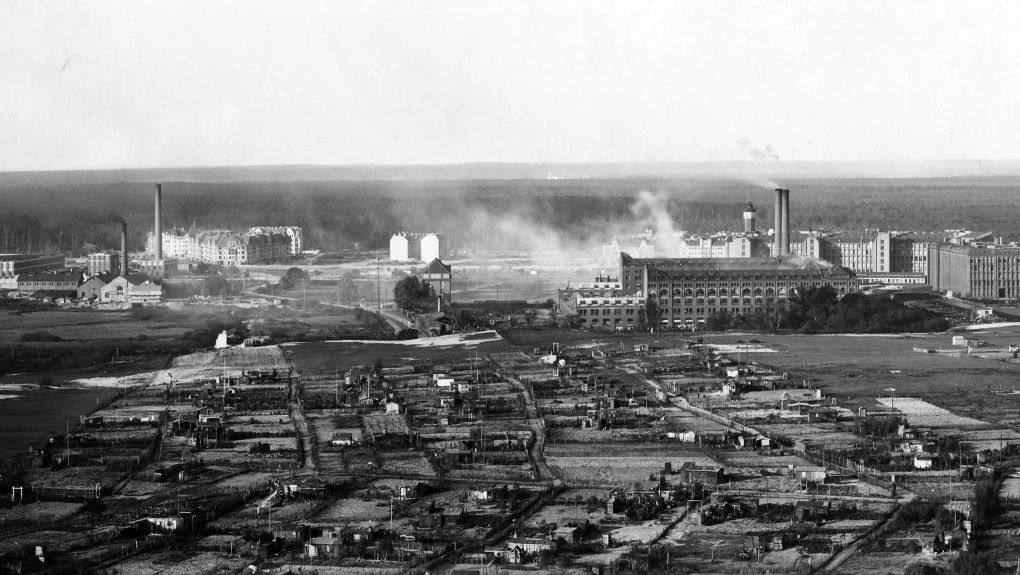
A fascinating look at the work of the German Communist Party nuclei of 400 cadre in the massive Siemens metal works outside of Berlin.
‘The Activity of a Factory Nucleus in Germany’ by Max Hesse from International Press Correspondence. Vol. 5 No. 11. February 5, 1925.
The chief task in which the German Party is now engaged is the reorganisation of the Party on the basis of factory nuclei. Although this activity has been developed really intensively only since the Fifth Congress, certain results are already evident. The reasons for the great progress hitherto made in the German Party after such a short time are due to the fact that since the very foundation of the Communist Party of Germany a certain amount of fractional work has been carried on in the factories. In contrast with the present nucleus activity, fractional work formerly was more of a subordinate matter. The principal centre of gravity of the political agitational work was in the residential districts. Thanks to the ever progressing Bolshevisation of the Party, especially under the direction of the new Central Committees, the recognition of the role of the Party and especially of the importance of anchoring it in the factories became more wide-spread.
Many difficulties of a personal and organisational nature became manifest in the application of the factory nucleus work in Germany. But the new Party leadership succeeded to a great extent in overcoming these difficulties. It may be affirmed that in most of the important large industries of Germany (2000), we already have established our nuclei. The factory nuclei papers have proved a very important factor in the building up of these nuclei. The circulation of these nuclei papers increases with every number; for instance, the factory nucleus of the Finkenwerder Docks shows the following publishing record: No. 1, 250 copies; and No. 3, 3200 copies.
The recent Party Congress of the Berlin-Brandenburg District was attended by 90 delegates elected directly from the nuclei.
The publication of the experiences of individual factory nuclei was especially helpful in conducting factory nuclei work. In order that the proper questions be answered from the very beginning, the Orgbureau of the Central Committee formulated a general questionnaire and the answers to the following questions were systematically utilised and distributed to the other districts.
1. How I organised my factory nucleus (railway, post, telegraph, gas works, electricity works, metal works, mines, docks harbours, warehouses, building construction, etc.).
2. How I am trying to draw all the members of my factory nucleus into regular activity.
3. How I get all the members of the nucleus to take part regularly in the nucleus meetings.
4. How I collect the Party dues in the factory.
5. How I organise the distribution of the Party paper in the factory.
6. How I organised the distribution of pamphlets in the factory.
7. How I am reorganising my local group on the basis of the factory nuclei.
The following paragraphs are to show how such a nucleus functions, how it is guided, and what value it has for the Party. Every single nucleus elects its own leadership of from three to five comrades. This leadership is responsible politically and organisationally to the Party. The activity of each nucleus naturally depends on the social and economic structure of the factory. A description of the nucleus in the Siemens Works is a sector out of the national organisation. One might say that throughout Germany in the most important nuclei, a similar activity, or perhaps even better, is conducted.

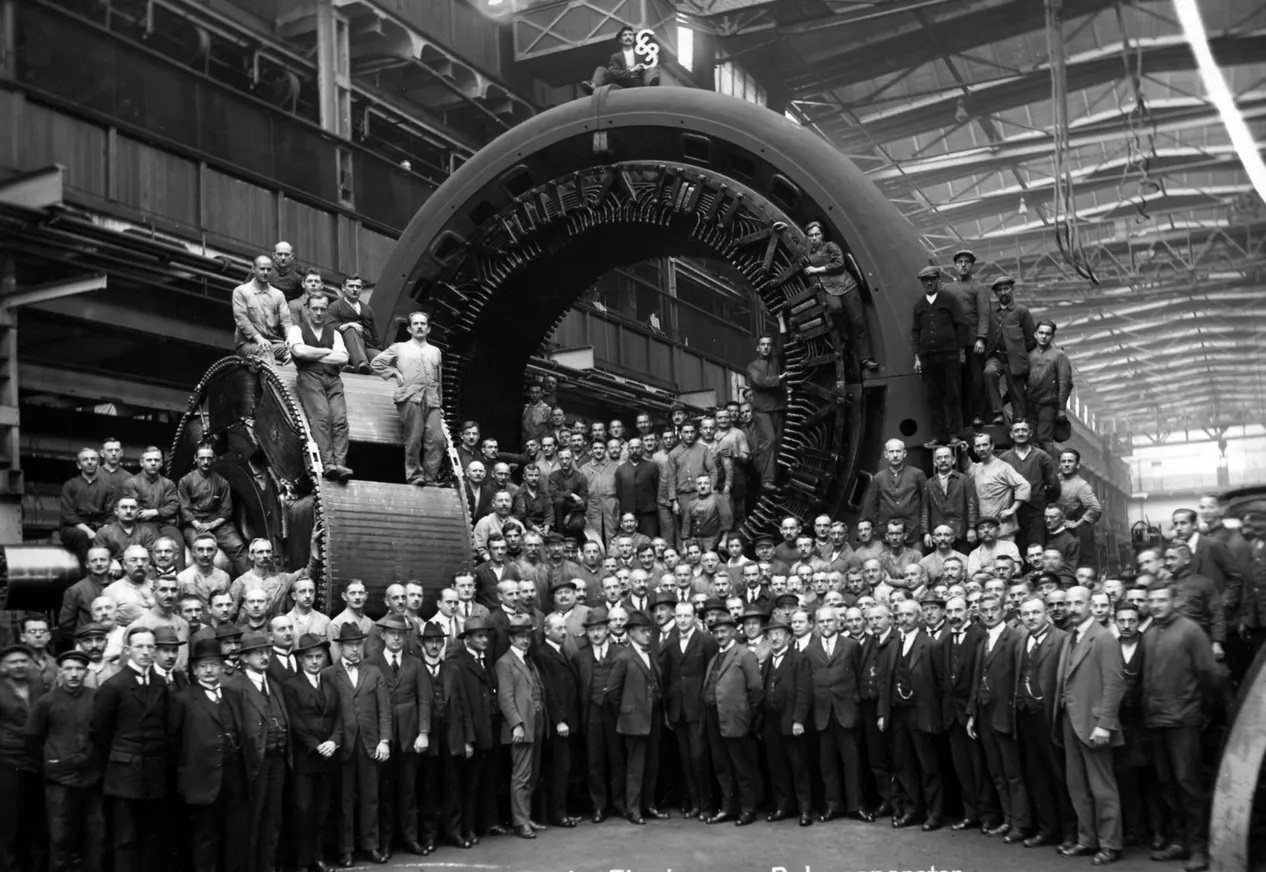
The Siemens-Concern is one of the most important factories in the Berlin Metal Industry. It employs 35,000 people (workers and administrative employees). Our nucleus is about 400 strong. The nucleus is subdivided into individual sections for the various departments. The chairman of the entire nucleus is a member of the Berlin District Party leading organ and also member of the Central Committee of the Party, ad a newly elected member of the Prussian Landtag. In every single department of the concern a nucleus meeting takes place once a week, and every fortnight the entire nucleus assembles. In its systematic work in the factories, the nucleus has succeeded in increasing communist influence to such an extent that at the elections of the factory council, the majority of the employees voted for the communists. In these weekly meetings, all questions of propaganda, agitation, and the activity of the nucleus in the factory are discussed. The communist members of the factory council are obliged to give an account of their activity at these meetings. They have no voice in the control of the complete nucleus, and are subject to the decisions of the nucleus. Each comrade reports his experiences in the departments and sub- divisions of the concern. The chairman of Agitprop distributes the latest party brochures for sale in the factory. The Editorial Commission of the factory newspaper reads its manuscripts. A comrade reports on the decisions of the Party.
Since nearly 40% of the employees of the Siemens-Works are women, the nucleus devoted special attention to agitation among women. When the nucleus considers it necessary to organise a factory meeting, the comrades in the factory council are entrusted with preparing for it and conducting it. The subject of the factory meeting, indeed, even the debaters, are determined by the nucleus so that any possible differences between the communists are not given expression to in public. In the nucleus itself these differences are thrashed out. The organ of the nucleus, the “Siemens-Zeitung” is, of course, edited and financed by the nucleus. It has already succeeded in increasing its circulation to 4,000 copies. The Siemens Nucleus sends its own delegates independently to the Party organisations (District Conferences, Party Congresses, and such like). For instance, at the last Party Conference of the Berlin-Brandenburg District in October, the Siemens Nucleus sent four delegates. The members of the nucleus are ex officio delegated members to the leading organ of the District in which the factory is located.
This systematic activity on the part of the nucleus has naturally called forth a reply from the management and the social democrats in the factory, i.e. attempts have been made to remove the responsible comrades from the factory, especially those issuing the paper. Hence the activity of the nucleus is carried on mostly illegally. In spite of the offensive on the part of the management, it can be asserted that the influence of the communists so far has not been broken, even though it has been interfered with here and there, The Siemens-Concern has proved, at all events, that it stood in the front ranks in the fights of the proletariat.
The activity of the nucleus described here is naturally not the only activity it carries on, for the fights in connection with wages and conditions of work, which are a current problem in the Siemens-Concern, demand important co-operation on the part of the nucleus. All economic questions which affect the workers are thoroughly discussed in the nucleus and the communist tactics determined. Through this systematic work it has come about that strikes in certain professions (turners, tool makers) immediately spread as a result of the nucleus activity. Last August the turners in the cable department, which employs 4,000 persons, made certain wage demands. The small group of turners (150) went on strike, but the department continued working.
Then the systematic propaganda of the nucleus was set in motion and only two days later all the employees adopted the demands of the turners, and struck in sympathy. As a result of this activity on the part of the workers, the management was compelled to give in and the demands were partially granted.
In the Dynamo Department, employing 3,500, a similar situation exists at present. In July 1923, on the occasion of the great metal workers strikes. the Siemens-Concern was the first to enter the fight practically without reservation, which was a surprise to the reformist leaders in the German Metal Workers Union, who believed that the Siemens workers were tired of the fights. These noble gentlemen had simply neglected to reckon with the activity of our communist nucleus.
In addition to all of these tasks, the nucleus is constantly engaged in fighting the daily attacks of the Social Democrats.
Every possible opportunity is used to tear Soviet Russia to pieces. At the present time the Social Democrats are carrying on propaganda in the factories in connection with the bad living conditions of the workers in Soviet Russia, the alleged starvation and the treatment of political prisoners. Against this campaign of vilification the nucleus naturally fought with every available means. But in order that we can be equipped with effective weapons in this fight, we would welcome the receipt of reports from Russian workers on how they live, their wages, the administration of the factories, the criminal acts of the Menshevists and the Socialist. Revolutionaries, and other matters. For such reports would unmask the social democrats more effectively than anything else. The Party has issued the slogan:
Entrench yourselves in the factories.
To strengthen and extend these entrenchments is now the chief task of all communists in the factories. Although these activities may still be difficult today, we hope soon to have developed so far in Germany that we can say: Every factory is a fortress, and even beyond that: Every factory is our property! The path of the German Revolution is a difficult and painful one. But it will be trod to its goal that is guaranteed by the Communist Party of Germany and by its work in the factory nuclei.
Whereas the activity of one individual nucleus is described above, certain facts must be given here to show that the Party in general has made even greater progress. During the period from May to August, 1092 factory nuclei were organised capable of work. During the same period 830 factory newspapers were issued. Both these figures are an underestimation rather than otherwise and it may be assumed that at the present time additional nuclei and papers have come into existence, for the recent election campaign showed that the nuclei were already effective.
The fact that the idea of the factory nuclei is a live one throughout the whole International, and that the necessity of the idea is not only recognised but is being practically applied is happily shown by the activity of the comparatively smaller parties. In Austria we already have several well-functioning nuclei in Vienna, including one (in the Vakhalovsky Locomotive Works) with a membership of 600 members. In Holland the organisation of factory nuclei has begun and the Communist Party of Switzerland is also working on this question. The results of the activity of these parties are meagre, but “Every Factory is our Fortress” still is becoming more and more recognised by the Communist International. Though in the process of transformation difficulties are encountered, these must be overcome, for the political significance of the factory nuclei in the fight for power has been demonstrated by the Russian Revolution. We must learn from experiences in order to reach our goal, the liberation of the working class of all countries.
International Press Correspondence, widely known as”Inprecorr” was published by the Executive Committee of the Communist International (ECCI) regularly in German and English, occasionally in many other languages, beginning in 1921 and lasting in English until 1938. Inprecorr’s role was to supply translated articles to the English-speaking press of the International from the Comintern’s different sections, as well as news and statements from the ECCI. Many ‘Daily Worker’ and ‘Communist’ articles originated in Inprecorr, and it also published articles by American comrades for use in other countries. It was published at least weekly, and often thrice weekly.
PDF of full issue: https://www.marxists.org/history/international/comintern/inprecor/1925/v05n11-feb-05-1925-inprecor.pdf
 Revolution's Newsstand