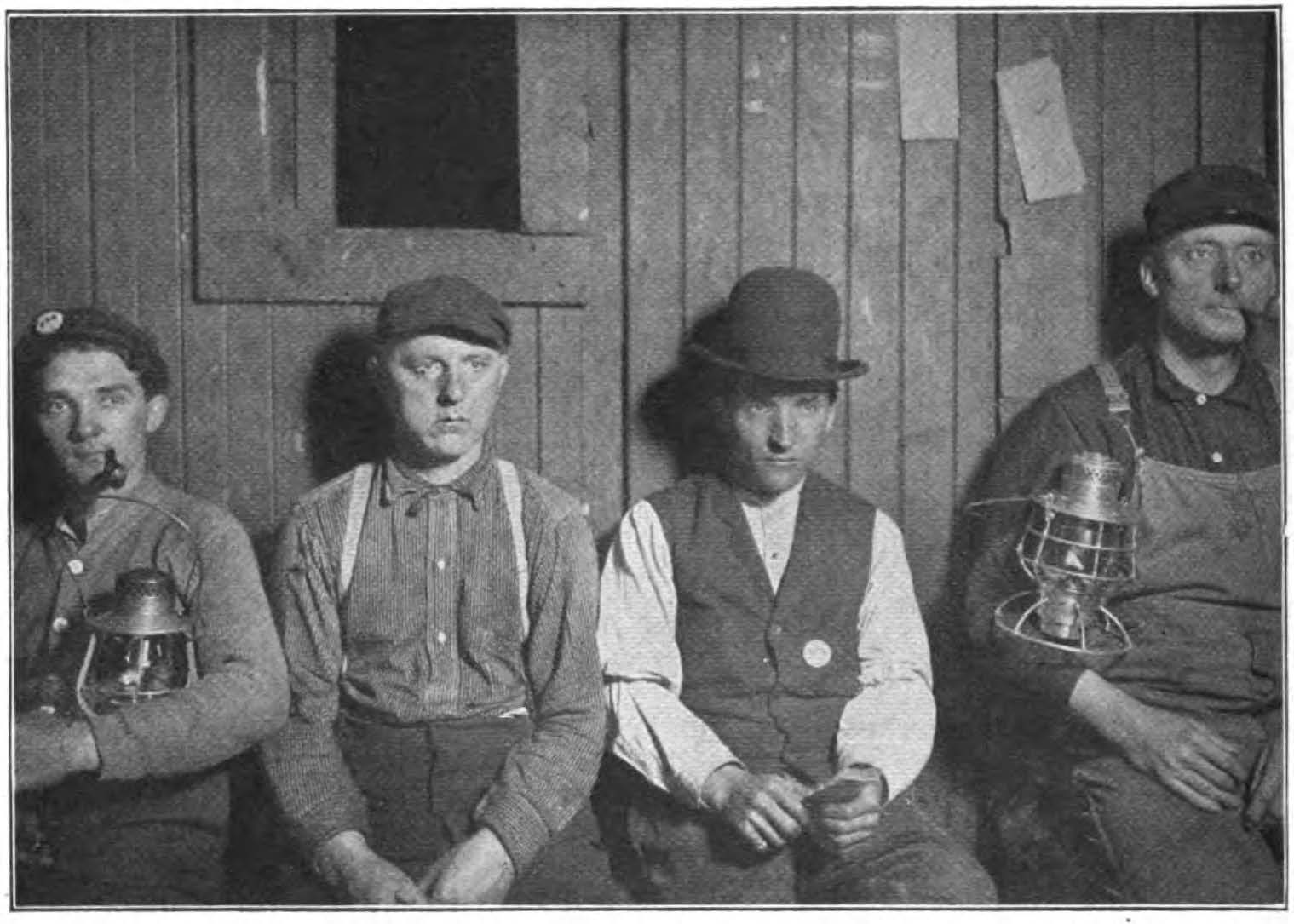
The struggles of railroad workers against exploitation and overwork is as long as industrial capitalism. While in many ways the conditions in which this was written 110 years are different today, in the most fundamental ways, little has changed. I am sure every rail worker would recognize more than one of comrade Chris Hill’s litany of abuses and hardships.
‘Notes About Railroading’ by Chris N. Hill from The International Socialist Review. Vol. 13 No. 1. July, 1912.
THERE is now a law which is supposed to limit the hours of a railroad man to 16. If a man works over the 16 hours, he (as well as the railroad officials), are subject to fine and imprisonment, unless it becomes necessary, through ‘some unforeseen act of God,’ as the law terms it, which means wrecks, wash-outs or snow-storms. For instance, suppose a derailment happens which ties up traffic at that particular point for two hours and you are on a train just leaving a terminal, 60 miles from the accident, and the company put so much work on you that they saw you could not get in, inside the 16-hour limit, you would receive a message to exceed the 16-hour limit two hours, although the derailment did not affect the movement of your train in the least. Your arrival at the spot where the derailment occurred to find that train ready for traffic, proves this.
Trainmen (engineers, firemen, conductors, flagmen and brakemen are so termed), are supposed to have eight hours rest after their day’s work, which is supposed to be 16 hours or less. Now this eight hours is supposed by the law, to be all rest. Whether it is or not will be shown below. We will suppose that we arrive at the home terminal after 15 hours’ work, which requires eight hours’ rest. After we put our train away, it takes on an average, 20 minutes to get home. Then 30 minutes for bath and 30 minutes for meals. This is one hour and twenty minutes of the eight hours’ rest consumed already. We will not allow any time for our meal to digest, to get up the fuel or any of the necessary chores around the house that we don’t want “wifey” to do. We proceed to bed on a full stomach and at 2 p. m., the caller comes for us to go to work at four. We are given two hours before leaving time to get ready, but really only an hour and a half as our time starts at 3:30 and we are sup- posed to look over our trains or have our engines ready so that the train can leave at four. So there is only seven hours and thirty minutes really. Now, after we are called we eat another hasty meal, and have time for a long visit with loved ones at home.
Now, let’s figure up how much real rest (seep) we have had: 20 minutes for reaching home, 30 minutes for bath, 30 minutes for meals. That would be one hour and 20 minutes; then called at two p.m., making four hours and 40 minutes sleep which is all of the real rest we get.
I have been on duty over 16 hours numbers of times and when the conductor would register the time at the end of the road he would make the figures show we had only been on duty 16 hours. Of course we get paid for the time we worked, but the I.C. “Commission” would not see the figures on the time slips and the conductors would be afraid of being discharged if they registered the right number of hours on duty. Often when a man has to stay at the other end of the road in some dirty old caboose, or R.R.Y. M.C.A., they don’t think anything of keeping him there 20 or 30 hours. Is not this a grand life when a brakeman receives the munificent sum of $2.42 per diem of 10 hours? Perhaps you or your wife is sick and business is rushed and extra men are scarce and you want to lay off a day or two. Then а big howl goes up, “Ме can’t spare you” But if you happen to be 20 or 30 minutes late and seriously delay a train of empty cars, then they can spare you long enough for you to serve 20 or 30 days for discipline.
The men injured in the road and yard service for fiscal year ending June 30, 1911, were 1,218 and 490, injured 29,306 and 11,702 respectively, according to the Interstate Commerce Commission report. There were 1,708 engineers, firemen, conductors, flagmen, brakemen and switchmen killed in the fiscal year ending June 30, 1911, and 41,008 injured. When men seek employment where it is certain that one out of every eight will get injured more or less, and one out of every 194 will get killed, it goes a long way to show what a man will do under the present murderous rule of the capitalist class to keep the wolf from the door. A report of the different Brotherhoods of the railroad organizations goes to show that one and 6-10 per cent of train and year men are totally and permanently disabled by accident and looking over the causes you will see the railroads are to blame for most of them. The companies have no time to dig the ice from the engine or caboose steps, to block frog or guardrails, etc. There are several patent automatic couplers which can be uncoupled by a lever if kept oiled, but these are never oiled (as oiling cost time and money and would reduce dividends), from the time the car is made till it goes out of service.
One more thing. If you are on the grievance committee of your lodge (most men refuse to serve on this committee), and you should go to the officials of the company and show you are representing the men, and if you are as strict as the company in doing – your duty to your lodge, you are soon a marked man and at the first small offense, you are discharged.
Railroading is not a certain job. You don’t know what minute you are going to be discharged for some little affair. I have known of men who have worked very near long enough to be pensioned off and just a year or two before their time, get discharged for some trivial matter.
There has been what is known as “The Full Crew” bill before the state legislature for some years. Hughes (Rep.), when governor of New York state for first term, vetoed the “Full Crew” bill and the workingmen elected him to a second term after he showed them what a friend of capitalism he really was. When our “Good Governor Dix” (Dem.), was elected, he was going to show labor what a friend he was. That was before election. He has been in some time now and dares not sign the “Full Crew” bill for fear of the big interests. Assemblyman Cyrus W. Phillips of the Fourth Monroe district has introduced a bill in the assembly that provides for amendment of the railroad law prescribing the number of men to be employed in train service. At present freight trains of from 50 to 120 cars are run with only two brake- men. Light engines are run without conductor or brakeman. The bill would regulate this so that all trains of over 25 cars would have three brakemen. Sixteen other states have adopted the “Full Crew” bill and the Empire state which is supposed to be the leading state of the country, has not yet adopted it or are there any signs of them doing so.
Now we will have a chance to see what a friend of labor we have in Governor Dix, who, we understand, pays some of his own employes in his wallpaper mills as high as seventy cents a day.
Workers of the world, unite in a class conscious group and run the railroads for your own benefit and then you will be able to go out on the road on an engine that doesn’t leak steam till you can’t see signals or a yard ahead, when comfort will be looked for instead of dividends, and you will not be driven like slaves, as are the men of today.
The International Socialist Review (ISR) was published monthly in Chicago from 1900 until 1918 by Charles H. Kerr and critically loyal to the Socialist Party of America. It is one of the essential publications in U.S. left history. During the editorship of A.M. Simons it was largely theoretical and moderate. In 1908, Charles H. Kerr took over as editor with strong influence from Mary E Marcy. The magazine became the foremost proponent of the SP’s left wing growing to tens of thousands of subscribers. It remained revolutionary in outlook and anti-militarist during World War One. It liberally used photographs and images, with news, theory, arts and organizing in its pages. It articles, reports and essays are an invaluable record of the U.S. class struggle and the development of Marxism in the decades before the Soviet experience. It was closed down in government repression in 1918.
PDF of full issue: https://www.marxists.org/history/usa/pubs/isr/v13n01-jul-1912-ISR-gog-ocr.pdf
 Revolution's Newsstand