
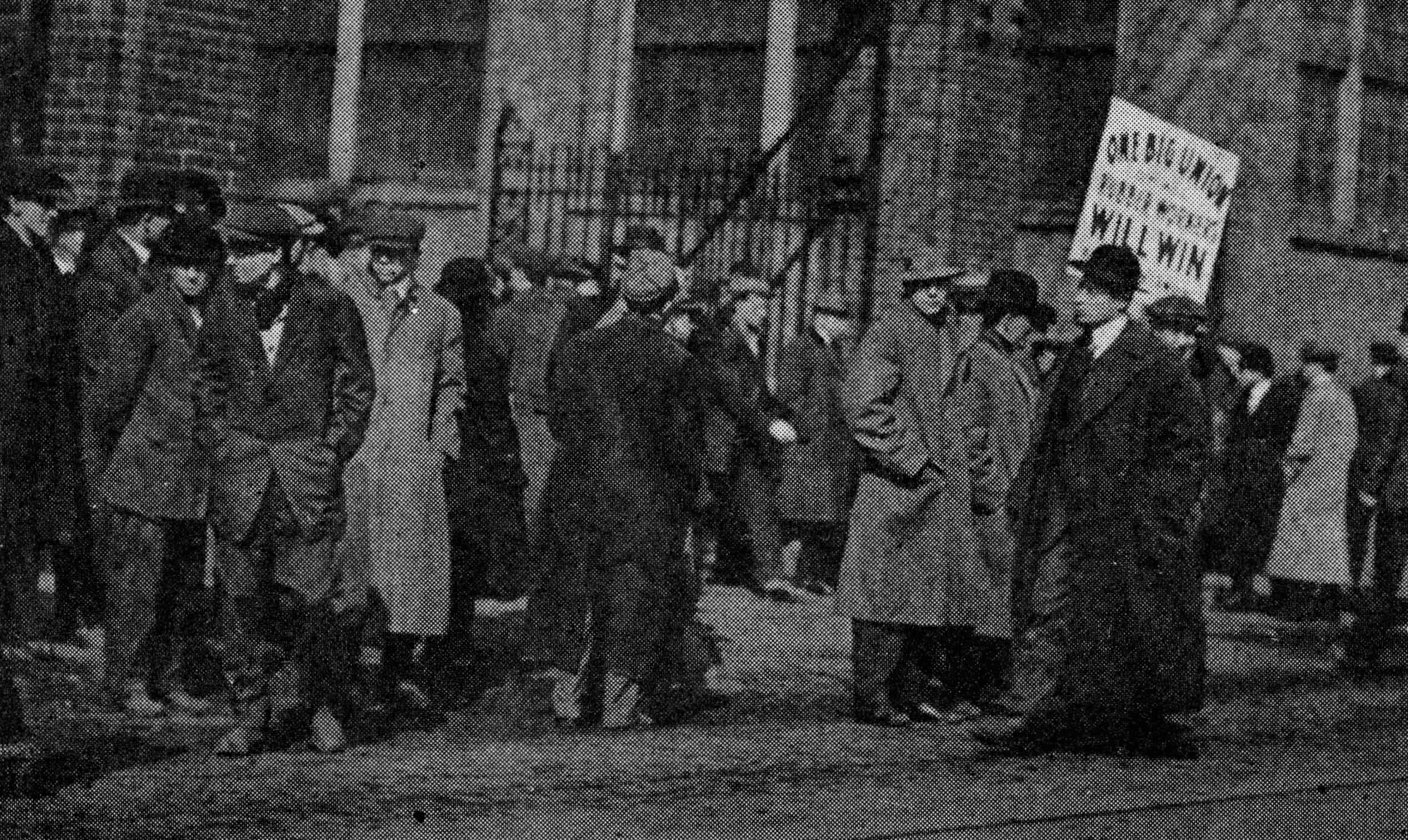
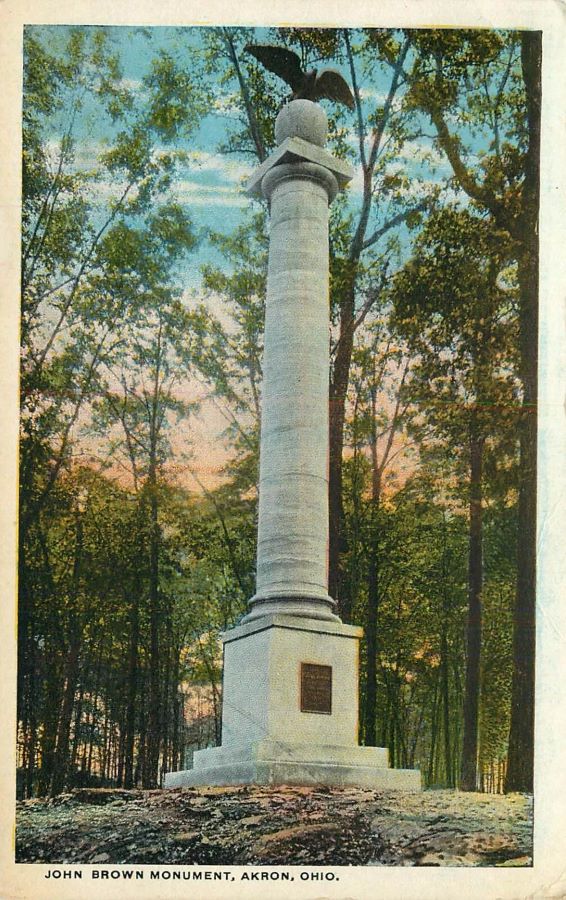
William D. Haywood rallies striking I.W.W. rubber workers in Akron, Ohio leading them to a recently erected monument for John Brown in the city, where the Brown family rented a home between 1844 and 1854. The hard-fought Akron rubber strike would go down to defeat, in part due to police/company infiltration of the union.
‘Haywood Returns to Akron’ from Solidarity. Vol. 4 No. 13. March 22, 1913.
Akron, March 15. Haywood was greeted at the Union station by 1,500 strikers and 500 police. As he stepped from the car an officer beckoned to him. He walked over to the line of police and was met by Police Captain Guillett, who is a worthy successor of Dusty Long of Little Falls, Chief Bimson of Paterson, and others.
Guillett said to Haywood: “You are treading on thin ice. You can stop here, but if you make any inflammatory speeches you will be arrested. And we have sufficient force to back it up.”
Bill asked him if he had a warrant. He said “No.” “Then step aside, I am going this way.” He then walked away, leaving the police and deputies to stare at him while he greeted his friends.
Then Haywood and Speed led a parade of strikers through the streets to Reindeer Hall, where Bill made a short but sweet speech.
Closely watching him in the hall were 12 policemen, but even they ended by singing “John Brown’s Body Lies a Mouldering in the Grave” until they were in immediate danger of being stricken with fits of apoplexy.
The special yellows were there too; the descendants of the vigilantes of San Diego. To disguise their viciousness, their degeneracy, their treachery to the working class, they go by the respectable name of the “Citizens’ Welfare League,” but are dubbed by the strikers, who see them in their true light with the eagle eye of an awakened class consciousness, the “Cut-throats’ Warfare League.”
Haywood jolted the Times when he said: “I picked up a copy of the Times this morning, and I never saw such an inciting of violence as the statements they make.”
“It is the rubber heads, their henchmen and the press of the rubber trust that are trying to create trouble among you,” shouted Haywood. Cheering and waving of hats followed this part of the speech.
Big Bill then reiterated his former advice when in the city in saying: “Viewing this strike situation I find no reason for changing my advice given on my former visit. I told you the way to win this strike was to put your bands in your pockets and keep them there.”
“We’ve got them there,” shouted the strikers.
“Yes,” retorted Haywood; “I know you have, and it is beginning to pinch the men who are fighting you. They are beginning to squeal and feel sick, and want you to go back to work.”
“Not on your life,” cried the strikers. Haywood smiled. “No, I don’t believe I would just yet,” he said. “You have the cow by the tail on a down hill pull. Police come first, then come the soldiers, and some of the ministers. They carry clubs in one hand and bibles in the other. Then there’s the Citizens’ Committee, that’s advising you to hustle back to work.”
He continued by saying: “But I want to appeal to you strikers to conduct the strike along the peaceful line you have been doing. You built this city and the rubber barons are realizing that you are necessary to its prosperity. They are realizing that until you are getting pay and better hours their profits will not increase.”
Haywood appealed to every striker to be present at a meeting to be held in the shadow of John Brown’s grave, saying: “There, under the shadow of the monument to John Brown, the martyr who died to free the black slave, we will preach unity, class consciousness and solidarity, so that the white slave and the wage slave may also be free.”
The most widely read of I.W.W. newspapers, Solidarity was published by the Industrial Workers of the World from 1909 until 1917. First produced in New Castle, Pennsylvania, and born during the McKees Rocks strike, Solidarity later moved to Cleveland, Ohio until 1917 then spent its last months in Chicago. With a circulation of around 12,000 and a readership many times that, Solidarity was instrumental in defining the Wobbly world-view at the height of their influence in the working class. It was edited over its life by A.M. Stirton, H.A. Goff, Ben H. Williams, Ralph Chaplin who also provided much of the paper’s color, and others. Like nearly all the left press it fell victim to federal repression in 1917.
PDF of full issue: https://www.marxists.org/history/usa/pubs/solidarity-iww/1913/v04n13-w169-mar-22-1913-solidarity.pdf
 Revolution's Newsstand