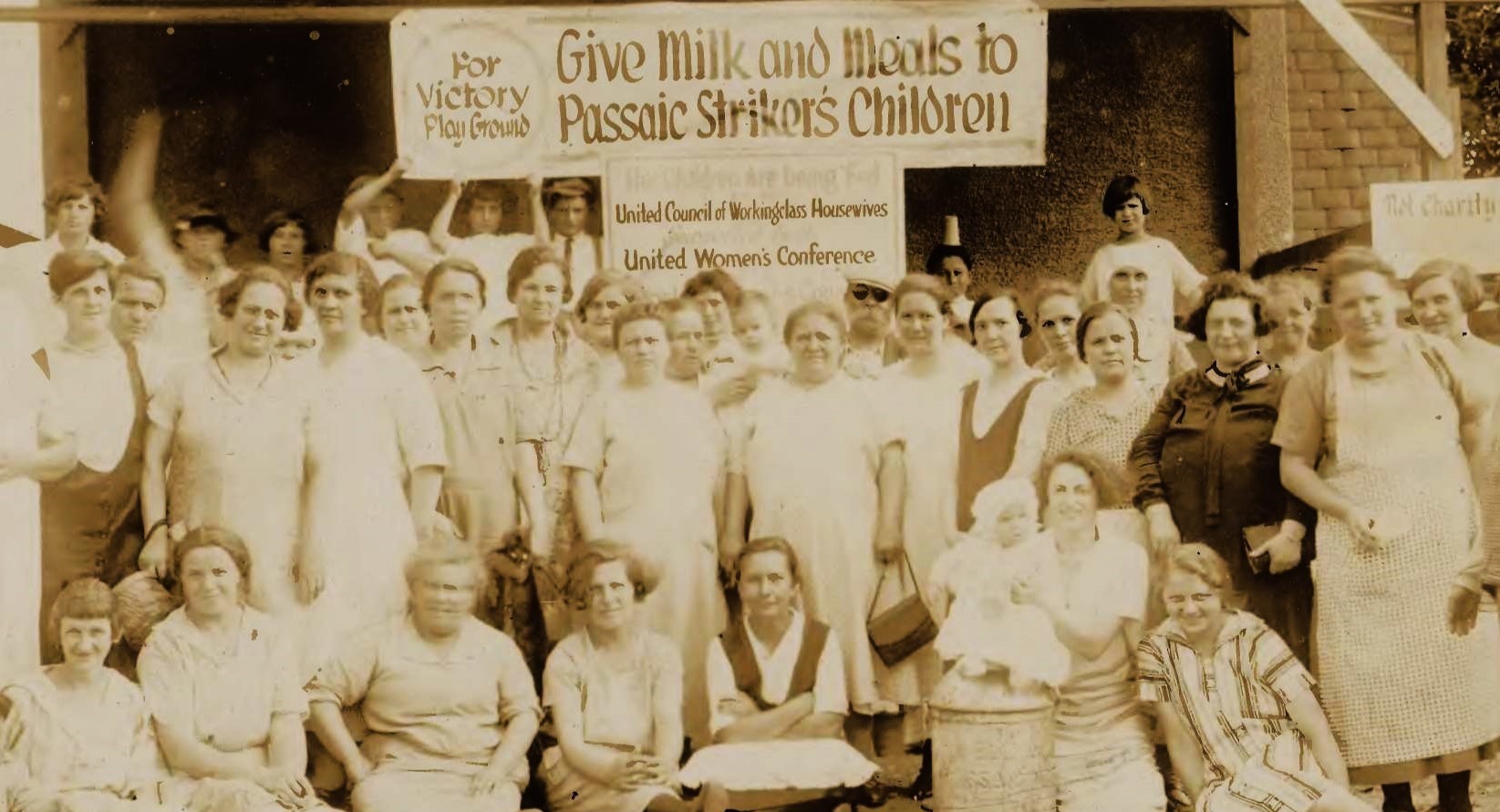
Leading Communist Party textile workers organizer Vera Buch speaks to the rise of the Working Women’s Councils during the 1926 strikes at Passaic and among cloakmakers.
‘Organize the Women for Class Struggle’ by Vera Buch from the Daily Worker. Vol. 3 No. 269. November 27, 1926.
THE need for the organized participation of the women folks in strikes is forcing itself more and more upon labor leaders. The unorganized woman is a millstone. Isolated from her husband’s struggle, not understanding, seeing only that the pay envelope does not come in as usual, she sends her husband, with nagging and complaints, back to work.
Give her, on the other hand, a chance to know what the fight is all about, show her own place in the working-class struggle, and you have an ally that will fight to the death to win the union’s demands.
All economic and social forces are pushing women more and more to an awakened class-consciousness. The world war started an influx of women into the industries. Low wages of the men are driving them constantly in the same direction. This double exploitation of the shop and of the home forces this most backward section of the working class to rebel. But this smouldering discontent and rebellion must be utilized by explaining the issues at stake and by organizing the women for action.
Passaic Shows the Way.
The Passaic strike set a splendid example of what can be done on this field. The cloakmakers, inspired by Passaic, have organized their wives. Now the paper box makers on strike are awakened to the need of drawing in the women.
The fight of the women in Passaic merits earnest consideration. Labor leaders may well study the marvel of a strike that is still strong after ten months. The organized participation of the women had much to do with the remarkable vitality of this strike. There, from the beginning, the left wing leadership made special efforts to draw in the women.
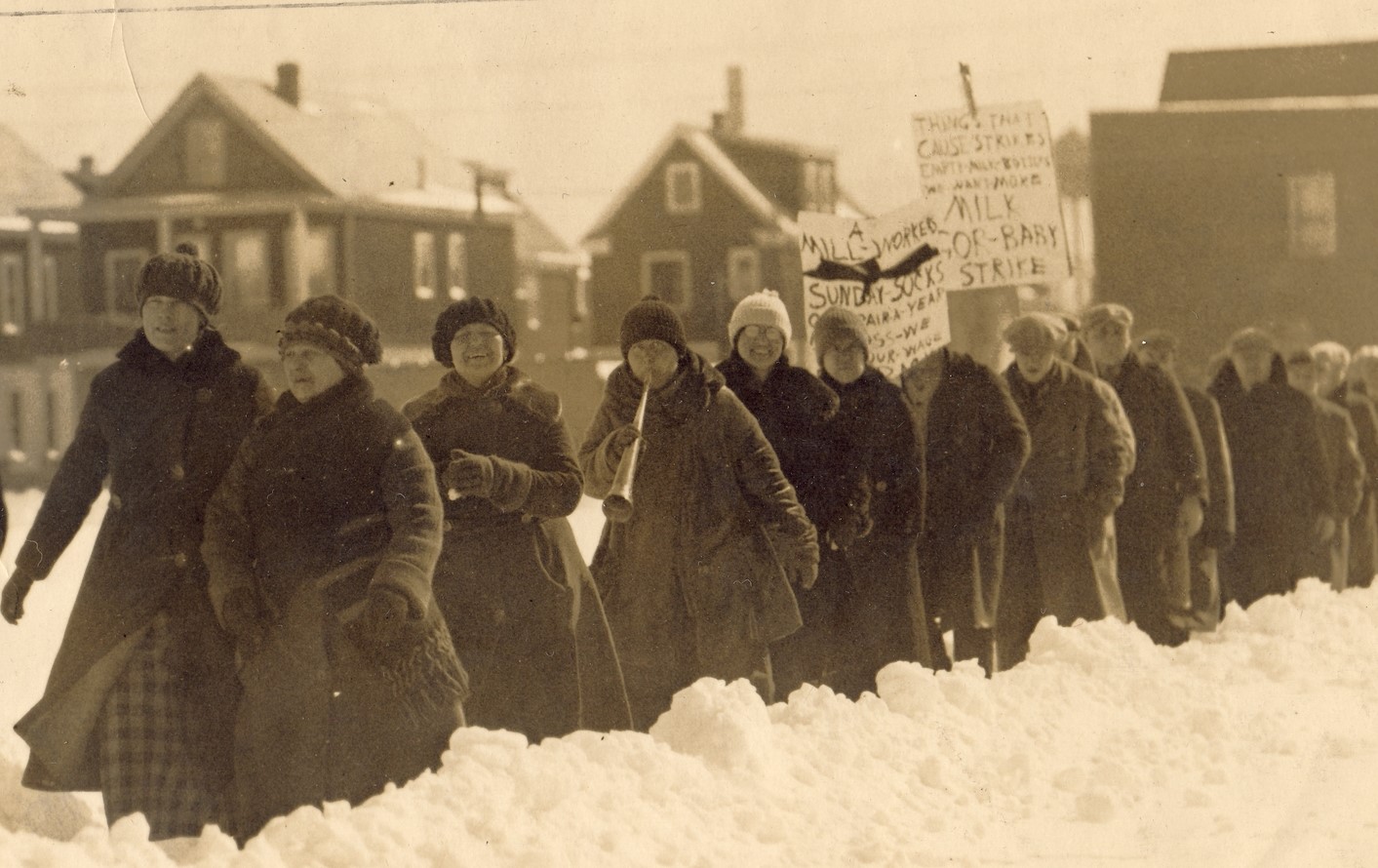
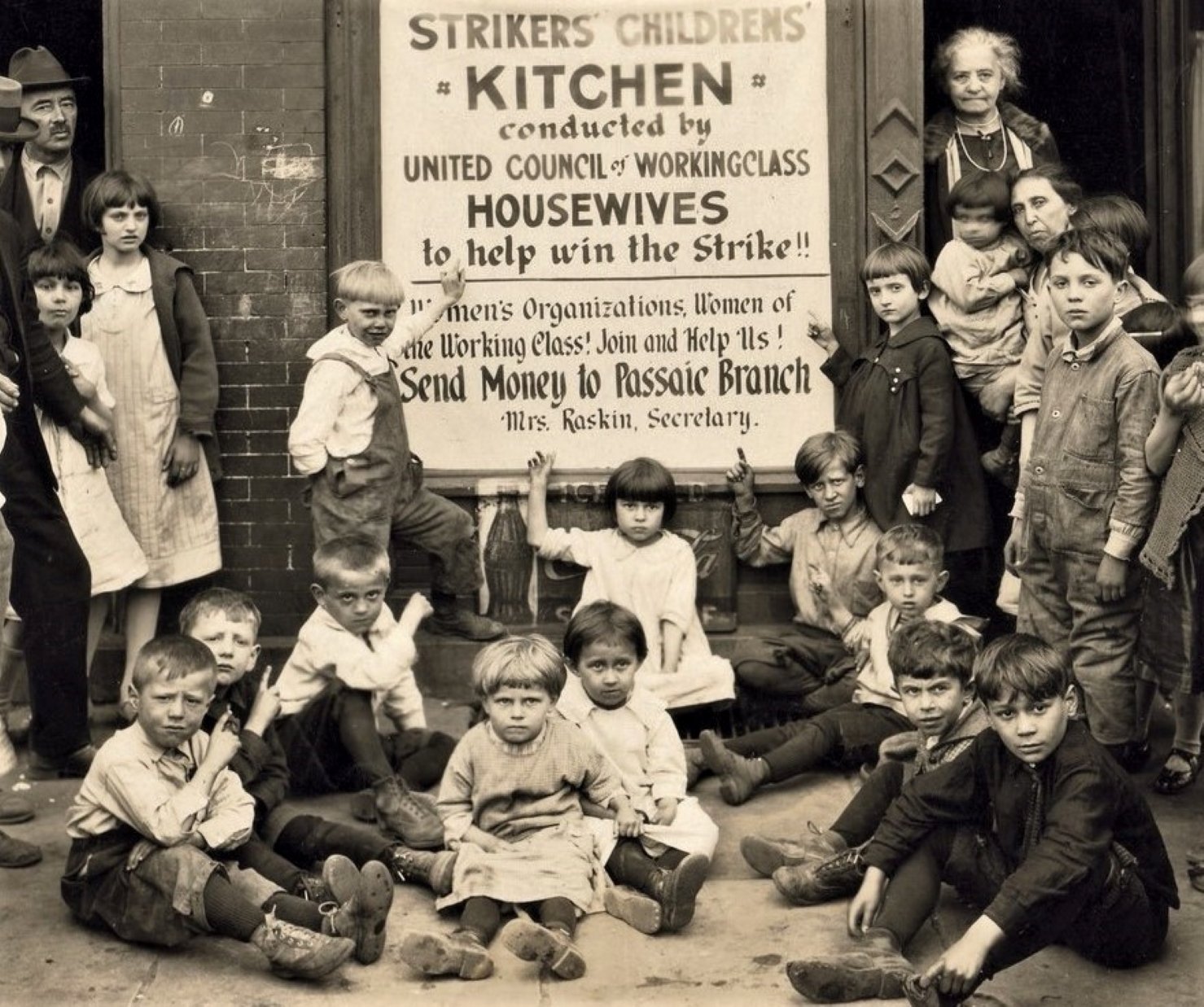
They had their own mass meeting, where the issues of the strike and the problems of their own lives were explained to them. Then the Working Women’s Councils were organized, which drew in not only the striking women but the wives of strikers and sympathizers. The United Council of Workingclass Housewives opened kitchens for the children, which the women themselves conducted. The Women’s Councils went in for strike work with scabs and on the picket line. They raised money for relief. The housewives for the strikers’ children at Victory Playground. An organization of women has been built up which has not only been a powerful support of the strike, but which the women will maintain after the strike is settled.
Cloakmakers Follow.
In the fourteenth week of the cloakmakers’ strike the union called the wives of the men to battle. It organized them into committees and set them to work at visiting scabs and generally stiffening up the strike. The women responded eagerly; at last they were a power in a great struggle; their confused, half-conscious yearnings and rebellions were crystallized into a conscious fight to win their husbands’ demands. With the strike settled the women will keep their committees. The United Council of Workingclass Housewives is helping everywhere to organize the workers’ wives for the workers’ struggles.
Movements spread quickly, as the battles of the workers come thick and fast. The 3,000 paper box makers of New York City have been on strike for eight weeks against low wages and conditions of miserable exploitation. Women, most of them young girls, constitute 70 per cent of this union. Shoulder to shoulder with the men they have marched on the picket line, taken the blows of policemen’s clubs and gone to jail.
Housewives Open Kitchen.
Pinched by the continuation of their strike, the union leaders, Caile, Markowitz, George Powers and Henrietta Ray, called in the help of the United Council of Workingclass Housewives. Nov. 12 they came to the office of Kate Gitlow, the secretary of the organization, and asked her to help them in establishing a strikers’ kitchen. She spoke at a mass meeting the following Saturday afternoon and immediately organized a committee of ten women and five men to conduct the kitchen. That was Saturday afternoon. On Monday the kitchen opened, with three women as managing committee. The strikers flocked into the Church of All Nations on lower Second avenue, New York, where it was housed. They were fed plentifully and well. They enjoyed the satisfaction of eating in their own union kitchen, the funds for which came from organized labor. In keeping up this kitchen, as well as in the other work of the strike, the women will be drawn in more and more.
Yes, the backward slaves, crushed by the century-long exploitation of the home and the new burdens of industry, are at last awakening. The women are learning that only by throwing themselves into the struggle for power which the working class is waging can they free themselves from those bonds which hamper their awakening thirst for freedom, for knowledge, for life.
The Daily Worker began in 1924 and was published in New York City by the Communist Party US and its predecessor organizations. Among the most long-lasting and important left publications in US history, it had a circulation of 35,000 at its peak. The Daily Worker came from The Ohio Socialist, published by the Left Wing-dominated Socialist Party of Ohio in Cleveland from 1917 to November 1919, when it became became The Toiler, paper of the Communist Labor Party. In December 1921 the above-ground Workers Party of America merged the Toiler with the paper Workers Council to found The Worker, which became The Daily Worker beginning January 13, 1924.
PDF of full issue: https://www.marxists.org/history/usa/pubs/dailyworker/1926/1926-ny/v03-n269-NY-nov-27-1926-DW-LOC.pdf
 Revolution's Newsstand