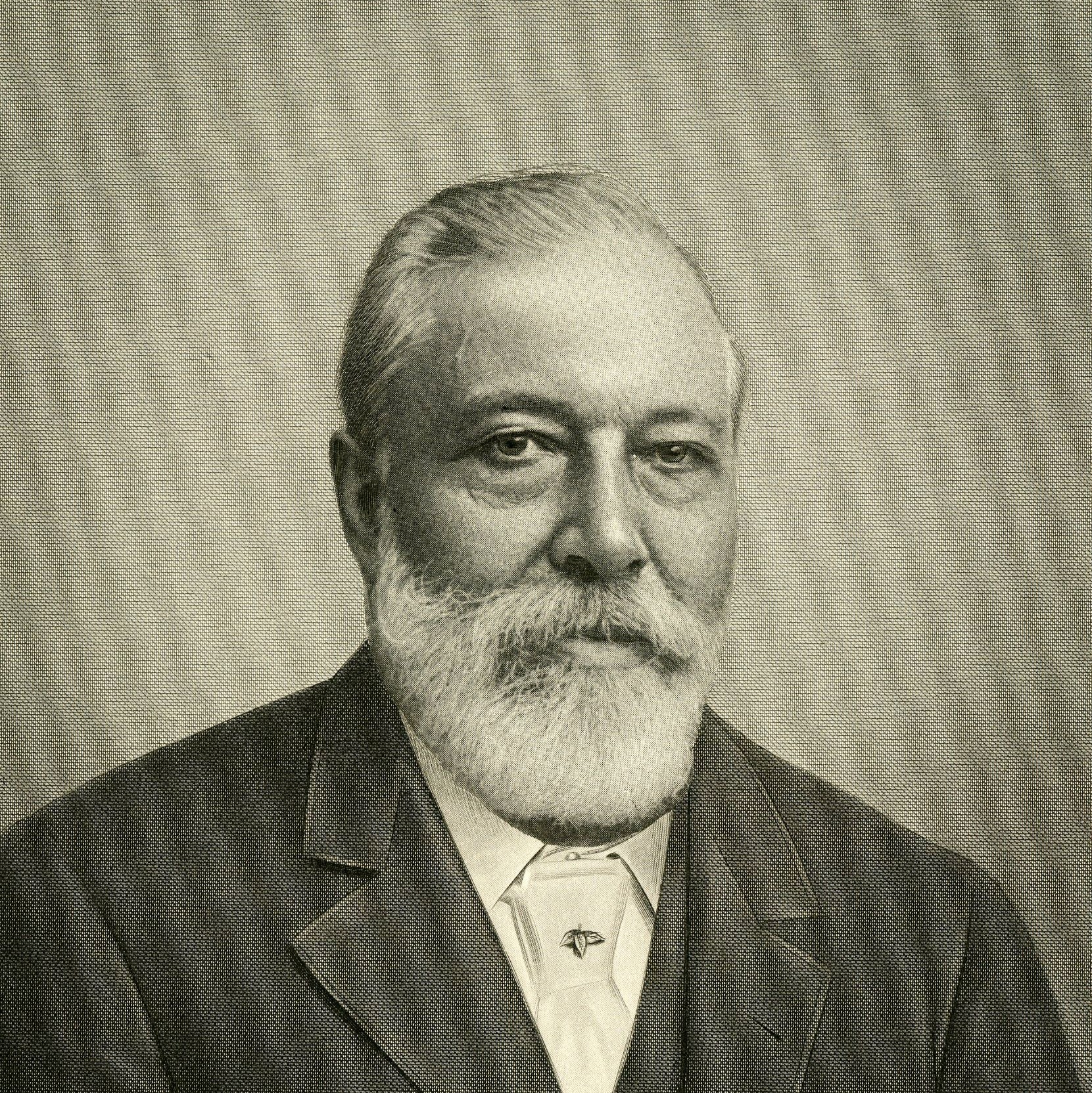
Tribute is paid to comrade Victor E. Dol, born in France in 1840 who died in California in 1911, and his work on behalf of the liberation of our class across two continents and two centuries.
‘Comrade Victor E. Dol’ by Harry J. Schade from the Daily People. Vol. 6 No. 292. April 23, 1911.
Address at the Burial Service of Mr. Victor E. Dol in Rosedale Cemetery, Los Angeles, Calif. March, 16 by Harry J. Schade.
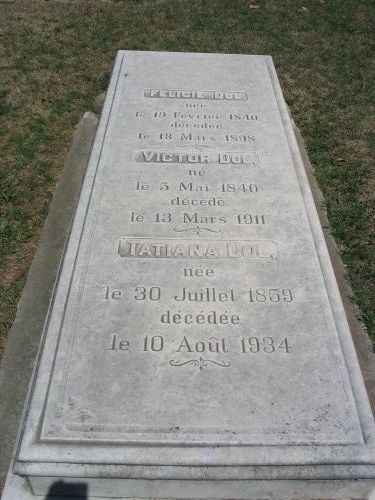
Friends and Comrades:-I know how vain it is to try to allay the sting of death with words. Recollections of the touch, the sight, the words and deeds of those we love will linger long after flowery phrases are forgotten. Our comrade, Victor E. Dol, whom we are about to lay away, was born at Cuers’ Department DuVar, France, May 5th, 1840, just twenty-two years to the day after the birth of Karl Marx, the great master mind of the nineteenth century and founder of scientific Socialism, of whom the deceased was a staunch admirer.
The immediate family consists of his wife, Mrs. Tannie Dol and two daughters, Mrs. Victorine Oberly, and Mrs. Josephine Bechtel, all of Los Angeles County, California; also some relations in France.
Comrade Dol came to California about 1873, and to Los Angeles, in 1876. He was a member of the Pioneer Society, whose prototypes Walt Whitman must have thought of when he wrote;
“O, resistless, resistless race,
Oh, I mourn and yet exalt!
I am rapt with love for all,
Pioneers! Oh Pioneers.”
Comrade Dol joined Section Los Angeles, Socialist Labor Party of America, in July, 1900 and was also an honorary member of the United Socialist Movement of France, being personally acquainted with such men as Paul Lafargue, Jaures, Guesde, Vaillant, Herve, De Leon and many others.
He was a product of a revolutionary age, when matters human and divine, including the divine rights of kings, were called before the bar of reason. The family was directly connected with the Paris Communards through a grand uncle, M. Flotte, who acted as intermediator between the Gallican Archbishop Darboy, and M. Thiers for the exchange of Blanqui, (see Lissagary’s Pages 225-226) and who was imprisoned for fourteen years. Our comrade naturally inherited that revolutionary spirit so native to France, which country is known as the “cradle of revolution,” and which spirit all through his life. made him a friend of education, science and progress, an enemy to ignorance, superstition and class antagonism. This tender comrade in every storm of life was as sturdy as the oak. He was the admirer of all heroic souls. His aims and ideals were high, and he left ignorance and superstition far behind. As things fine and noble gave him pleasure, things brutal and sordid caused him pain. He aimed to help abolish poverty and class-antagonism.
With mind and reason he grasped the dawning of a grander day for all humanity. He loved the beautiful in art, music and nature. He strove for liberty, was a friend of the oppressed. Many times I have heard him tell of the heroism of Blanqui and of the ideals of the Communards. Only last year he made a journey to Europe to meet his old comrades, and he attended the International Socialist Congress at Copenhagen, Denmark.
Our sympathies naturally flow to his widow, children and loved ones; theirs is indeed an irreparable loss, but death is one of nature’s indisputable demands which seem tyrannical, for life is but the tender vine between the barren peaks of two eternities.
But let us find comfort in the fact that death is a fate none can avert, and all must face. In spite of all dogmas and philosophies, the grand wave of human hopes rises for happiness, that mirage for which all reach but few attain. Then let us neither contest nor deny nature her gifts or demands, but rather with the birds in the air, the sunshine, the stars in the sky, and flowers in the field, work in harmony with her for the greatest good for humanity. Let us feel that the world is better for our comrade’s having lingered here some seventy odd years, that we have gained by his life’s work for the good, the constructive elements in both men and nature. Instead of tears, let there be deeds; instead of sorrow, let there be hope; instead of hatred, let there be love; instead of weakness, let there be strength, and when we also close our eyes to the beauties and sorrows of this old world we may feel our duty well done. As the days of toddling infancy are but a prelude to vigorous manhood, so vigorous manhood is but the prelude to eternal rest, for:
“Down life’s stream we all must
journey,
‘Tis but a step from life to death;
So let our lives’ deeds add to this
old world’s cheer,
That we may leave it brighter for the
fact that we were here.”
One of our great poets has said:
“Sad is the fate to human life allotted
That underneath each rose must lurk
a thorn.”
To this we may add:
“Sad is the fate, that death’s the station,
To which we start when we are born.”
What can we say in the face of the death of this son of restless France, whose very name makes the blood flow quicker, and of an age which has given the world bright men and women such as adorn the scientific and literary firmament of Europe to-day?
France helped in “the making” of Karl Marx and such persons as Fourier, Laplace, Pasteur, Hugo, Zola, Balzac, Delescluze, Madame Curie and others; besides those already mentioned are not only national but international celebrities.
Our comrade who was a kind father, March 13th, this year at the age of a loving husband, died at Venice. Cal., seventy years, ten months and eight days, leaving but a memory of goodness. With assurance of a life well spent, without fear, we give him back to nature, the source and mother of us all. With reluctance to lose his aid, yet amid the glories of nature’s monuments, the snow-capped mountains on the east, the restless ocean on the west, under sunny skies, amid green grass, fragrant flowers and all the sweet influences of nature, we leave one who has gone to eternal rest while we return again with renewed vigor to the task of education and emancipation so incomplete.
New York Labor News Company was the publishing house of the Socialist Labor Party and their paper The People. The People was the official paper of the Socialist Labor Party of America (SLP), established in New York City in 1891 as a weekly. The New York SLP, and The People, were dominated Daniel De Leon and his supporters, the dominant ideological leader of the SLP from the 1890s until the time of his death. The People became a daily in 1900. It’s first editor was the French socialist Lucien Sanial who was quickly replaced by De Leon who held the position until his death in 1914. Morris Hillquit and Henry Slobodin, future leaders of the Socialist Party of America were writers before their split from the SLP in 1899. For a while there were two SLPs and two Peoples, requiring a legal case to determine ownership. Eventual the anti-De Leonist produced what would become the New York Call and became the Social Democratic, later Socialist, Party. The De Leonist The People continued publishing until 2008.
 Revolution's Newsstand