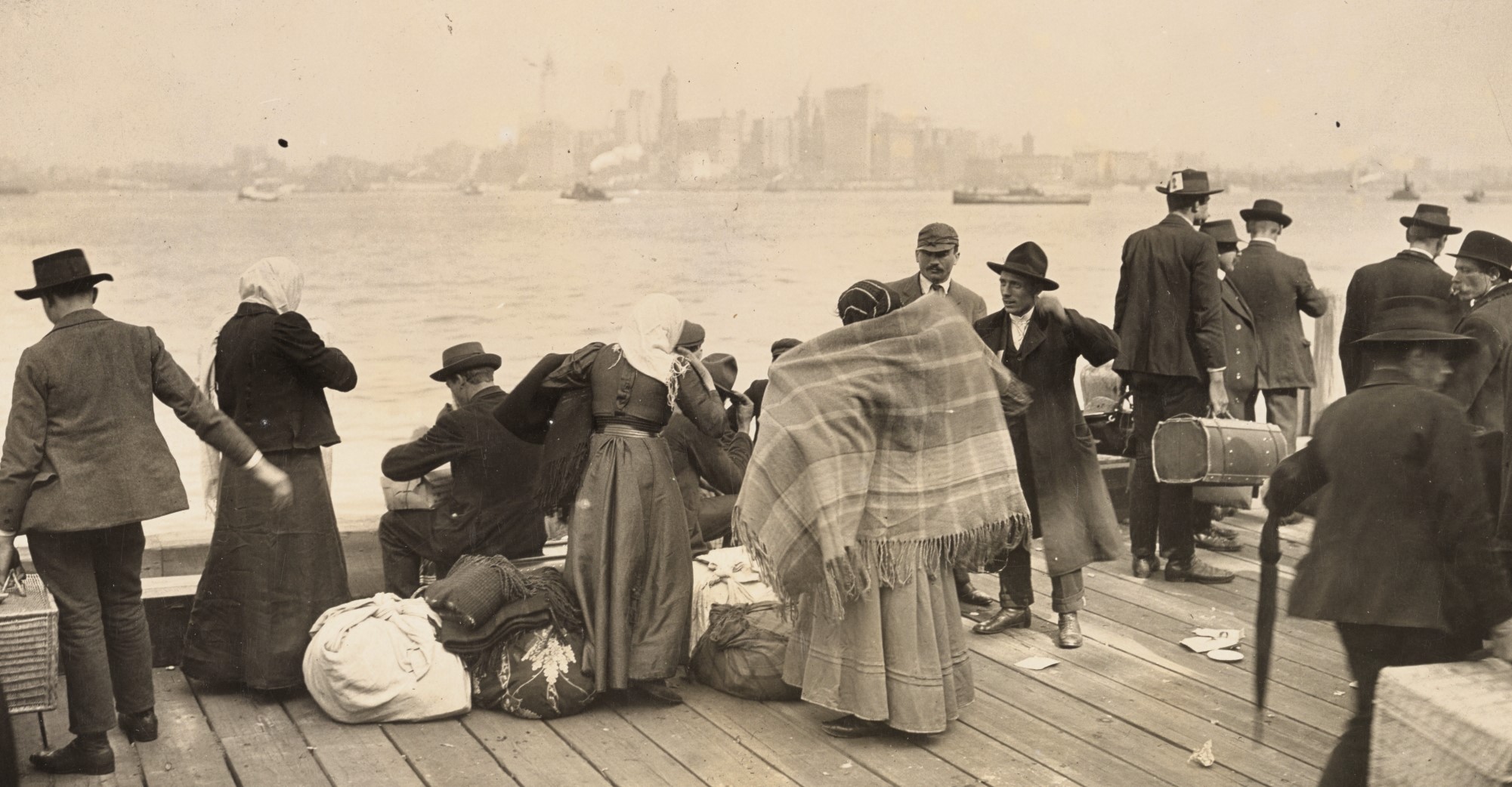
How did revolutionary workers’ organizations respond to emigration and the conflicts it produced in the post-World War One era? This resolution was passed by the leading body of the Red International of Labor Unions in the summer of 1923.
‘World’s Workers Have a Program on Immigration’ from the Daily Worker. Vol. 1 No. 323. January 26, 1924.
The question of immigration is that connection it is interesting to read the resolution of the Red International of Labor Unions on the subject of workers’ migration. This is one of the resolutions passed at the Third Session of the Central Council of the Red International of Labor Unions, held in Moscow from June 25 to July 2, 1923. The resolution reads as follows:
On Workers’ Migration
1. Revolutionary Labor Union Centrals, independent organizations and minorities sympathizing with the R.I.L.U. must institute special bureaus in those countries experiencing emigration and immigration. The bureaus will collect statistical mate- rial dealing with the number, sex, age and profession of immigrants and emigrants. They must likewise collect comparative material on the wages of all countries, on dearths, on the labor market, on the workers’ protection laws, on methods of employment and also general information of interest to migrating workers. These inquiries and activities will yield the possibility of a minute study into the problem of migration.
2. In all countries of immigration, special committees comprising representatives of the nationalities yielding the largest percentage of immigrants together with representatives from the labor union central or from the organized minorities sympathizing with the R.I.L.U. must be formed. It is the aim of these committees to work out organizatory forms and to effect a propaganda for creating brotherly connections and solidarity between the immigrants and the home elements. Similar committees are to be established in the most important centers of immigration and in the places of work.
3. Periods of disturbance strike are favorable for conflicts between home workers and immigrants. Employers and authorities making use of such opportunities excite nationalist tendencies with a view of splitting and destroying working class solidarity. To avoid these dangers and so frustrate ruling class schemes, the immigrants must be given a guarantee that their rights and interests will be protected like those of the home workers. With that aim, the immigrants should, legally or illegally, according to the particular countries’ legislation, be induced to participate in the work of strike committees.
4. The entire labor union press of the countries of immigration, but especially the press of the labor union federations directly interested, must systematically deal with the problems of immigration, reserving sufficient room for the treatment of this item. The articles in question should be written in the language. of the persons dealt with. Wherever possible, a special periodical for the immigrants in each country should be issued. Connections, however, must already to that end have been taken up with the revolutionary unions and the Communist Parties in the countries concerned alike with immigration and emigration.
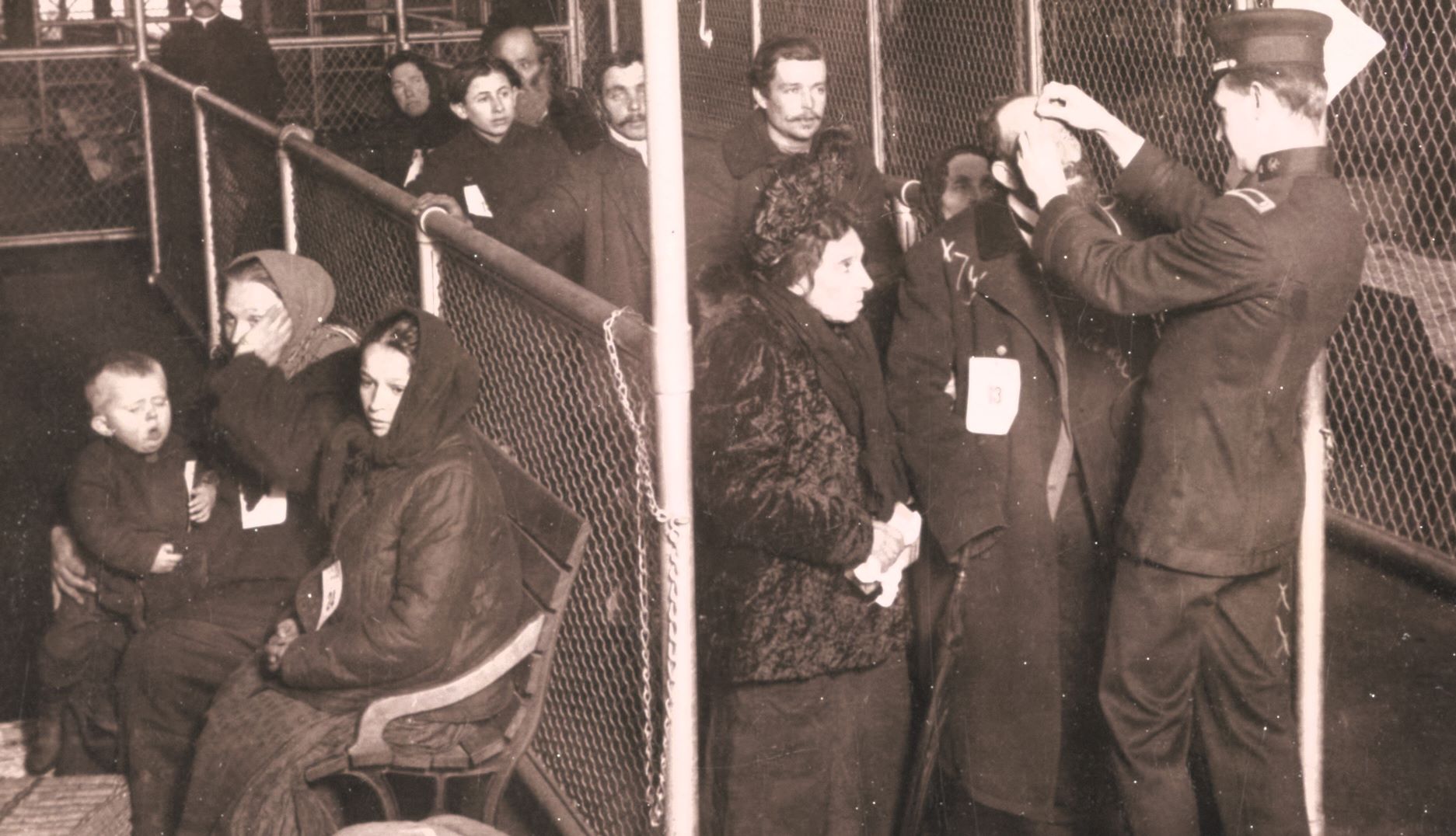
5. Immigrated workers may in no case form distinct trade unions. They must, on the contrary, enter the local organizations on exactly the same conditions as the home workers. The labor unions must create special language groups for those that are not acquainted with the language of that area. Wherever deemed useful, said groups may form their own clubs for propaganda and education. These groups are obliged to find out the most suitable forms of organization for attracting foreign workers, especially those temporarily living in the country, to the labor unions.
6. In the home labor unions’ local sections, labor chambers, etc., rooms should be reserved in which immigrant workers can meet.
7. In addition to the problem of uniting the immigrant workers with the help of the labor union organizations and the questions of insurance against accidents, invalidity, age, etc., the organizations endorsing the R.I.L.U. principles must also give much attention to the utilizing of the co-operative societies on behalf of the immigrants.
8. Immigration into Soviet Russia is of special importance. Offers of immigration are being received from workers, technicians, engineers, etc., of various countries. Altho the present economic situation does not allow of a big influx and an economic utilization of emigrants, nevertheless, qualified workers are badly needed for restoring the economic life. The emigration bureaus of the organizations attached to the R.I.L.U. must study the question of emigration to Soviet Russia. The bureaus must register all petitions and communicate with the corresponding organs in Soviet Russia as well as with the Russian labor unions. The bureaus should give special attention to the immigration of technicians and engineers ready to serve the proletarian Republic.
9. In the trade unions not affiliated to the R.I.L.U., a lively propaganda should be developed on behalf of the immigrants’ protection.
The private institutions, such as employment offices, etc., that live by sucking and tricking the immigrants, must be mercilessly combated, and if possible abolished.
The Daily Worker began in 1924 and was published in New York City by the Communist Party US and its predecessor organizations. Among the most long-lasting and important left publications in US history, it had a circulation of 35,000 at its peak. The Daily Worker came from The Ohio Socialist, published by the Left Wing-dominated Socialist Party of Ohio in Cleveland from 1917 to November 1919, when it became became The Toiler, paper of the Communist Labor Party. In December 1921 the above-ground Workers Party of America merged the Toiler with the paper Workers Council to found The Worker, which became The Daily Worker beginning January 13, 1924.
PDF of full issue: https://www.marxists.org/history/usa/pubs/dailyworker/1924/v01-n323-jan-26-1924-DW-LOC.pdf
 Revolution's Newsstand