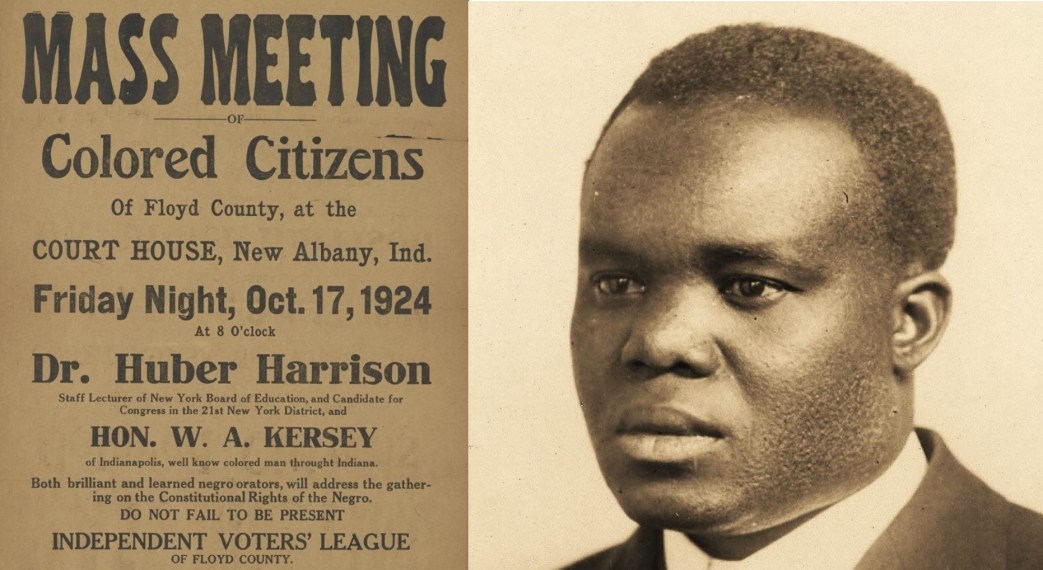
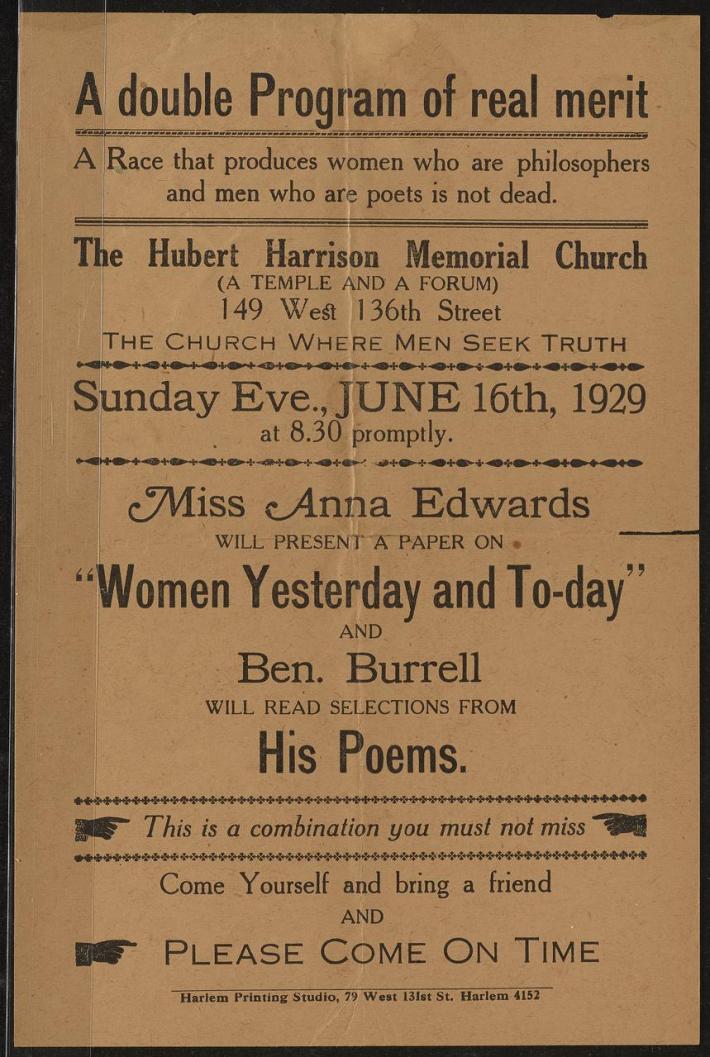
Hubert Henry Harrison (1883-1927) was a uniquely gifted intellectual, a polymath, writer, editor, teacher, and political activist. Here is an example of his expansive interests through two dozen notices of his many lectures, forums, and classes.
‘The Work of Hubert H. Harrison Told in Flyers, Broadsides, and Announcements, 1917-1927’
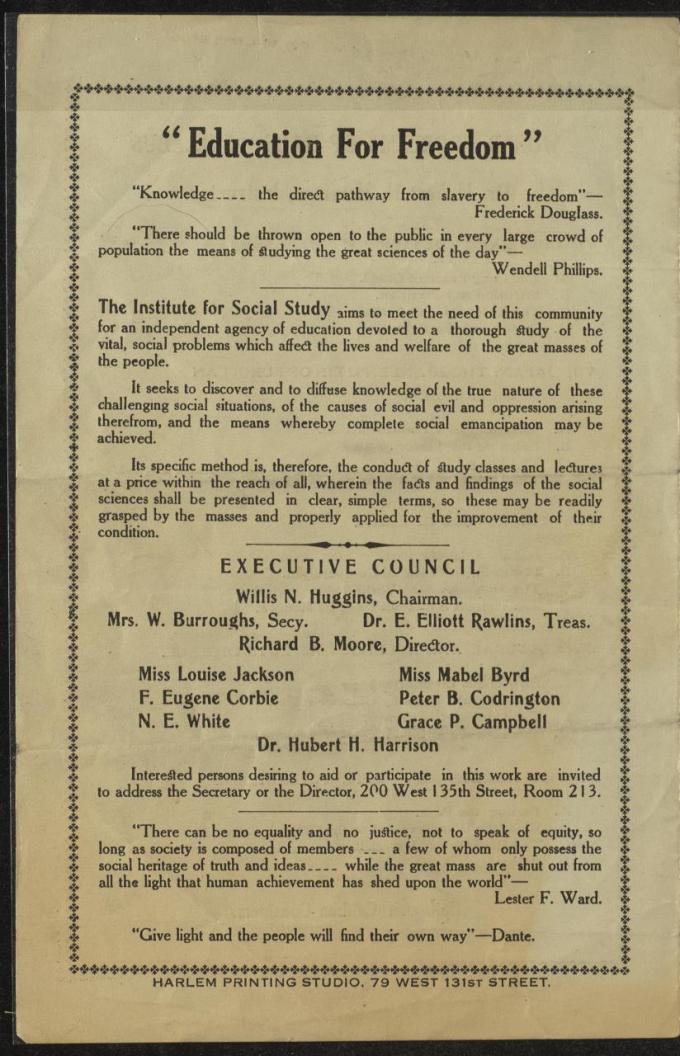

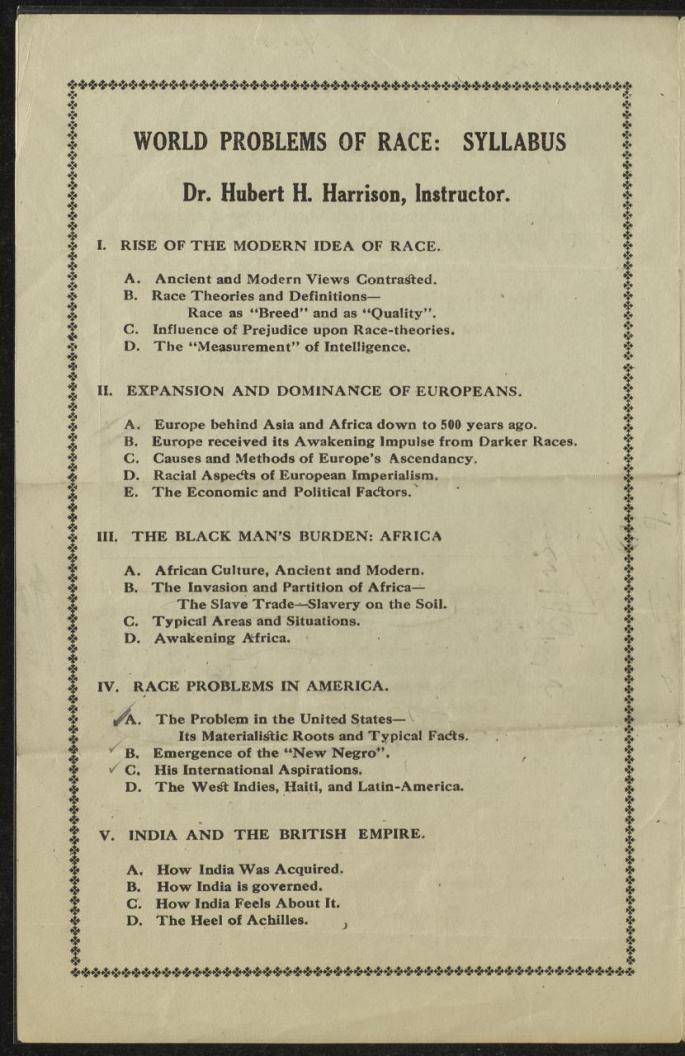

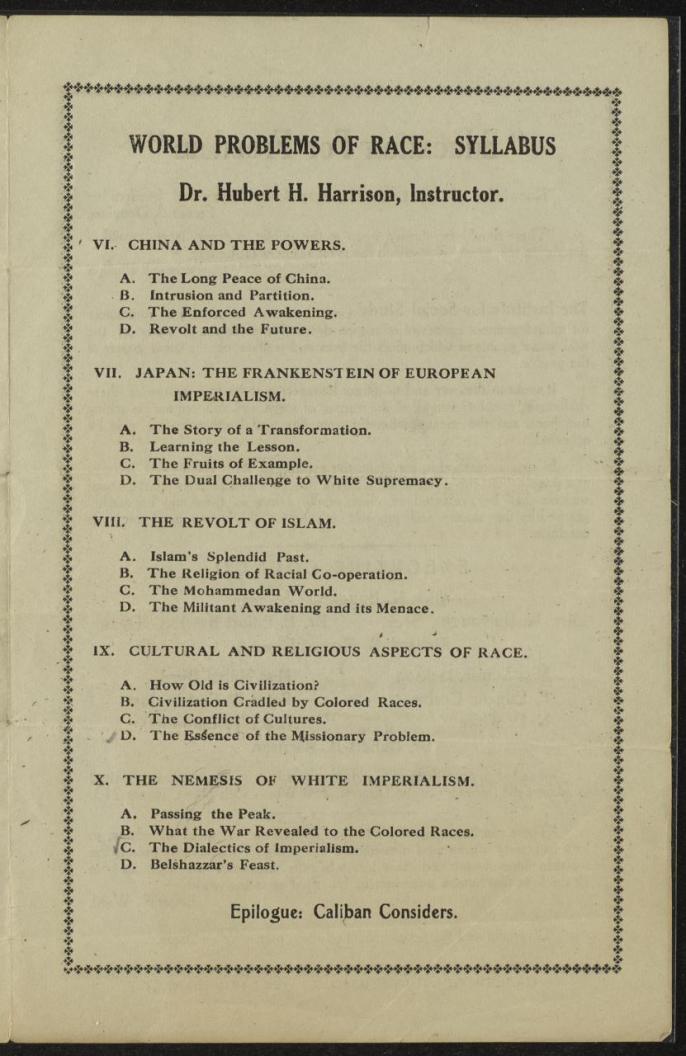
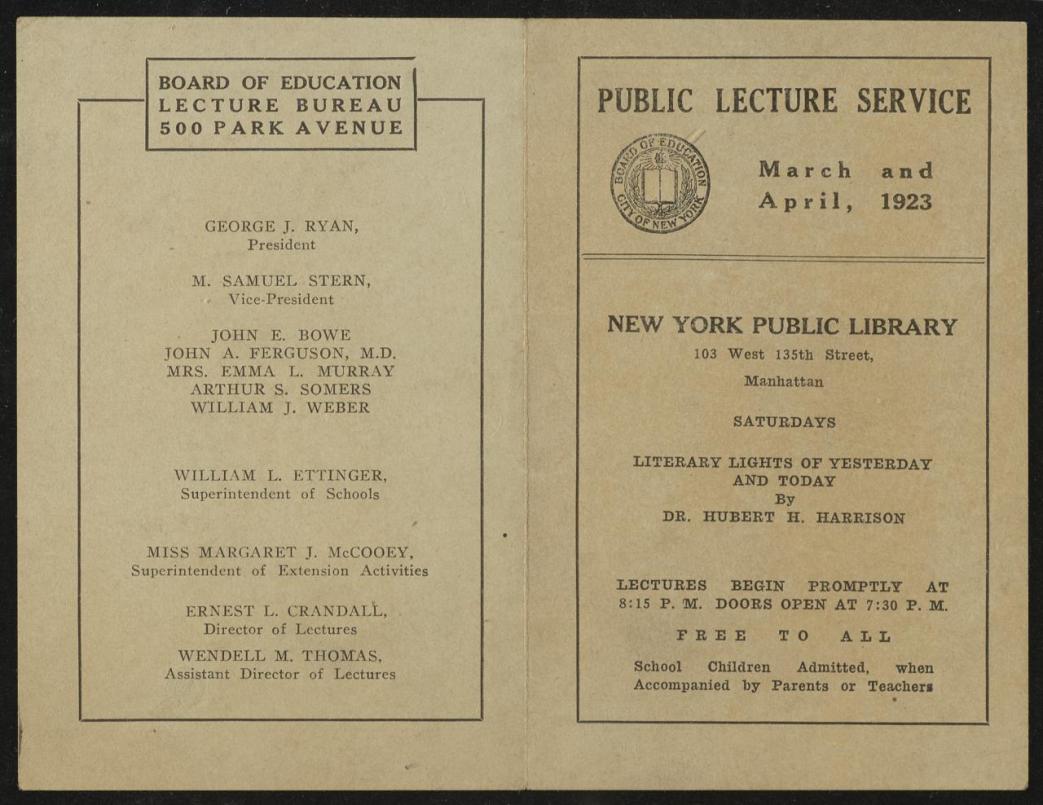
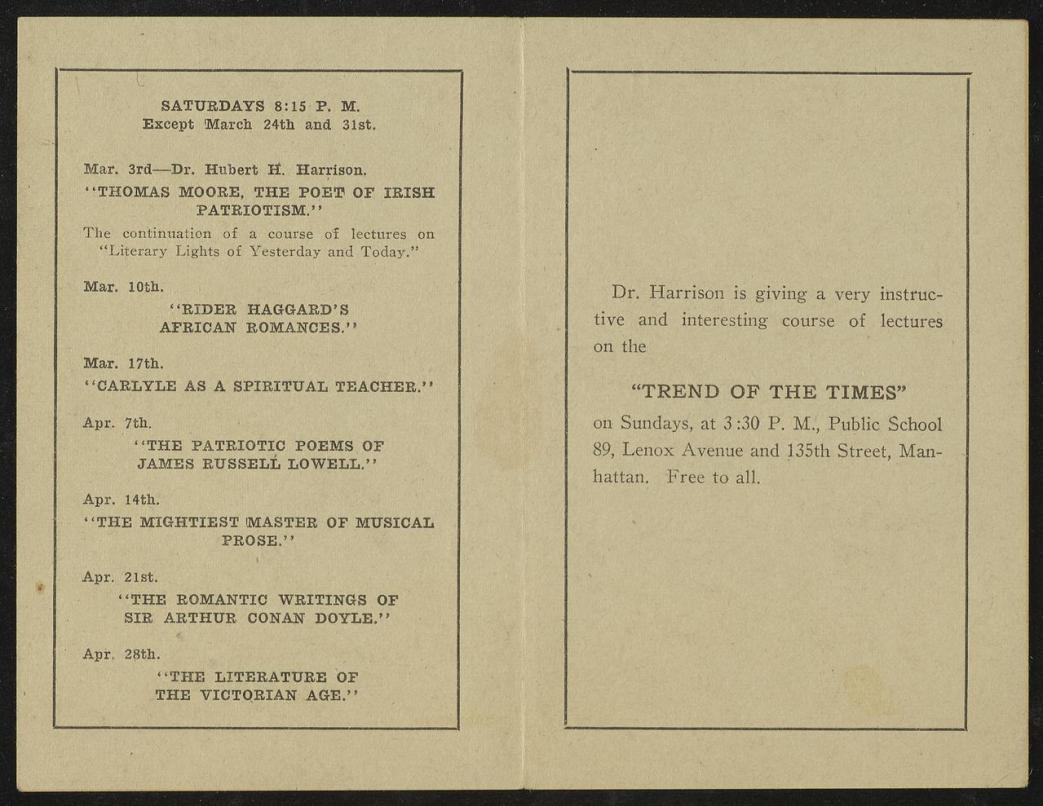
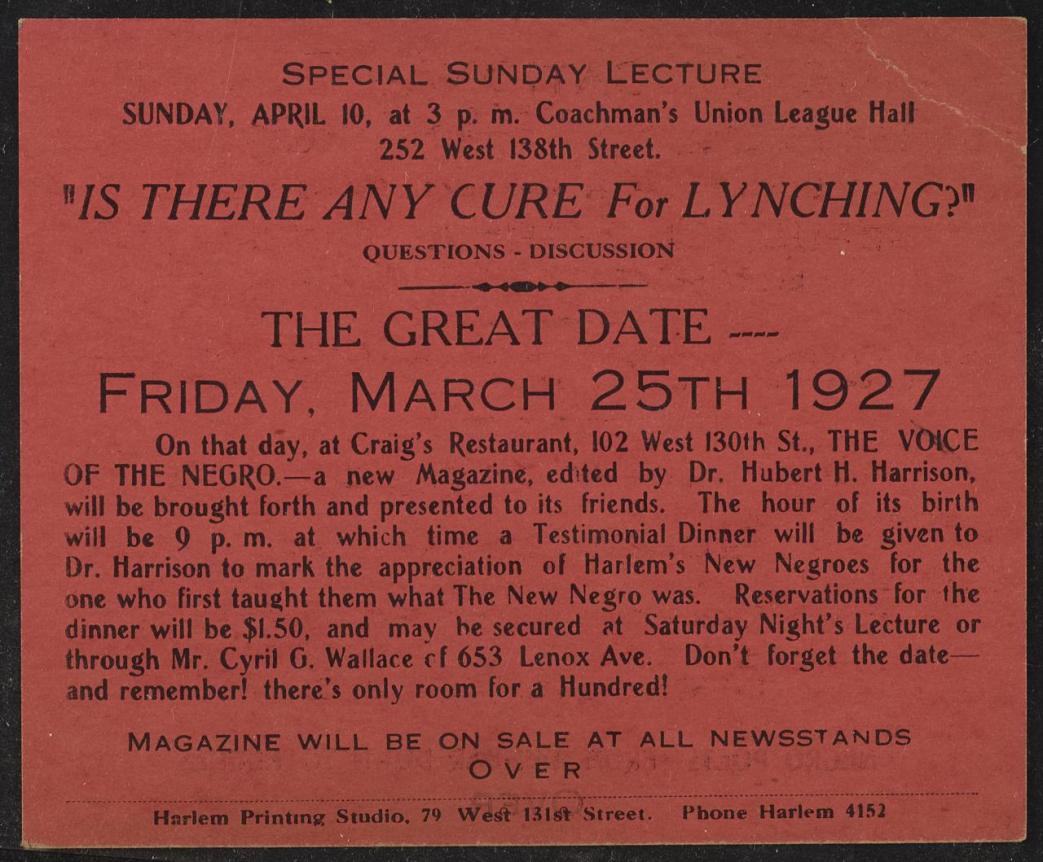
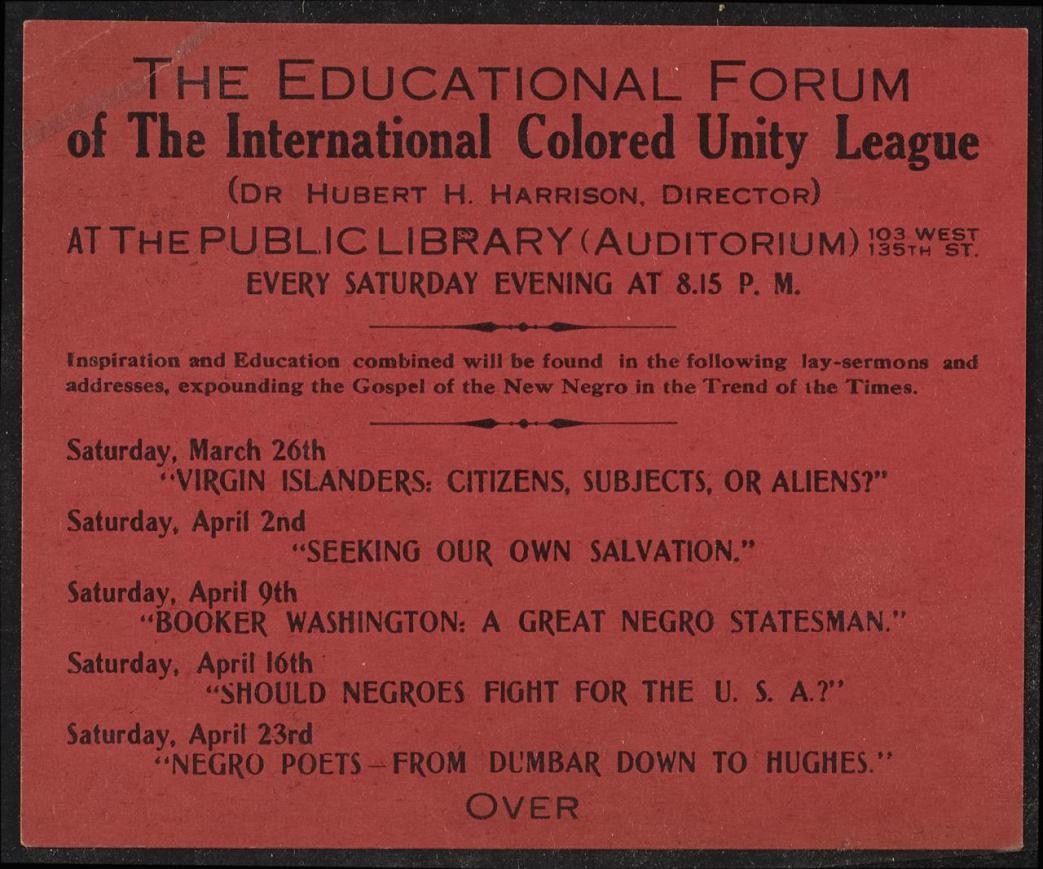


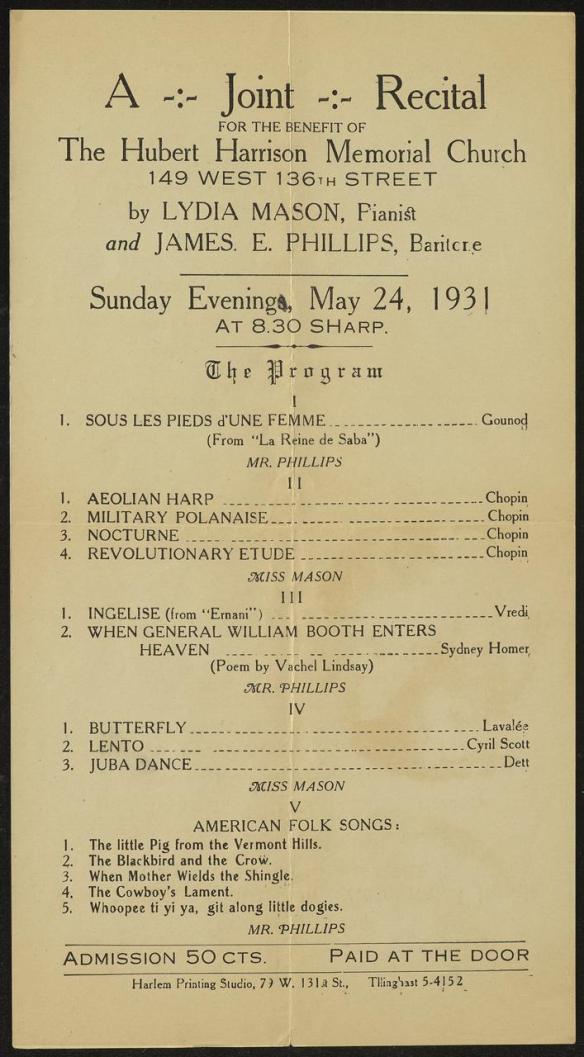
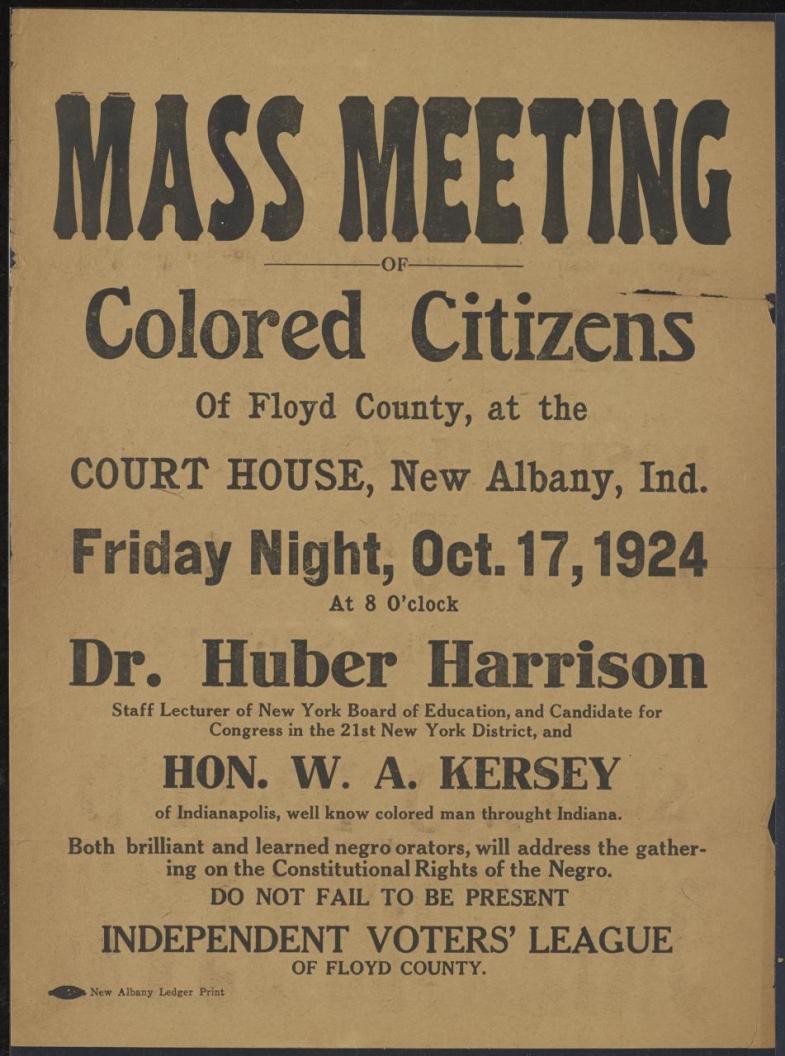
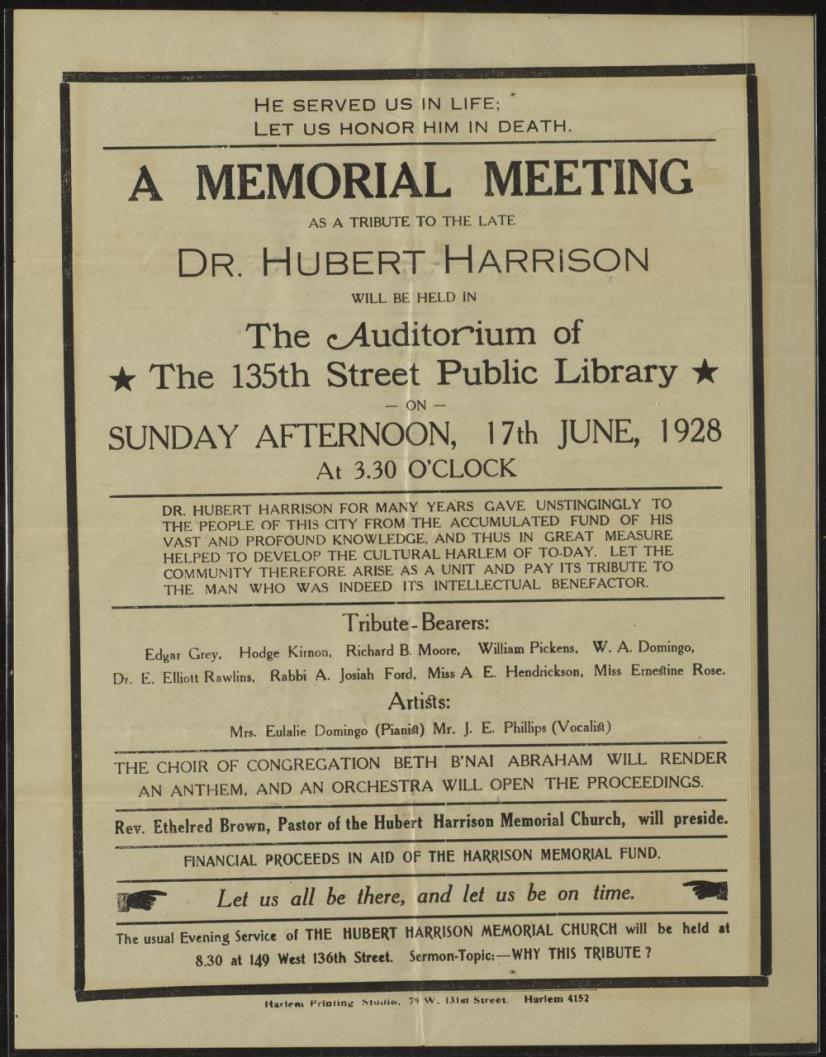
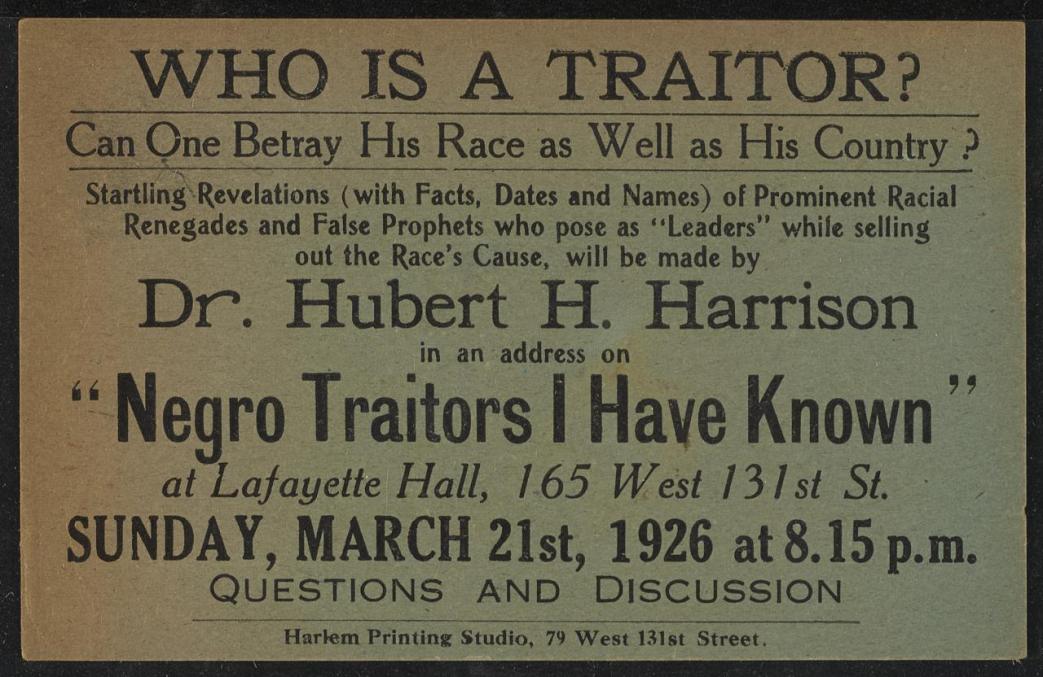
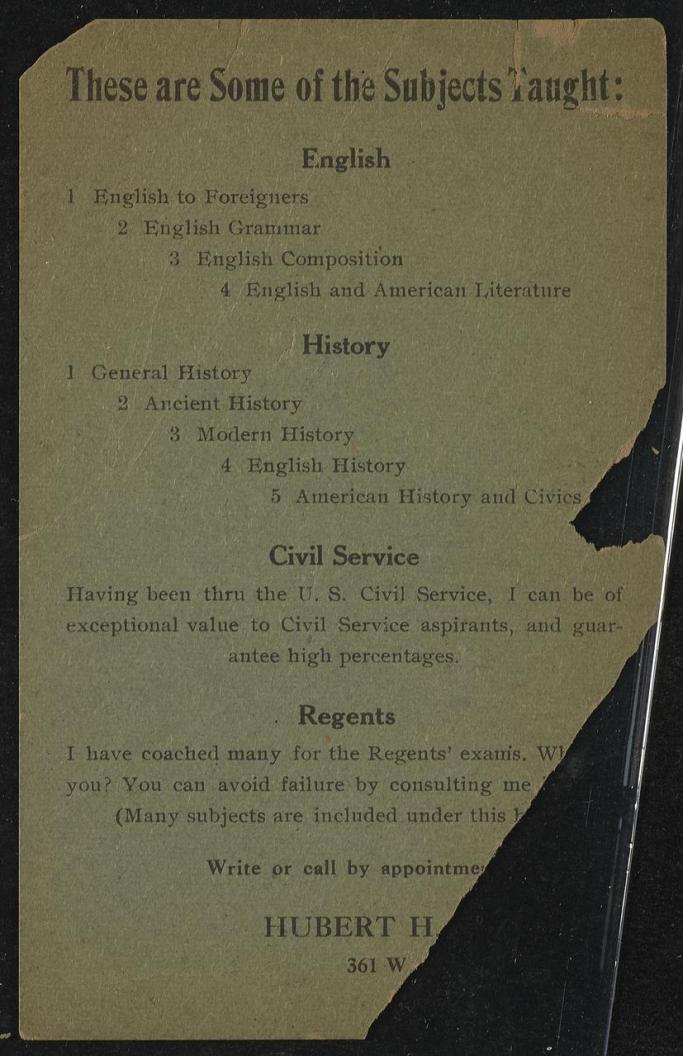
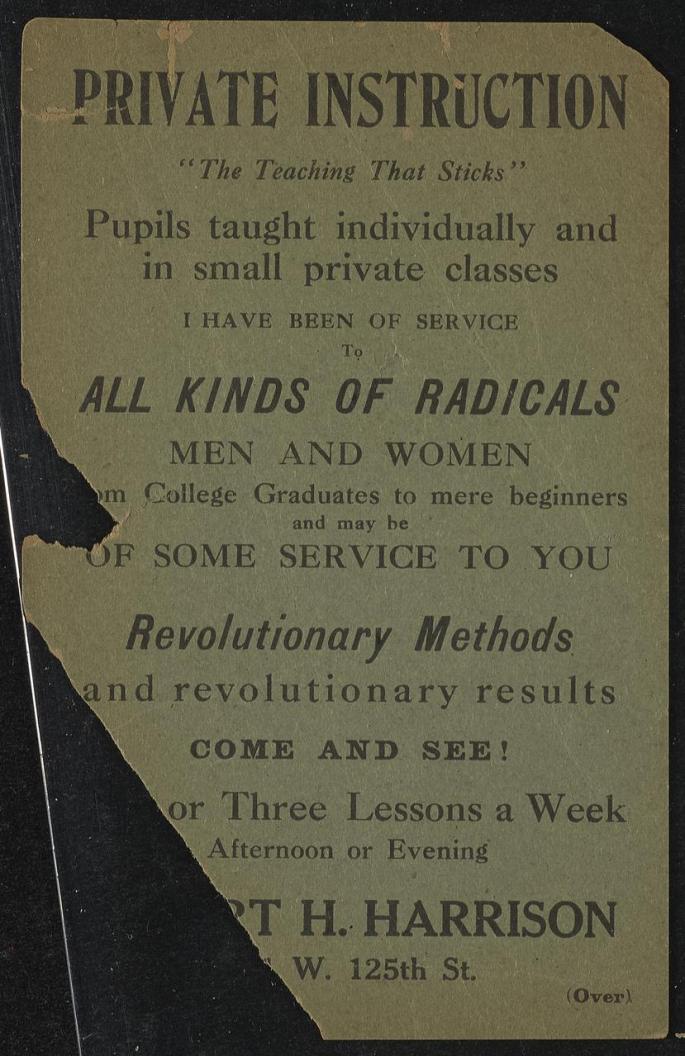
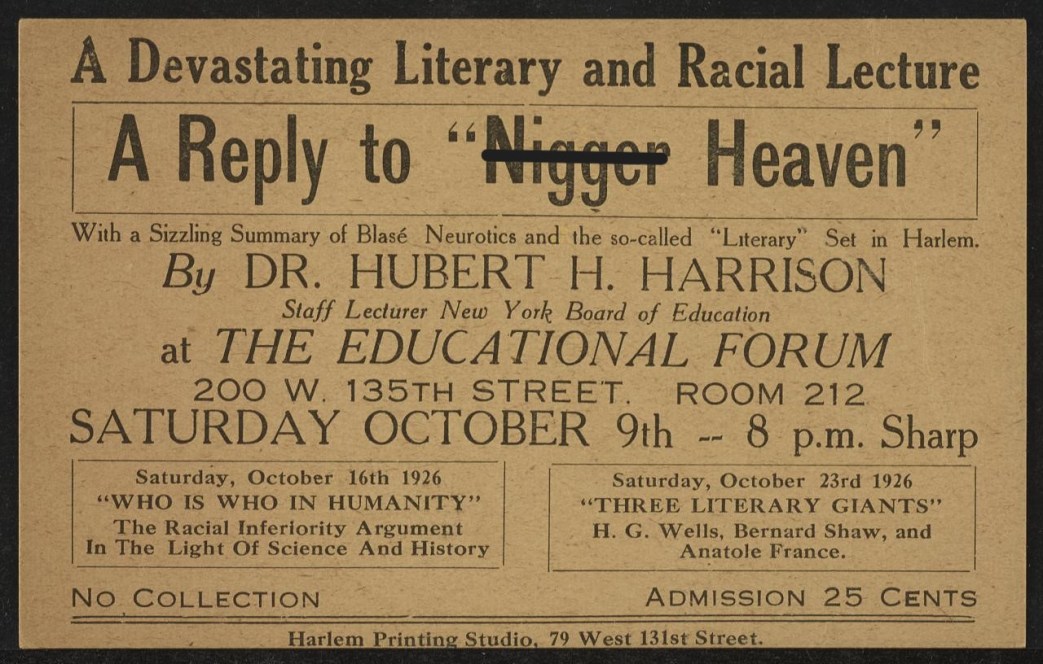
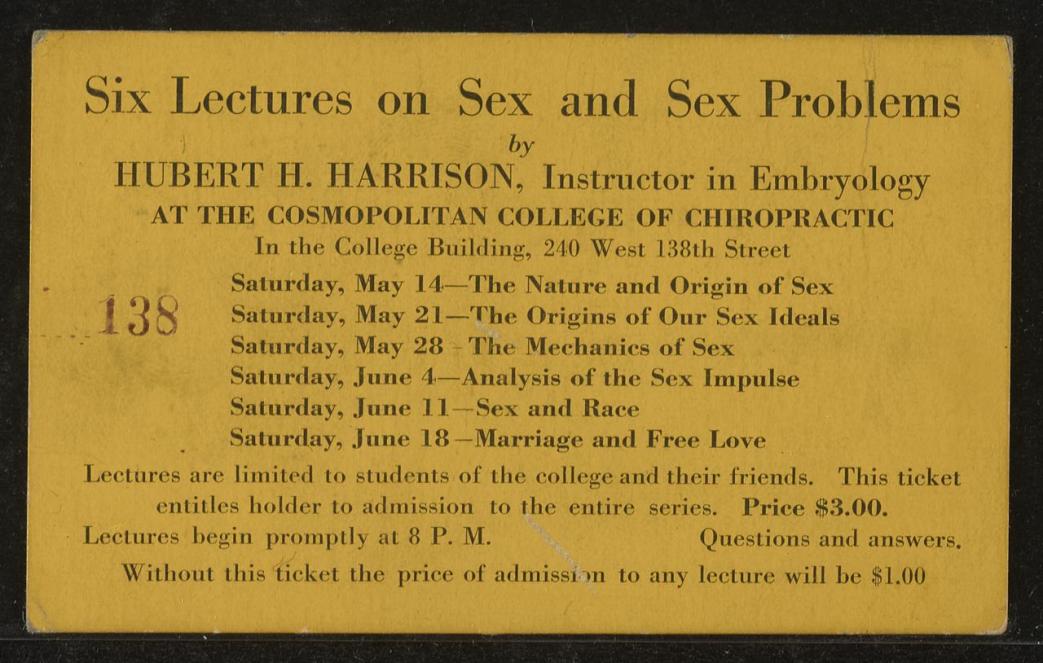
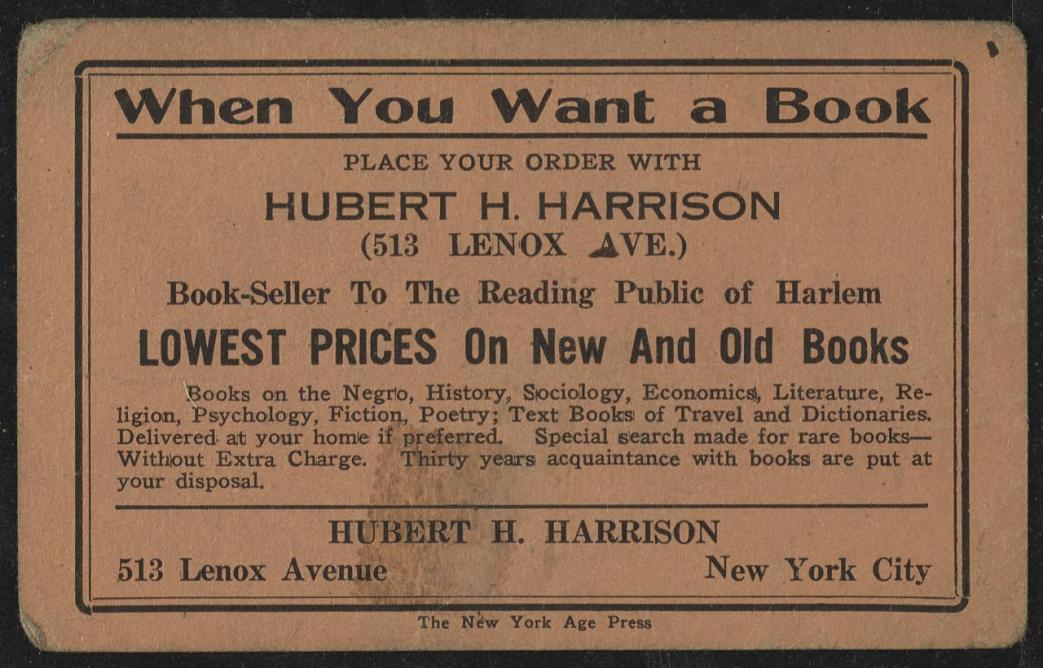
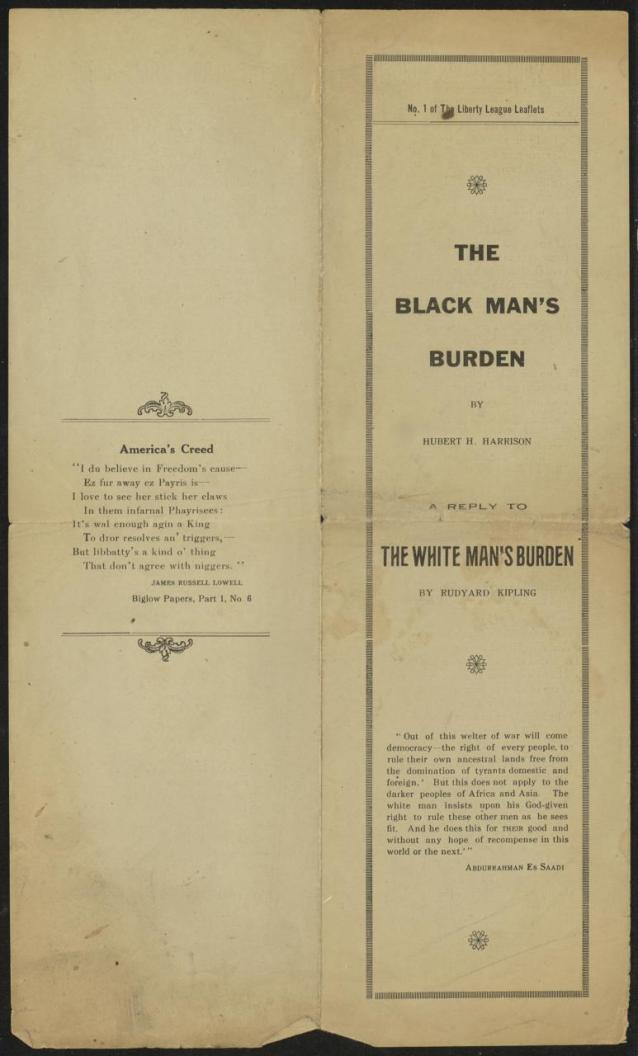

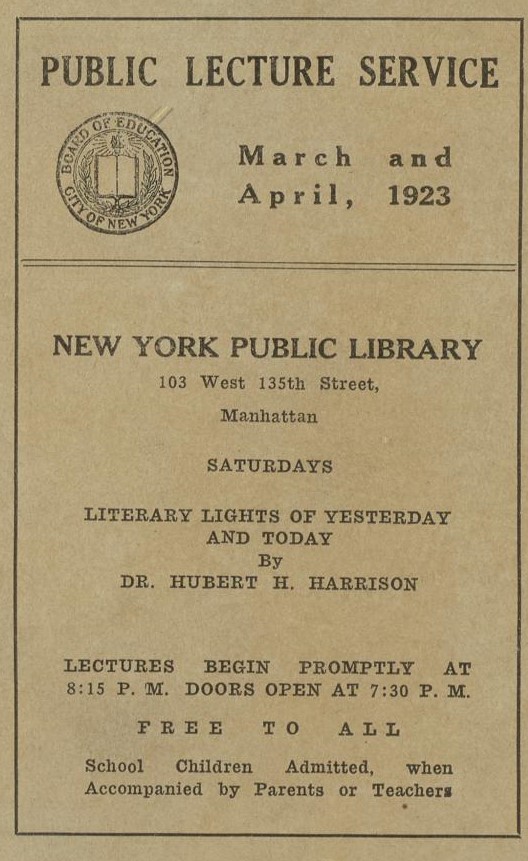
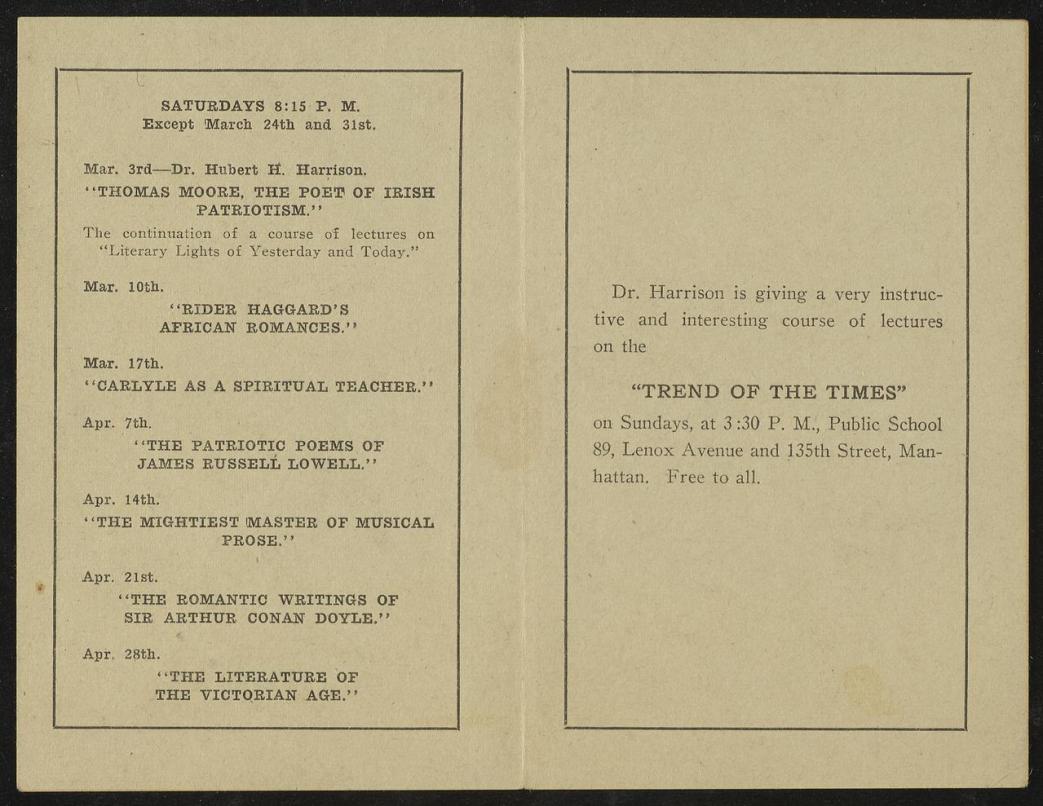

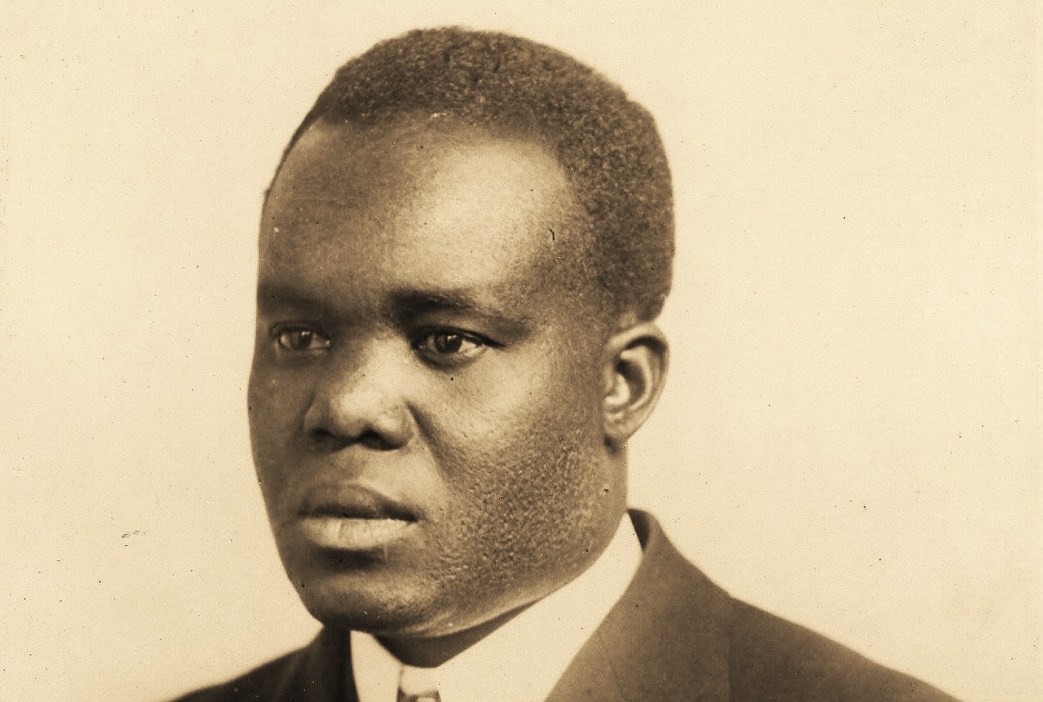
Born St. Croix, then Danish West Indies to a father born enslaved. At 17, Hubert traveled to New York where he worked various jobs such as a telephone operator and hotel bellman. In 1901 he began attending evening high school classes, after graduation Harrison found work in the Post Office.
Largely self-taught and a voracious reader, Harrison joined the New York Socialist Party in 1909. The next year Harrison wrote a series of articles strenuously attacking the politics of Booker T. Washington who would use his influence to have Harrison fired from the Post Office. Soon, Harrison became a full-time lecturer on Black history and Socialist politics, becoming one of the most prominent Black socialists in the country. In 1911 he became an editor for The Masses and founded the Colored Socialist Club.
Harrison began a series of articles printed in the left-wing International Socialist Review magazine and the moderate New York Call Socialist Party newspaper in 1911 criticizing the SP and aligned union movements attitude to Black workers and the struggle for specifically Black issues. Increasingly working with the Party’s left wing and the revolutionary syndicalists of the IWW, including playing a prominent role in the 1913 Paterson Silk Strike, Harrison would be expelled, like many other leftists, from the Party in 1914. Aligned with the Left Wing, an internationalist, and a revolutionary it was natural that the Russian Revolution and World War One would have an impact on Harrison thinking and trajectory.
In 1917 Harrison organized and led the militant all-Black Liberty League and began to publish its paper Voice: A Newspaper for the New Negro, which challenged the elitism and social-patriotism of the then DuBois and NAACP and advocated self-defense, labor, anti-imperialism, and socialism. In 1918 Harrison became as an organizer for the American Federation of Labor and chaired the Negro-American Liberty Congress led by William Monroe Trotter. In 1919, Harrison then founded The New Negro newspaper, “An organ of the international consciousness of the darker races–especially of the Negro race,” in the midst of the Red Summer. The pages advocated Black self-defense and self-organization in the face of unrelenting racist terror as well reporting on and making connections to the larger African Diaspora.
In 1920, with the meteoric rise of the movement led by Marcus Garvey, Harrison took an editorial position on the Universal Negro Improvement Association (UNIA) Negro World, though he himself did not join the UNIA and by 1922 had definitively broken with Garvey. After that experience, Harrison spearheaded the formation of the International Colored Unity League, which called, among other things, for an independent Black state on the territory of the US. After leaving the Negro World 1922, Harrison continued to lecture, write and for the Black and radical press. Just before he died, he launched a new publication ‘The Voice of the Negro.’ Harrison retained, even deepened his radicalism. Referred to by many as the “Black Socrates,” Harrison never received a college degree and remained largely neglected by later activists until recently. His work and thinking developed a dynamic understanding of the relationship between race and class that we are still coming to grips with today. He is entirely deserving of the greatest study, understanding, and inspiration.
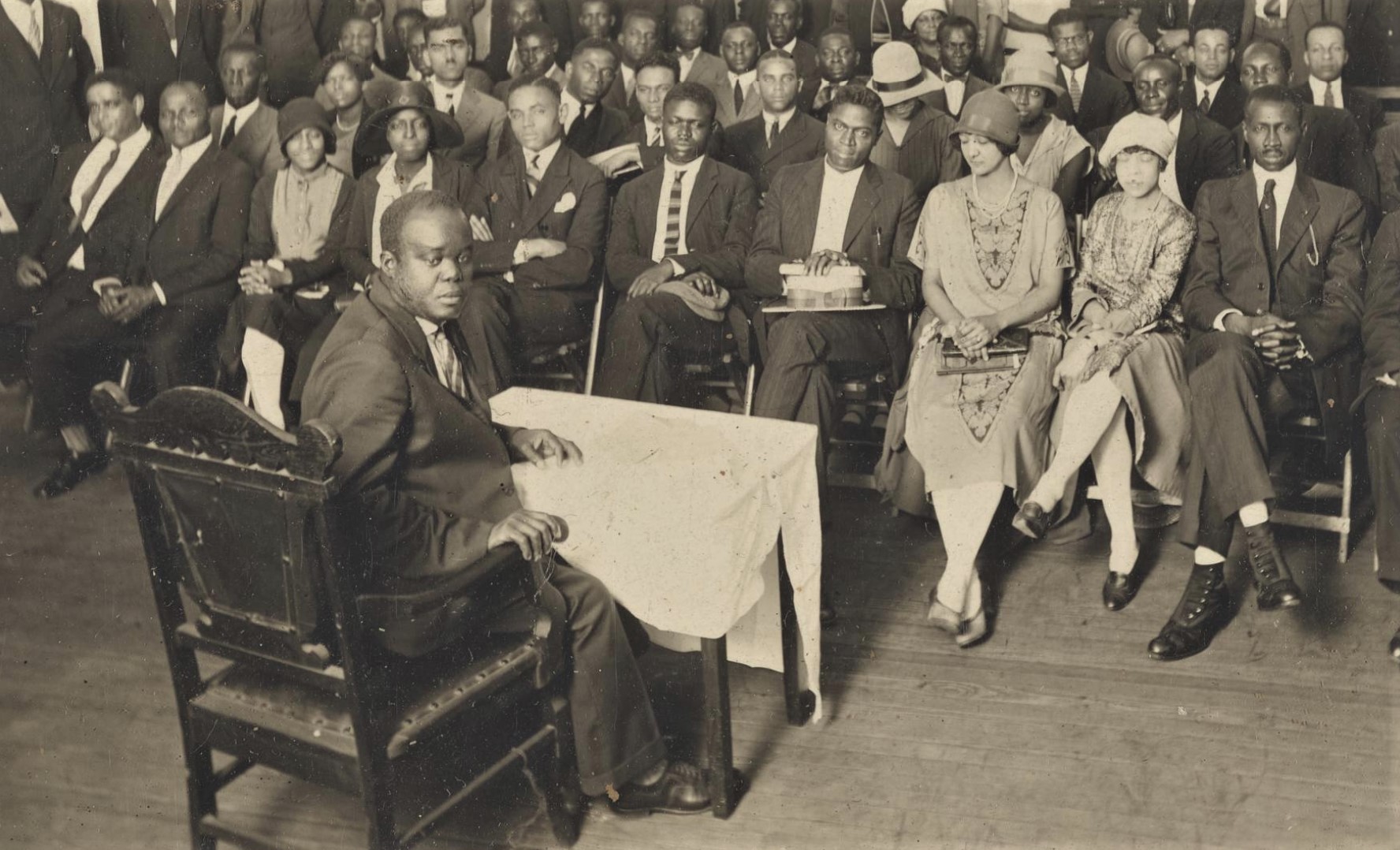
Hubert Henry Harrison died on December 17, 1927 in New York from complications from an appendectomy. He was 44. After his death, his comrades created the Hubert Harrison Memorial Church: A Temple and Forum at 149 136th Street to continue his work and thinking with forums, meetings, and theater. His work worthy of continuous study and evaluation, Harrison remains, a century after his death, a central figure in the Black freedom struggle, the liberation of our class, and of our species.
For much more on Harrison, please see Jeffery Perry’s scholarship: https://www.jeffreybperry.net/index.htm
 Revolution's Newsstand