
Marxist economist and labor activist Jacob M. Budish on a constant of capitalism, the battle over hours and wages of work.
‘Wages and the Five Day Week: Why Shorter Hours Tend to Increase Wages’ by J.M. Budish from Labor Age. Vol. 17 No. 8. August, 1928.
THE five-day week has become a paramount issue with American labor. The 1927 convention of the American Federation of Labor reaffirmed the five-day week as the immediate goal of the working people of America. The resolution declares:
“It is a reflection upon the general intelligence of our nation that there still remain a few who oppose the shorter workday on economic grounds.” Perhaps we should be less concerned with the attitude of non-labor circles; not to speak of groups hostile to labor. The progress made by the labor movement in shortening the hours of labor has been made as a result of incessant struggles, and there is no reason to believe that any future fundamental gain will be made without a struggle. Neither is organized labor ready to give up its militancy and depend entirely upon the mercy and good will of the employers. So what we should really be concerned about is the attitude of the working people themselves. In the final analysis it is the only thing that really matters. In the long run labor can depend only upon itself. Labor has nobody to thank but itself for the gains it made in its long and eventful history. Neither will labor want to share with anybody else whatever blame there may be due for any setbacks.
Let it be noted in passing that the shortening of the hours of labor is one of those fundamental gains which once secured are never lost. Unlike wages the hours of labor once shortened are very seldom lengthened again. Wage statistics have shown that real wages measured in purchasing power have changed very little. From 1899 to 1919, they have practically remained stationary and have even gone back slightly. It is only since 1919 that real wages have increased somewhat. As to social wages, that is, when the purchasing power of labor is measured by national production, we actually made no progress at all. With the only exception of 1921, social wages have in this century always been lower than in 1899. In 1927 they were still five per cent lower than in 1899. (See American Federationist, July, 1928, p. 832). So the gains made by labor in increasing wages have been to a large extent stolen from it by means of the increased cost of living and even more by means of the increased productivity of the workers. The only fundamental gain which once gained was retained without impairment and progressively increased, is the shortening of hours of labor. (See History of Hours of Labor, Proceedings, 1927 A. F. of L. Convention, p. 34).
The paramount importance of the five day week is fully realized by every section of the labor movement. But there are some who still raise the question, what price the five-day week? What effect will the five-day week have upon the wages of the working people? In the last issue of this journal I quoted statistics of the United States Bureau of Labor Statistics showing that trades with shorter hours have as a rule not only greater hourly wages but even greater wages. Comparing the hours of labor and wages in nine organized trades in 1927, we find that as hours of labor go down from 54.7 a week (chauffeurs, teamsters and drivers) to 43.7 (building trades) wages go up from 70 cents to $1.32 per hour and from $38.51 to $57.81 a week, respectively. I also quoted figures from various unorganized and. poorly organized industries for a series of years, all showing that as the hours of labor are reduced wages are increased. In some of these trades, like the boot and shoe industry and woolen and worsted goods manufacturing, a slight increase in hours of labor took place during later years (1924-1926) and during the same period wages went down.
Economics point to two main reasons for this inverse correlation between hours and wages.
Supply and Demand
The theory of wages is perhaps the weakest point of modern economics. Just because this problem is so vital, just because so many conflicting social interests are involved, theories of wages of most schools of economics are crude, perfunctory and involved. In some cases the wage theories are more apologies on existing conditions than efforts at the scientific discovery of the truth. Two factors are however generally recognized among the main objective economic causes determining the course of wages. These are the supply and demand of labor and the standard of living of the working people.
The supply and demand theory applies to all prices including the price of labor power, or wages. Working people do not need to know much about theoretical economics to appreciate the effect of the law of supply and demand. They get their lessons at the factory gates. When the labor market is glutted with idle hands for whom there is no demand, the workers who are lucky enough to have jobs have all the difficulty in the world to maintain their wages. Even in organized trades with strong Union control and with experienced Union members who have passed through the mill, it may be hard for the workers to maintain their wage especially when in poorly organized and unorganized trades a lessening of the demand for labor or an increase in the supply leads almost immediately to wage reductions.
On the other hand, when for some reason there is a great demand for labor and there are no idle hands available wage increases are in order. Such wage increases will be secured sooner by organized trades; but even unorganized trades will, in the end, benefit. During the years of the World War and Reconstruction the demand for labor power exceeded the supply and the wages of all classes of labor went up. In all the 28 years, from 1899 to 1927, there was only one year when social wages were higher than in 1899, and that year was during the after-war reconstruction period (1921).
The immigration policy of the A. F. of L. is at least partly a crude attempt at bringing the supply of labor power more in accord with the demand for it. It is a crude attempt, because it misses the mark. For capital possesses greater mobility than labor. Limiting the immigration of foreign labor cannot prevent the emigration of capital to foreign countries. It is probably harder to replace American workers by immigrants in the industries of this country, than to invest in foreign countries, establish factories there and employ the workers of those countries right there for the production of goods which would otherwise have been produced here, by partly immigrant and mainly native labor. According to the Department of Commerce over one billion dollars of American money ($1,053,000,000) was invested abroad during the first six months of this year. Restriction of immigration may bar the importation of workers; it cannot prevent the exportation of jobs. It may prevent the increasing of the supply of labor power; it cannot prevent the reducing of the demand for it. At this writing a big U. S. corporation has transferred an order from a South American country for tens of millions of electrical equipment to its branch factory in Japan, thus depriving thousands of American workers of jobs, and reducing to that extent the demand for labor power here.
But whatever the merits of the policy to limit immigration as a method of regulating the supply of labor, the fact still remains that the labor movement appreciates the importance of the law of supply and demand. A reduction in the hours of labor, other conditions being equal, must have the effect of reducing the supply and increasing the demand for labor. What is more, the effect of shorter hours cannot be counteracted by the export of capital to any such degree as is the case with the limitation of immigration. A general shortening of hours reduces the supply of all classes of labor, most of which cannot be replaced either by the importation of immigrants or by the exportation of jobs. That is one potent reason why the shortening of hours of labor tends to bring about a higher wage level.
Standard of Living
The other no less potent reason why the reduction in the hours of labor makes for higher wages is the effect it has upon the standard of living of the working people.
Whatever the merits of the so-called iron law of wages (according to which wages tend to reach a level where they will be just enough to cover the cost of the bare means of existence) it in any case provides the limit below which wages cannot fall. What is more, when we speak of the means of bare subsistence we speak of something rather flexible. Even Ricardo who is considered the originator of the “iron-law” of wages was aware that the “natural” wages of labor estimated in food and in necessaries cannot be considered as absolutely fixed and constant, that “it essentially depends on the habits and customs of the people,” or on what we call the standard of living. The standard of living thus determines the rock bottom limit below which wages cannot fall; in any case not without a great upheaval. For people will resist to the limit any effort to reduce their standard of living.
There are very few statistical investigations of the correlation between the cost of the means of subsistence, the standard of living and wages. But there is an interesting statistical investigation made by Prof. Henry Ludwell Moore (see his books, Laws of Wages, 1911). After a painstaking analysis of the correlation between wages and both the cost of the means of subsistence and the standard of living in some provinces of France, Prof. Moore comes to the following conclusion (p. 41):
“We now have definite quantitative solutions to the problems we set out to examine. The wages of unskilled laborers vary from place to place in the same country directly 1) with the cost of the means of subsistence, 2) with the standard of life, the closeness of the relation being measured respectively by the co-efficient=.306 in the first case and the coefficient = .628 in the second case. The wages of skilled laborers vary directly with the wages of unskilled laborers, the degree of association being measured by a co-efficient = .757.”
The same author tells us that a co-efficient between .00 and .75 is considered a high correlation.
In other words, wages of unskilled laborers change directly with the change in the standard of living. And since the wages of skilled workers rise and fall together with the wages of unskilled workers, it is clear that the standard of living is a potent factor in the determination of the level of wages. An increase in the standard of living tends to bring about an increase in wages.
The hours of labor are perhaps the most important single element determining the standard of living. This is recognized even by the most orthodox economists. Alfred Marshall in his Principles of Economics, recognizes that “it is true that no class of workers who are devoid of leisure can have much self-respect and become full citizens; some time free from fatigue and free from work are necessary conditions of a high Standard of Life.” (p. 789). The objection that people do not know how to use their leisure is met by Marshall with the simple fact that “it is only through freedom to use leisure as they will that people can learn to use leisure well.” In any case leisure is the most essential element of a high standard of life. Shorter hours of labor provide such leisure and accordingly tend to raise the standard of life. And a higher standard of living makes for higher wages, or at least provides a higher level below which wages cannot fall. A higher “natural” minimum wage provides a better starting point for increases in wages above the minimum level.
Orthodox economists express only one fear as to the effect of a general shortening of the hours of labor. They fear that it may reduce total production, and thus reduce the total national income. According to Alfred Marshall, “Capitalists and employers may indeed bear a large share of the burden; but they are sure not to bear all.” In our case, however, there is no such fear. What we suffer from now is technological unemployment; that is, the capacity of our means of production and modern technique is substantially greater than the profit paying demand. A reduction in the hours of labor in our case cannot possibly lead to a reduction of the total national income, because it cannot possibly reduce the output of our industries. Its only effects will be (1) to reduce the great reserve army of unemployed by increasing the demand for labor power, and (2) to raise the standard of living.
‘It is because of these two objective, potent economic reasons that the general introduction of the five-day week is bound in the long run to make for higher wages, if even it should in some cases have to be introduced at the same hourly rates as that prevailing under the present longer hours. That cannot change the objective economic effect of a universal five day week. Needless to say that these objective effects can and should be strengthened by the conscious and purposeful efforts of organized labor. The general five-day week provides a better objective economic base, thus assuring greater success for the continuous struggle of organized labor for a better and freer, life—when the working people will control their own lives.
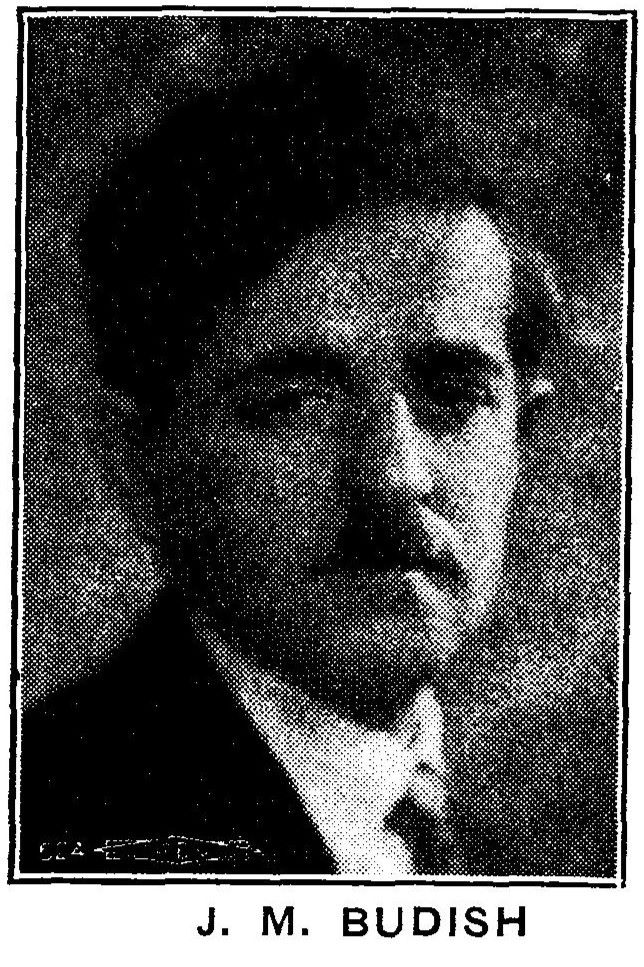
Born near Kiev in 1886 where he began his economic studies, J.M. Budish emigrated to the U.S. in 1912. Continuing his education at the University of Chicago and later Columbia, Budish became involved in the Yiddish-speaking workers’ movement, particularly the Cloth Hat, Cap and Millinery Workers International Union, for which he was editor of The Hedgear Worker between 1916 and 1930. In the 1920s and 30s he was was also involved in Brookwood Labor College and the Committee for Progressive Labor Action, as well as a founder of Ambijan, and organization in support the Biro-Bidjan, the former autonomous Jewish Soviet region, and author of a number of books on labor and the Soviet economy.
Labor Age was a left-labor monthly magazine with origins in Socialist Review, journal of the Intercollegiate Socialist Society. Published by the Labor Publication Society from 1921-1933 aligned with the League for Industrial Democracy of left-wing trade unionists across industries. During 1929-33 the magazine was affiliated with the Conference for Progressive Labor Action (CPLA) led by A. J. Muste. James Maurer, Harry W. Laidler, and Louis Budenz were also writers. The orientation of the magazine was industrial unionism, planning, nationalization, and was illustrated with photos and cartoons. With its stress on worker education, social unionism and rank and file activism, it is one of the essential journals of the radical US labor socialist movement of its time.
PDF of full issue: https://www.marxists.org/history/usa/pubs/laborage/v17n08-aug-1928-LA.pdf
 Revolution's Newsstand