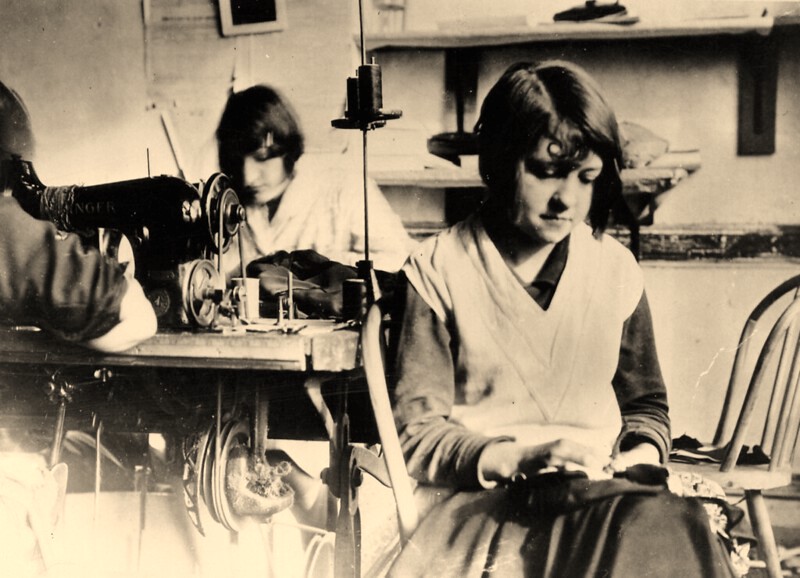
An important review from Foster on the struggle against the bureaucracy in the mighty International Ladies Garment Workers Union and the work of the Trade Union Educational League among the needle trades.
‘The Left Wing in the Needle Trades’ by William Z. Foster from Workers Monthly. Vol. 5 No. 1. November, 1925.
DURING the past month two events of prime significance took place in the needle trades. These occurred simultaneously. They were the reinstatement of the expelled three local unions of the International Ladies’ Garment Workers and the holding of the third national conference of the needle trades section of the Trade Union Educational League.
When the revolt of 30,000 members of Locals No. 2, No. 9, and No. 22 of the International Ladies Garment Workers’ Union in New York took place in the middle of June, it was the inevitable result of the policy being followed by the Sigman administration. Briefly this was, on the one hand the policy of class collaboration with the employers, involving as usual the surrender of the workers to the bosses, and on the other hand a policy of wild terrorism against the left wing elements who proposed a program of union reorganization and of militant struggle against the employers. Driven to desperation by the advance of the left wing, and forced to try to win a base of operation in the New York unions against the rival Breslaw group, which is deeply entrenched among the skilled workers, the Sigman machine tried to capture the rebel strongholds, Locals No, 2, No. 9, and No. 22, by a coup d’ etat of expelling the entire Executive Boards, 77 members, of the three locals upon the ridiculous pretext that the local unions, at their May Day meetings, were addressed by Communist speakers.
Revolt followed. Immediately the leaders of the 30,000 workers found themselves confronted with a multitude of problems. The first and foremost was the time-honored tendency toward dual-unionism, which always manifests itself in such situations. It is the crude, instinctive reaction of goaded workers against union bureaucrats who have betrayed them. It was necessary, if the fight were to be conducted according to Leninist tactics, that this dual union tendency be checked and the struggle directed towards the goal of reestablishing the unity of the union under a more advanced type of leaders. This objective was achieved. The dual union tendency was killed. One of the most important victories over it was the decision for the expelled members to stand trial before the Joint Board. This trial reacted all to the advantage of the victimized local officials, as it showed up all the rottenness of the Sigman administration. Similar maneuvers, all directed towards maintaining contact with the International Union, had the final effect of completely eradicating dual unionism and of making the masses of workers realize that their hope of victory lay in the fight to consolidate all the union forces together.
Another tendency that menaced the movement in its early stages was that of taking the struggle into the courts. At first the leaders of the workers tended too much to take the advice of lawyers. The proposal to get out against the officials of the International an injunction restraining them from having members of Locals No. 2, No. 9 and No. 22 discharged from the shops, from seizing the funds of these locals, and various other acts, would have been a disastrous mistake had the left wing leaders yielded to it. The left wing has nothing to gain in capitalist courts. In the first place, it is idle nonsense to believe that the capitalist judges would side with Communists and their close allies as against reactionary trade union officials; and in the second place, even though the impossible happened, and the left elements were able to get a decision against the bureaucratic officialdom, they would only succeed in discrediting themselves in the eyes of the rank and file of the union. The lefts stood to lose either way it they took their case to court. In such situations the recourse of the left wing must be to spread solidarity and militant methods on the part of the masses involved. Fortunately the leaders of the movement finally understood this. They avoided the mistake of going to the courts, and they won the fight by an appeal to the masses against the corrupt and reactionary Sigman and Breslaw machines,
Another problem was to prevent the Sigman and Breslaw machines from breaking the united front between the Communists and the progressives, which was the backbone of the movement. Sigman especially left no stone unturned to make the question of Communism the issue and thereby to isolate the Communists from the masses. But in this he failed signally and thus was defeated in the whole struggle. The Communists were able to keep the attention of the workers focused on questions of immediate issues in the struggle and thus avoided isolation. They made the issue of the elimination of Sigmanism, with all the corruption, gangsterism, and reaction which Sigmanism implies, the center of the struggle. They made a serious mistake in not bringing more prominently to the front the economic demands of the workers, but in spite of this they managed to maintain control of the masses. The demonstrations in the Yankee Stadium, and the gigantic hall meetings will remain as landmarks in the history of the New York labor movement. The needle workers could not be frightened by the “red scare.”
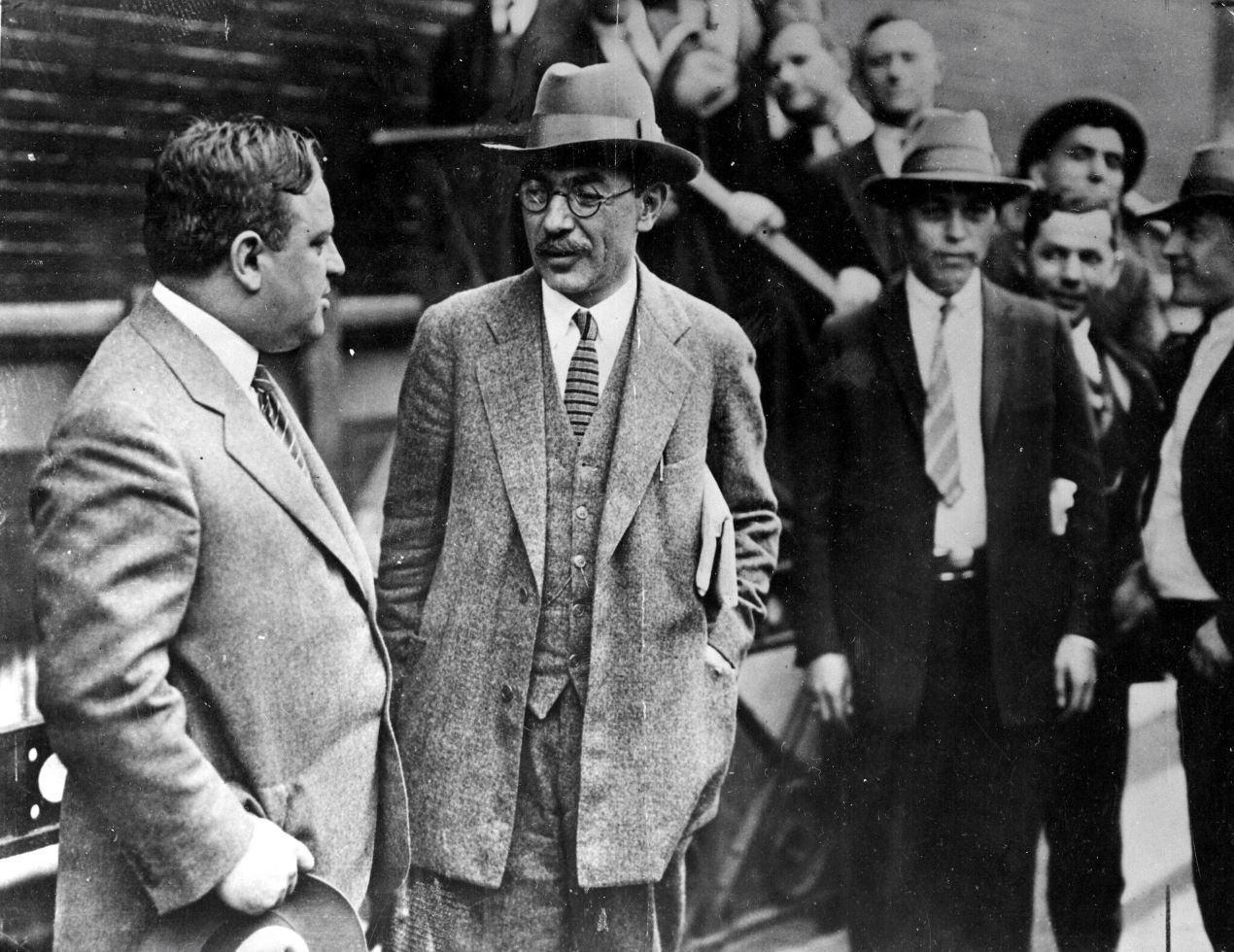
In the face of the unbreakable mass uprising of the workers, the Sigman machine collapsed. The first real sign of its collapse was the resignation of Perlstein and Feinberg, the two most contemptible figures in the International Ladies Garment Workers Union, both of whom were the most active leaders in the expulsion policy. The next was the adoption of the fake peace proposals by the General Executive Board,—proposals which fell flat and which made the Sigman machine look ridiculous. The last step was when Sigman faced a meeting of the shop chairmen, which elected a so-called non-partisan committee, dominated by left sentiment, to negotiate a settlement of the dispute. The creation of this committee under the very nose of Sigman, registered for him the most striking defeat of his whole policy of expulsion. After that the only question was how much of a victory the left wing could crystallize over the conference table as against the tottering Sigman machine, and the forces of Breslaw, who had succeeded in organizing most of the right wing elements behind him during the course of the struggle.
The principal demands of the Joint Committee of Action which conducted the left wing struggle were as follows:
1. All persecutions for political opinions shall immediately cease and all suspended and expelled members shall be reinstated.
2. The principle of proportional representation shall be applied in the election of delegates to the Joint Boards and the International Convention.
3. All workers who have been taken off their jobs through the actions of the international officials. shall be reinstated,
4. A general election shall be held in all locals of the New York Joint Board. All members shall be eligible to run as candidates. The election to be supervised by a committee representing the International and the Joint Committee of Action.
5. All officers of the Joint Board and International shall be elected directly by the membership.
6. Repudiation of the Governor’s commission award and the development of a movement against the bosses for better conditions in the industry.
7. Establishment of lower dues and economy in the management of the union,
8. Development of an organization campaign to bring the unorganized workers into the union.
On nearly all of these points the settlement resulted in substantial victories for the representatives of the Joint Committee of Action and the membership of the union at large. Point 1 of the agreement adopted unanimously a great mass meeting on September 24, in Cooper Union, says:
“On the question of tolerating political opinions in our union, it is unanimously decided by all parties at the conference that a spirit of tolerance must be established in our union, and that all discrimination for political opinions must immediately cease.”
To force the Sigman machine to sign such a statement was a real victory for the left wing. It was an open acknowledgement, also confirmed by Sigman in his speeches that the policy of expulsion in the International Ladies Garment Workers Union was a complete failure. It is a warning to bureaucrats in other unions who are now embarking upon the policy of expulsion which was initiated in the American labor movement two years ago by Sigman.
In the matter of reinstatements, the agreement was not so satisfactory. All the suspended members of the Executive Boards of Locals No, 2, No. 9, and No. 22 were reinstated, which was an important victory. Other expelled members throughout the country are to appeal their cases to the General Executive Board, and under the agreement will be reinstated, with the exception, however, that those members who have already appealed their cases to the General Executive Board and whose cases have been acted upon unfavorably must let their cases go to the convention for settlement. How the union feels on the question of general amnesty, however, was evidenced by the unanimous adoption by the Cooper Union meeting of a resolution endorsing the immediate reinstatement to full membership of all the workers Victimized in this long and bitter struggle. The left wing must categorically insist upon the Sigman machine’s yielding to this universal demand for a general amnesty.
Point 2, the demand for proportional representation, was of the most vital importance. As the Joint Boards and Conventions are now organized, the great masses of unskilled and semi-skilled workers are largely disfranchised to the advantage of the skilled workers and the bureaucracy. Proportional representation would eliminate this evil and tend to throw the union more under the control of the left elements. The question was referred to the Convention in November, with the provision that the proposals for proportional representation (there will probably be two or more of them) shall be submitted to a general vote of the membership, the referendum to be supervised by representatives of the various plans proposed. With an active struggle by the left wing to carry the referendum, this makes it almost certain that the union will have a much higher degree of proportional representation than heretofore. In order to safeguard the make-up of the national convention, the candidates for election as convention delegates shall have “the right to take care of the elections.”
The demand under Point 3 resulted in a complete: victory for the left wing. The workers discharged from their jobs during the struggle were reinstated to their positions. This was a bitter pill for Sigman to swallow.
On Point 4 the left wing was only partially successful. Instead of elections in all the local unions, as demanded, the agreement called for elections only in Locals No, 2, No. 9, and No. 22. These have since resulted in sweeping victories for the left wing, the old officers, leaders of the Joint Committee of Action movement, being returned to office by votes of about ten to one against the Sigman candidates. Breslaw, through pressure upon Sigman, succeeded in preventing elections in the other New York locals and thus for the moment saved himself from defeat,
On Point 5 the left wing secured the concession of electing the General Manager of the New York Joint Board by a referendum vote. Hitherto this powerful position, which is next in importance to that of International President, has been filled by appointment. The new arrangement means that almost certainly one of the leaders of the Joint Committee of Action will secure the position.
On Point 6, the left wing failed to make an effective fight, so it got few concessions. The best that was done was to secure an agreement that immediately after the elections in the union the whole matter of economic demands will be taken up afresh.
On Point 7, the question of dues was referred to a referendum vote of the New York membership. This means that the left wing proposal of 40 cents a week dues will almost certainly carry, and thus will mark the successful end of one of the bitterest fights in the history of the International. On the economy demand, the matter will be taken up after the elections by the New York Joint Board, with the almost certain result that many of the evils complained of in the management of the union’s finances will be rectified.
Point 8 was not greatly stressed by the left wing. Consequently only a vague agreement was reached that “after the elections of the three locals, a plan for organization shall be worked out which will draw in the active membership into the union activities.”
From the foregoing it is manifest that the united front of the Communists and progressive elements in the Joint Committee of Action, supported by the great masses in the union, has won a substantial victory. A death-blow has been struck to the expulsion policy, and the union has been started off on a new track towards a better leadership and more militant policy. Some mistakes were made. One of these was not to have brought the economic demands of the workers more strongly to the front, a mistake made all through the movement and repeated at the settlement. Another was in not having raised the question of amalgamation of all the needle trades unions. The necessity for combining the various needle trades unions is fundamental. Without this, no real policy of struggle is possible. The representatives of the Joint Committee of Action in the negotiations, should have made this an issue by demanding a general amalgamation convention of all the needle unions. The overwhelming masses of workers in the clothing industry believe in industrial unionism. If they are not now aggressively demanding it, it is simply because, on the one hand, the union bureaucrats have actively combatted amalgamation, and on the other hand, the left wing leaders have not really conducted a fight for it. At the big Cooper Union meeting of shop chairmen, a speech for amalgamation by any of the leaders of the Joint Committee of Action would have swept the gathering by storm. It was a great mistake not to have seized the occasion for the launching of a real amalgamation movement. In the future these weaknesses of policy must be corrected. A militant movement must be launched in support of the left wing economic demands, for the organization of the masses of unorganized in the industry, and for the consolidation of all the needle unions into one powerful industrial union.
Although it has undeniably scored a victory in the great movement which reached its climax in the settlement on September 25, the left wing still has hard struggles ahead of it in its inevitable march to control the International Ladies Garment Workers’ Union. The right wing, supported principally by skilled workers, is strong and well organized. Although Sigman and his group have been weakened in the struggle, Breslaw and his followers, supported by the reactionary Jewish Daily Forward and the socialist party, are powerful. They represent the real enemy of the left wing in the union. But if the Joint Committee of Action group rises to the possibility of the situation, they should be able, at the coming convention, to defeat both the Sigman and Breslaw forces and to start the union, under new leadership, into a new era of progress and development,
The National Conference of the Needle Trades Section.
THE third national conference of the needle trades section of the Trade Union Educational League was held in New York City on September 21 and 22, just in the midst of the negotiations for the settlement of the controversy in the International Ladies Garment Workers’ Union. There were present 90 delegates coming from all the important garment centers of America, including New York, Chicago, Montreal, Rochester, Toronto, etc. The conference, which was one of the most important ever held by the Trade Union Educational League, mapped Baltimore, Cleveland, Boston, Philadelphia out elaborate programs of work for the industry, including campaigns in support of the left wing economic demands, the organization of the unorganized, the relief of unemployment, the reorganization of the unions upon the basis of shop committees, the foundation of a labor party, the establishment of the Needle Worker, the broadening out of the League groups and their establishment upon a firmer basis financially. Resolutions were adopted condemning the policy of class collaboration now being so energetically promulgated in the labor movement, condemning the exclusion of Saklatvala, demanding the recognition of Soviet Russia, world trade union unity, and the release of class war prisoners.
A feature of the conference was the great stress laid upon amalgamation in the program of work presented by Comrade Zack. It has long been one of the weaknesses of our work in the needle trades unions not to have laid greater stress upon the consolidation of all the craft unions into one industrial organization, This conference of the needle trades section, bids fair to mark the beginning of the first real struggle of the left wing in the needle industry to amalgamate the unions. Comrade Zack showed how the whole future of unionism in the clothing industry is directly bound up with the problem of joining the present scattered and demoralized organizations into a single unified movement. The conference clearly recognized that the amalgamation movement has been greatly neglected in the needle trades.
But the high light of the conference was the discussion of the concrete policies to be applied in the actual struggle to win the unions from the control of the reactionary bureaucrats. These policies involved questions of the propagation of our program as a whole, the formation of united front blocs against the reactionaries, and especially the war against right wing deviations in our own ranks. This was a conference which dealt with the living problems in the industry.
The needle trades section of the Trade Union Educational League has held three national conferences, each marking a new stage of development of the left wing in the needle trades, The first took place in 1922. At that time the left wing had hardly a trace of real organization and but little understanding of the correct policy to be pursued in the unions. The first conference, therefore, dealt with the elementary questions of policy and organization. The question of amalgamation was dealt with, but not in a manner to make it a living issue in the left wing.
The second conference took place in 1923. Already the left wing had made rapid progress in understanding and organization. It had become a real power in the industry, with the result that the bureaucracy had declared the most ruthless war against it. The great question at the second conference was how to combat the expulsion policy, how to cling to membership in the unions in spite of the terrorism of the officials, who saw themselves menaced by the rising wave of revolt.
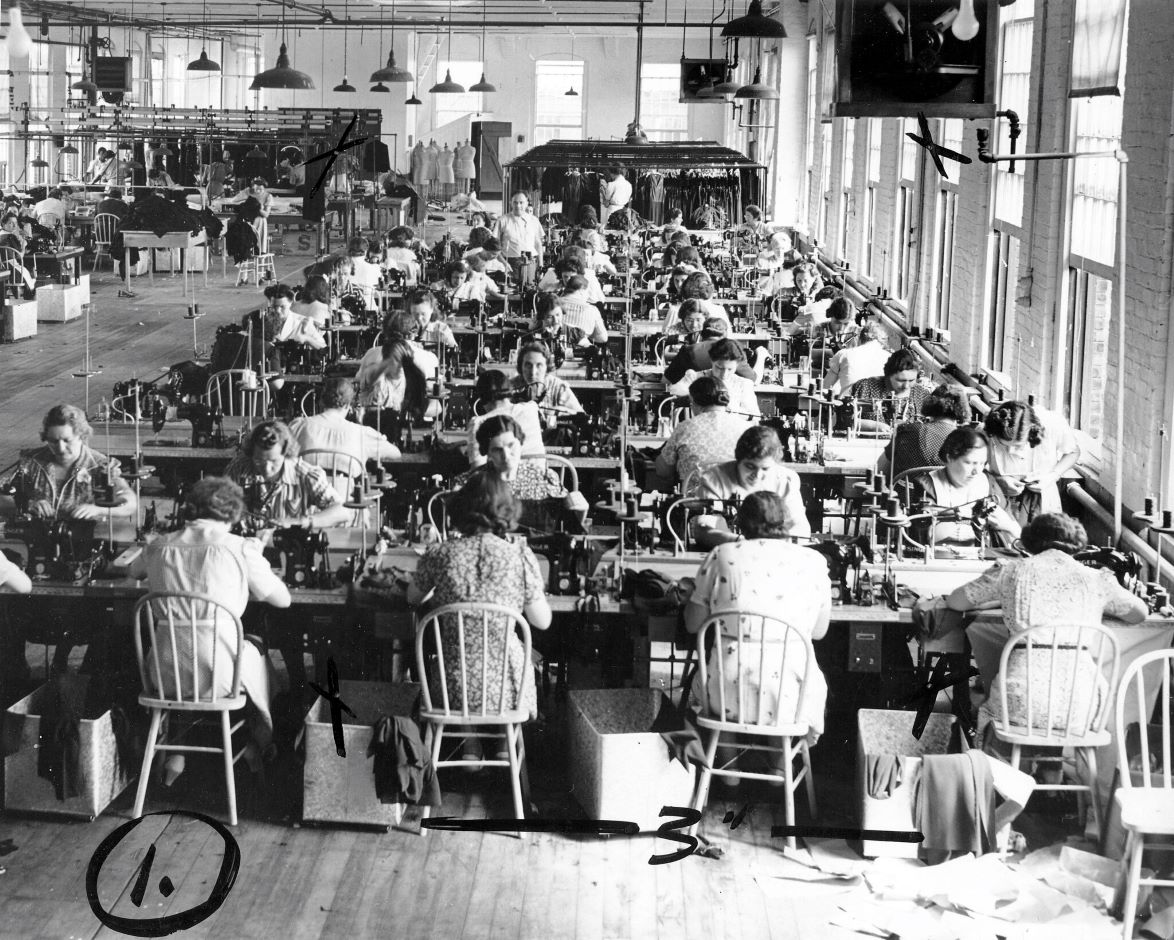
The third conference marked the defeat of the expulsion policy, and the entry into power of united front combinations in which the left wing exercises a powerful influence. In the Fur Workers’ Joint Board the revolt had taken place some months previously and had resulted in an overwhelming defeat for the Kaufman machine and the expulsion policy. And now, just as the conference was in session, the negotiations were on foot between representatives of the International Ladies Garment Workers’ Union and the Joint Committee of Action, for a settlement which was bound to register a defeat for the Sigman machine and the expulsion policy in the International. The beginnings of such movements are also taking shape in the Amalgamated Clothing Workers and the Capmakers. The problems of the third conference were the problems of actually assuming control of the needle trades unions.
The conference emphatically declared for the application of united front tactics to combine the revolutionary and progressive forces in blocs against the reactionary bureaucracy. But it was unsparing in its criticism of right deviations practiced by left wingers in carrying out such united front movements. In this respect Comrades Wortis and Zimmerman, who headed the national committee of the needle trades section until they resigned recently under sharp criticism, were the storm center, Their policy of maneuvering was attacked. It was demonstrated that they tended to ignore the broader issues of the League program and to concentrate too much upon the securing of official position of the left wingers in the unions. Many speakers pointed out the dangers of such opportunism. The report of the national committee of the needle section, which dealt extensively with these points, was overwhelmingly adopted.
The reports to the third national conference of the needle trades section showed that a revolution is taking place in the leadership and policies of the needle trades unions. Under the pressure of the bosses, who are decentralizing the industry and scattering it out of the big clothing centers, the masses of workers are moving to the left. They are fast becoming more revolutionary and are demanding a higher type of unionism and of struggle against the employers. Their political horizon is rapidly broadening. The old leadership, long dominated by the socialist party, is bankrupt and is breaking up into various warring factions. Its class collaboration policies are hopelessly inadequate to meet the situation. To the front is coming a new left wing leadership, made up for the most part of members of the Workers Party. These new leaders are bringing with them a new policy of class struggle. The whole industry is in a process of ferment and change.
The fate of unionism in the needle industry is bound up with the success of the revolutionary upheaval now taking place in the unions. The left wing must find ways to fight its way to control and to break the power of the incompetent right wing, which has absolutely nothing to offer the workers. In this situation much responsibility rests upon the growing group of new young left wing leaders in the unions. If they have the understanding to follow a real Leninist policy, the progress of the left wing will be greatly facilitated. During the past year these leaders have made many mistakes, such as the failure to emphasize the economic demands in the big struggle in the International Union, the failure to make amalgamation an issue in the needle industry, and the over-stressing of the importance of official positions at the expense of the League program. These mistakes must be remedied in the future. The needle trades section program is the program necessary for the regeneration of the unions in the needle industry. It must be prosecuted vigorously and all deviations from it resisted. The fourth needle trades conference should show a needle trades unionism regenerated and pointing the way that all American trade unions must go.
The Workers Monthly began publishing in 1924 as a merger of the ‘Liberator’, the Trade Union Educational League magazine ‘Labor Herald’, and Friends of Soviet Russia’s monthly ‘Soviet Russia Pictorial’ as an explicitly Party publication. In 1927 Workers Monthly ceased and the Communist Party began publishing The Communist as its theoretical magazine. Editors included Earl Browder and Max Bedacht as the magazine continued the Liberator’s use of graphics and art.
PDF of full issue: https://www.marxists.org/history/usa/culture/pubs/wm/1925/v5n01-nov-1925.pdf
 Revolution's Newsstand